
Alcelaphus · Serengeti · Taxonomy · Part 1
Introduction
I have personal experience of Alcelaphus cokii in both the Athi–Kapiti plains and the Serengeti ecosystem.
These populations lie on different sides of a well-recognised biogeographical feature, which tends to separate closely-related species and subspecies. I refer to the Eastern Rift of Kenya and Tanzania.
My impression, after much scrutiny in the field, has been that
- the two populations differ significantly in the shape of the horns, and
- this difference may be sufficient to indicate a subspecies-distinction.
However, no subspecies of A. cokii have previously been accepted.
Aims
The aims of this post are
- to illustrate my postulated difference between the two populations of A. cokii in the shape of the horns, and
- to investigate the subspecies-distinction in the taxonomic literature, which seems confused and obscure, and
- to propose that the correct subspecies-name is Alcelaphus cokii kongoni (Heller, 1912).
Methods
My own field-experience of the two populations has been, respectively, in
- 1985–1988 — east of the Eastern Rift: Nairobi National Park, and Wildlife Ranching and Research, Athi plains.
- 1985–1996 — west of the Eastern Rift: Serengeti National Park and Ngorongoro Conservation Area of Tanzania, and Maasai Mara National Reserve of Kenya.
In this post, I test my impressions of a difference in the shape of the horns by scrutinising the many images now available on the Web.
Results
Athi–Kapiti plains, east of the Eastern Rift
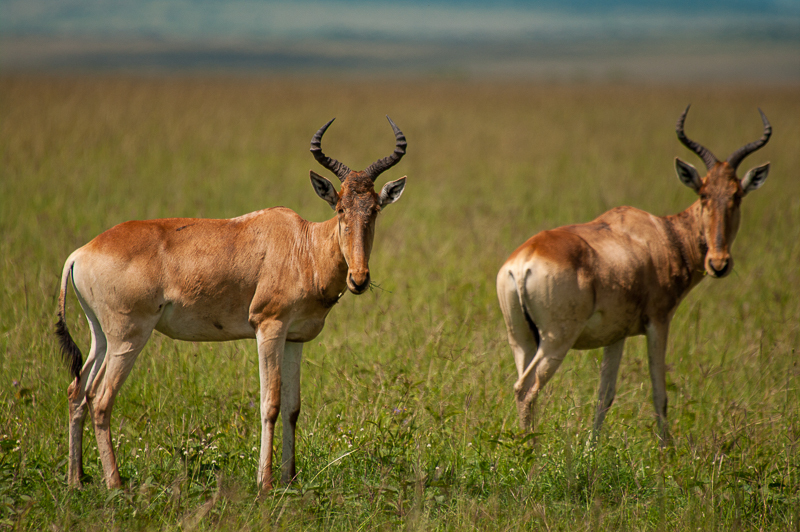
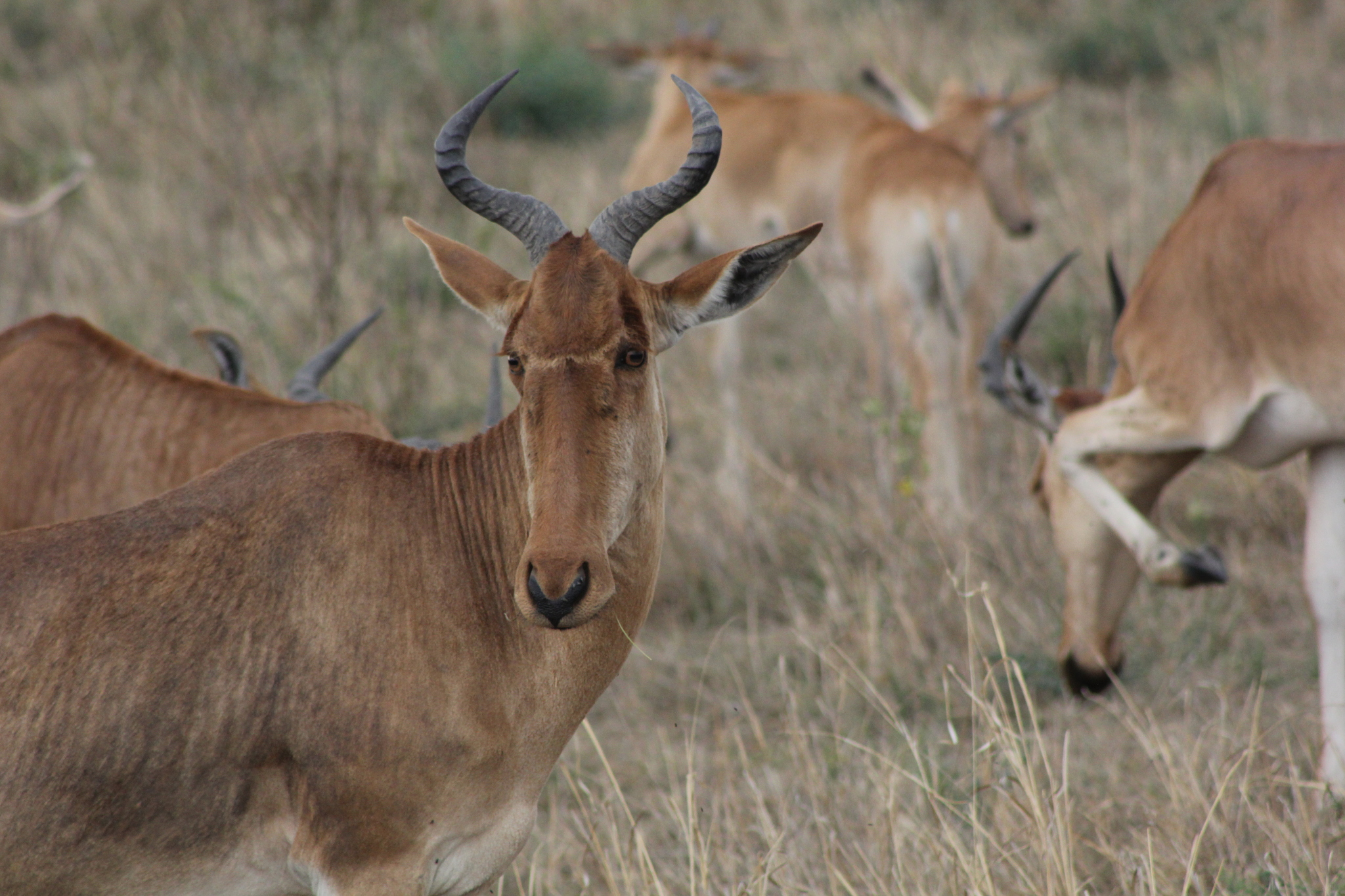
In the eastern population, the horns form right-angles, or ‘square-brackets’: the shafts rise, turn sharply outward, and the tips hook back inward at close to a right angle.
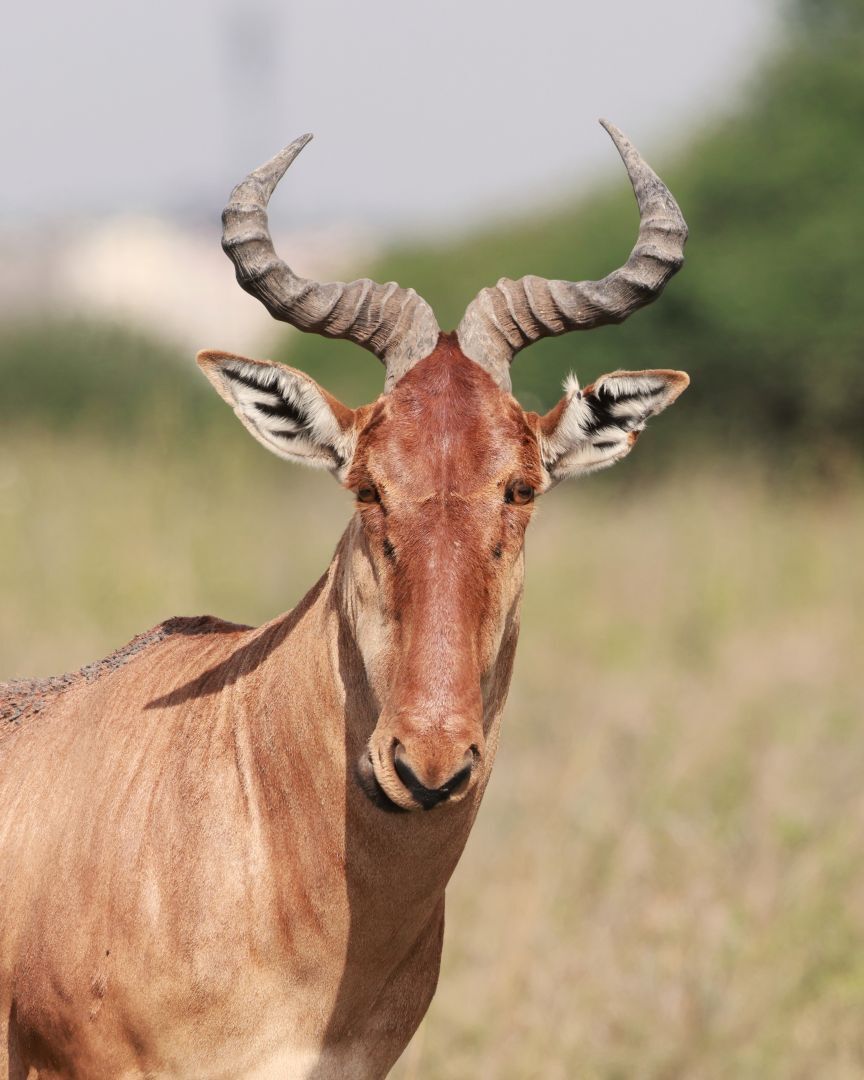
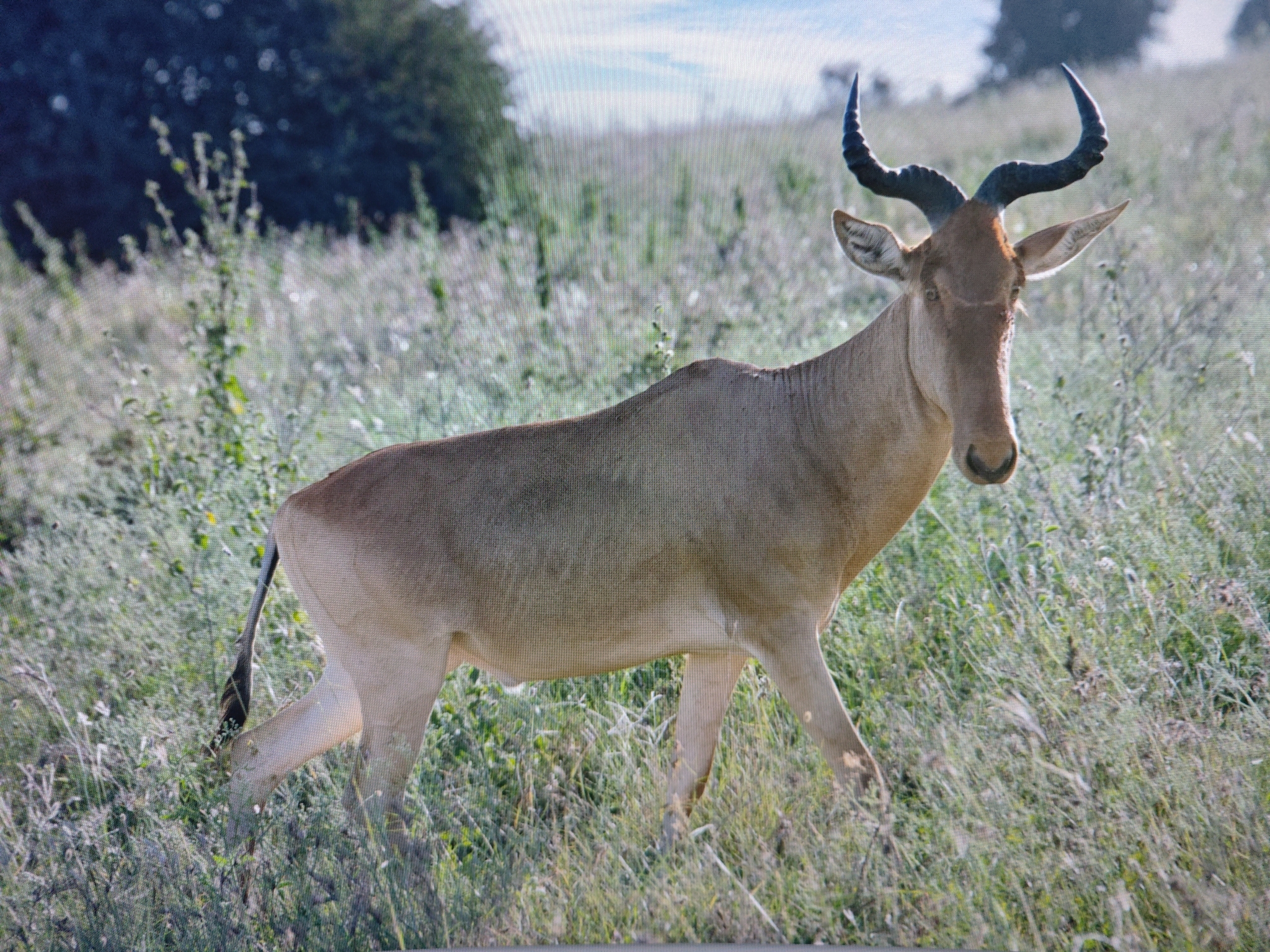
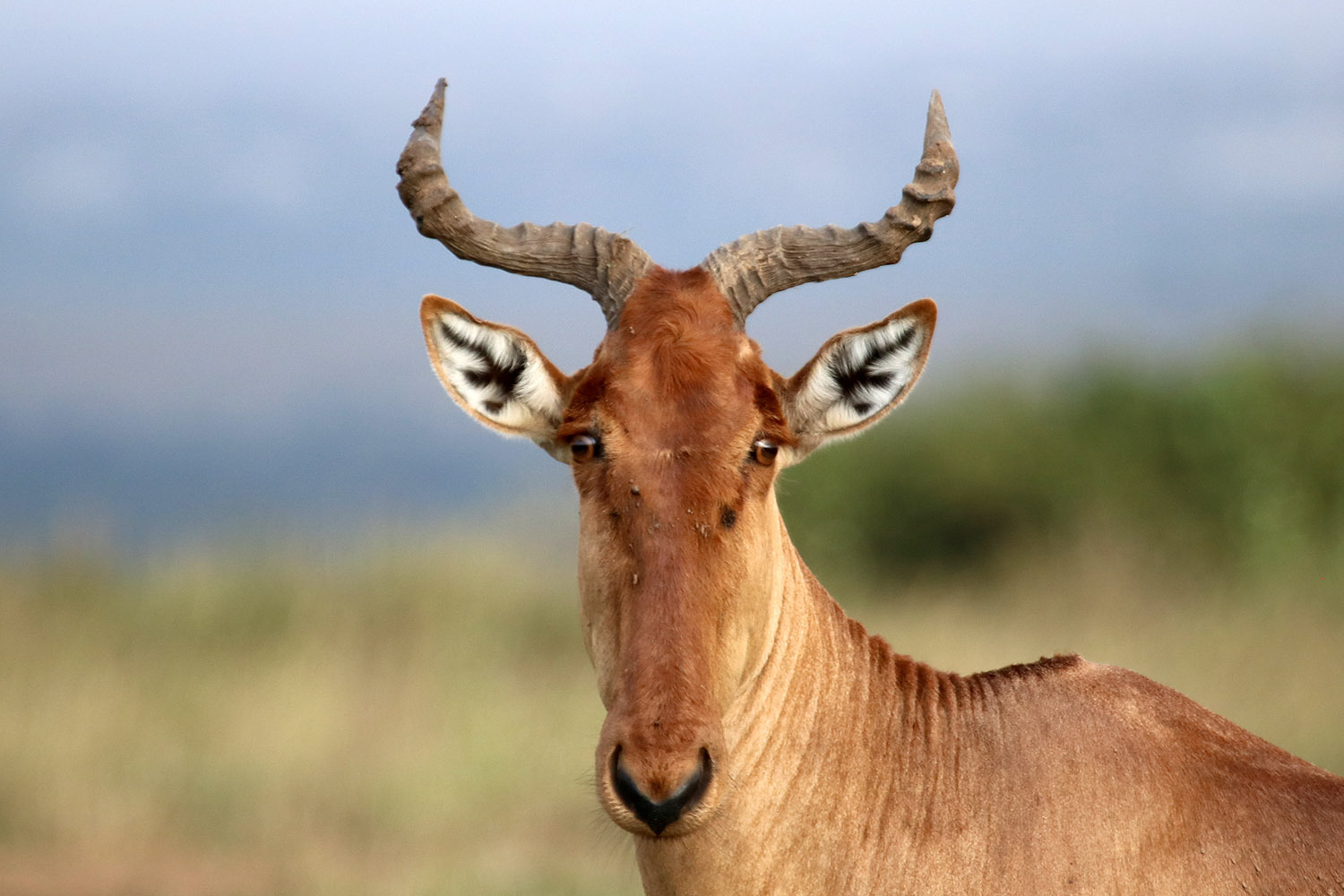
Serengeti ecosystem, west of the Eastern Rift
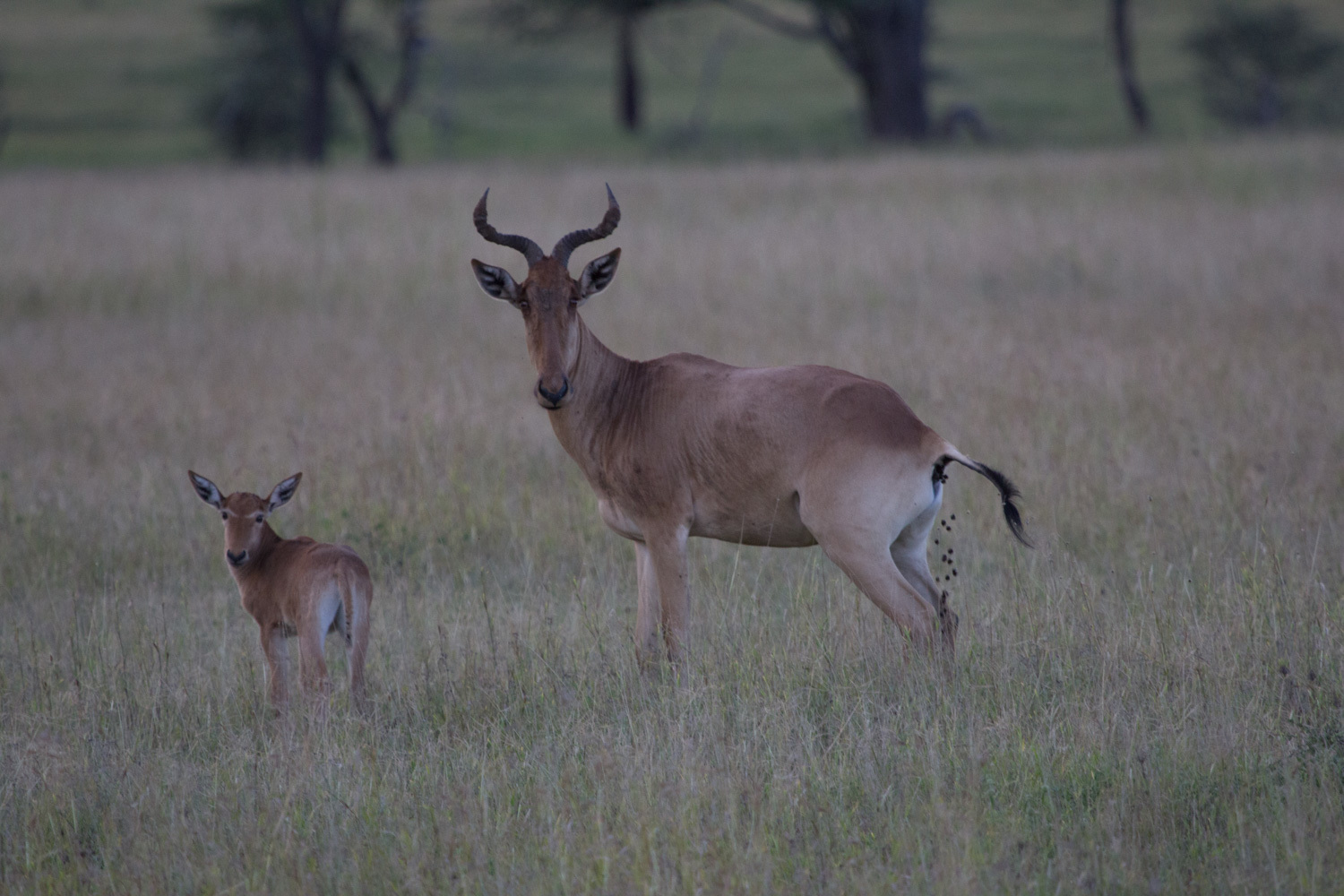
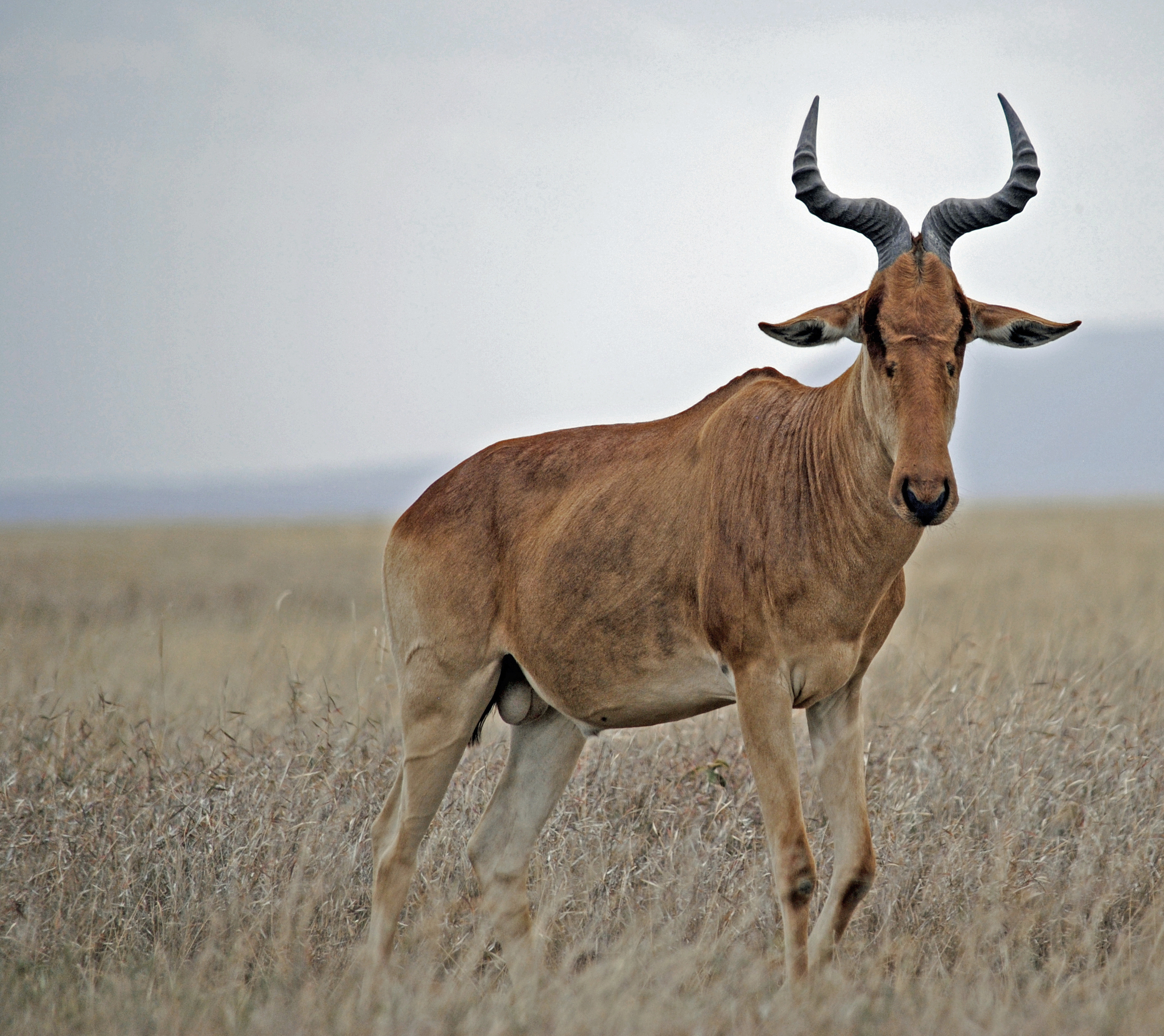
By contrast, in the western population, my impression has been that the horns have a relatively open curvature — the bracket is narrower, the pedicle more elevated, and the whole configuration tends towards an inverted V.
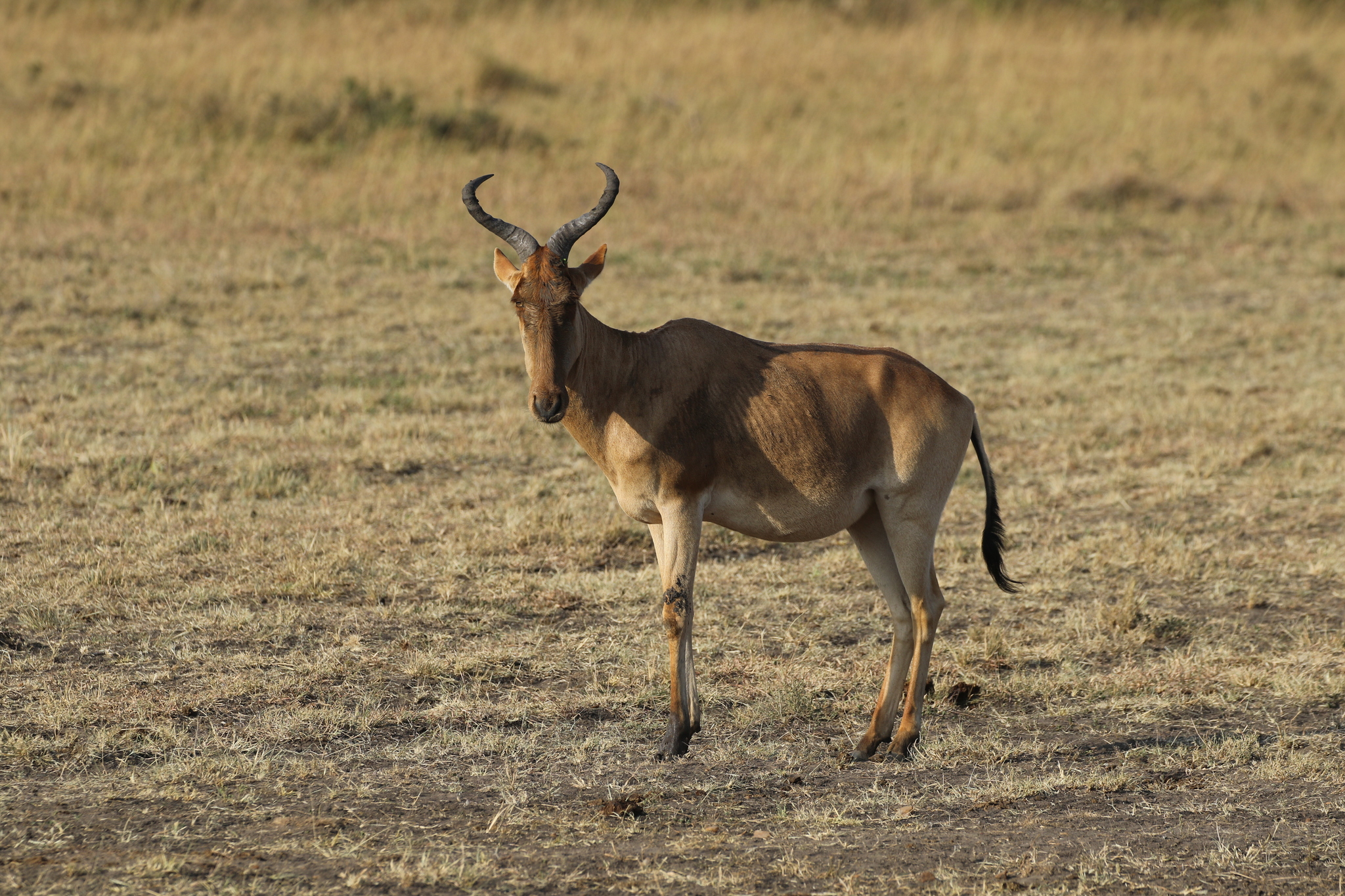
Photograph not reproduced here
This observation is published under CC BY-NC-ND, which does not permit reproduction here, so the image is linked instead.
View observation 362416997 on iNaturalist →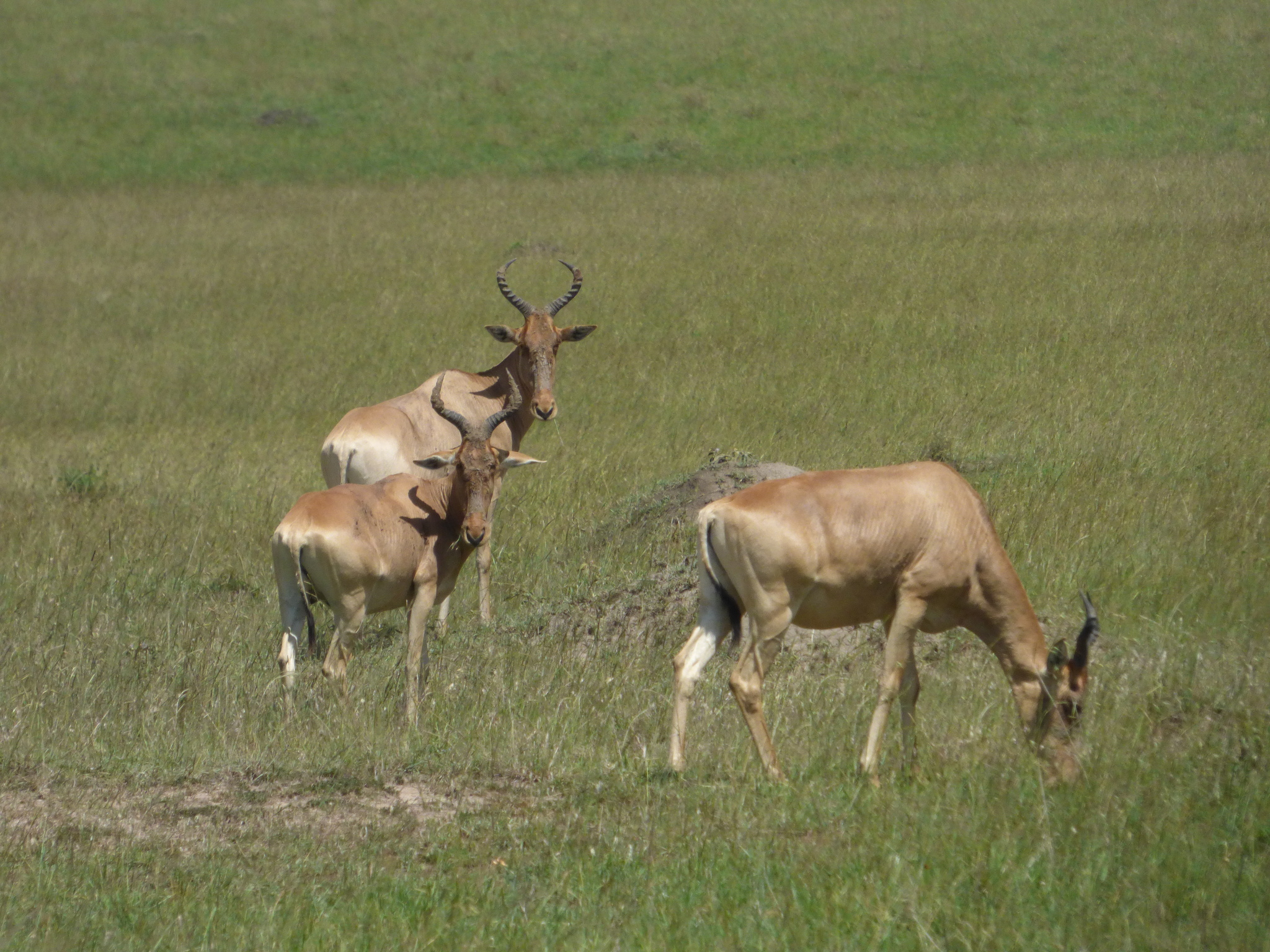
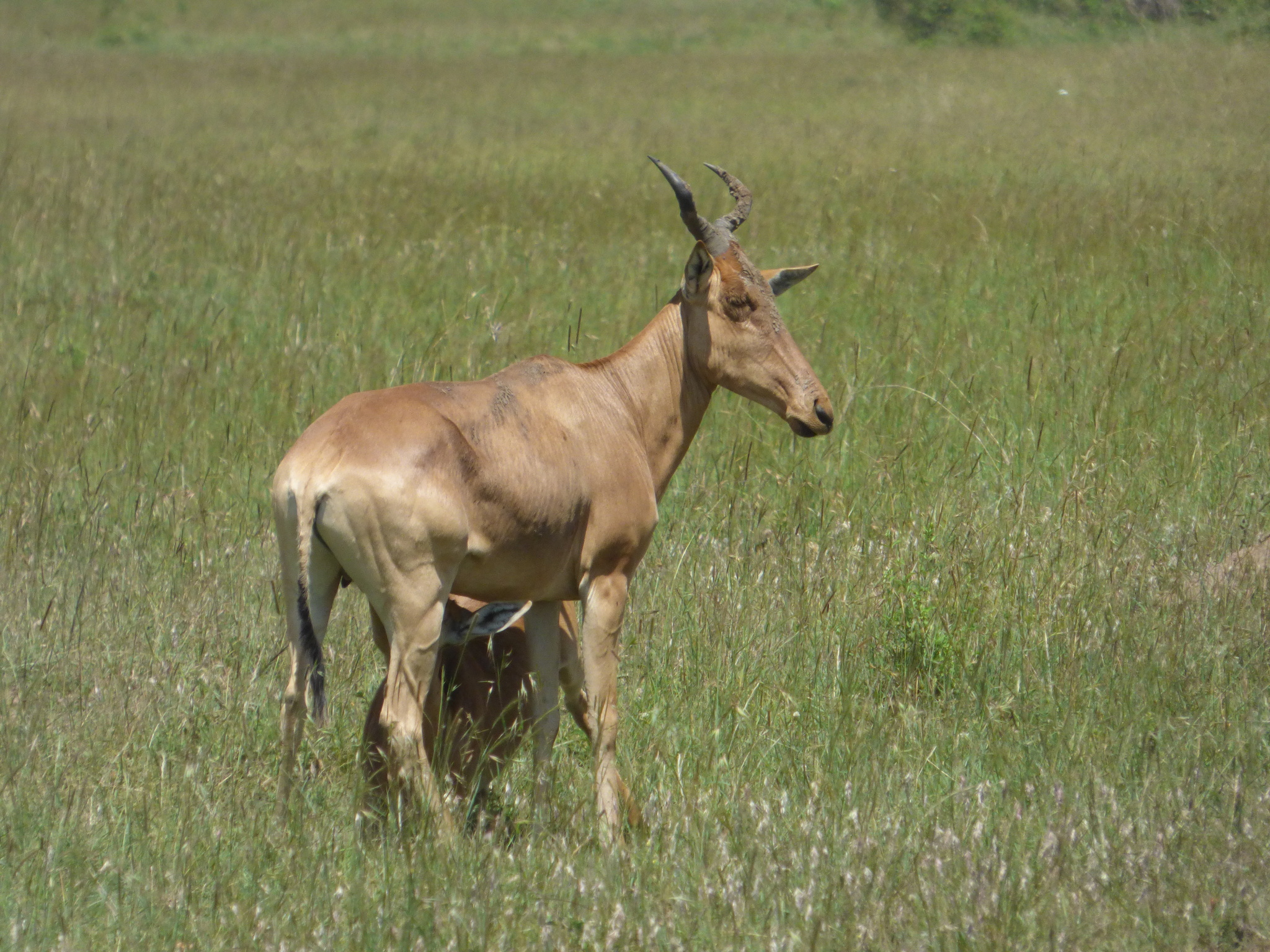
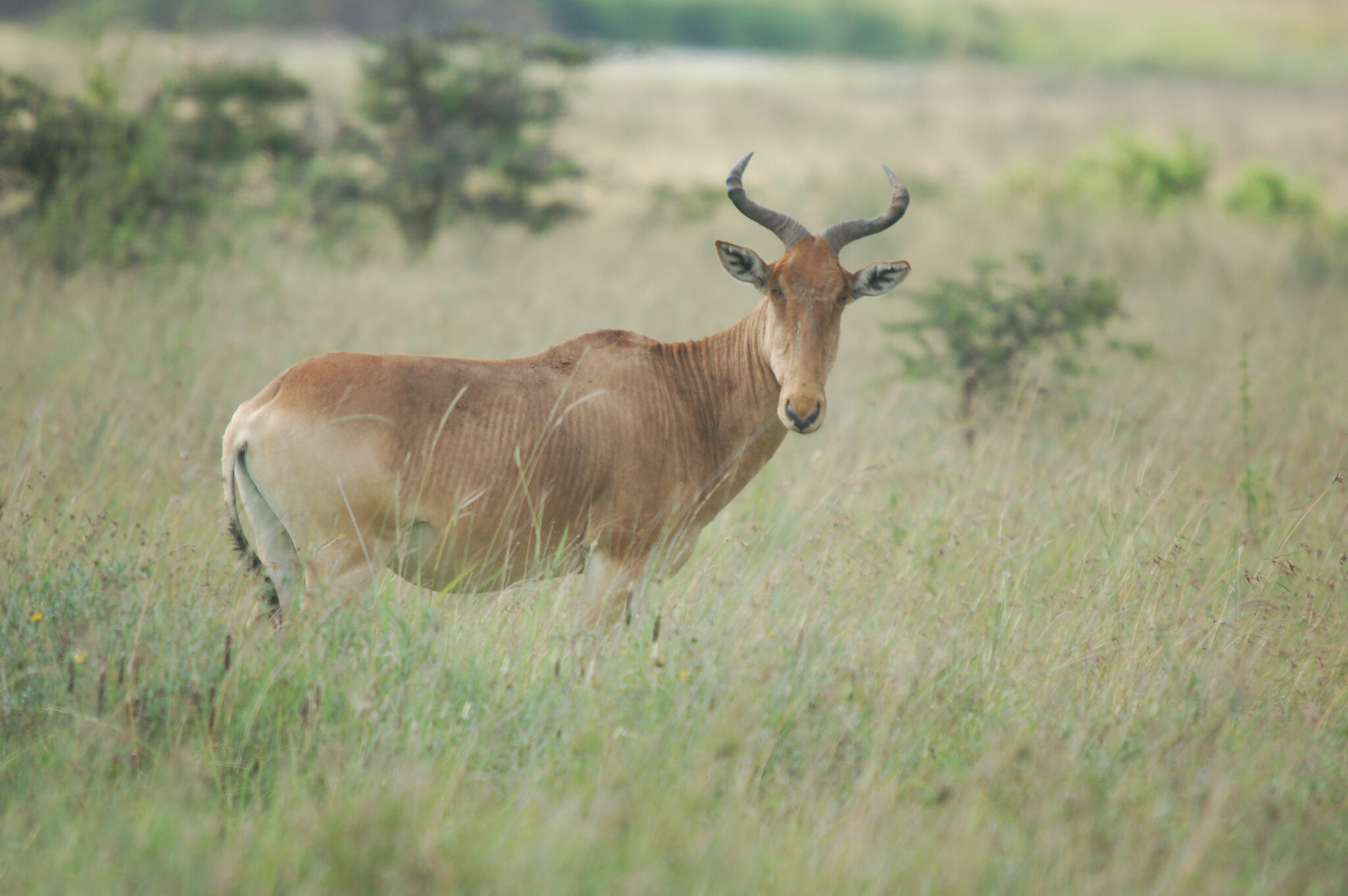
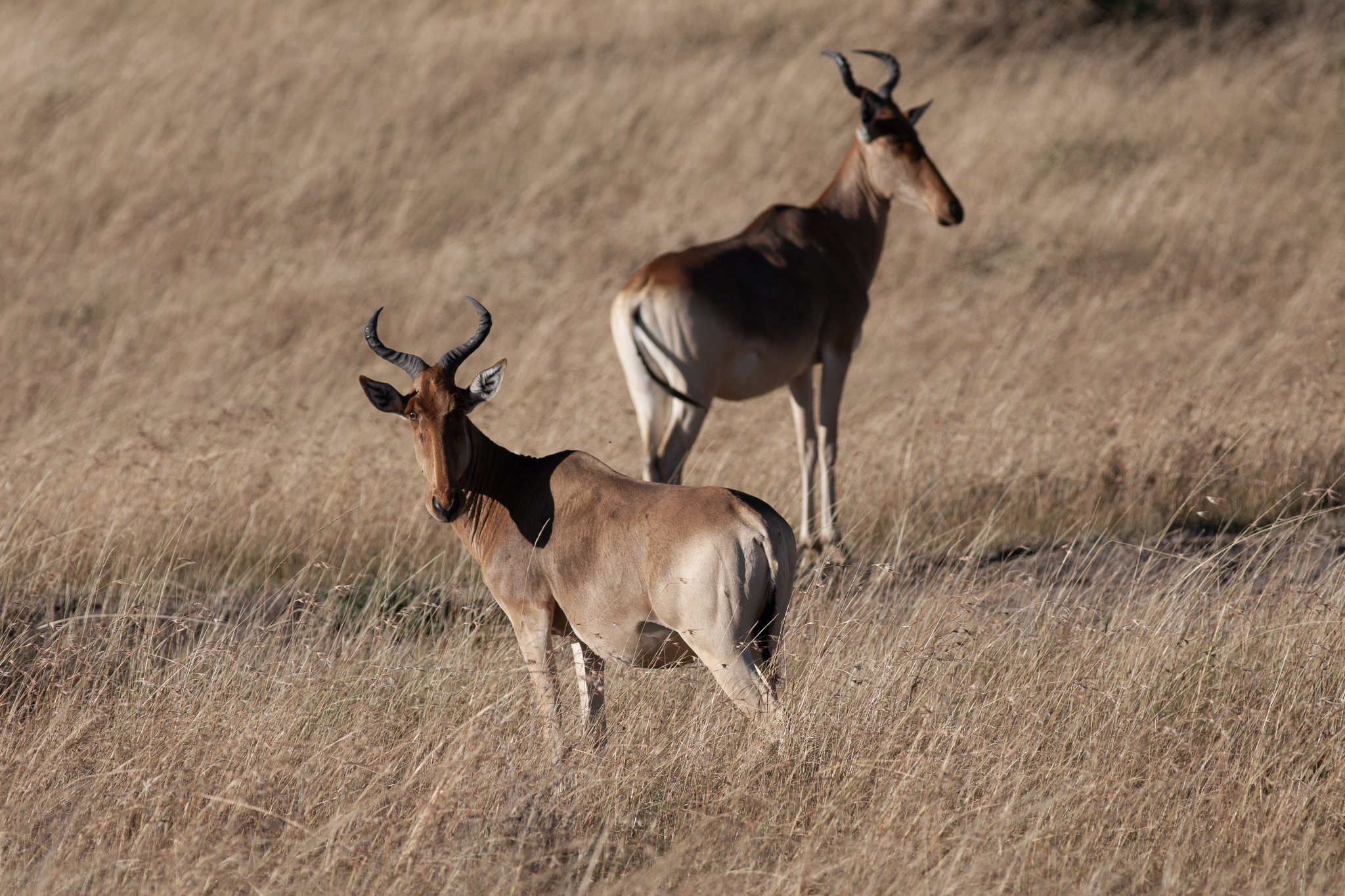
Photograph not reproduced here
This observation is published under all rights reserved, so the image is linked rather than embedded.
View observation 382281370 on iNaturalist →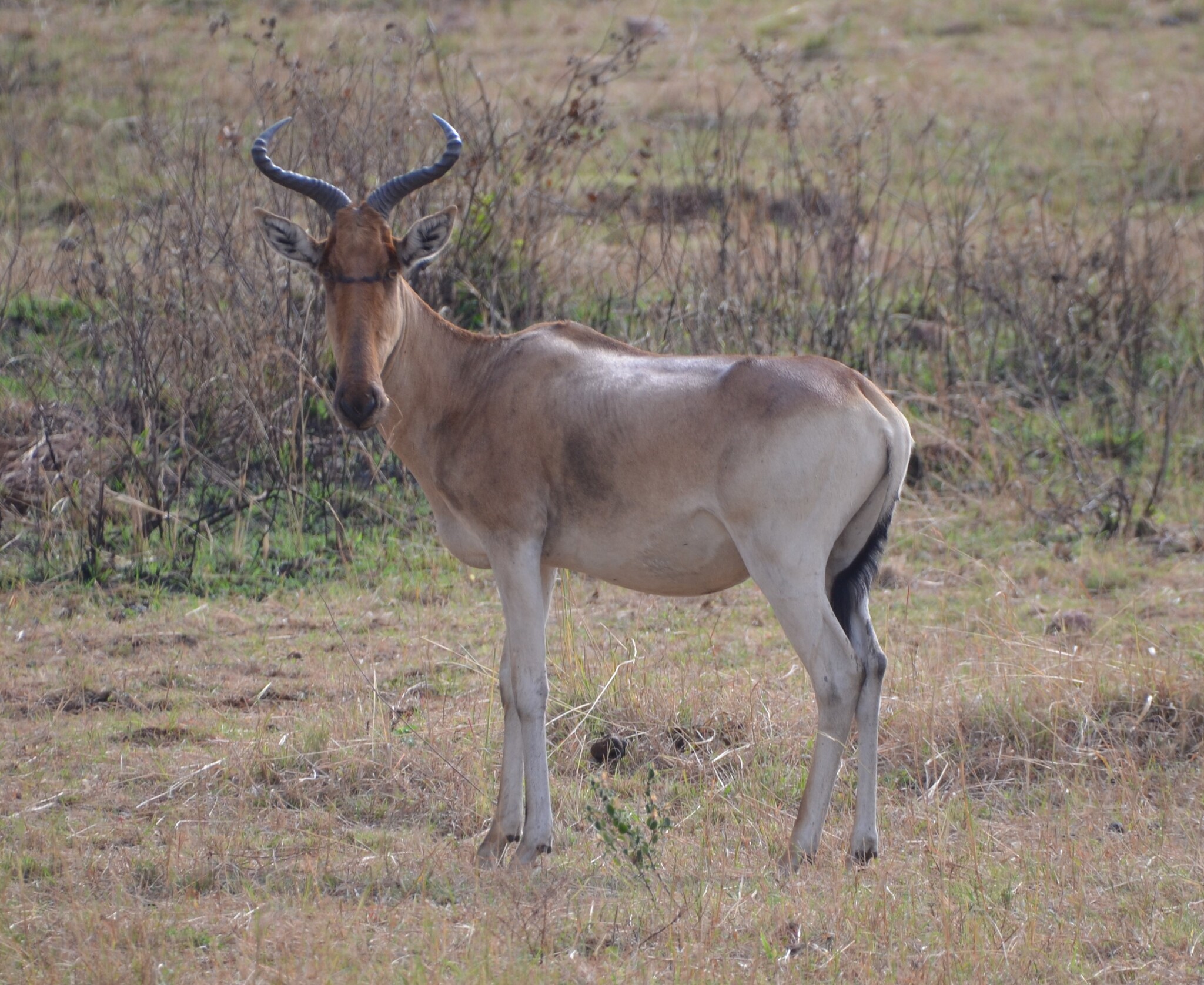
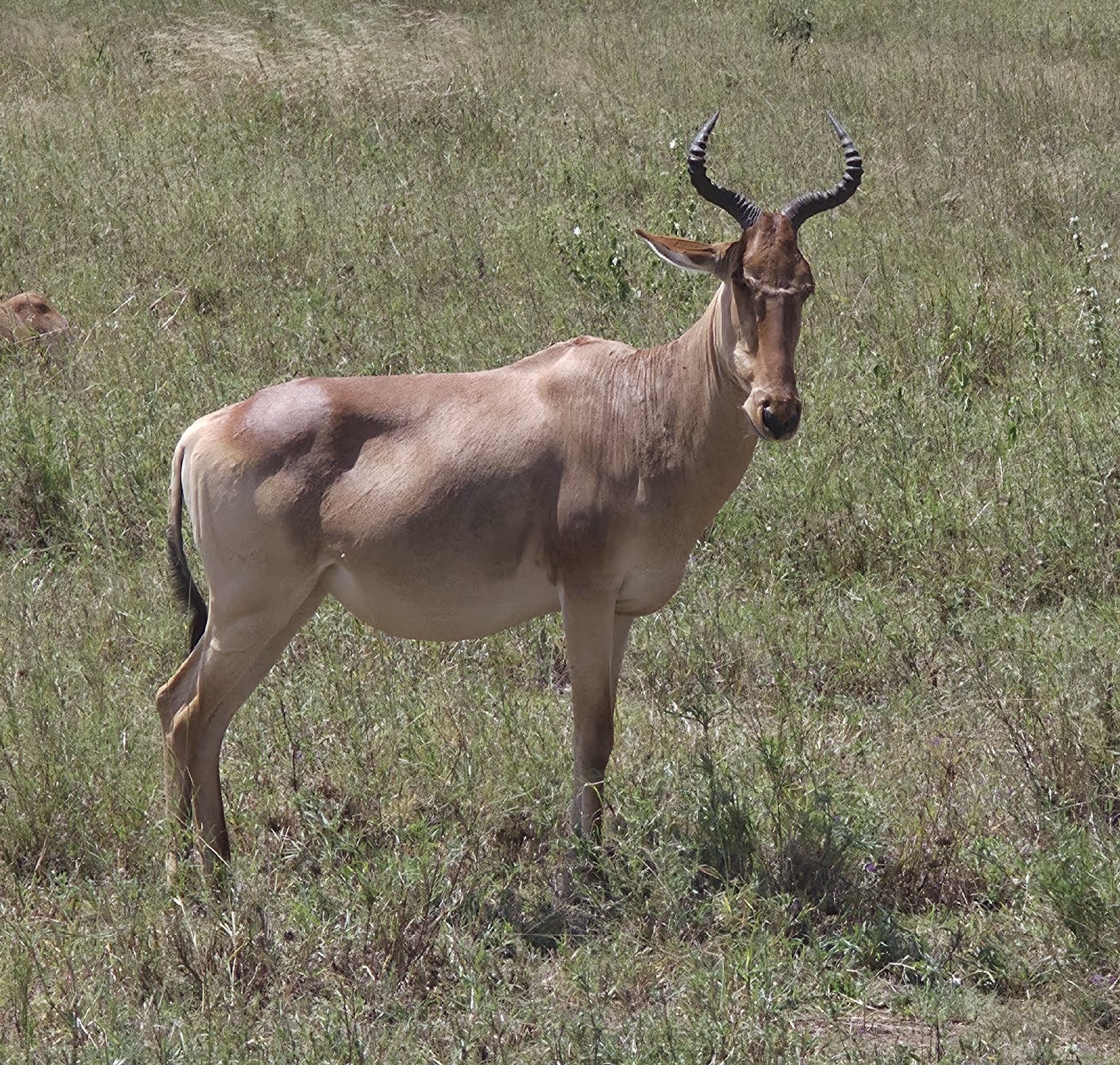
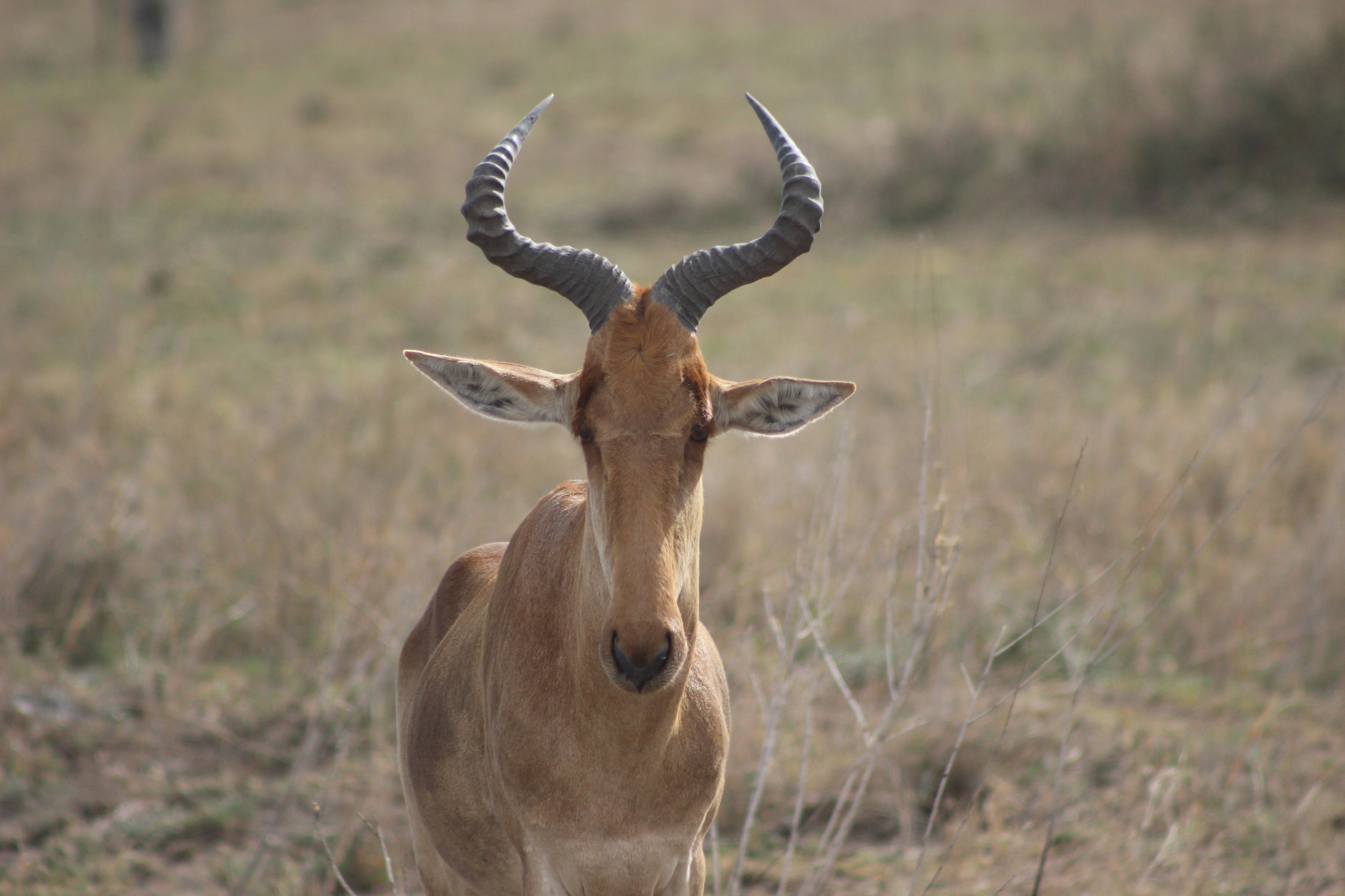
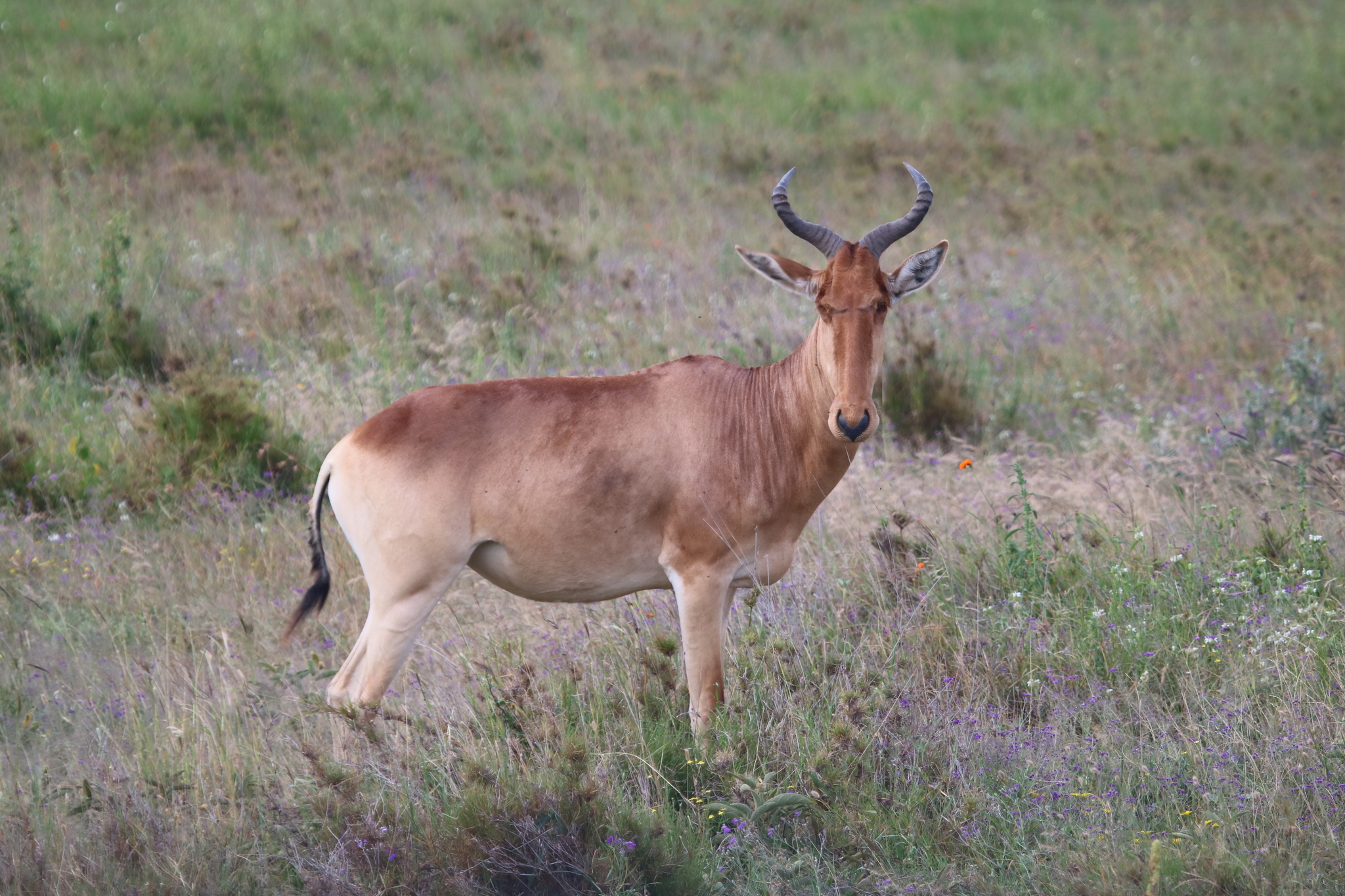
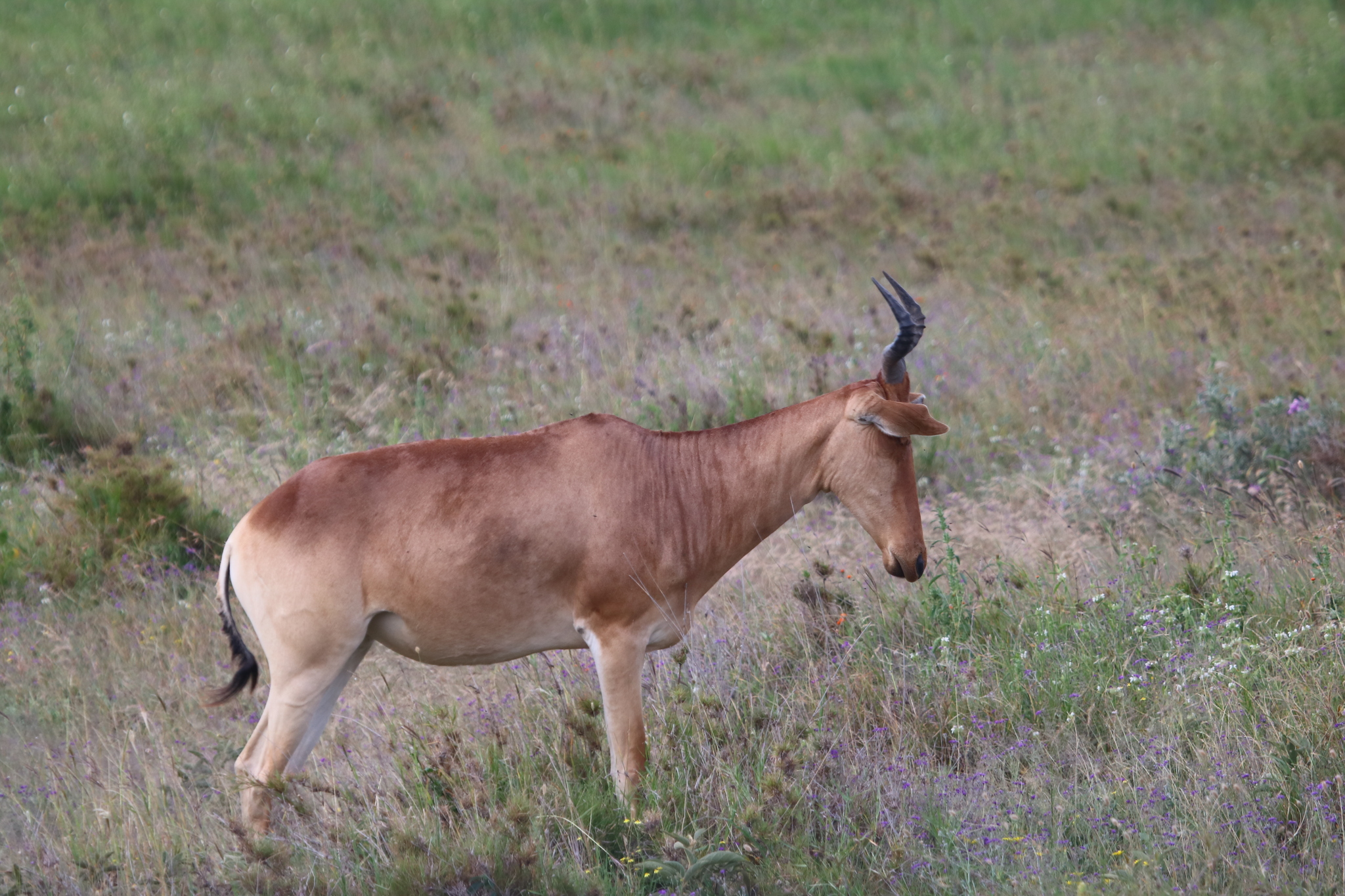
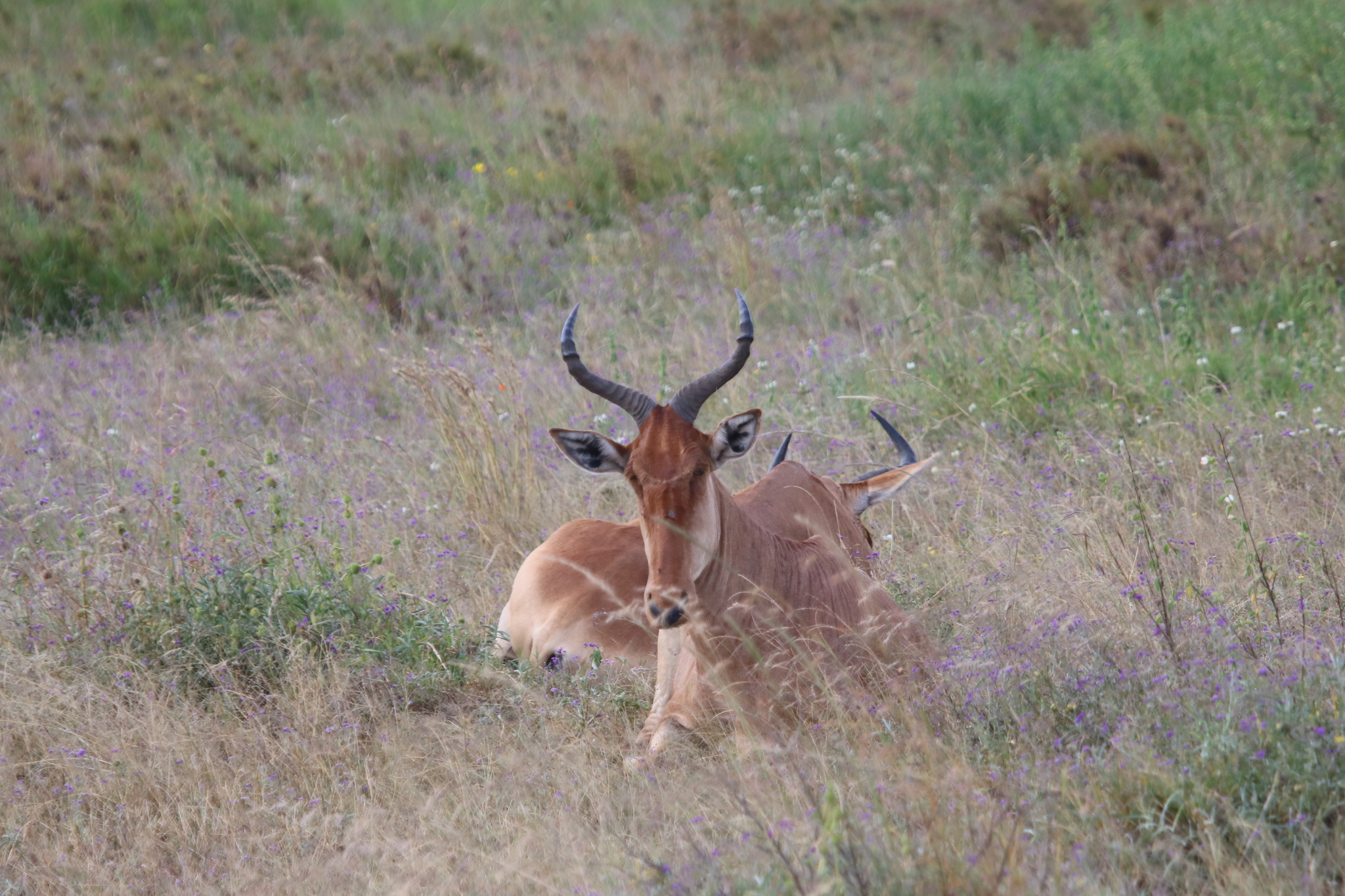
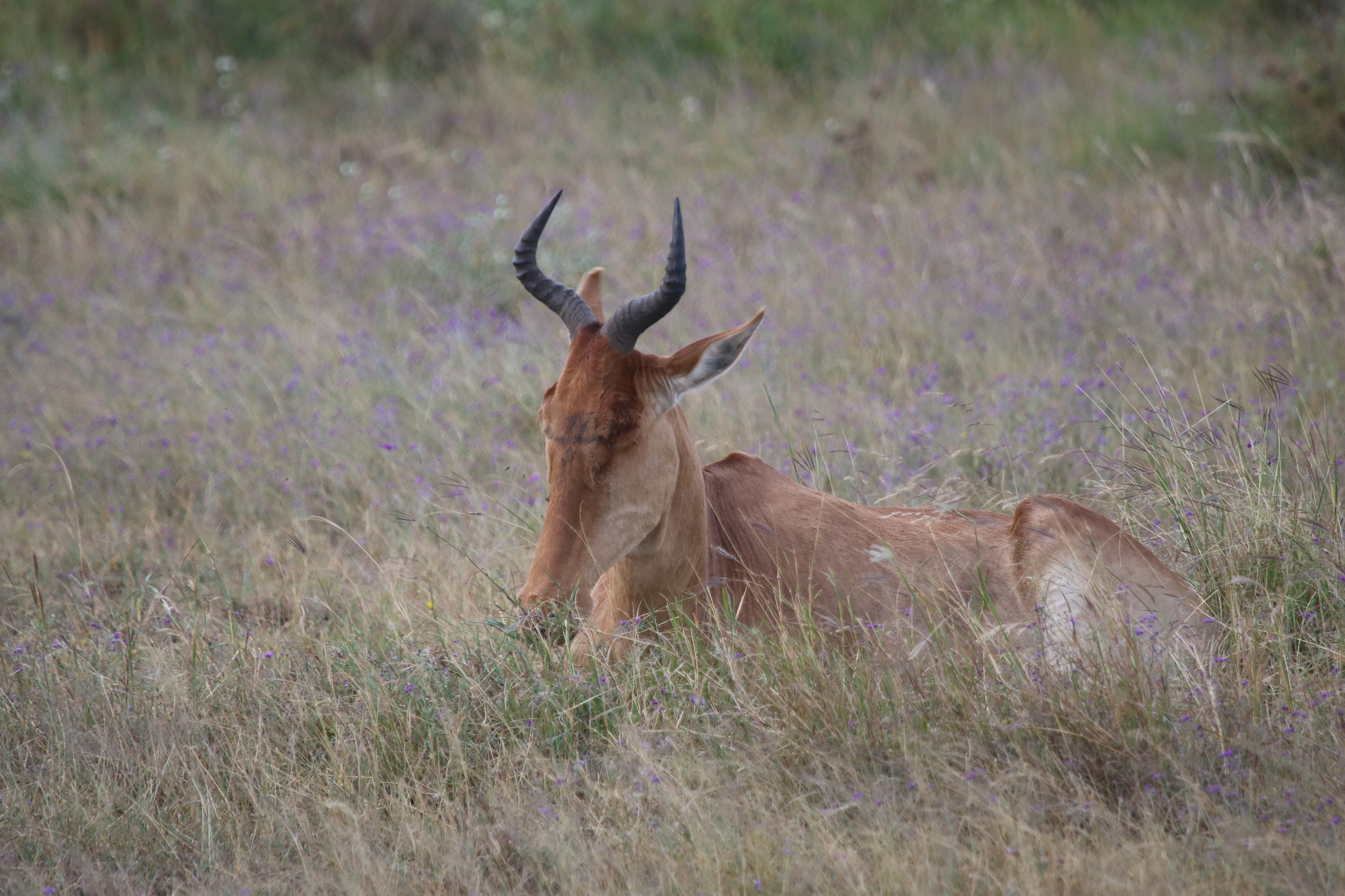
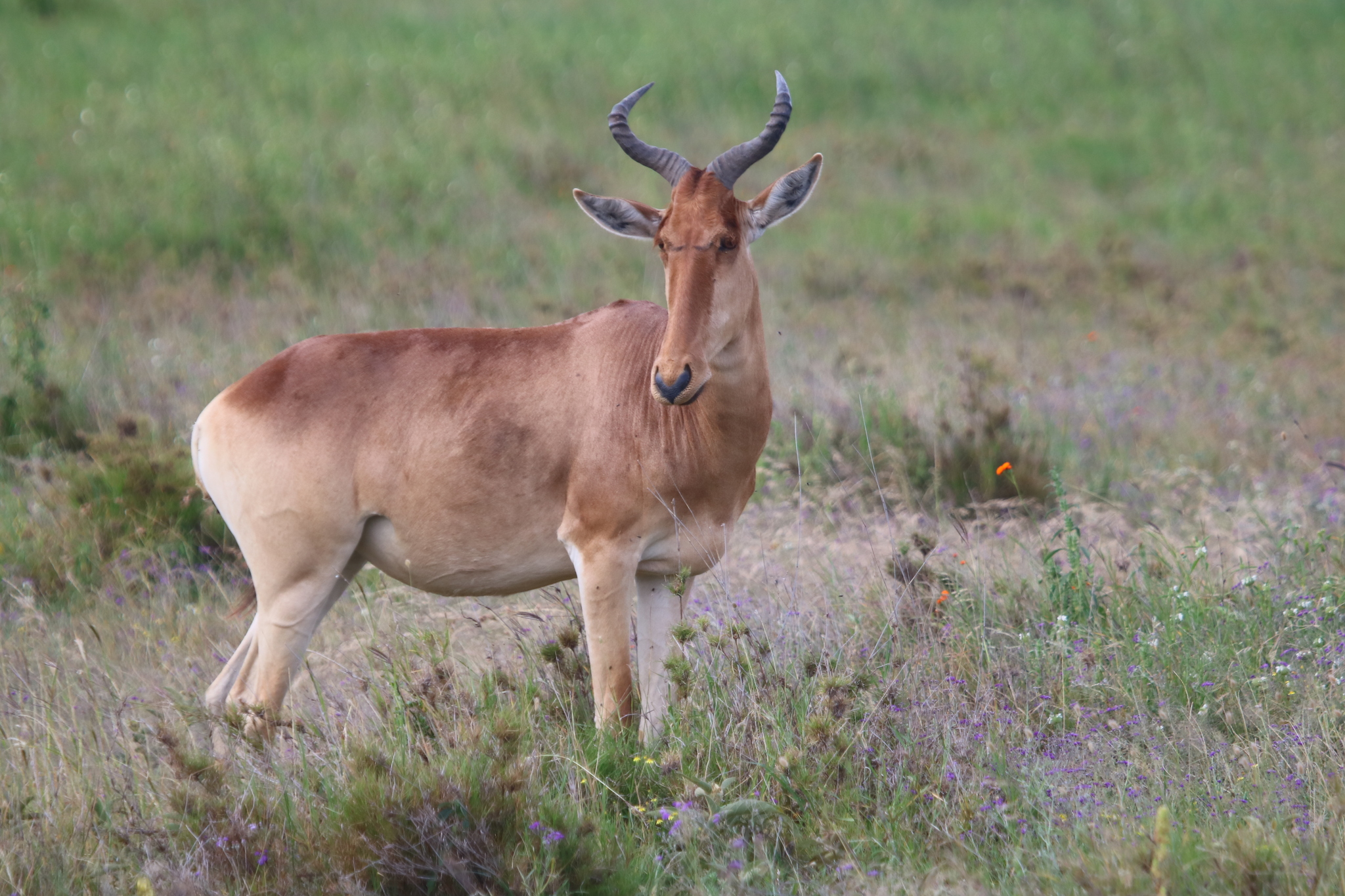
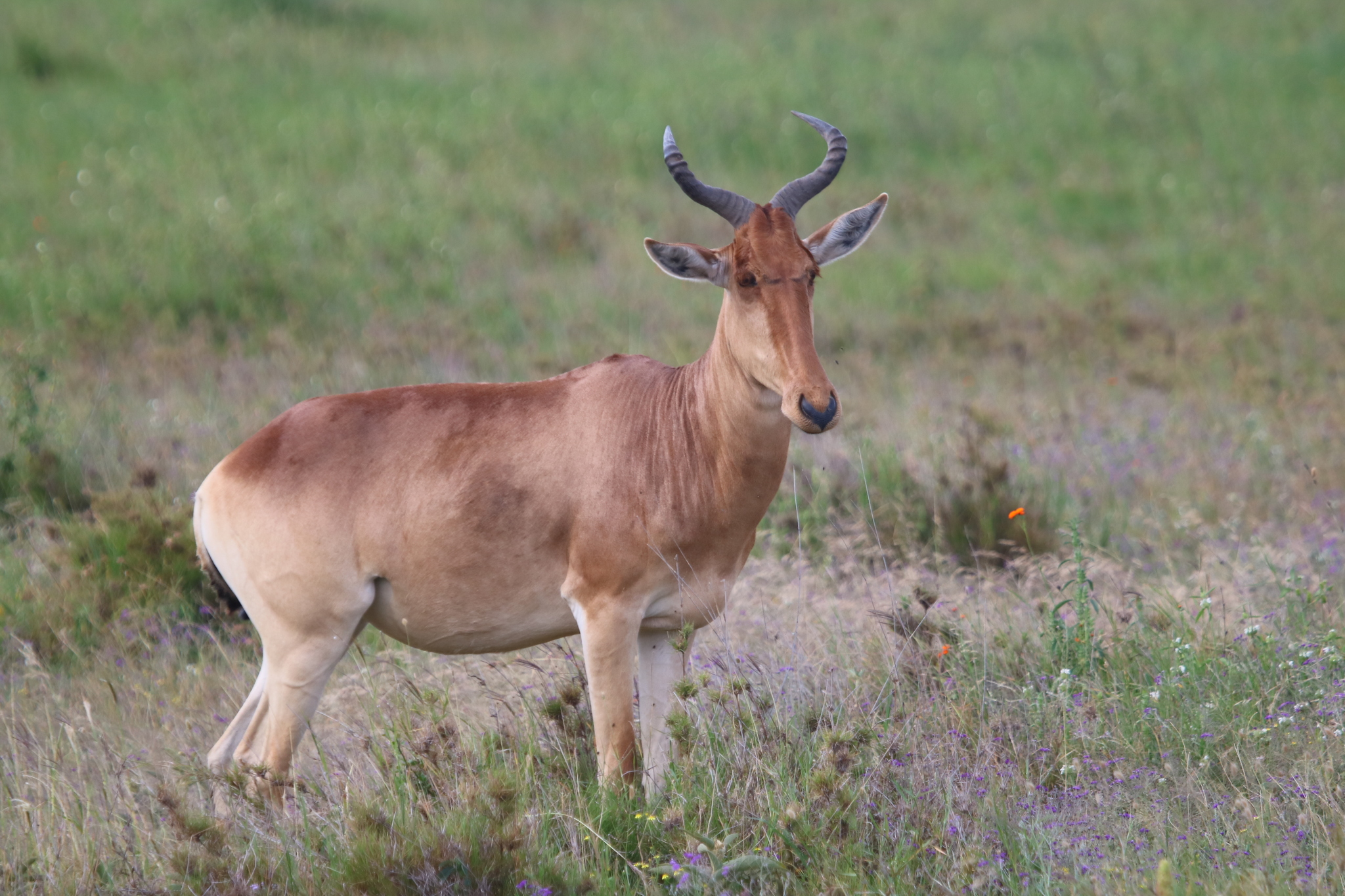
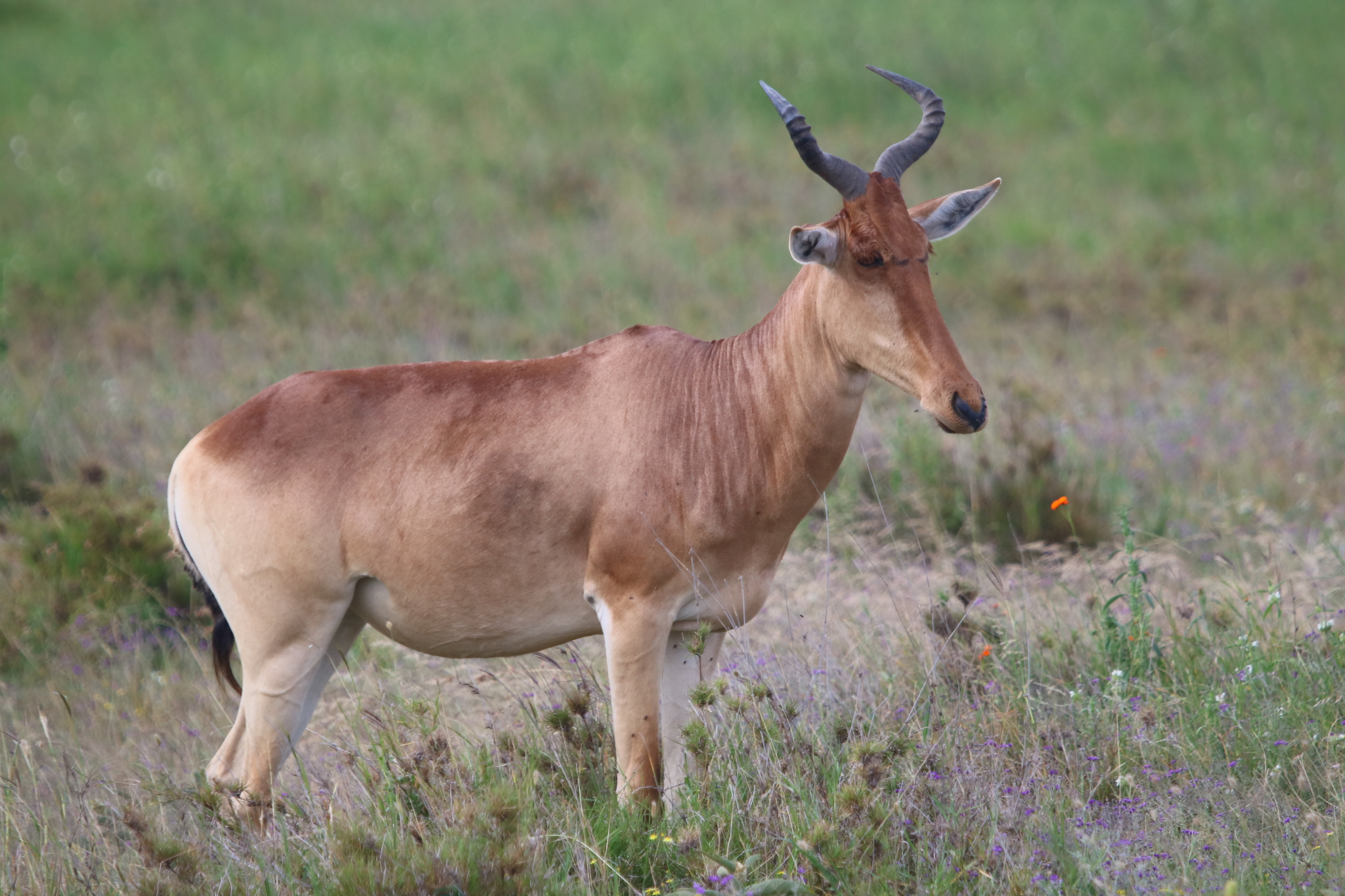
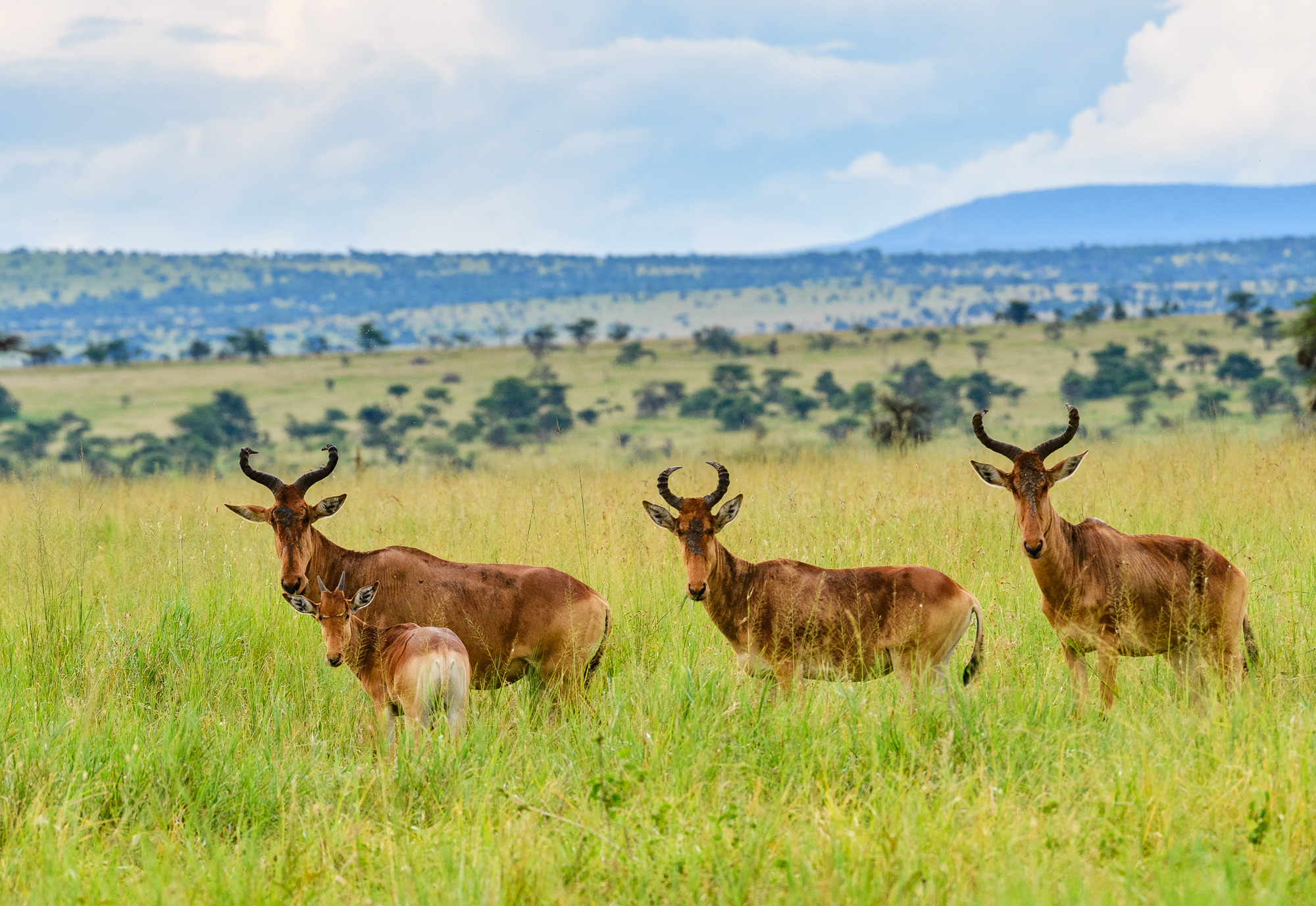
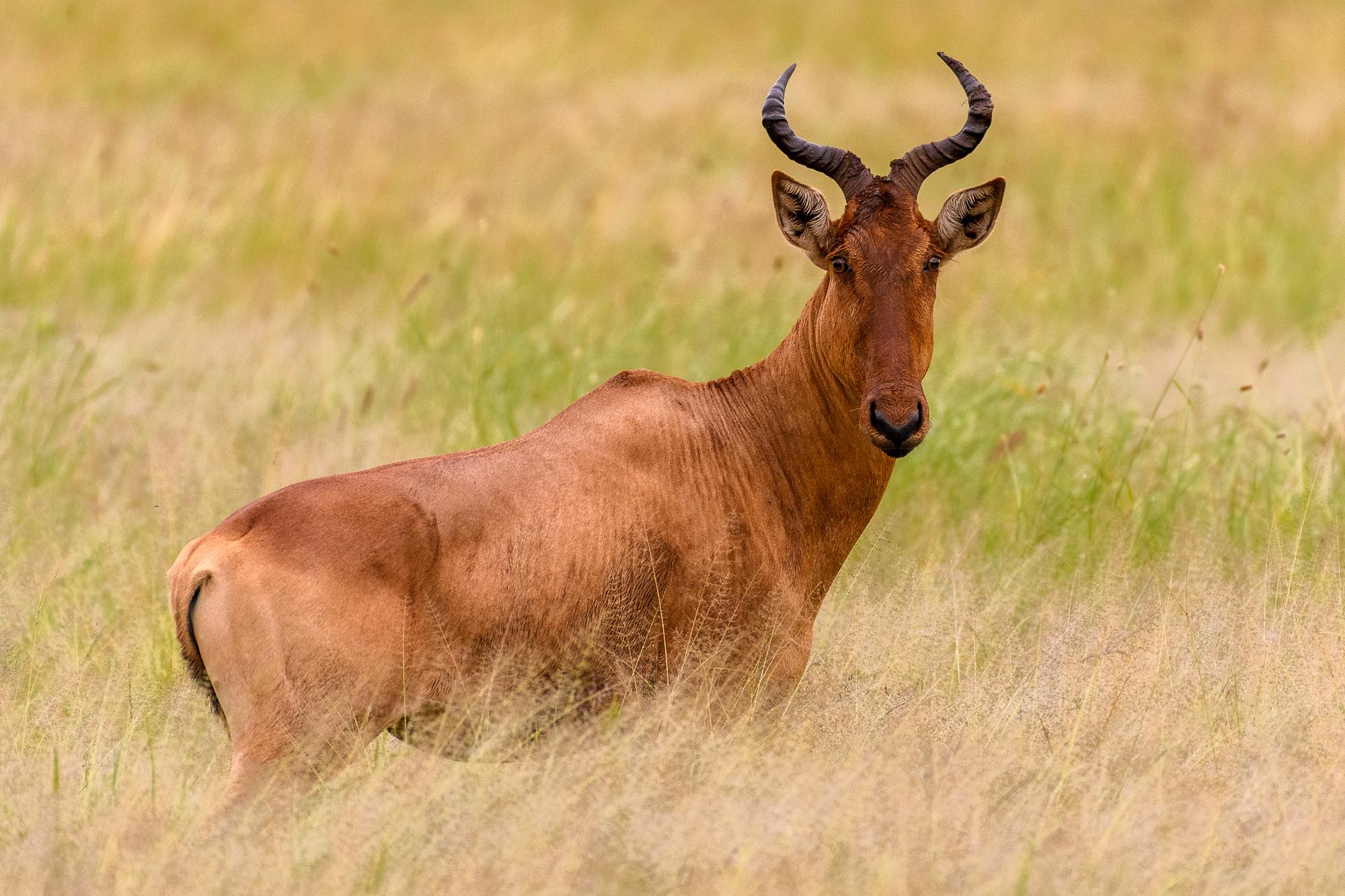
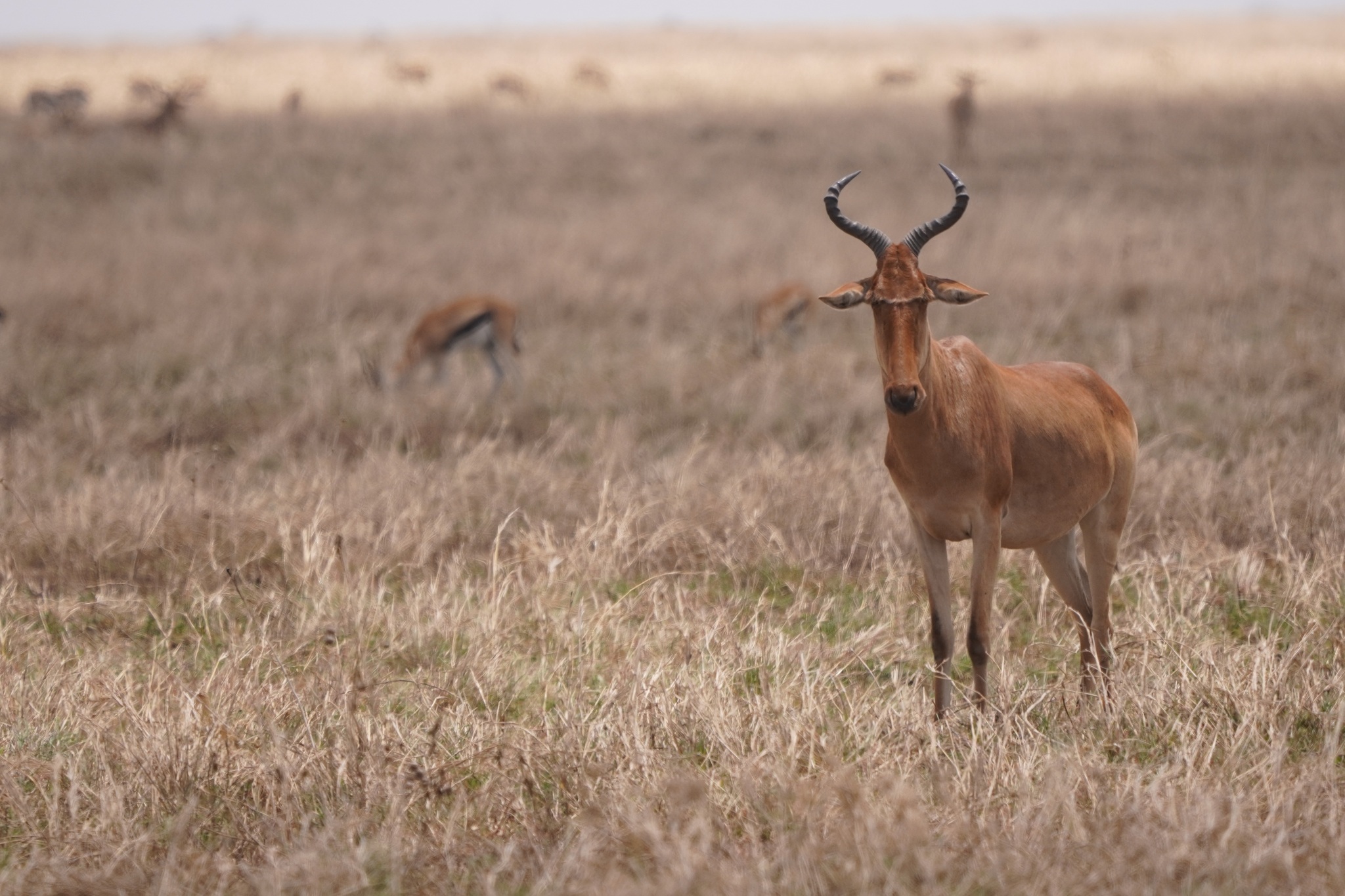
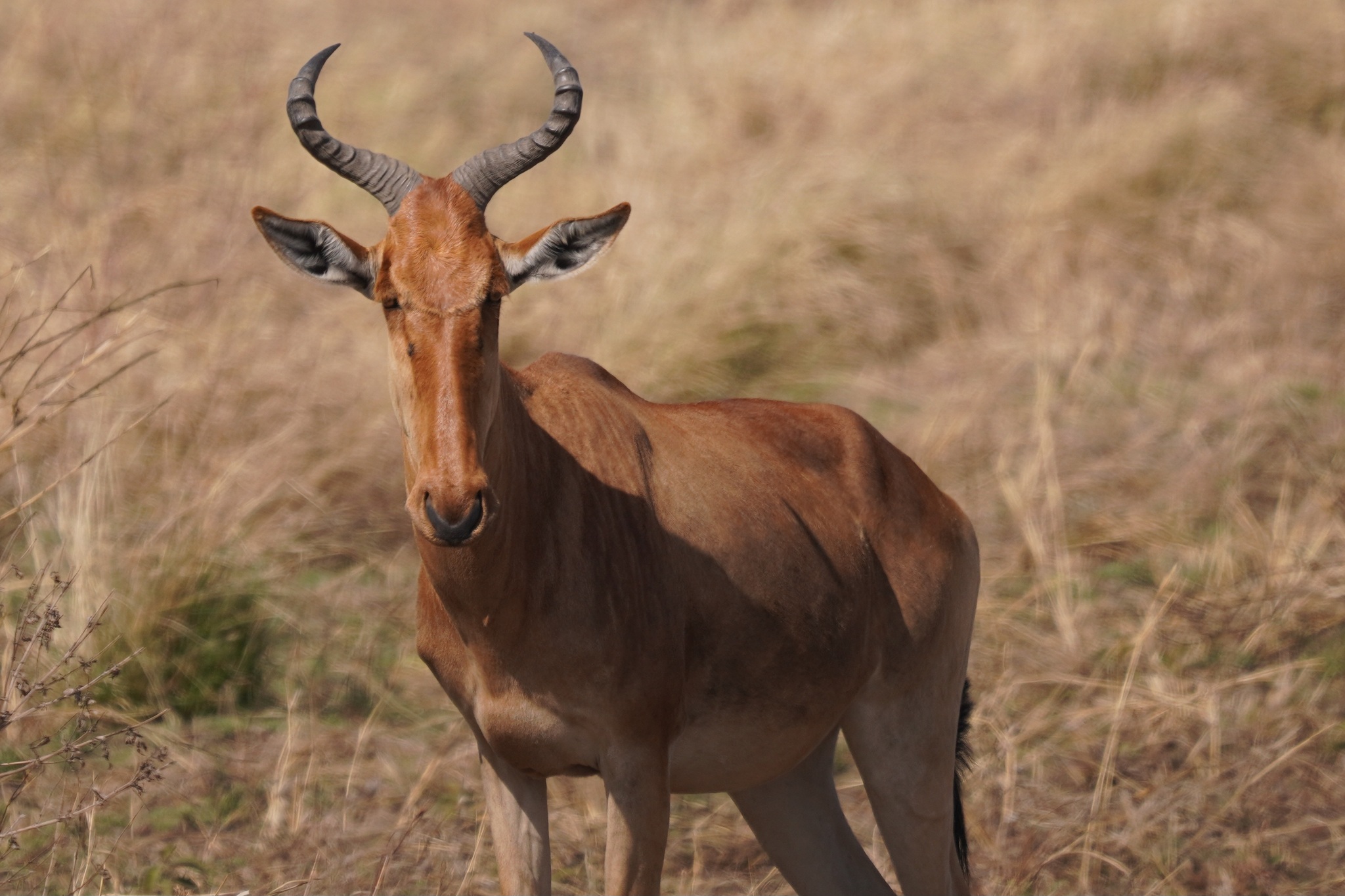
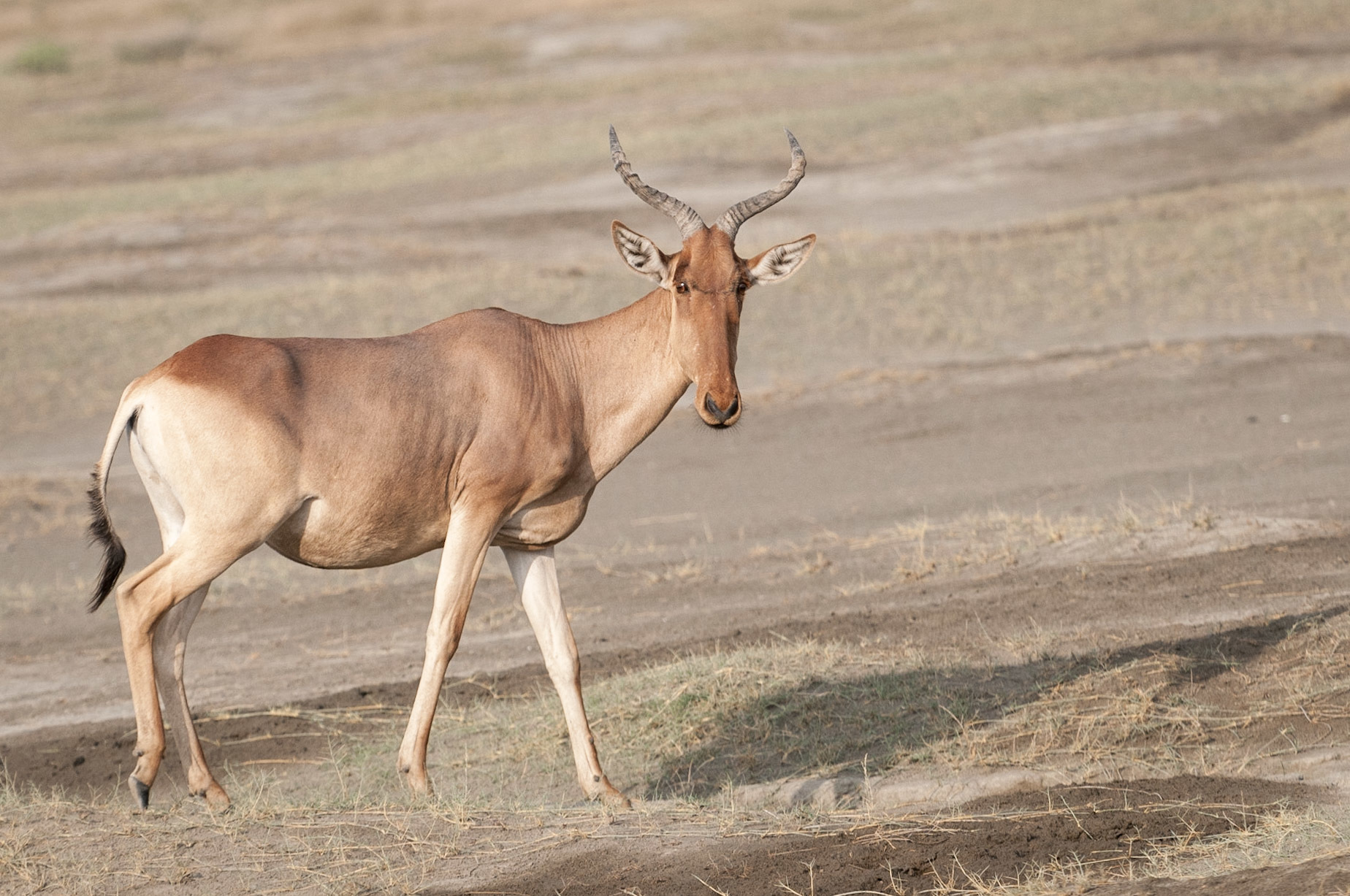
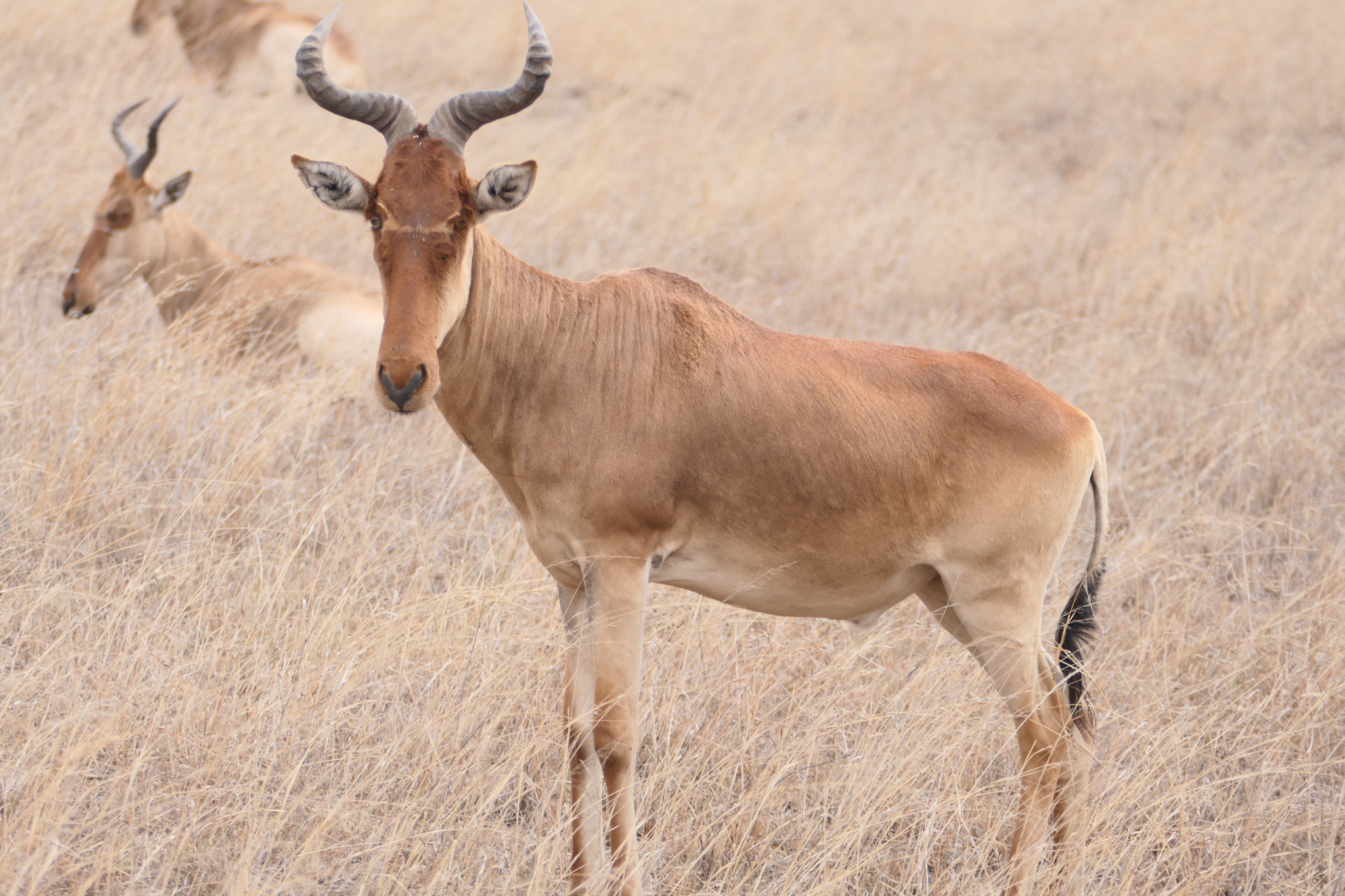
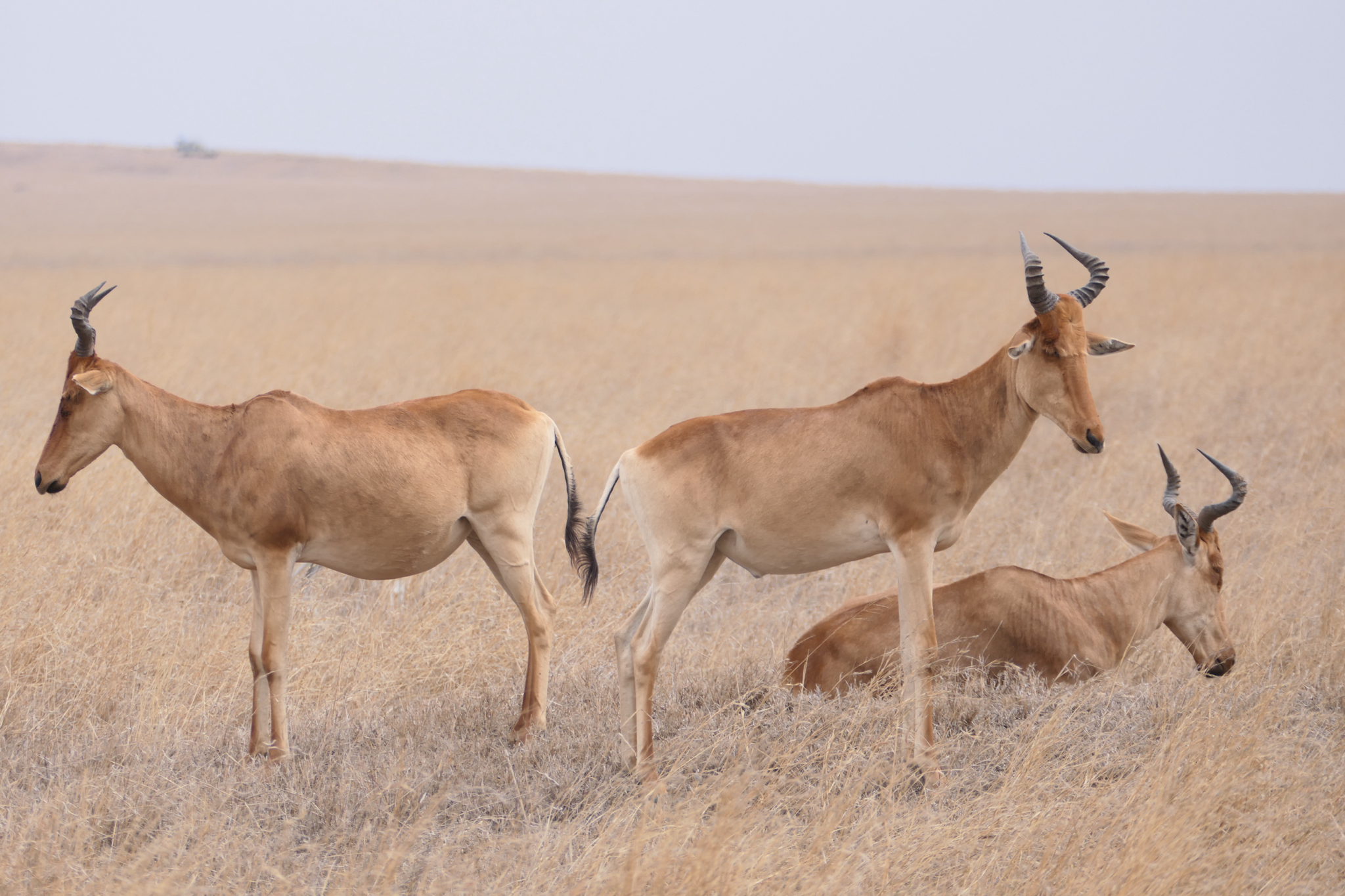
Western individuals resembling the eastern form
However, a minor percentage of individuals in the western population resemble the eastern population.
Photograph not reproduced here
This observation is published under all rights reserved, so the image is linked rather than embedded.
View observation 326351772 on iNaturalist →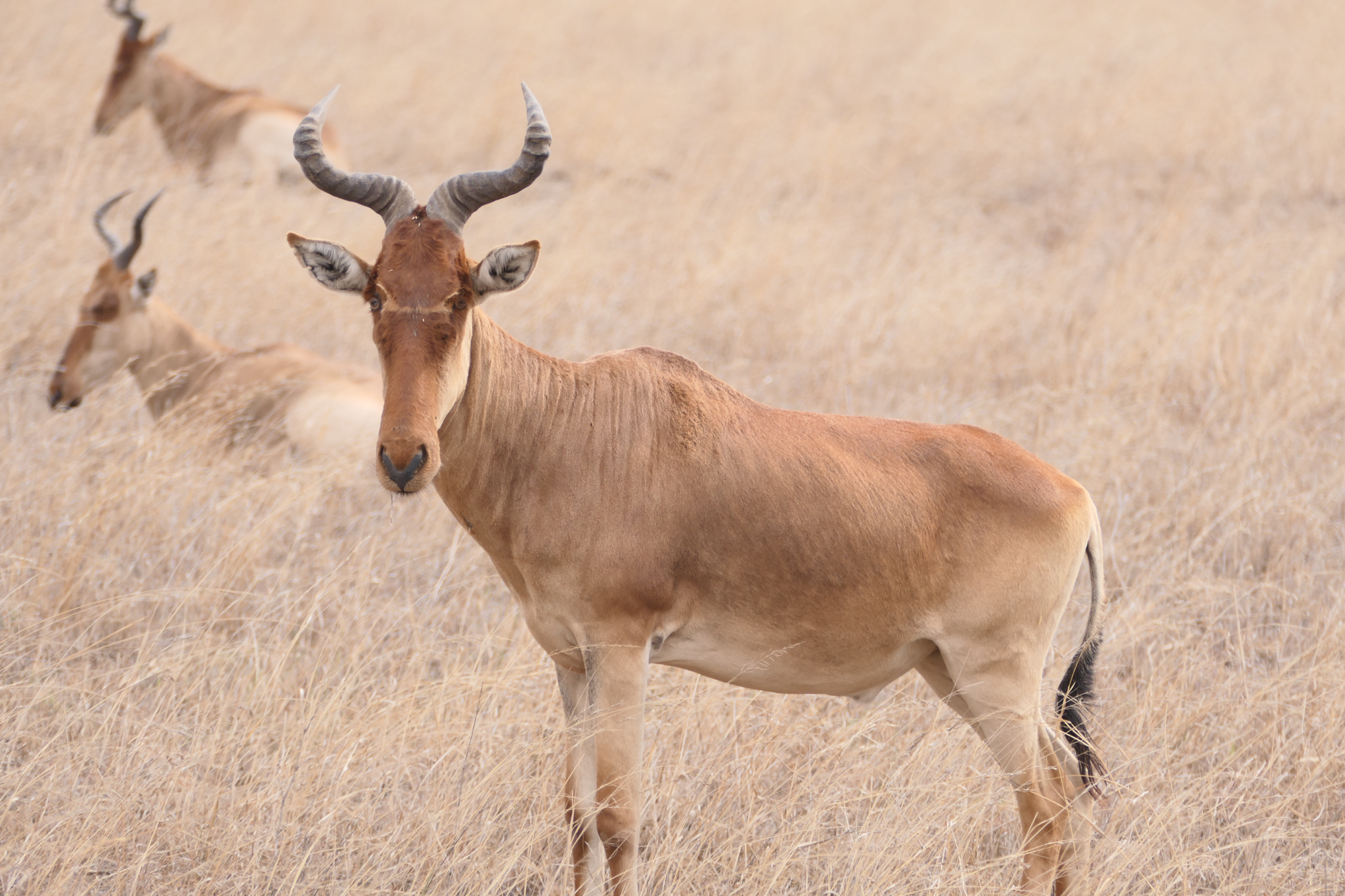
Photograph not reproduced here
This observation is published under all rights reserved, so the image is linked rather than embedded.
View observation 228580453 on iNaturalist →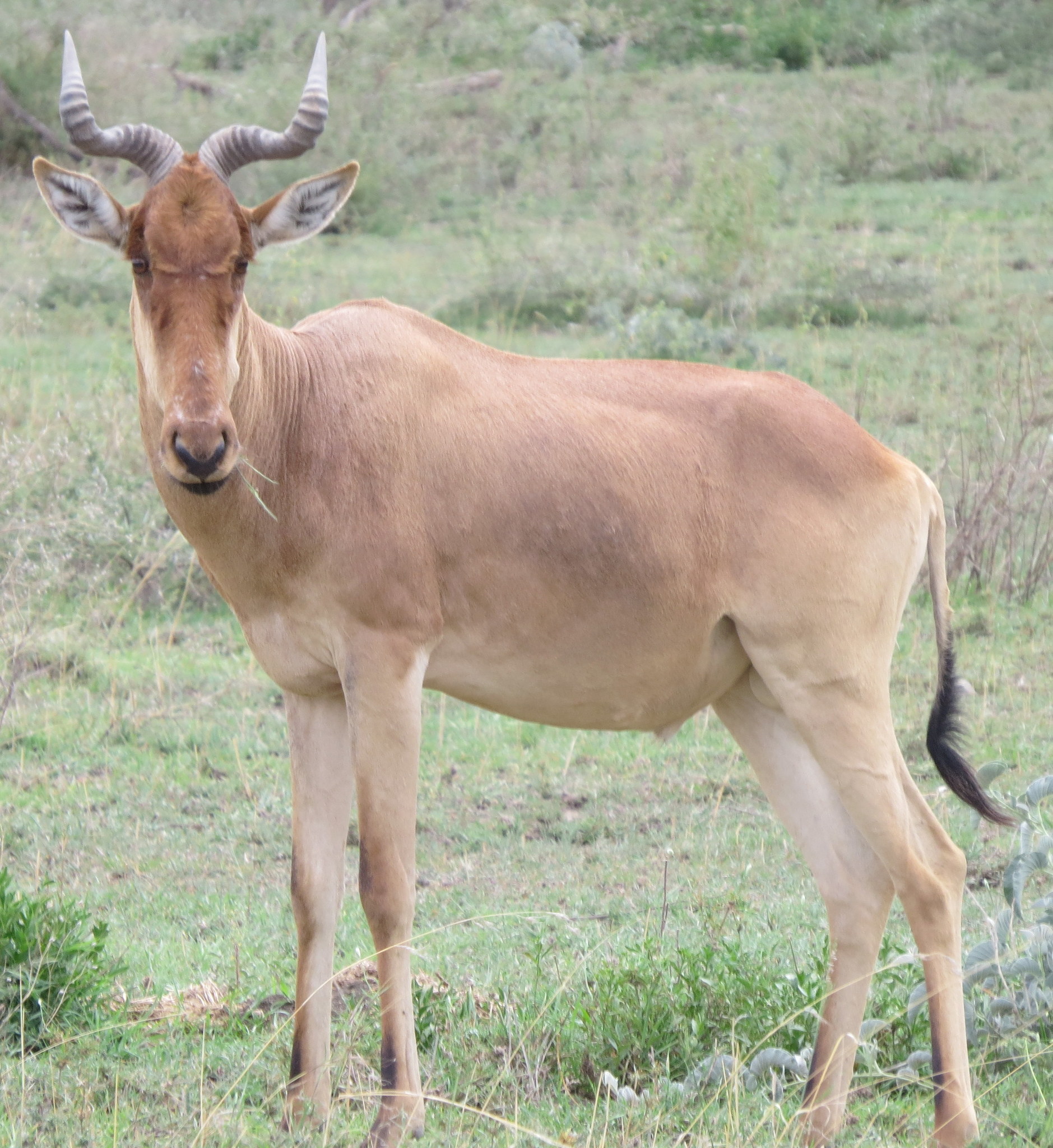
Discussion
In the Laikipia region of Kenya, the shape of the horns indicates hybridisation between A. cokii and a westerly congener, viz. Alcelaphus lelwel. This zone of ostensible hybridisation lies east, not west, of the Eastern Rift.
The shapes of the horns differ, progressively, from
- those of the Athi–Kapiti plains (horizontal), through
- those of the Serengeti ecosystem (somewhat upright), and
- those of the Laikipia region (mainly upright), to
- those of neighbouring Uganda (fully upright, and qualifying unambivalently as A. lelwel).
My interpretation, accordingly, is that the origin of the population of Alcelaphus in the Serengeti ecosystem is A. cokii with a slight admixture of A. lelwel.
Furthermore, I suggest that this warrants subspecies status for the western population of A. cokii, documented pictorially in this post.
Continued in part 2 below — or read it on iNaturalist.
Footnotes — transcripts from AI
The following are verbatim transcripts of answers returned by three AI systems to questions about the taxonomic history. They are reproduced as in the original post; the references they cite have not been independently verified and some are known to be unreliable.
ChatGPT
Q. Alcelaphus cokii differs in horn-shape between the Athi-Kapiti plains and the Serengeti ecosystem. Which authors have described this difference, and which subspecies names have been assigned accordingly? Supply full references.
The distinction between the Athi–Kapiti population of Coke’s hartebeest and that of the Serengeti has been recognized by a number of mammalogists, although not all regarded it as taxonomically significant. The principal difference concerns the shape and orientation of the horns. In general:
- Athi–Kapiti plains (Kenya): horns are shorter, heavier, and more strongly “bracket-shaped,” with the terminal points tending to turn inward and downward.
- Serengeti ecosystem (Tanzania): horns are generally more open, more lyrate, less strongly incurved, and often somewhat longer relative to skull size.
These differences form a geographical cline rather than a sharp discontinuity, and modern authors usually regard both populations as belonging to the same taxon, despite the consistent average difference. The principal authors are as follows.
H. A. Bryden (1899)
Bryden was probably the first author to comment explicitly that the hartebeest of British East Africa differed geographically. He remarked on variation in horn form between specimens from what are now Kenya and northern Tanzania, although he did not recognize separate subspecies.
Richard Lydekker (1908–1916)
Lydekker compared large museum series and illustrated horn variation. He recognized that the Kenya animals possessed the more compressed “bracket” horns, whereas animals from German East Africa (Serengeti region) tended to have a more spreading horn form. He nevertheless retained them within Alcelaphus cokii.
Theodore Roosevelt & Edmund Heller (1914)
While discussing East African collections, Roosevelt and Heller noted regional differences in horn conformation between the Athi Plains and the Tanganyika populations. They regarded the variation as geographical rather than specifically distinct.
Glover M. Allen (1939)
Allen summarized previous work and accepted the geographical variation while retaining all populations in A. buselaphus cokii.
Jonathan Kingdon
Kingdon discussed the difference in several editions of his East African mammal works. He emphasized that the Athi population has the classic heavy “Coke’s” horn shape; that Serengeti animals average a more open horn configuration; and that the variation intergrades across southern Kenya. He did not recommend recognition of separate subspecies.
Subspecies names applied
| Name | Type locality | Application |
|---|---|---|
| Alcelaphus cokii Günther, 1884 | Usagara, Tanzania | The standard name now applied to both Athi and Serengeti populations. |
| Alcelaphus buselaphus cokii | same | Traditional subspecific combination used throughout the twentieth century. |
| Alcelaphus cokii kongoni Matschie, 1892 | southern Kenya | Applied by some early authors to Kenyan populations with the heavier bracket-shaped horns; now considered a synonym of A. cokii. |
No subspecies restricted specifically to the Serengeti has gained lasting acceptance. Although some early workers informally separated the Athi and Serengeti populations on horn characters, later authors concluded that the differences are clinal and that there is continuous intergradation across southern Kenya into northern Tanzania. Accordingly, modern authorities — including Colin P. Groves & Peter Grubb, the IUCN, and the Illustrated Checklist of the Mammals of the World — treat both the Athi–Kapiti and Serengeti populations as a single taxon, Alcelaphus cokii.
References
- Bryden, H. A. (1899). Great and Small Game of Africa. London: Rowland Ward.
- Lydekker, R. (1908). The Game Animals of Africa. London: Rowland Ward.
- Lydekker, R. (1914–1916). Catalogue of the Ungulate Mammals in the British Museum (Natural History). Vols. 1–5. London: BM(NH).
- Roosevelt, T., & Heller, E. (1914). Life-Histories of African Game Animals. Vol. II. Washington, D.C.: Smithsonian Institution.
- Allen, G. M. (1939). A Checklist of African Mammals. Bulletin of the Museum of Comparative Zoology, 83, 1–763.
- Kingdon, J. (1982). East African Mammals: An Atlas of Evolution in Africa. London: Academic Press.
- Kingdon, J. (2015). The Kingdon Field Guide to African Mammals. London: Bloomsbury.
Gemini
Q. Alcelaphus cokii differs in horn-shape between the Athi-Kapiti plains and the Serengeti ecosystem. Which authors have described this difference, and which subspecies names have been assigned accordingly? Supply full references.
The geographic variation in horn morphology of Coke’s hartebeest between the Athi-Kapiti Plains of Kenya and the southern/western ranges extending into the Mara–Serengeti ecosystem has been documented by early 20th-century mammalogists and subsequent taxonomic reviewers.
Edmund Heller (1912); Roosevelt & Heller (1914)
Subspecies assigned: Bubalis cokii sabakiensis Heller, 1912 (for the Athi-Kapiti / Machakos population) vs. nominal Bubalis cokii cokii Günther, 1884.
Heller distinguished the Athi and Kapiti Plains population (sabakiensis, type locality Villa Machakos / Athi Plains) from typical coastal/Taita cokii and southern/western rift populations based on horn angle and bracket shape:
- Athi-Kapiti (sabakiensis): horns display a wider spread with pedicles that are shorter and flatter, and horn tips that turn sharply inward and backward at a lower angle.
- Serengeti / Mara / rift-margin populations: moving south-west toward the Mara–Serengeti ecosystem, horn morphology transitions — the pedicle becomes more elevated and the bracket formed by the horn bases becomes narrower and more inverted-V-shaped, reflecting clinal intergradation toward Jackson’s hartebeest, A. buselaphus jacksoni.
A. E. Ruxton & Ernst Schwarz (1929)
Ruxton and Schwarz evaluated the extensive horn variation across Kenya and Tanganyika. They demonstrated that the differences noted between Athi-Kapiti and Serengeti/Mara populations represented continuous clinal variation and hybrid zones rather than distinct stable subspecies. They synonymized Bubalis cokii sabakiensis Heller, 1912 under A. buselaphus cokii, while categorizing the intermediate horn forms along the Serengeti–Mara margins as hybrid swarms between A. b. cokii and A. b. jacksoni (previously named Bubalis nakurae Heller, 1912).
Colin Groves & Peter Grubb (2011)
Re-evaluated the morphometrics and horn architecture of the Alcelaphus group. They noted the localized divergence in horn width and pedicle height between northern Tanzanian/Serengeti populations and central Kenyan (Athi-Kapiti) populations, treating cokii as a full species while treating named forms such as sabakiensis as local morphotypes or synonyms.
References
- Günther, A. (1884). Note on Bubalis cokii. Annals and Magazine of Natural History, (5) 14(84), 425–426.
- Heller, E. (1912). New African Ungulates. Smithsonian Miscellaneous Collections, 60(8), 1–16.
- Roosevelt, T., & Heller, E. (1914). Life-Histories of African Game Animals. New York: Charles Scribner’s Sons. 2 vols.
- Ruxton, A. E., & Schwarz, E. (1929). On Hybrid Hartebeests. Proceedings of the Zoological Society of London, 99(3), 567–583.
- Groves, C., & Grubb, P. (2011). Ungulate Taxonomy. Baltimore: Johns Hopkins University Press.
Grok
Q. Alcelaphus cokii differs in horn-shape between the Athi-Kapiti plains and the Serengeti ecosystem. What is the difference, which authors have described this difference, and which subspecies names have been assigned accordingly? Supply full references.
In early 20th-century taxonomy, multiple local “races” of Coke’s hartebeest were named on the basis of horn morphology. Two of the most relevant are:
- Bubalis cokei sabakiensis Zukowsky, 1914 — type locality Athi Plains, Kenya.
- Bubalis cokei schulzi Zukowsky, 1914 — type locality Olossirva Plateau, about 10 km north-east of Ngorongoro Crater, Tanzania.
Horn-shape difference, as described by Zukowsky
- sabakiensis (Athi-Kapiti): horns relatively large but not especially robust. The middle section is bent distinctly forward, giving the horns a relatively low stance relative to the skull. The tips are straight and parallel, or only slightly directed inward.
- schulzi (Serengeti / Ngorongoro): a comparatively long and broad basal section of rounded, even form, narrowing abruptly into a weaker middle section that bends only slightly forward, followed by a sharp but rounded kink into a weak tip standing at roughly 75° to the middle section and directed somewhat inward. Zukowsky stated he had not seen this configuration in some 150 other specimens. Relative to sabakiensis, schulzi has a more strongly developed basal section, a weaker middle section, and a smaller angle between middle section and tip; it was also said to be larger-bodied with a particularly heavy head.
These distinctions form part of a broader set of local forms named by Zukowsky (and Matschie & Zukowsky) around 1914–1916, also including schillingsi, tanae, wembaerensis and oscari. Modern treatments regard the finely split names as synonyms reflecting individual or local variation rather than valid subspecies.
References
- Zukowsky, L. (1914). Descriptions of Bubalis cokei sabakiensis, B. c. schulzi and related forms. Archiv für Naturgeschichte (Abt. A), vol. 80.
- Groves, C., & Grubb, P. (2011). Ungulate Taxonomy. Baltimore: Johns Hopkins University Press.
Verdict on the subspecies-name for Alcelaphus cokii in the Serengeti ecosystem
On the basis of the following interrogations of AI, I conclude that the correct name, previously neglected, is Alcelaphus cokii kongoni (Heller, 1912).
The type-location is the Southern Ewaso Ng’iro River, on the Loita Plains.
The collector was Edmund Heller.
Footnotes — transcripts from AI (part 2)
As in part 1, these are verbatim transcripts of AI answers, reproduced as in the original post. The references they cite have not been independently verified, and the three systems disagree with one another — the exchanges below show two of them revising their conclusions under questioning.
Gemini
Q. Accept that Alcelaphus cokii is a valid species, as opposed to being a subspecies of Alcelaphus buselaphus. Accept that the population of A. cokii in the Serengeti–Mara–Ngorongoro ecosystem warrants subspecific status within A. cokii, in distinction from the populations east of the Eastern Rift. Which subspecies-name applies?
Under the International Code of Zoological Nomenclature (ICZN), taxonomic names and subspecific designations are governed primarily by the Principle of Priority (Article 23) and the Principle of Coordination (Article 43).
Nominate subspecies (eastern population)
Valid combination: Alcelaphus cokii cokii (Günther, 1884). Basionym: Bubalis cokii Günther, 1884. Type locality: Mbuyuni, near Taveta, Taita-Taveta County, Kenya, east of the Eastern (Gregory) Rift Valley. Range: eastern Kenya and eastern Tanzania — Athi Plains, Amboseli, Tsavo, and areas east of Lake Manyara.
Under ICZN Article 47.1, when a species is divided into subspecies, the population containing the type specimen automatically retains the autonym.
Western subspecies (Serengeti–Mara–Ngorongoro)
Valid combination: Alcelaphus cokii nakurae (Heller, 1912). Type locality: Nakuru, Rift Valley, Kenya Colony. The oldest available name proposed for a hartebeest population in the Rift Valley/western range of the A. cokii complex is Bubalis nakurae Heller, 1912.
Q. The name nakurae would be invalid if it includes the Laikipia region. This is because the congener in the latter region is Jackson’s hartebeest, with more upright horns than in the Serengeti ecosystem. Check your verdict.
If the Laikipia/Nakuru population is excluded on the grounds that Bubalis nakurae represents a hybrid zone involving Jackson’s hartebeest, then nakurae cannot be applied to the pure southern Serengeti–Mara–Ngorongoro population. Under ICZN rules, the valid subspecific name for the population of the Loita Plains, Mara, Serengeti and Ngorongoro is then Alcelaphus cokii kongoni (Heller, 1912).
In the same 1912 paper Heller simultaneously described Bubalis cokei kongoni, type locality Lime Springs, Southern Guaso Nyiro (Ewaso Ngiro) River, Loita Plains, Kenya Colony. The Loita Plains form the direct eastern border and integral geographic extension of the Maasai Mara and Serengeti ecosystem. Bubalis cokei kongoni was published on page 5, preceding Bubalis nakurae on page 6.
References
- Günther, A. (1884). Note on Bubalis cokii. Annals and Magazine of Natural History, (5) 14(84), 426–428.
- Heller, E. (1912). New antelopes and hare in the collection of the United States National Museum. Smithsonian Miscellaneous Collections, 60(8), 1–5.
- Lydekker, R., & Blaine, G. (1914). Catalogue of the Ungulate Mammals in the British Museum (Natural History), Vol. III. London: BM(NH).
- Ruxton, B. P., & Schwarz, E. (1929). On hybrid hartebeests and on the distribution of the groups of the genus Alcelaphus. Proceedings of the Zoological Society of London, 99(3), 567–583.
- Groves, C., & Grubb, P. (2011). Ungulate Taxonomy. Baltimore: Johns Hopkins University Press.
ChatGPT
Q. …which subspecies-name applies to the population in the Serengeti–Mara–Ngorongoro ecosystem? Bear in mind that nakurae may not apply if it includes the population in the Laikipia region, which has more upright horns (apparently as a result of hybridisation with Alcelaphus lelwel).
The applicable subspecific name depends entirely on the Principle of Priority (ICZN Articles 23 and 24): the oldest available name whose type locality lies within, or can be unambiguously referred to, the Serengeti–Mara population is the correct one. On present evidence, that name appears to be Alcelaphus cokii schultzi Zukowsky, 1914.
Why not nakurae?
Heller (1912) described Bubalis nakurae from Nakuru, Kenya. The type locality is firmly within the Kenyan Rift Valley, and later authors consistently restricted nakurae to the Nakuru–Naivasha–Baringo region. Consequently, even if nakurae is a valid subspecies, it would apply to the Rift Valley population, not to Serengeti animals.
Why schultzi?
Zukowsky (1914) described Bubalis cokei schultzi from the western uplands of Oldeani/Olossirwa, about 10 km north of Ngorongoro Crater, which lies squarely within the greater Serengeti–Ngorongoro ecosystem.
Q. Check your verdict with respect to kongoni, which you have ruled out on dubious grounds.
I think you are right to question my previous dismissal of kongoni. On re-examining the nomenclature, my earlier reasoning was too hasty. The crucial point is that there are two distinct questions — whether kongoni is an available name under the ICZN, and whether it applies to the Serengeti–Mara population. These should not be conflated.
Heller (1912) described Bubalis cokei kongoni from the Loita Plains, Southern Guaso Nyiro River, British East Africa. The type locality is in the Loita Plains, immediately north-east of the Mara ecosystem. It is certainly not in Laikipia, and it is not in the Nakuru basin.
Schwarz (1920), reviewing the US National Museum material, identified kongoni from the Loita Plains, Southern Ewaso Ngiro, Telek River, Suswa Plains, Sotik and Lake Naivasha — essentially south-western Kenya. Sotik and Loita lie immediately adjacent to the Mara, and there is no obvious faunal break between the Loita Plains and the Maasai Mara.
The source that led me astray treats kongoni, following Ruxton & Schwarz (1929), as a hybrid between jacksoni and cokii. However, this was not a nomenclatural ruling but a taxonomic opinion. The ICZN does not invalidate a name merely because later workers thought the type represented a hybrid.
Revised assessment
- Alcelaphus cokii kongoni (Heller, 1912) — probably the senior available name, if the Loita population belongs with the Serengeti–Mara form.
- Alcelaphus cokii schultzi (Zukowsky, 1914) — only if the Ngorongoro population is considered distinct from Loita, or if kongoni is shown to be objectively inapplicable.
I therefore think my previous conclusion in favour of schultzi was premature. The decisive issue is not the questionable hybrid interpretation of Ruxton & Schwarz, but whether the Loita type population is consubspecific with the Serengeti–Mara population. If it is — and geographically that seems entirely plausible — then the Principle of Priority would favour Alcelaphus cokii kongoni.
References
- Günther, A. (1884). Description of a new species of hartebeest from East Africa. Annals and Magazine of Natural History, (5) 14, 425–426.
- Heller, E. (1912). New races of African ungulates. Smithsonian Miscellaneous Collections, 60(8), 1–16.
- Zukowsky, L. (1914). Neue afrikanische Säugetiere. Archiv für Naturgeschichte, 80A(9), 95–104.
- Groves, C. P., & Grubb, P. (2011). Ungulate Taxonomy. Baltimore: Johns Hopkins University Press.
Grok
Q. …which subspecies-name applies to the population in the Serengeti–Mara–Ngorongoro ecosystem?
Alcelaphus cokii schulzi (Zukowsky, 1914). The nominate form Alcelaphus cokii Günther, 1884 has its type locality on the Mlali Plains, east of Mpwapwa, Tanzania — east of the Eastern Rift. The available name whose type locality falls within the Serengeti–Mara–Ngorongoro ecosystem is Bubalis cokei schulzi Zukowsky, 1914, from the Olossirva Plateau, north-east of Ngorongoro.
Q. I question your verdict. Why have you discounted kongoni?
You are right to question this; kongoni (Heller, 1912) is the correct available name under the premises of the query.
Heller (1912) described Bubalis cokii kongoni with type locality the Loita Plains / southern Guaso Nyiro, which lies in the Maasai Mara region of southern Kenya — squarely within the continuous population of Coke’s hartebeest west of the Eastern Rift. This name has two years’ priority over Bubalis cokei schulzi Zukowsky, 1914.
I previously favoured schulzi because Groves & Grubb (2011) listed kongoni among names they associated with the hybrid zone between A. cokii and A. lelwel, and treated A. cokii as monotypic. However, the query explicitly requires accepting A. cokii as a valid species and the Serengeti–Mara–Ngorongoro population as warranting subspecific rank. Under those premises, Heller’s name applies directly to the western population and has priority. The hybrid-zone interpretation does not override priority.
Thus the valid subspecies name is Alcelaphus cokii kongoni (Heller, 1912). The earlier preference for schulzi was an over-reliance on the hybrid interpretation rather than strict application of priority under the stated taxonomic framework.
References
- Heller, E. (1912). New subspecies of mammals from equatorial Africa. Smithsonian Miscellaneous Collections, 60(8), 1–12.
- Zukowsky, L. (1914). Eine neue Rasse des Kongoni, Bubalis cokei schulzi. Archiv für Naturgeschichte, 80(Abt. A).
- Groves, C., & Grubb, P. (2011). Ungulate Taxonomy. Baltimore: Johns Hopkins University Press.
This conclusion is contested. A detailed nomenclatural objection was posted in the comments on the original part 2, arguing that kongoni cannot be valid while cokii is treated as a subspecies of A. buselaphus, and that the differences described are clinal. See the discussion on iNaturalist.