Introduction
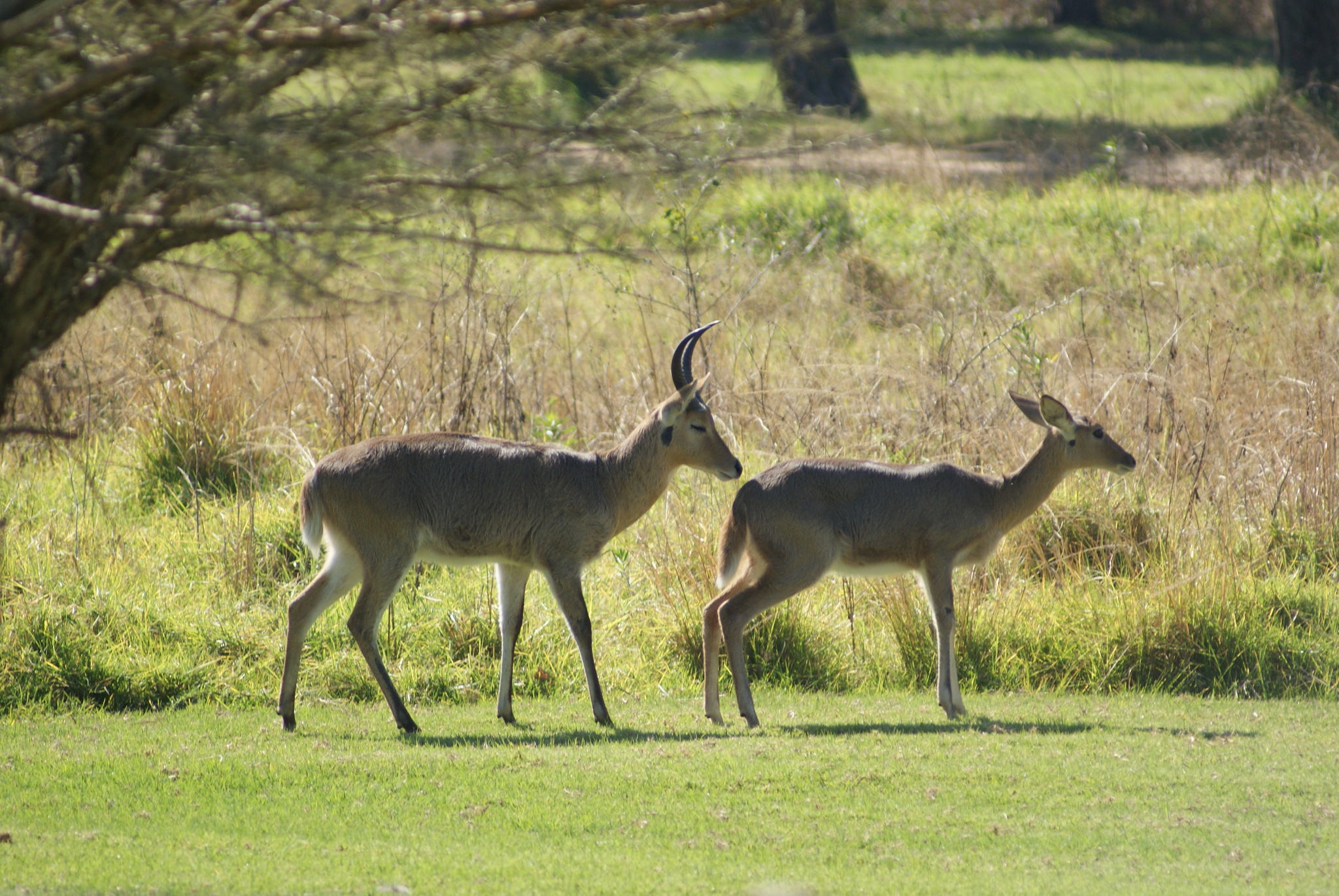
The bohor reedbuck (Redunca redunca) is among the best examples, among bovids, of planic colouration.
BackgroundTaxon page·Planic colouration
This species relies on being overlooked by potential predators by virtue of
- pelage so uniform as to be inconspicuousness among tall grass, and
- countershading.
CountershadingWikipedia
Furthermore, R. redunca differs from many gregarious bovids of open environments in that the anterior surfaces of the ear pinnae are covered with plain pelage.
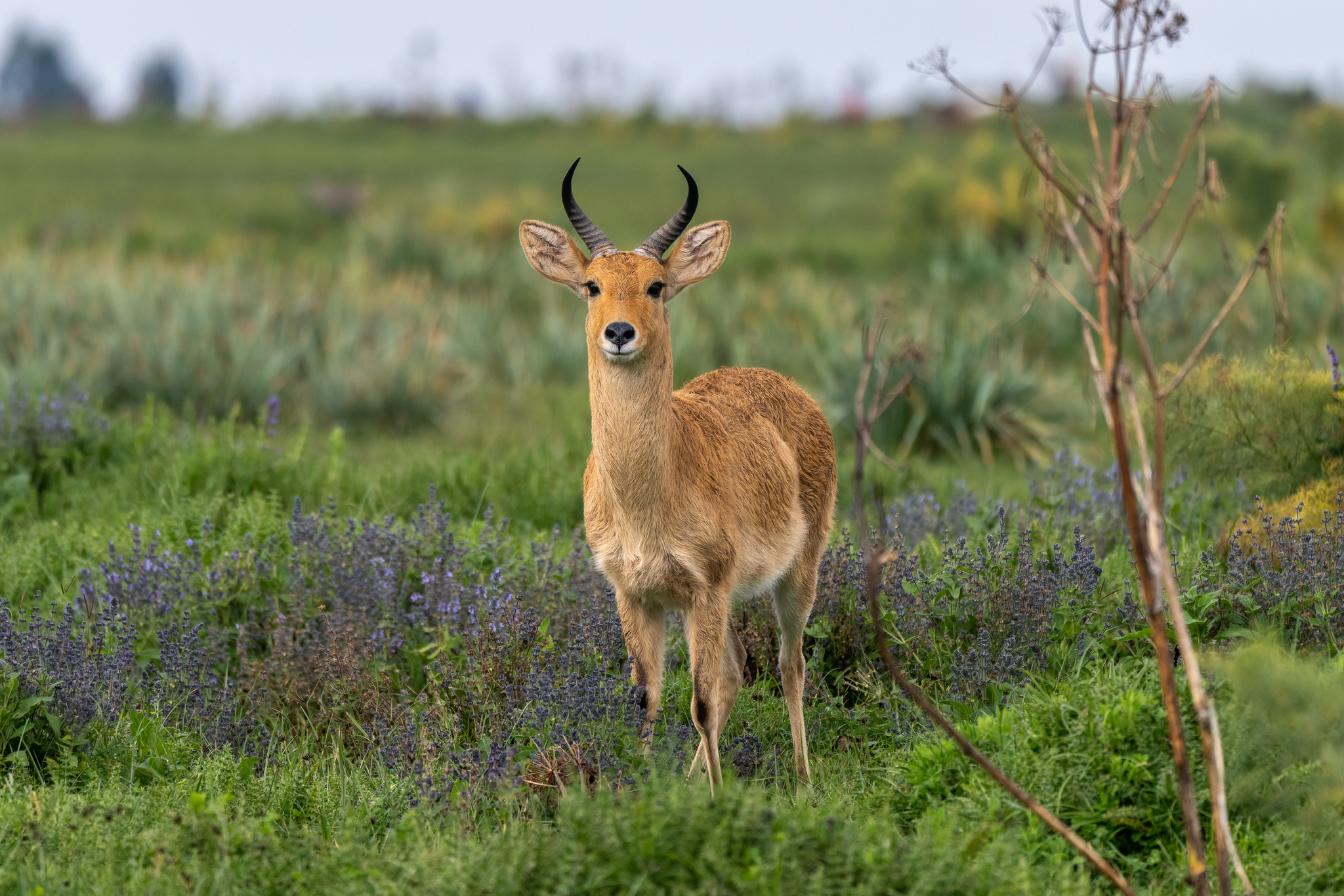
Plain front-of-ear — also citediStock·Adobe Stock
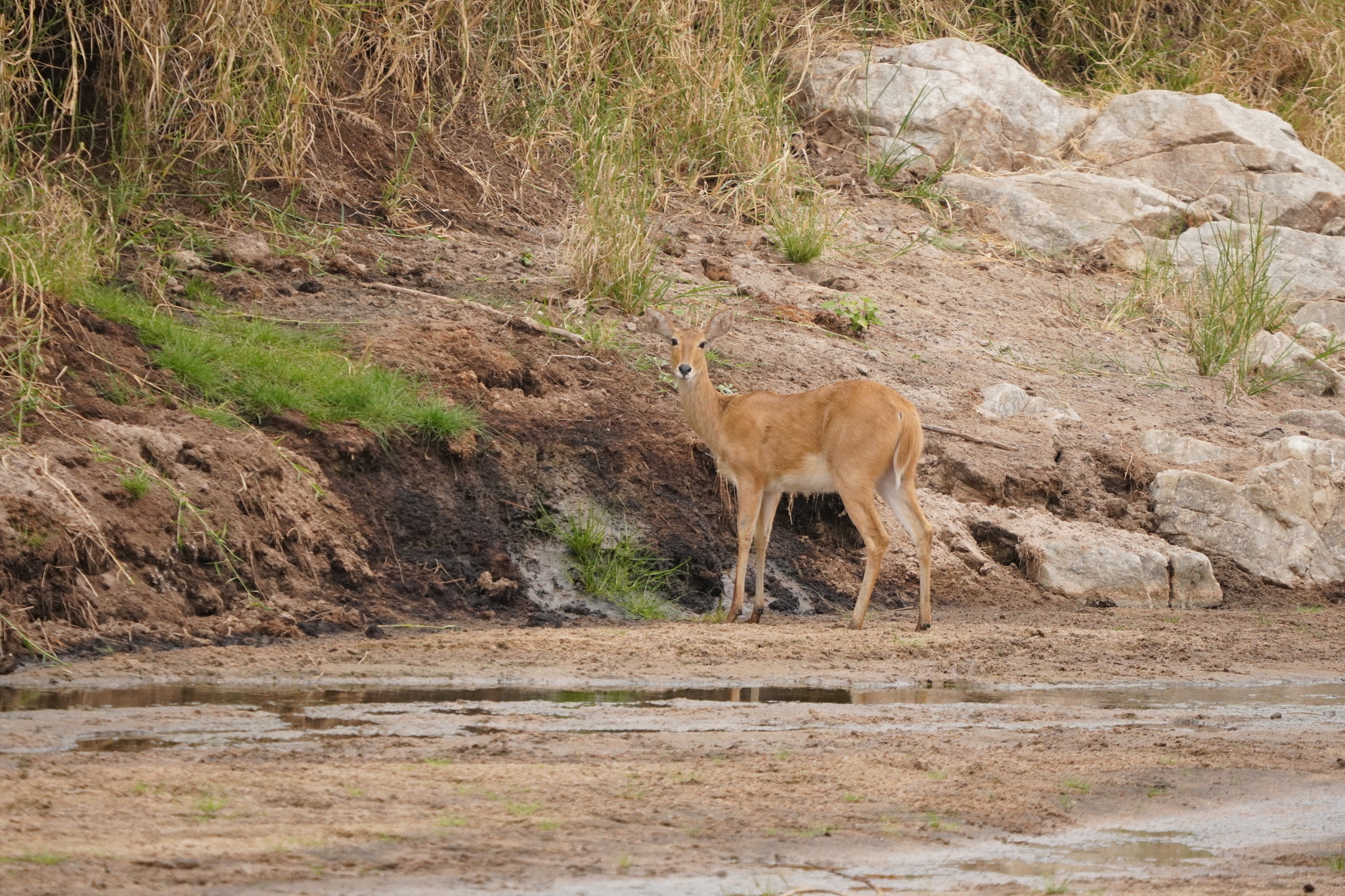
Like other large mammals that rely on hiding, R. redunca tends, when apprehensive,
- to ‘freeze’ immobile, and
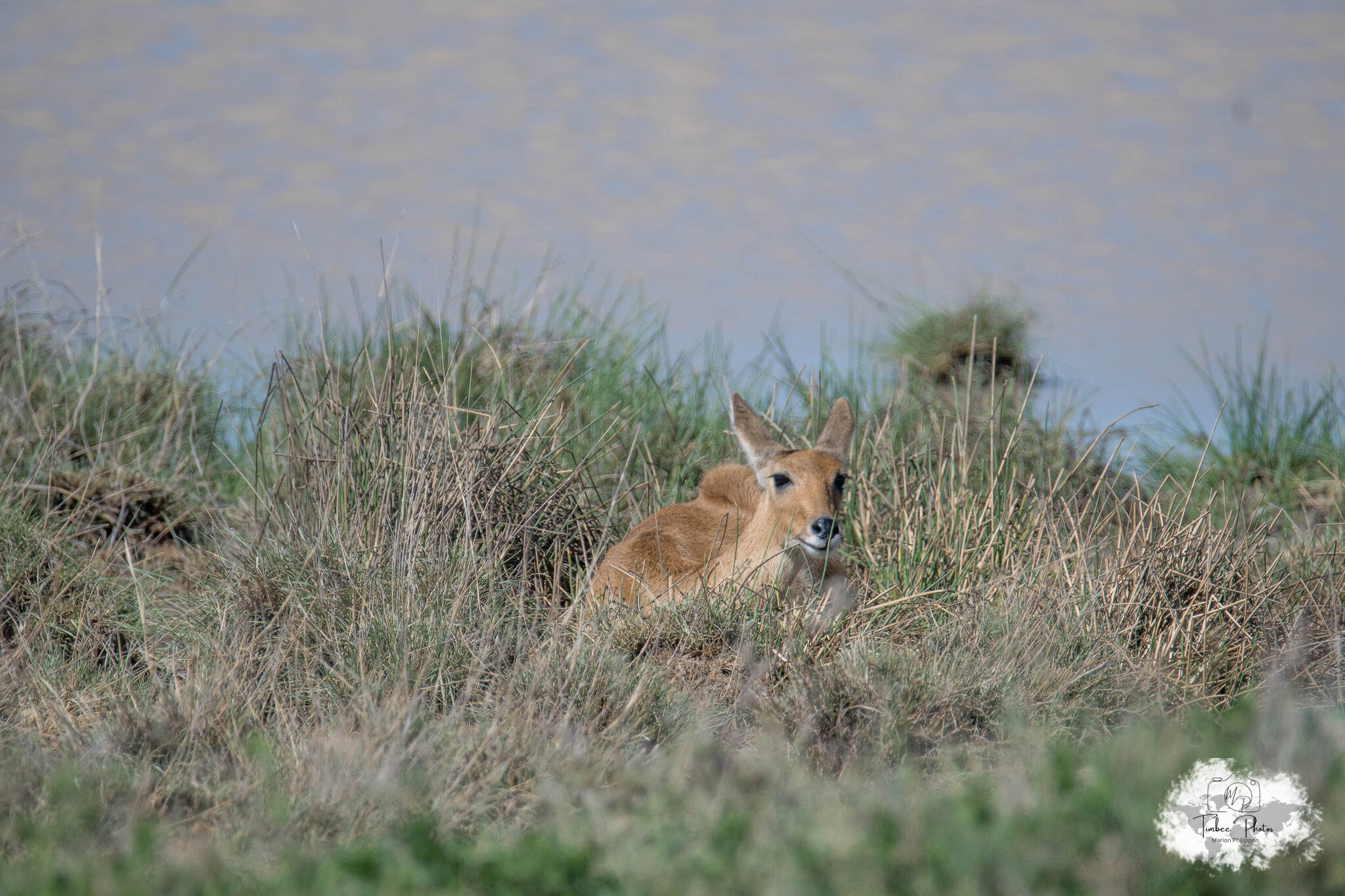
- in some circumstances to lie down and lower its head, in order to ‘reduce its profile’.
This covert combination of colouration and skulking behaviour is adaptive.
It allows R. redunca to blend into its environment in the eyes of scanning Carnivora.
These predators, with their dichromatic vision,
- can hardly distinguish between greens and browns,
- see mainly in ‘shades of grey’,
- are extremely sensitive to movement, and
- emphasise motion-sensitivity in dim light, rather than hue-sensitivity in bright light.
However, I have noticed something for the first time, after a lifetime of careful scrutiny of countless photos of antelopes.
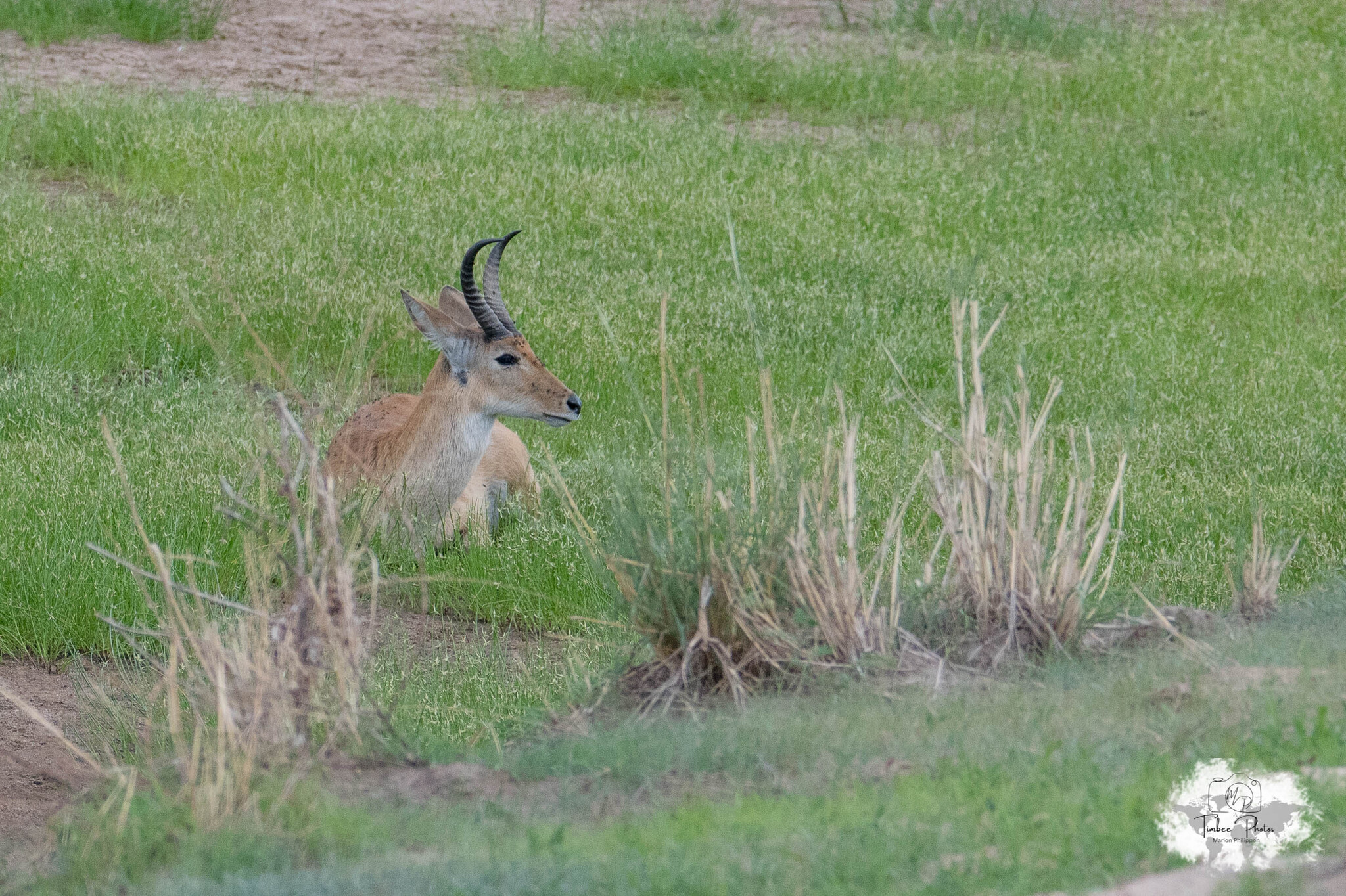
This is that R. redunca, ‘freezing’ in mild alarm, tends to rotate the ear pinnae.
Ear-rotationiStock
This is somewhat surprising, because one would expect the ears, like the eyes and nose, to be ‘on alert’ or ‘tuned in’ while watching the intruder in suspense.
Instead, R. redunca tends to compromise its auditory acuity, as a trade-off in favour of inconspicuousness.
This tactic of ear-rotation is likely to be effective, because
- the posterior surface of the ear pinnae exceeds the anterior surface in the plainness of its colouration, and
- predators have a subconscious ‘search-image’ for the front-of-ear.
Illustrations
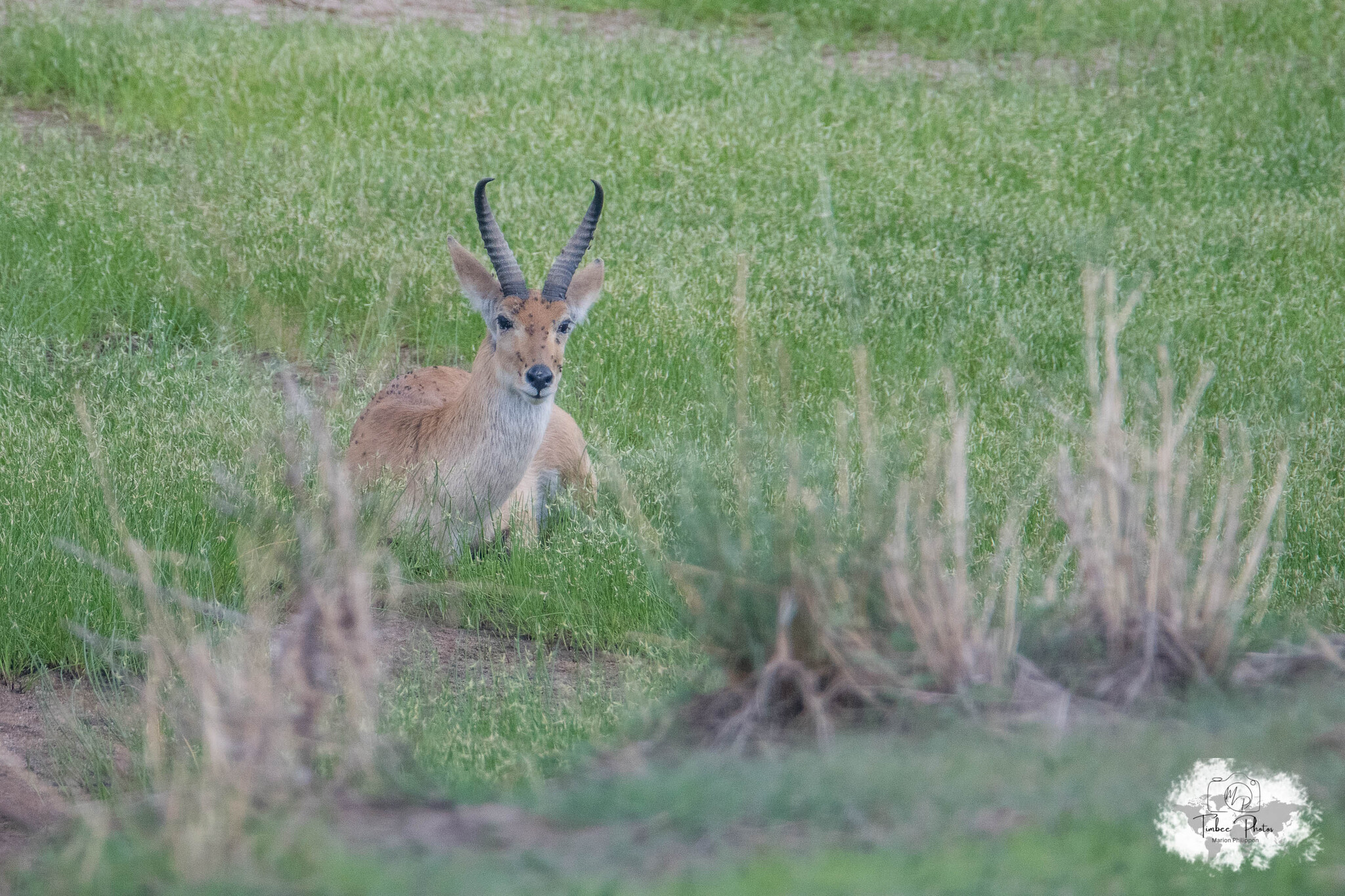
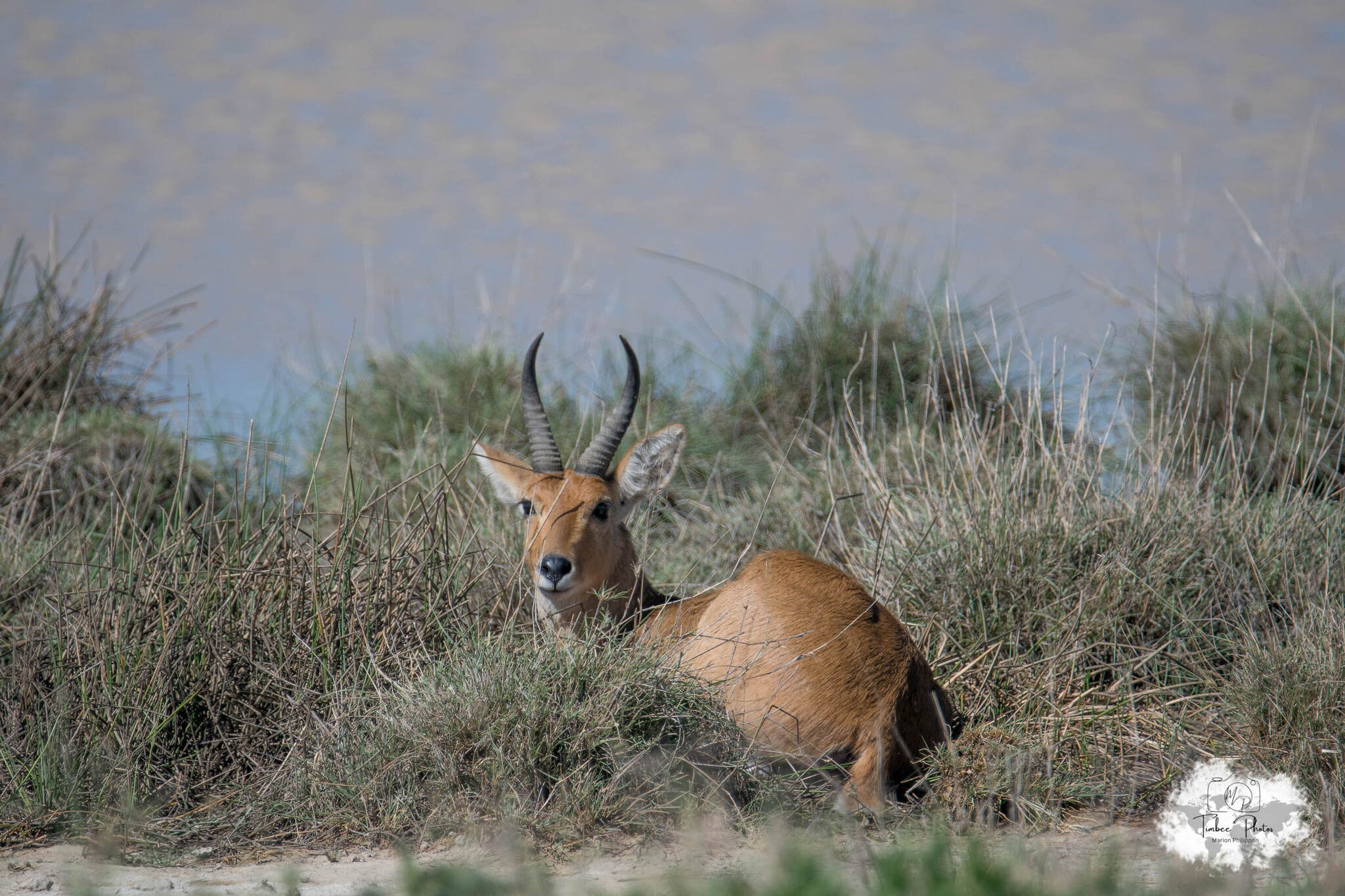
The following illustrate auricular rotation in apprehension in R. redunca.
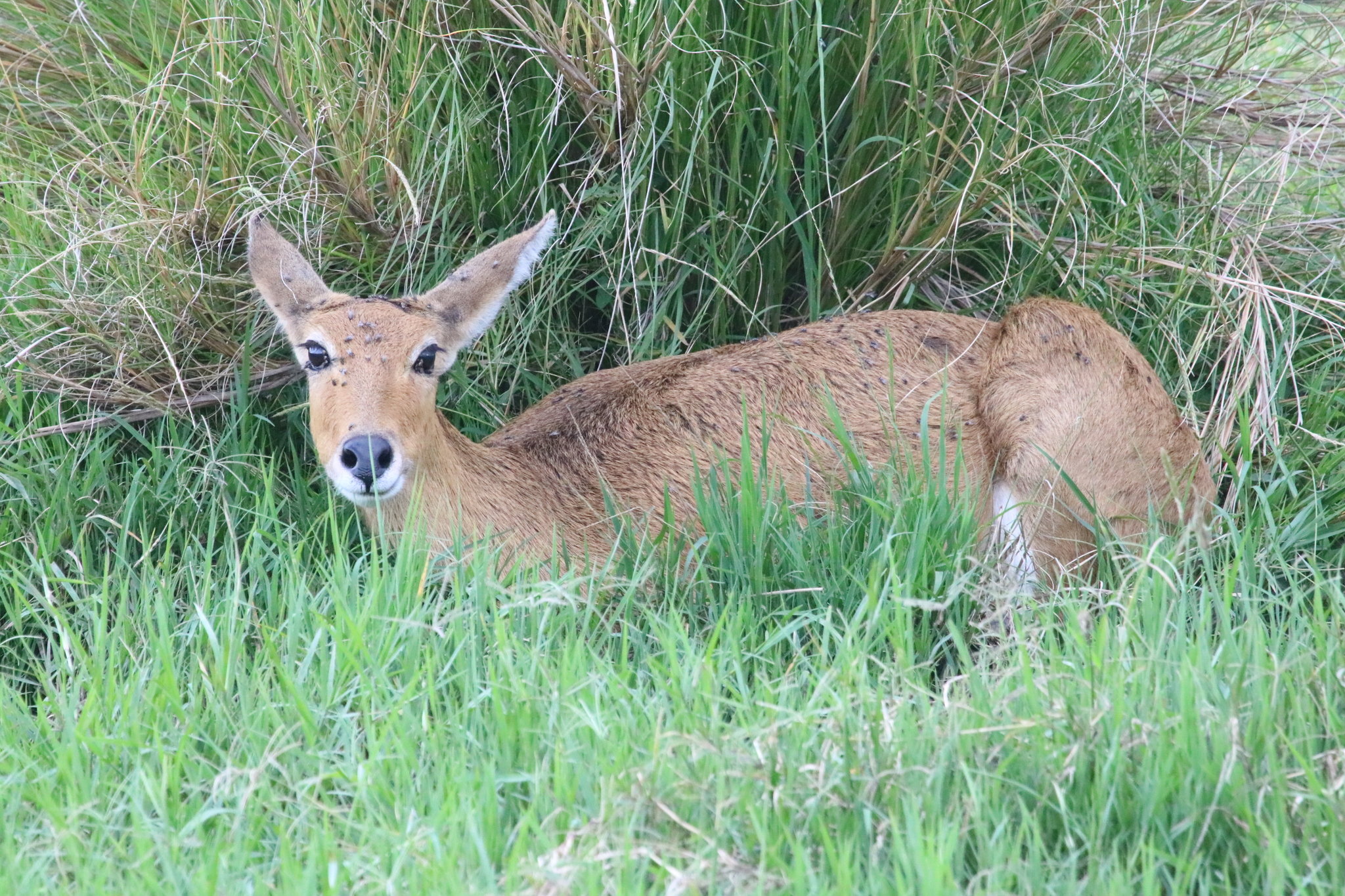
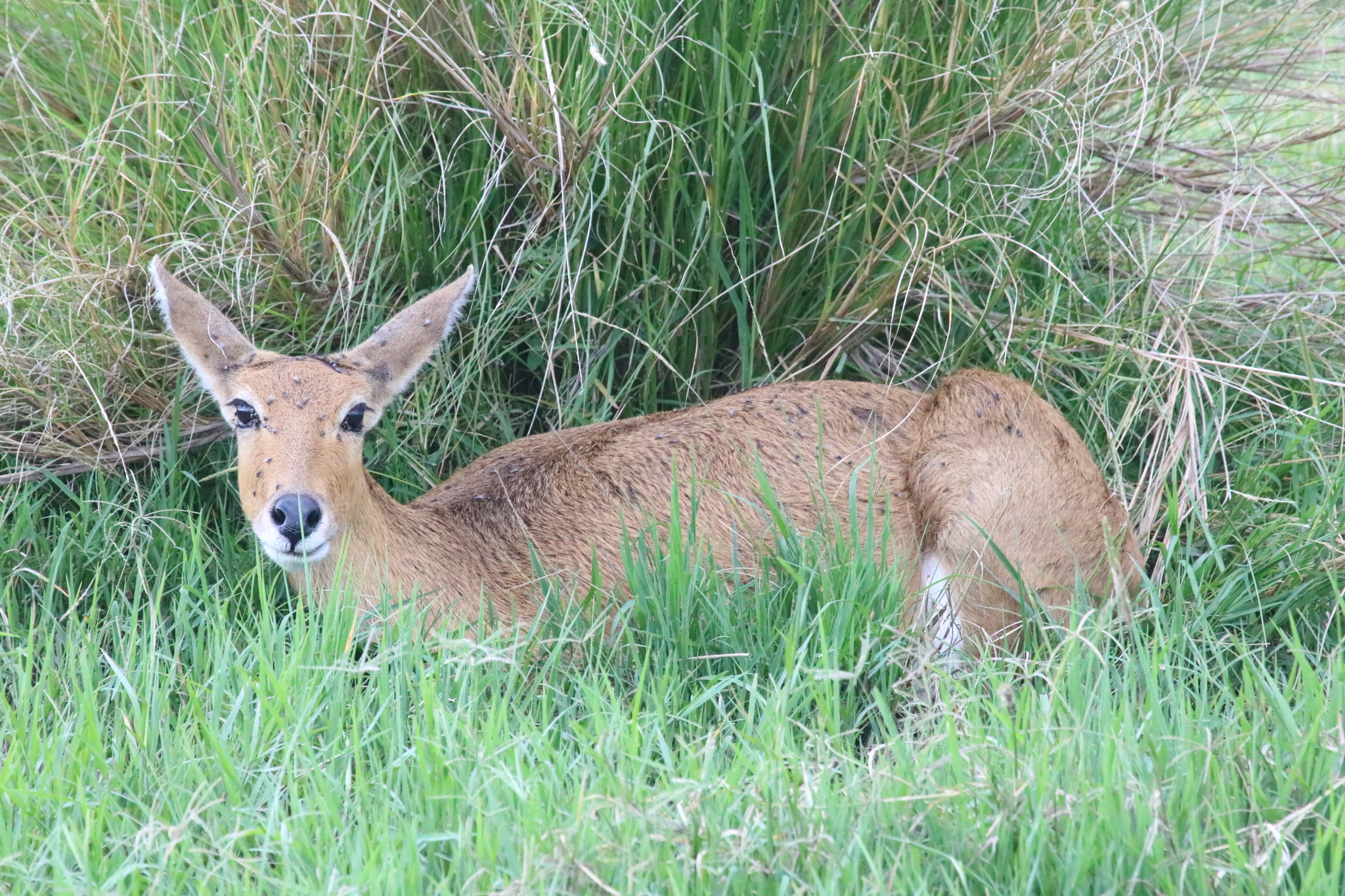
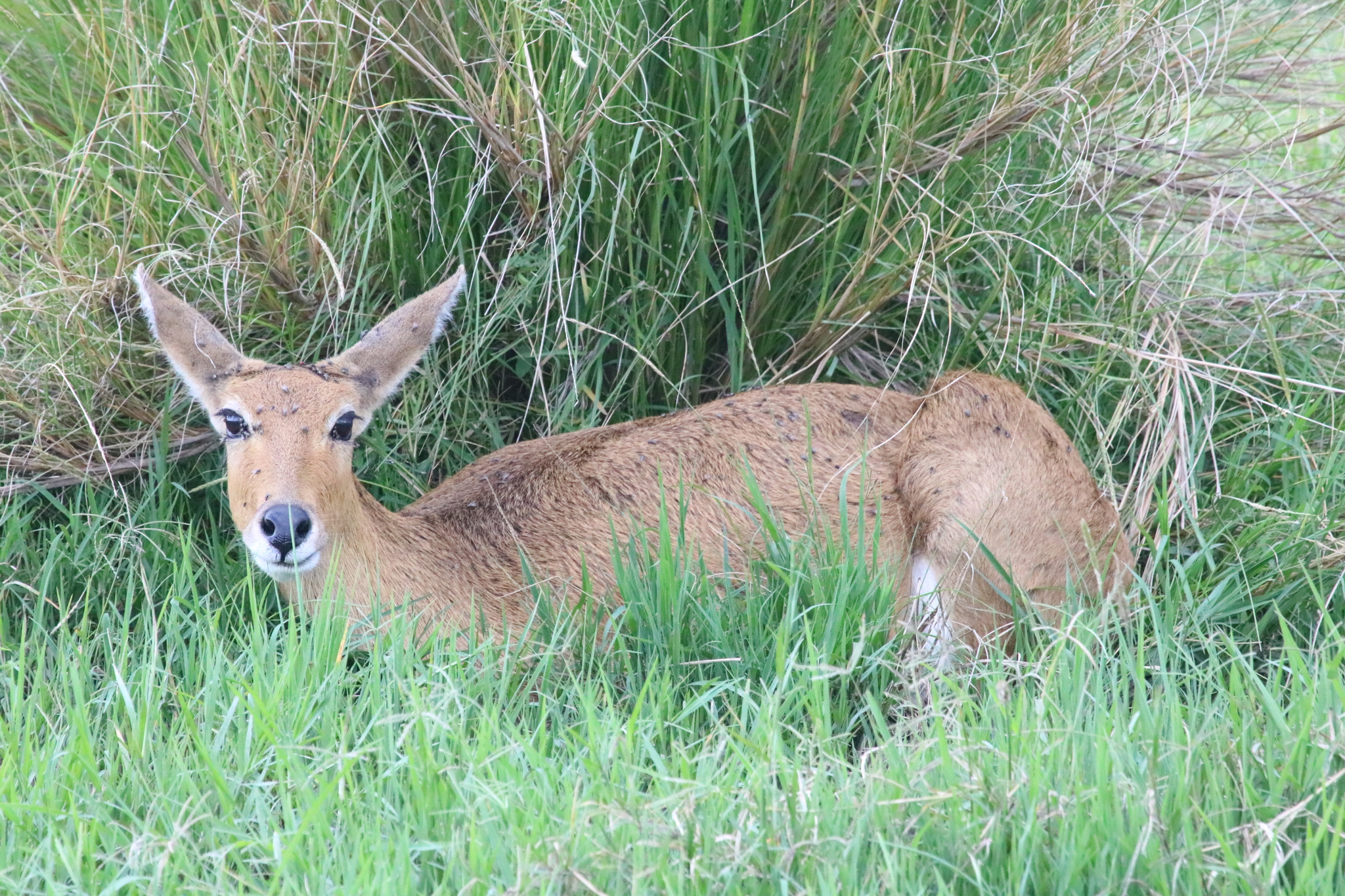
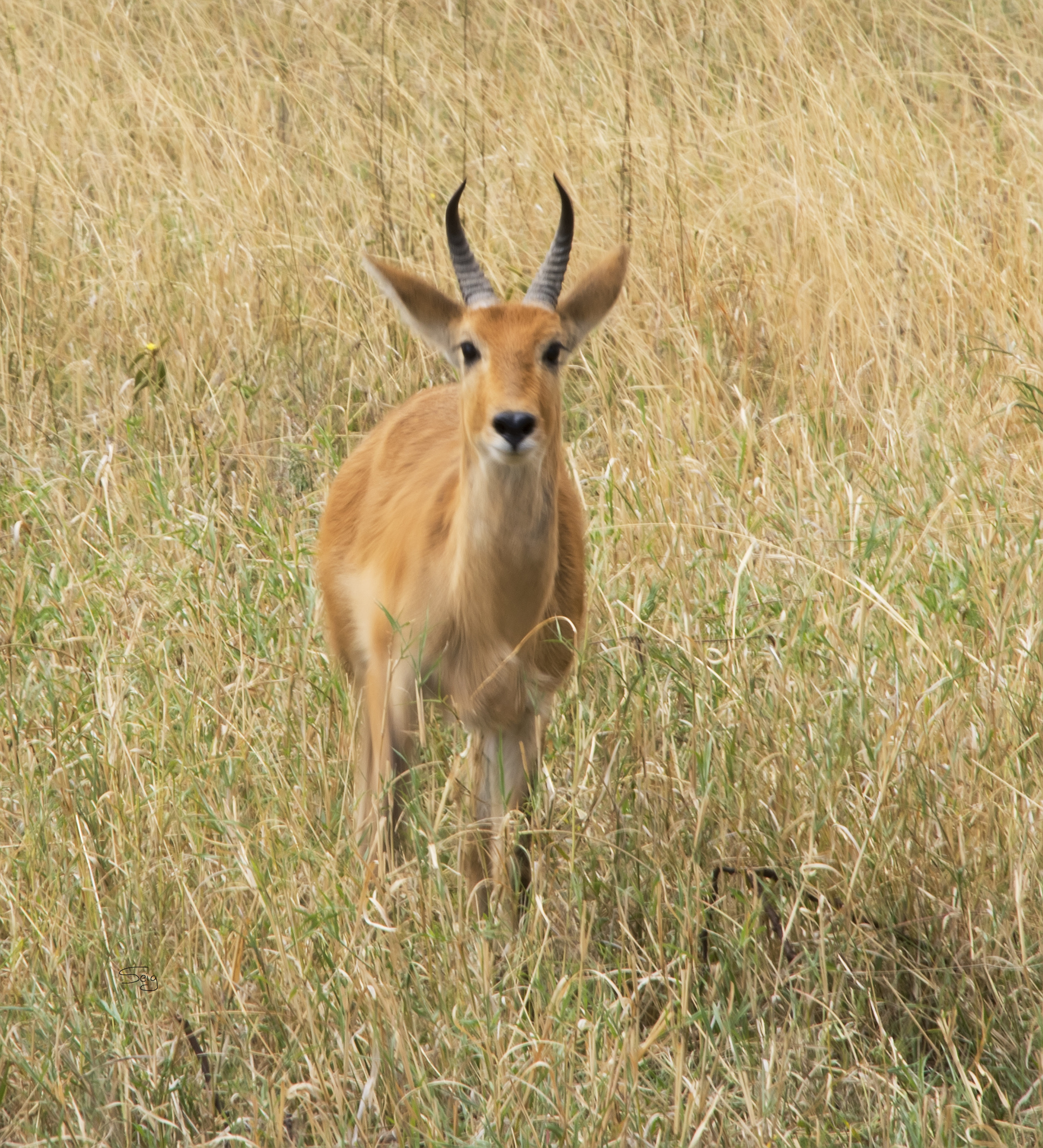
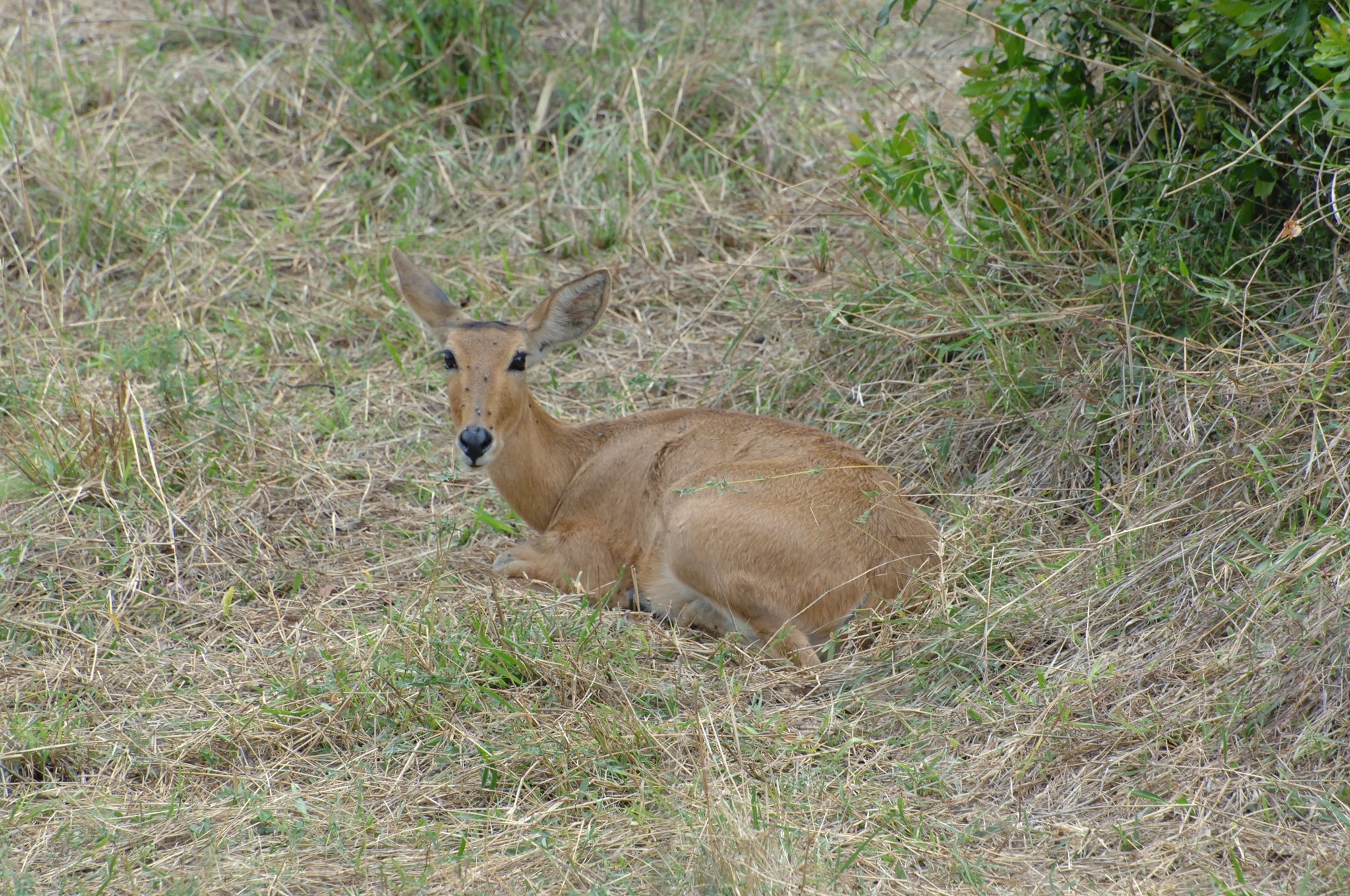
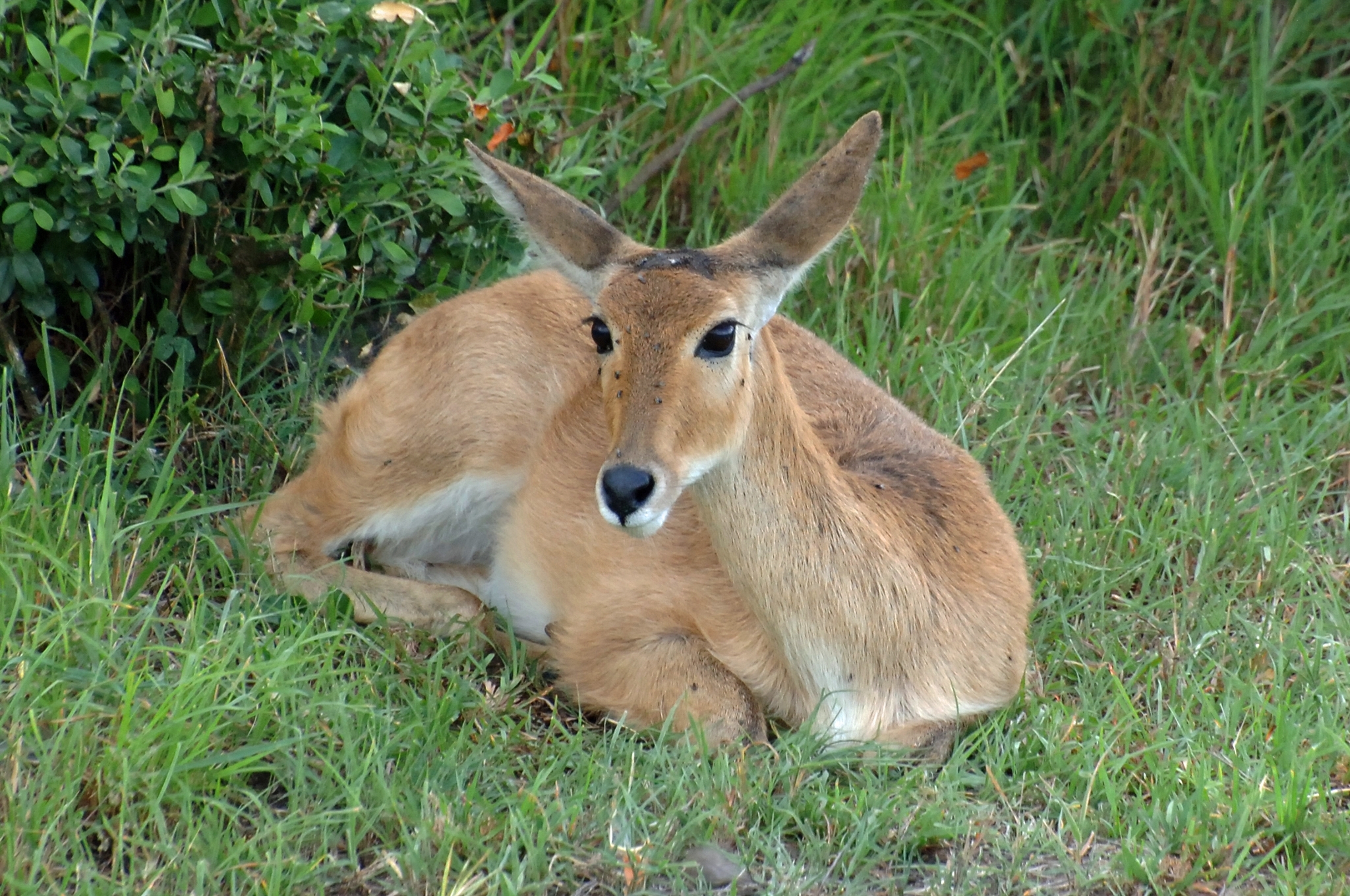
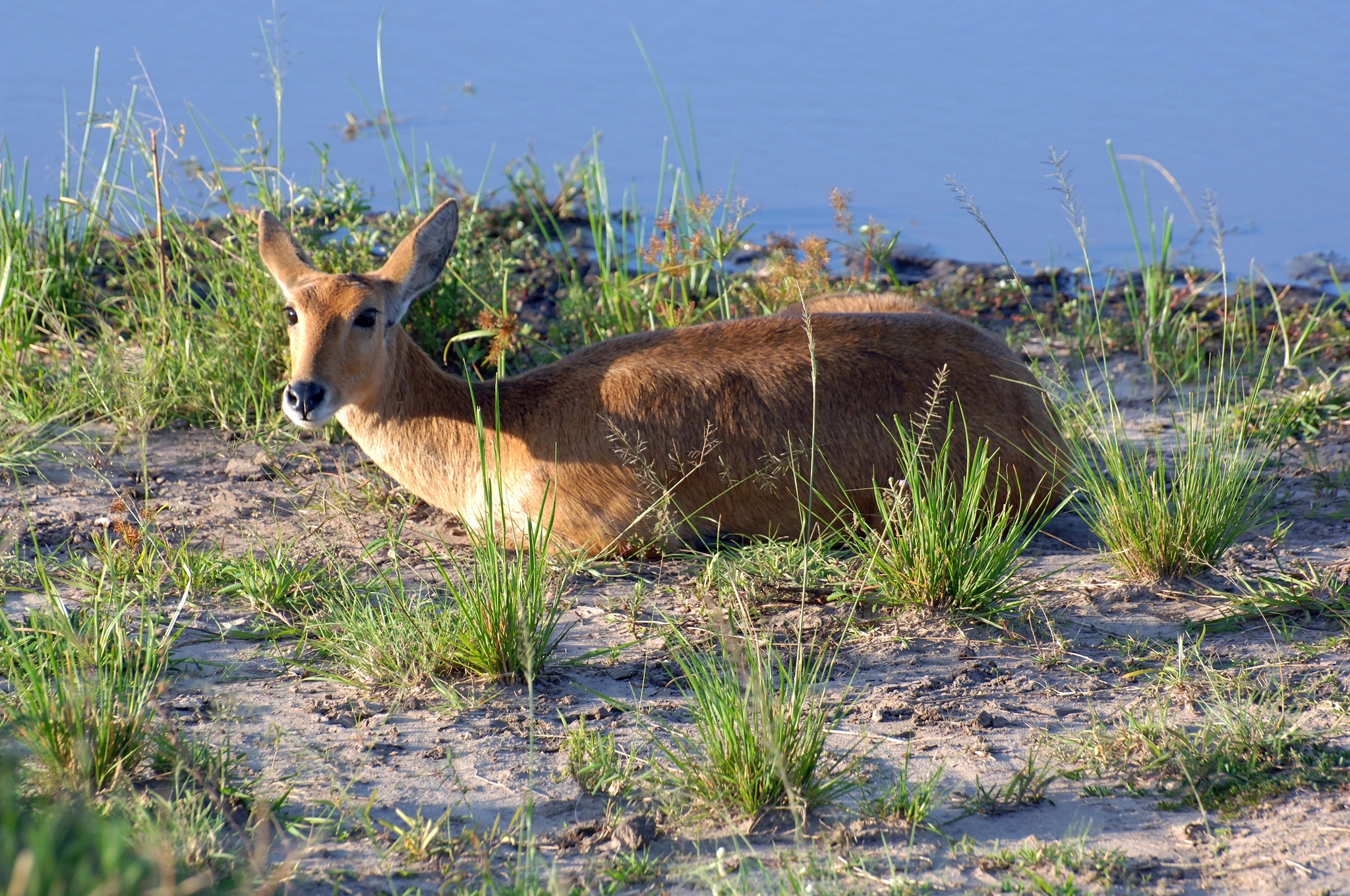
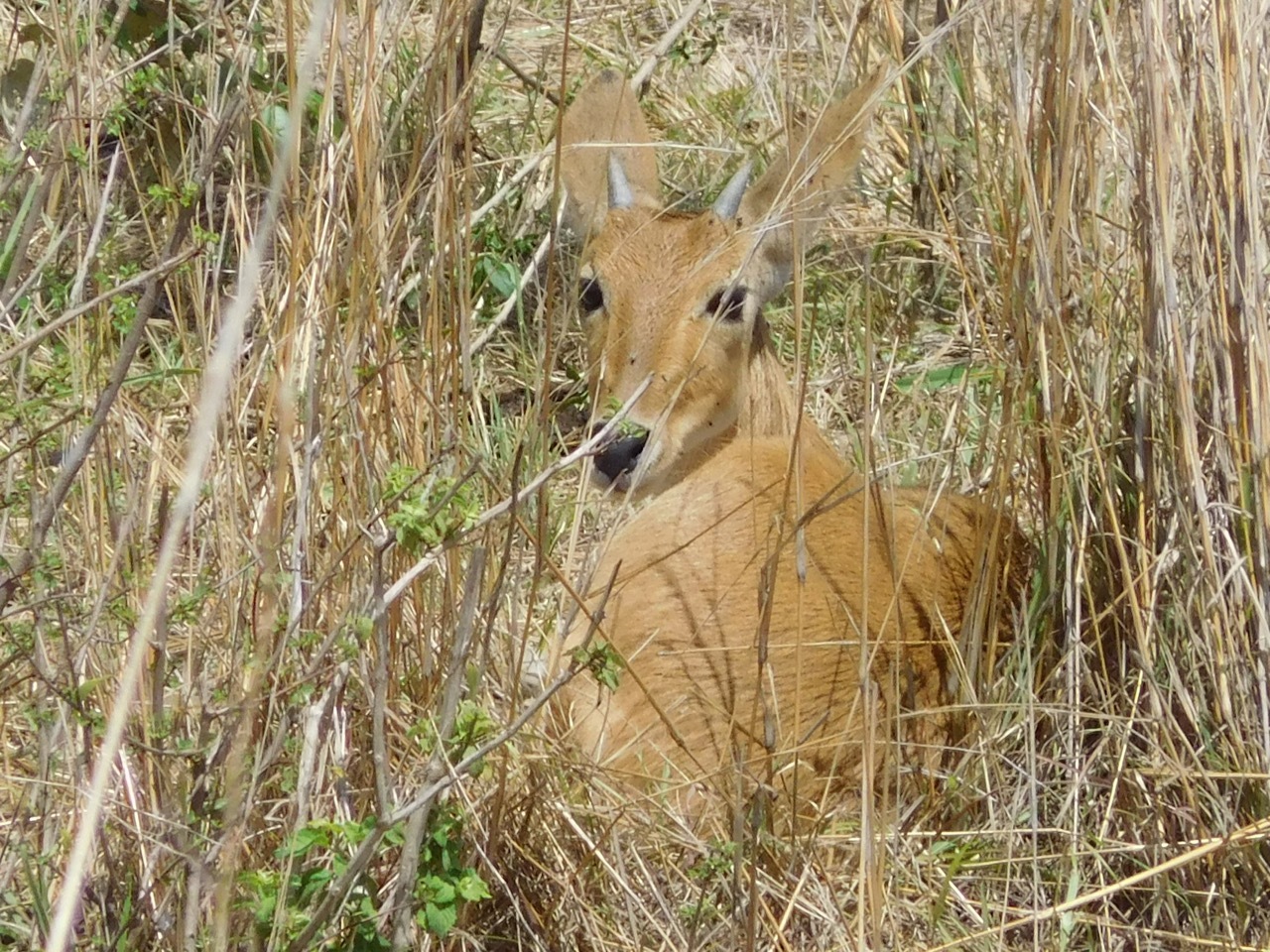
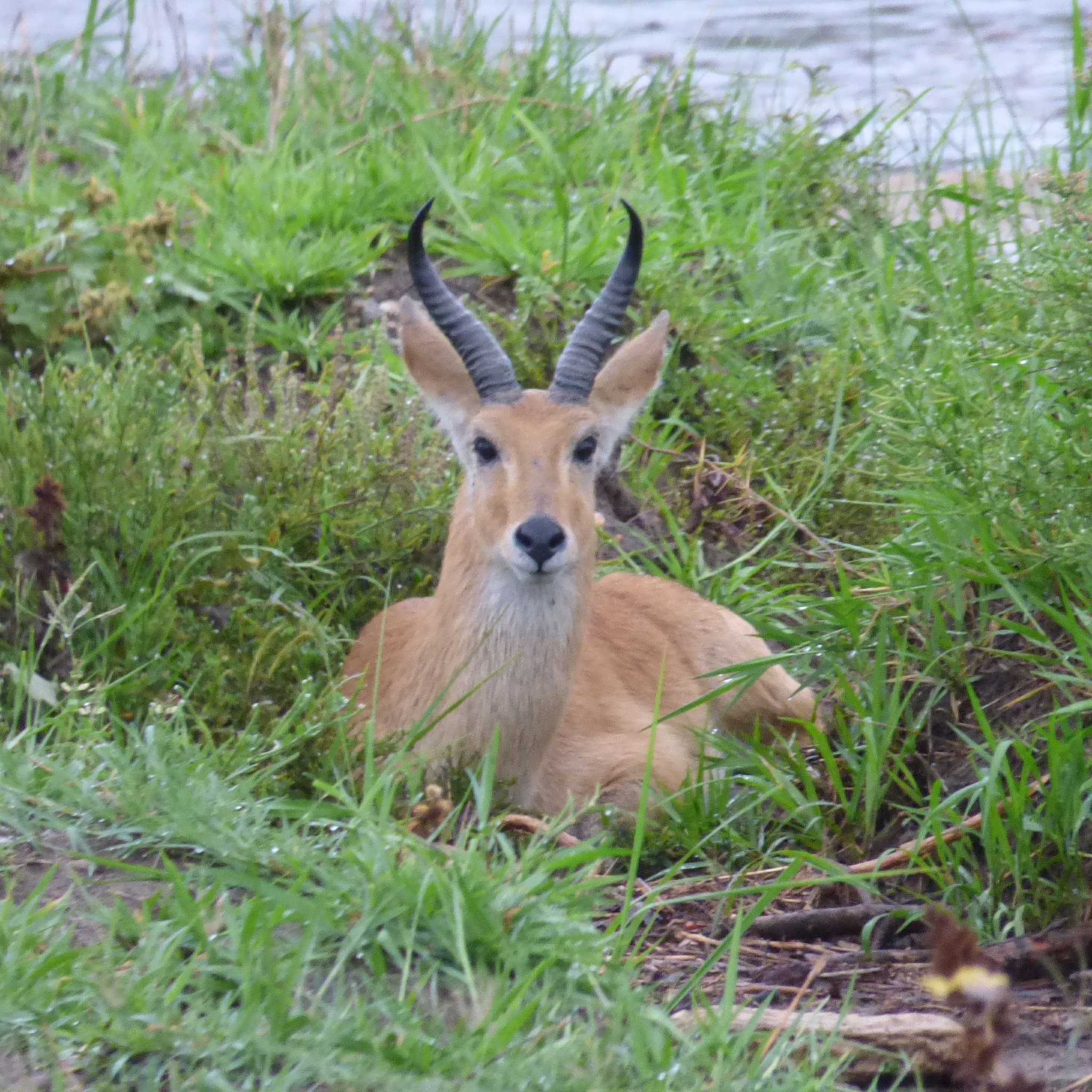
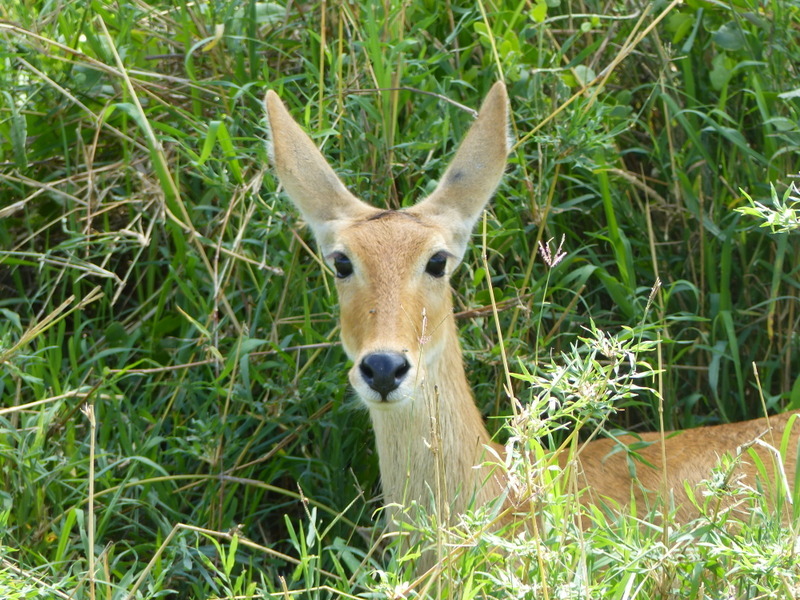
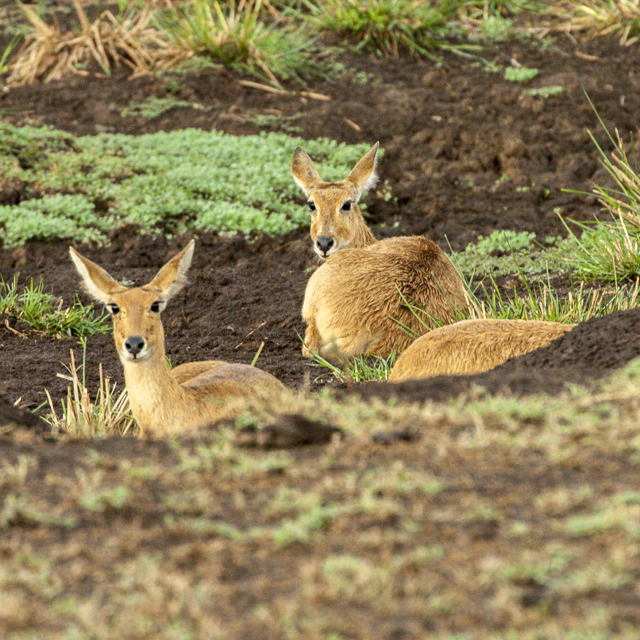
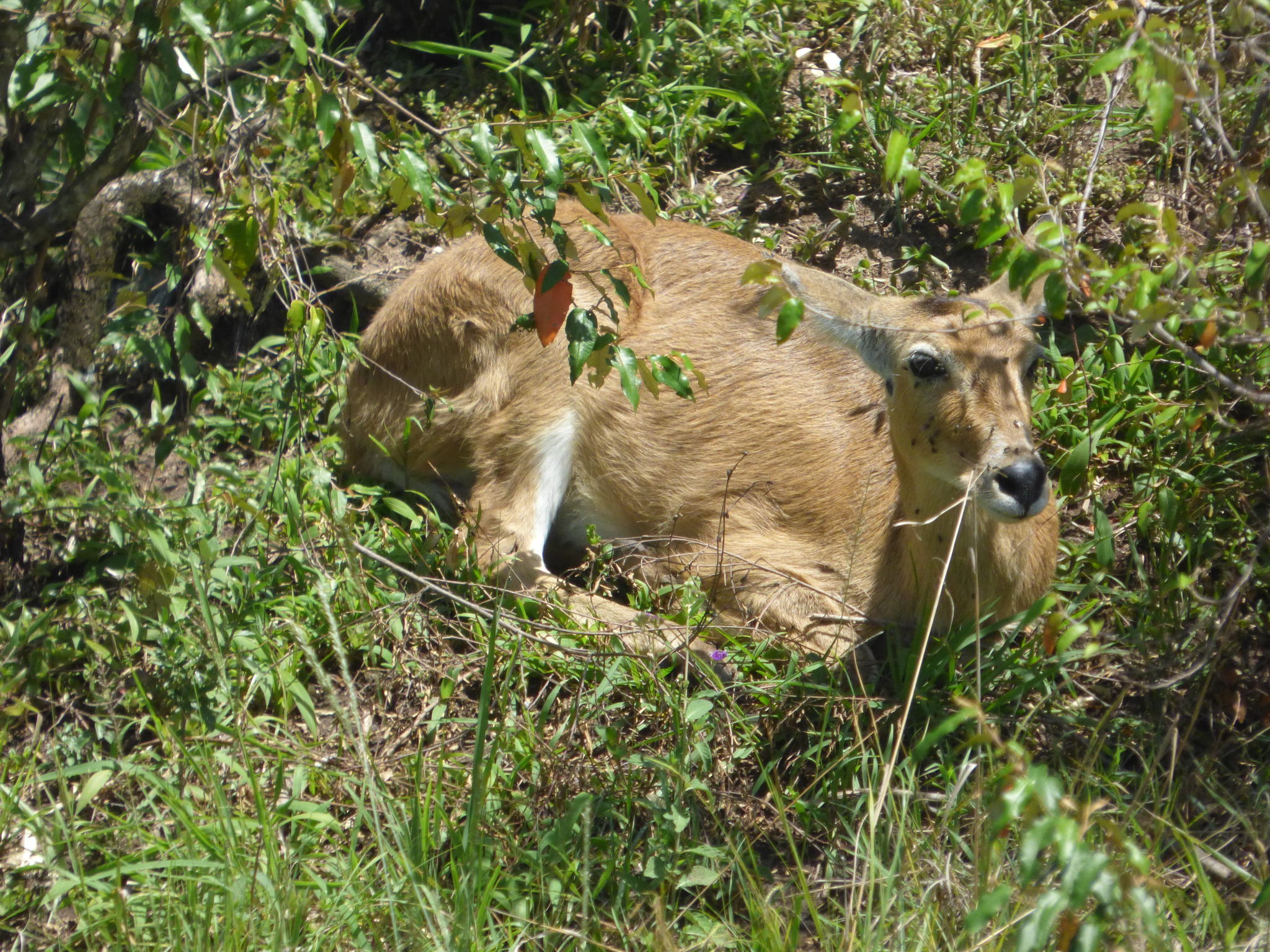
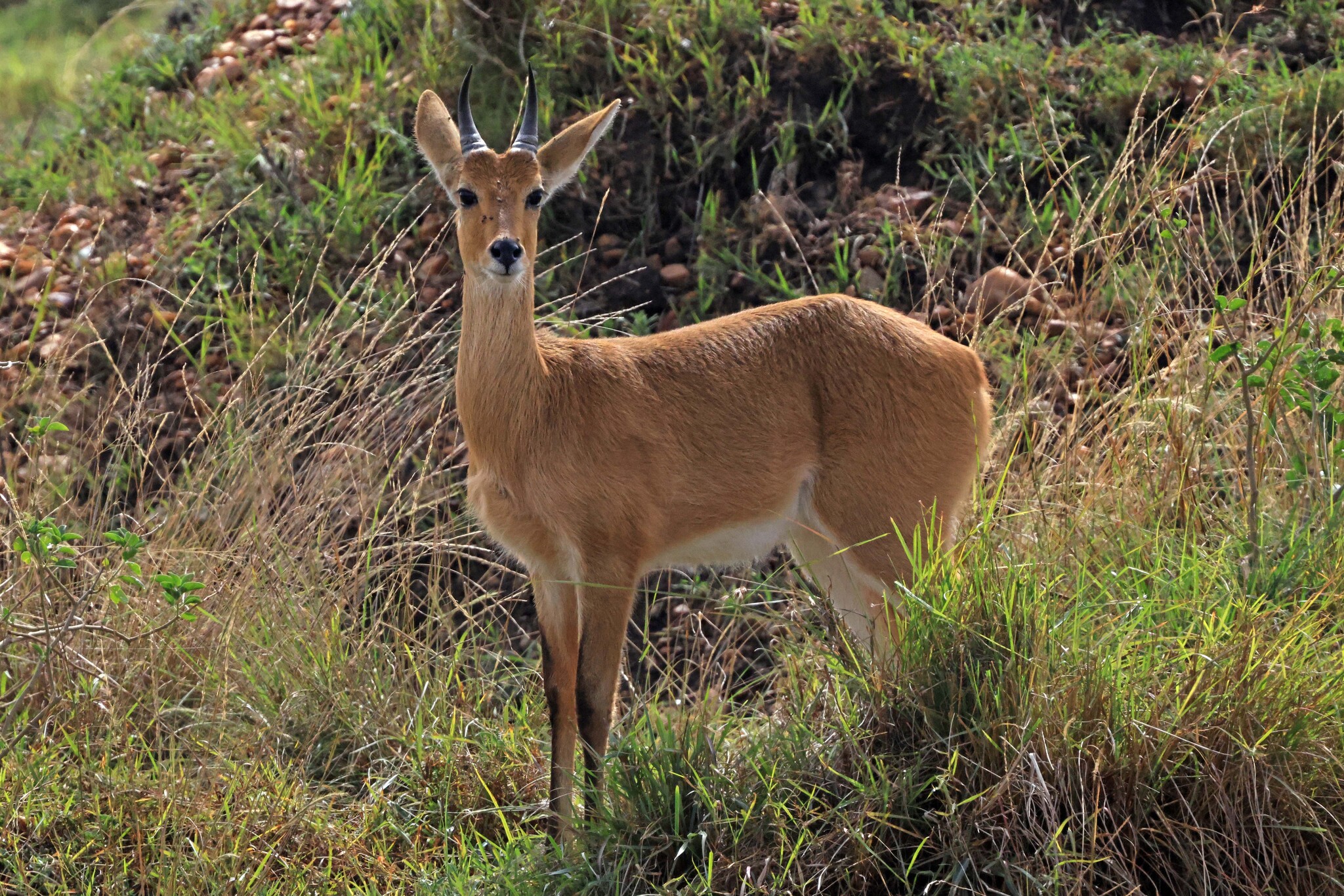
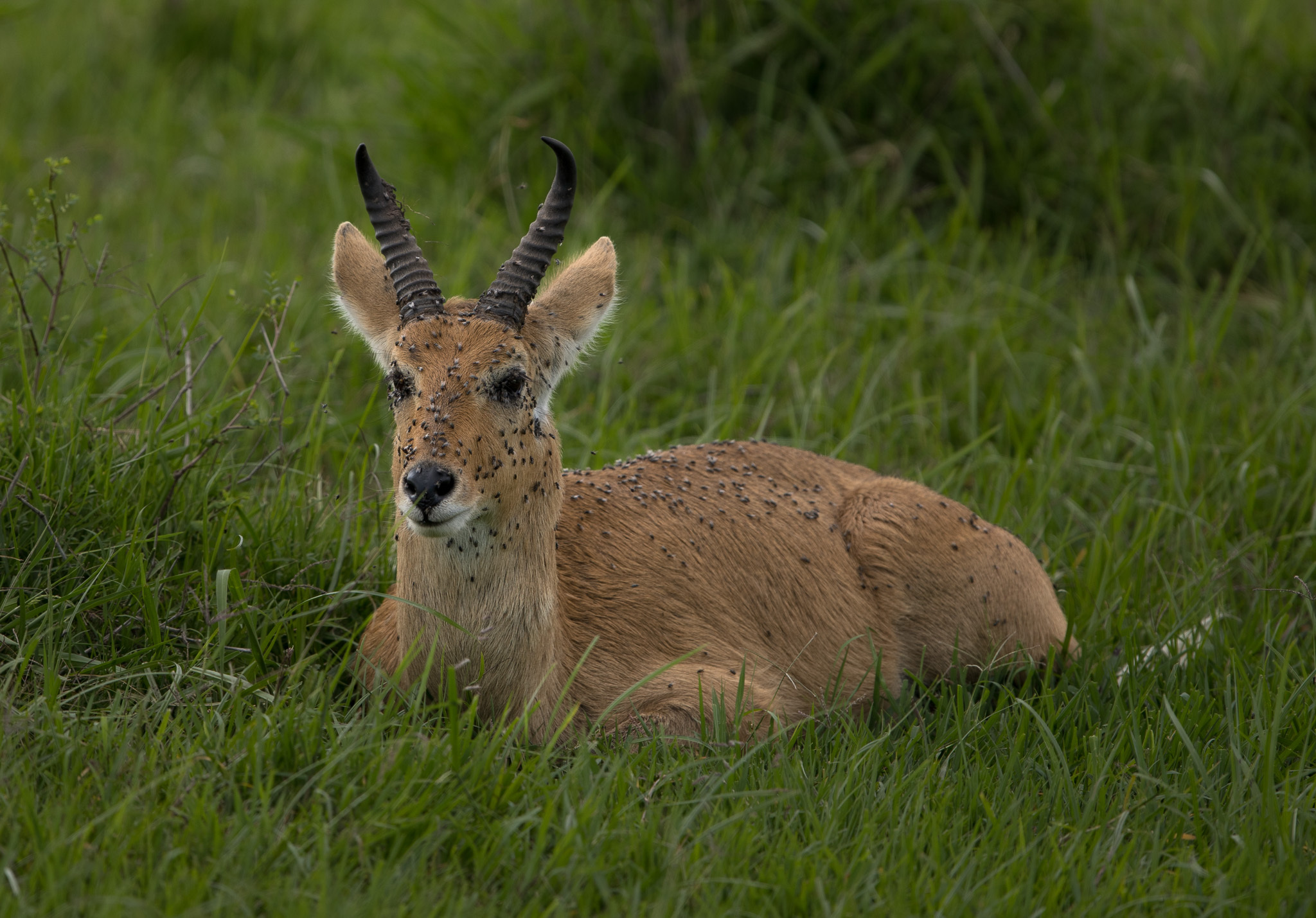
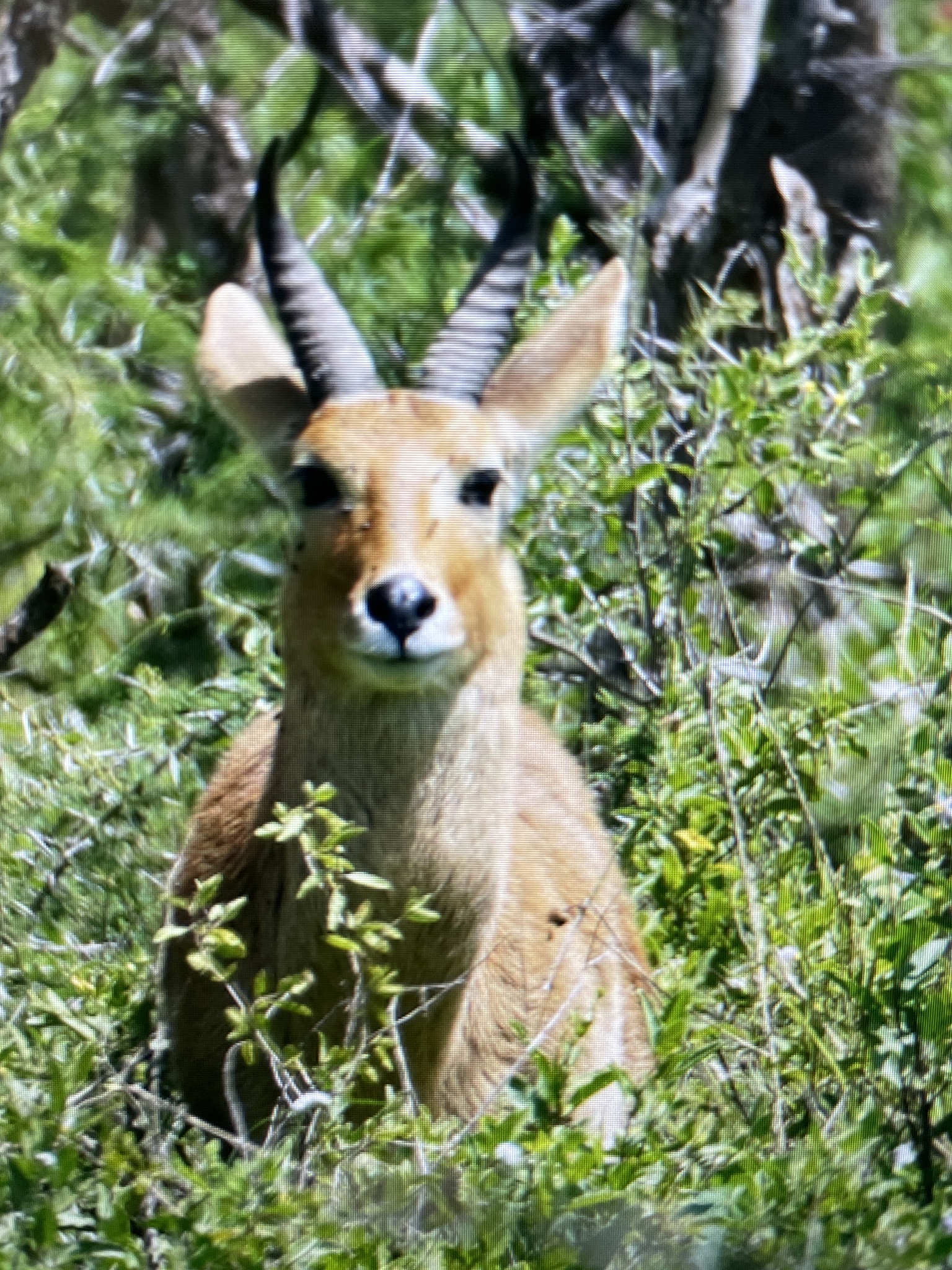
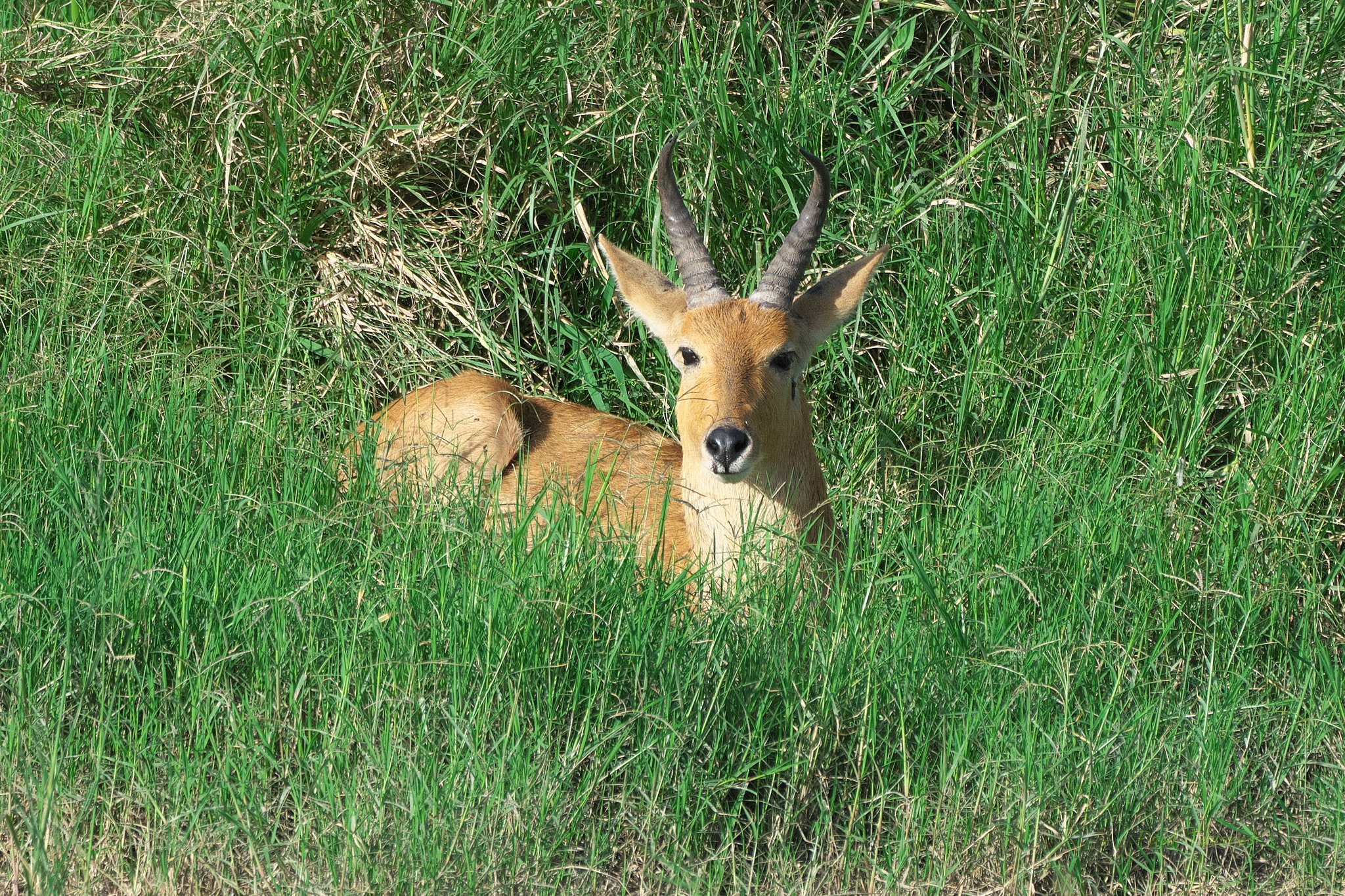
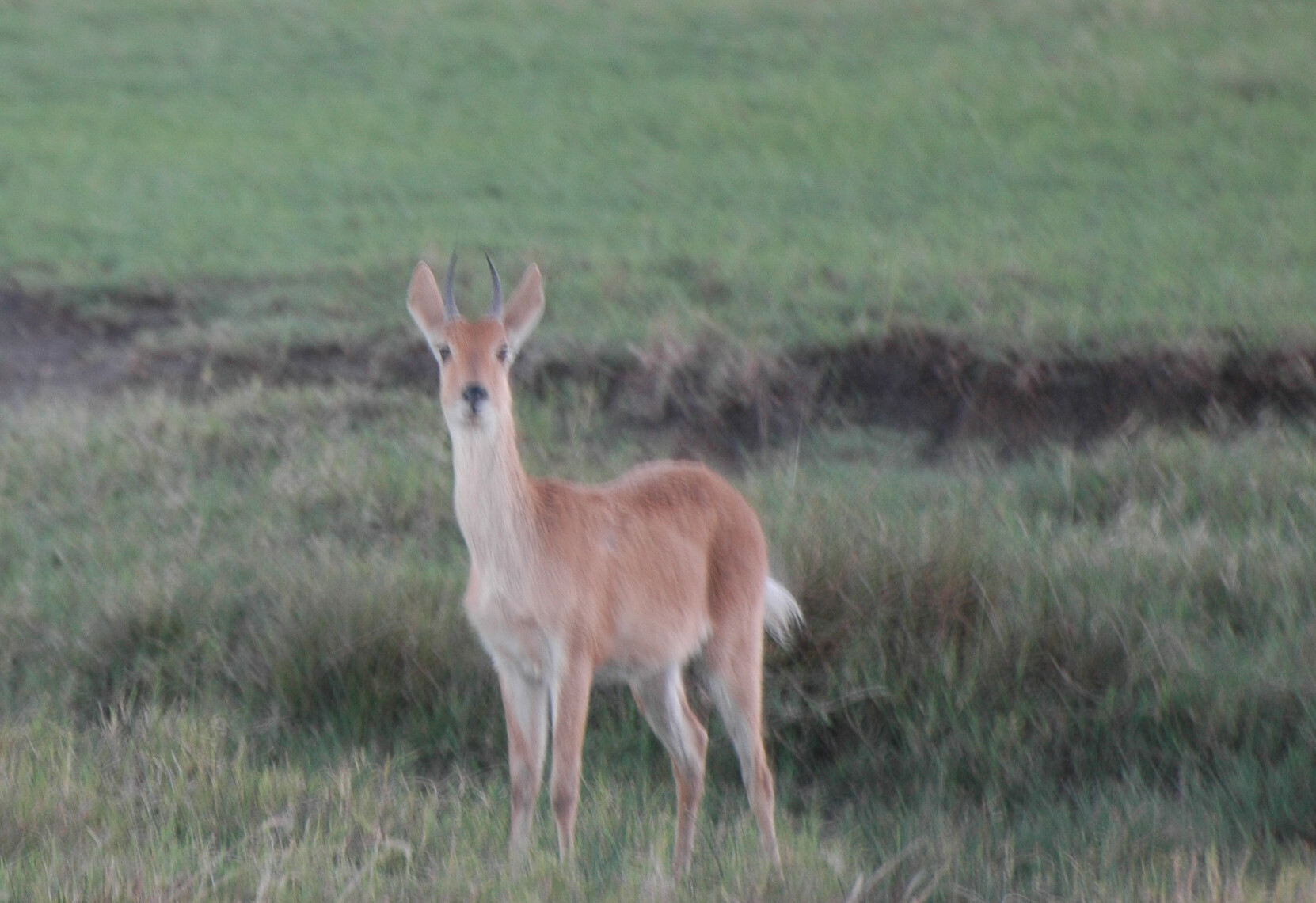
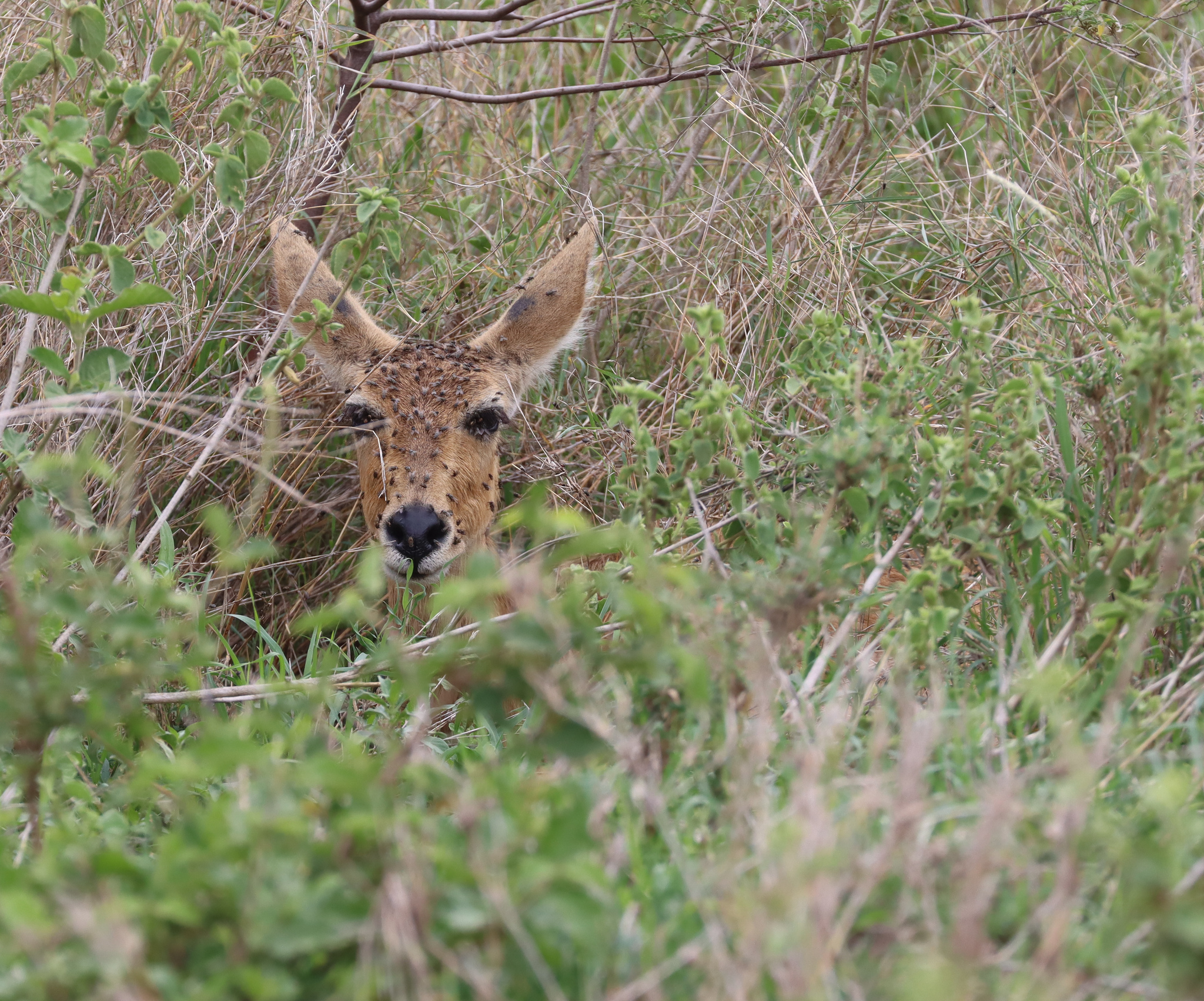
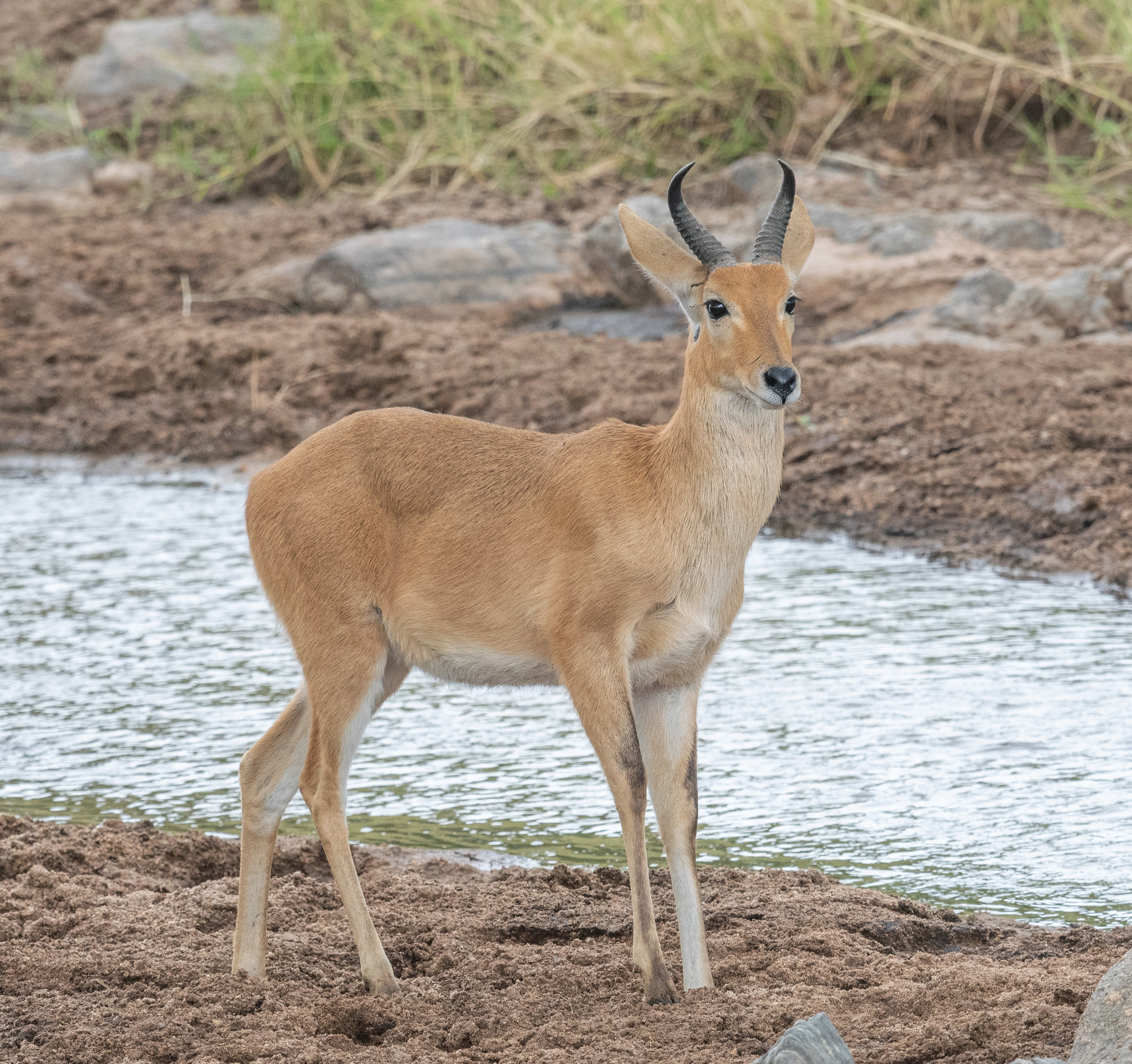
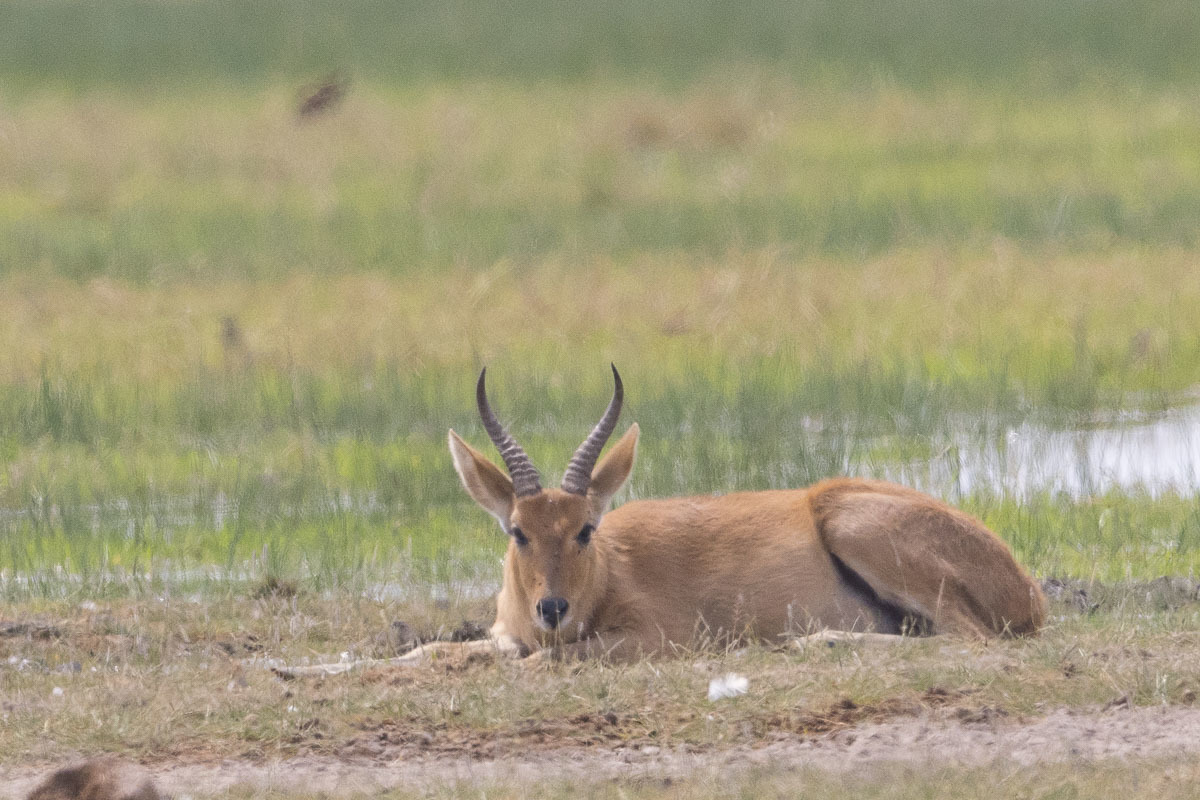
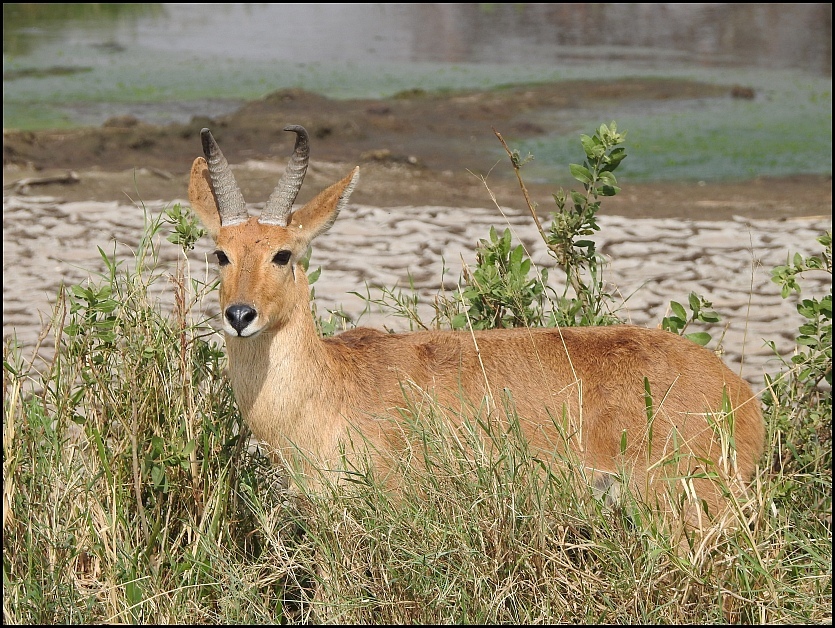
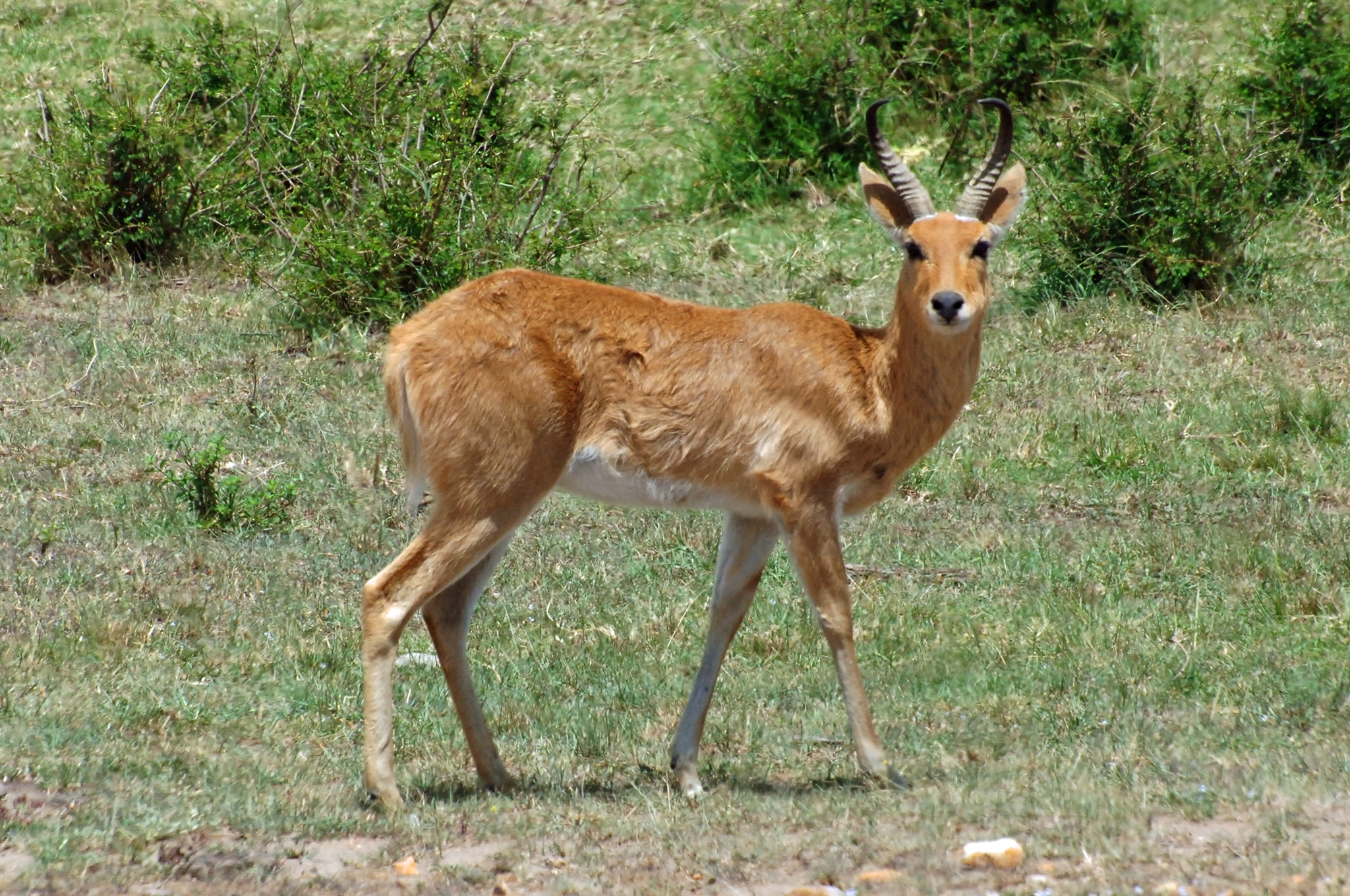
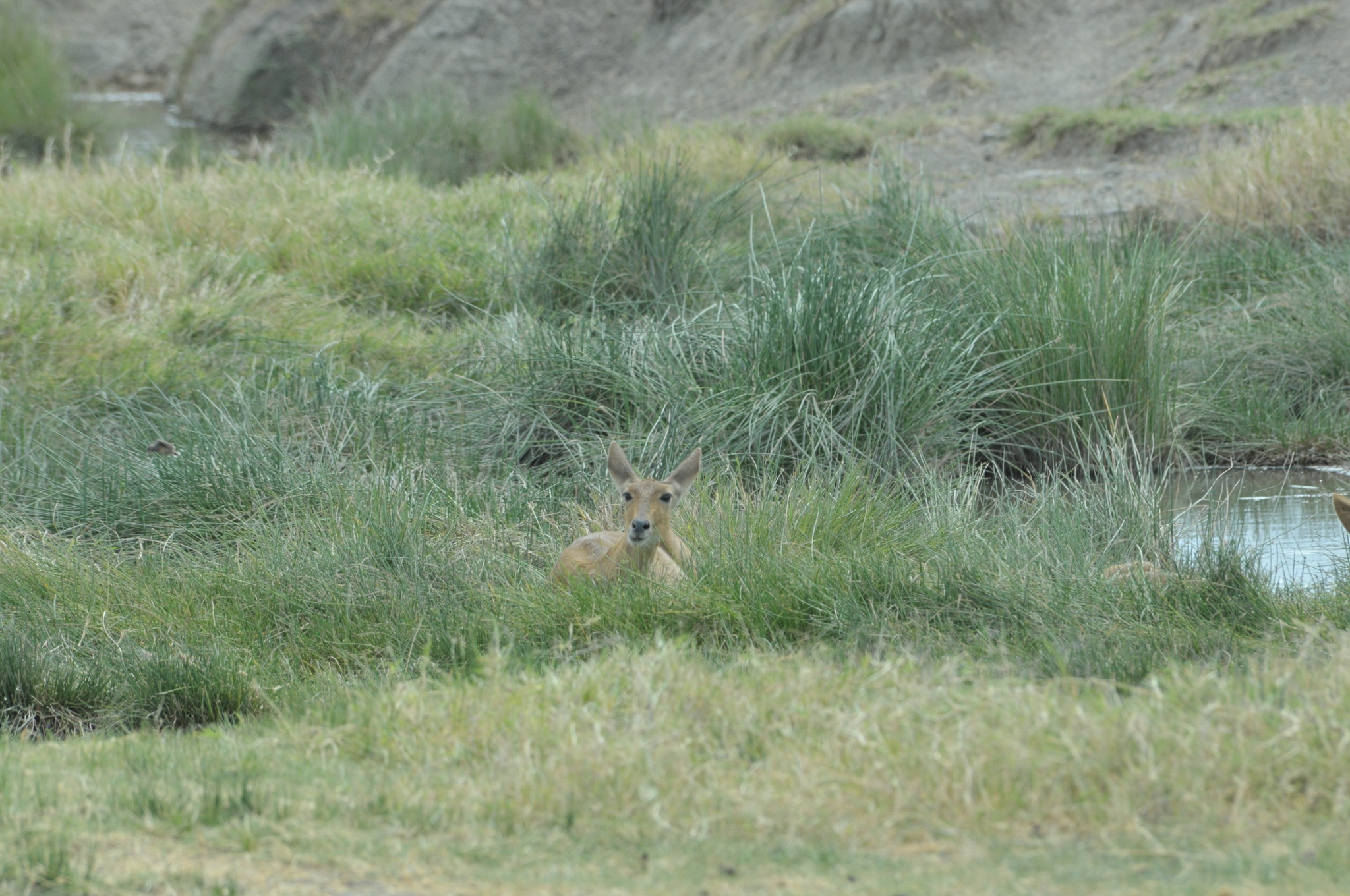
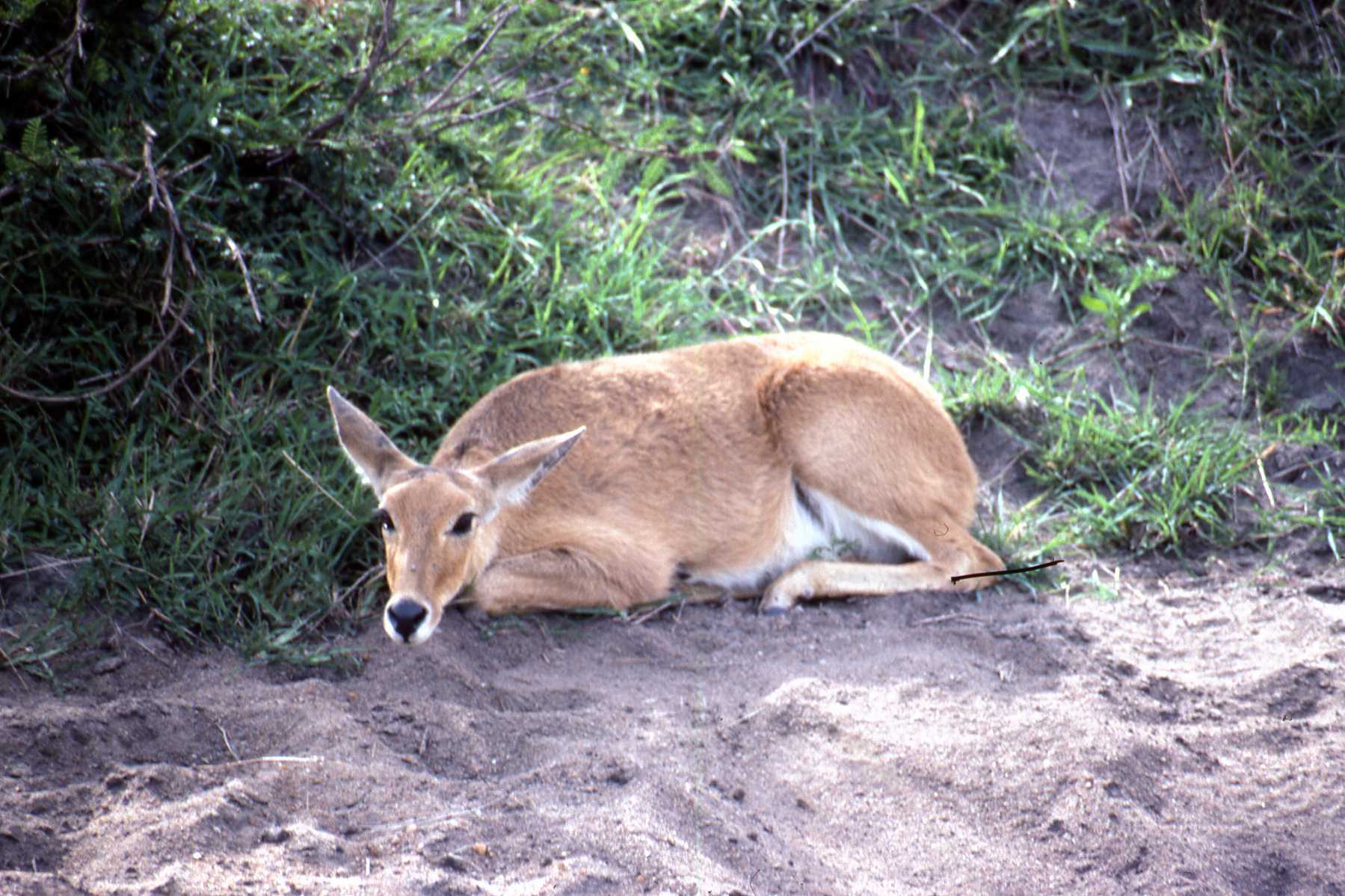
Also cited on iNaturalistobs. 66939509·obs. 186258846·obs. 105378028·obs. 66386417
Also citedGetty·iNaturalist Australia·iStock·Adobe 1·Adobe 2·Adobe 3
Discussion
I have yet to establish whether similar behaviour occurs in Redunca arundinum.
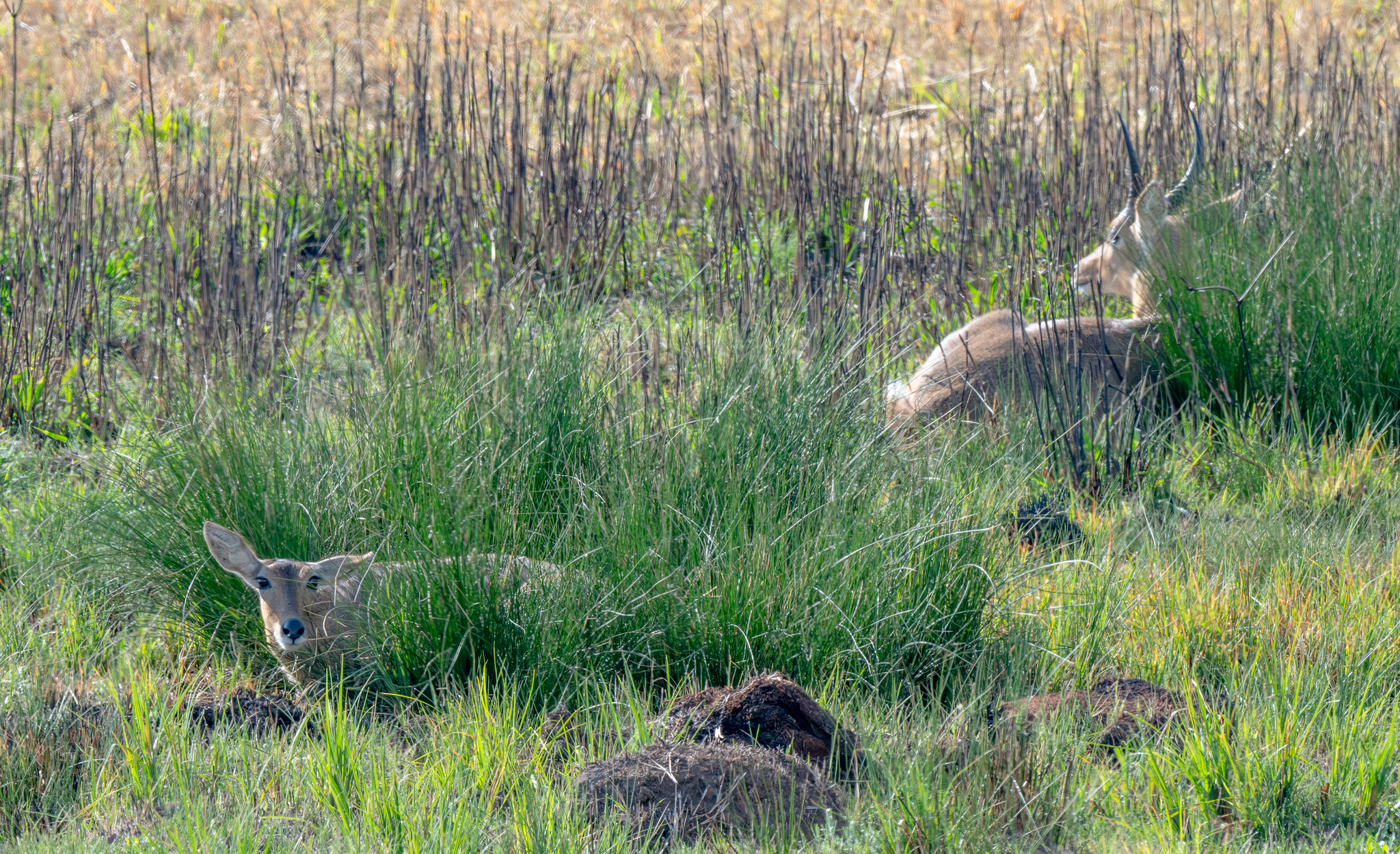
Redunca arundinum — also citedTaxon page·Adobe video 1·Getty 1·Adobe Stock·Adobe video 2·Getty 2
In the case of Redunca fulvorufula, there is a reason not to expect similar behaviour.
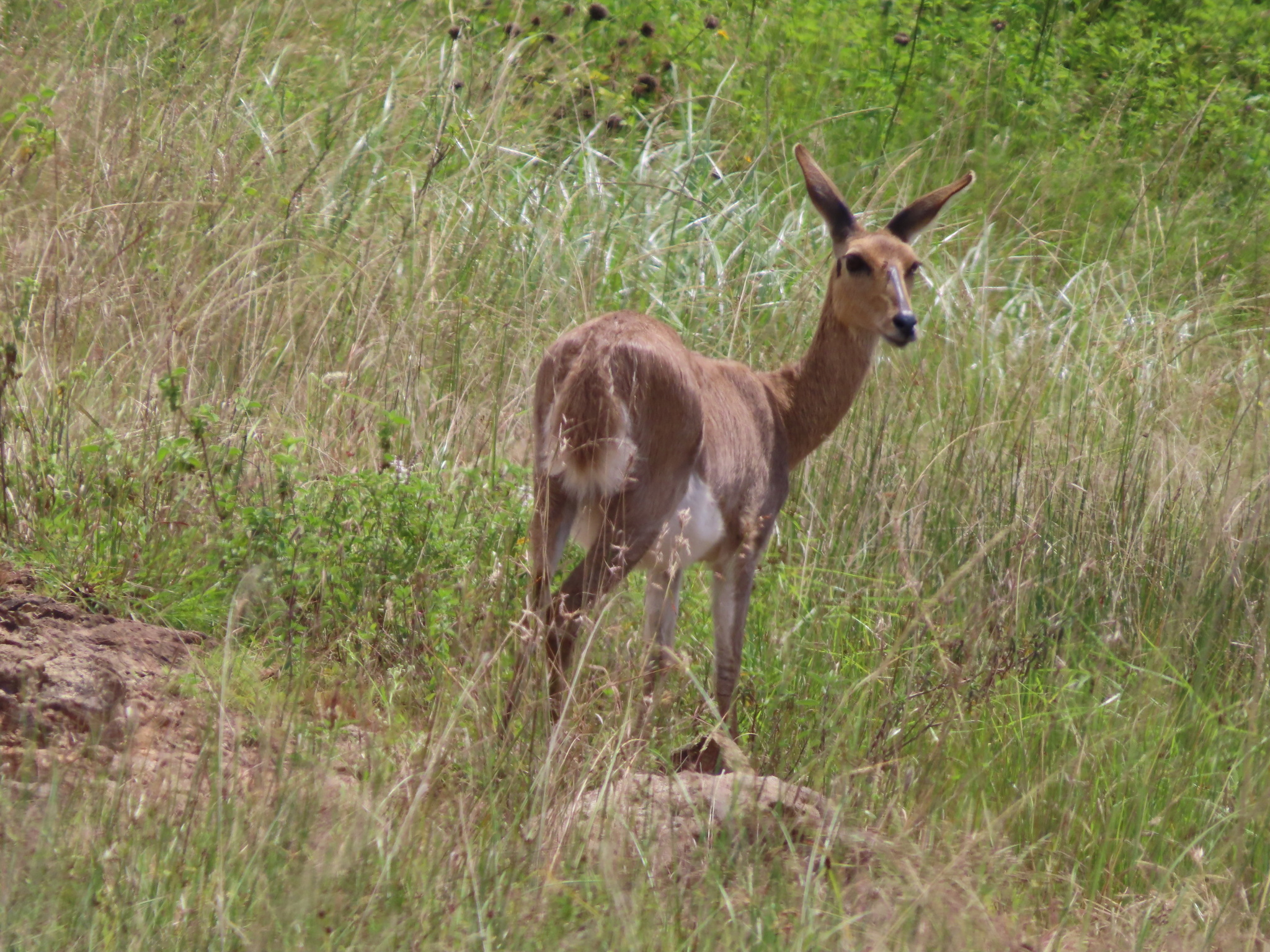
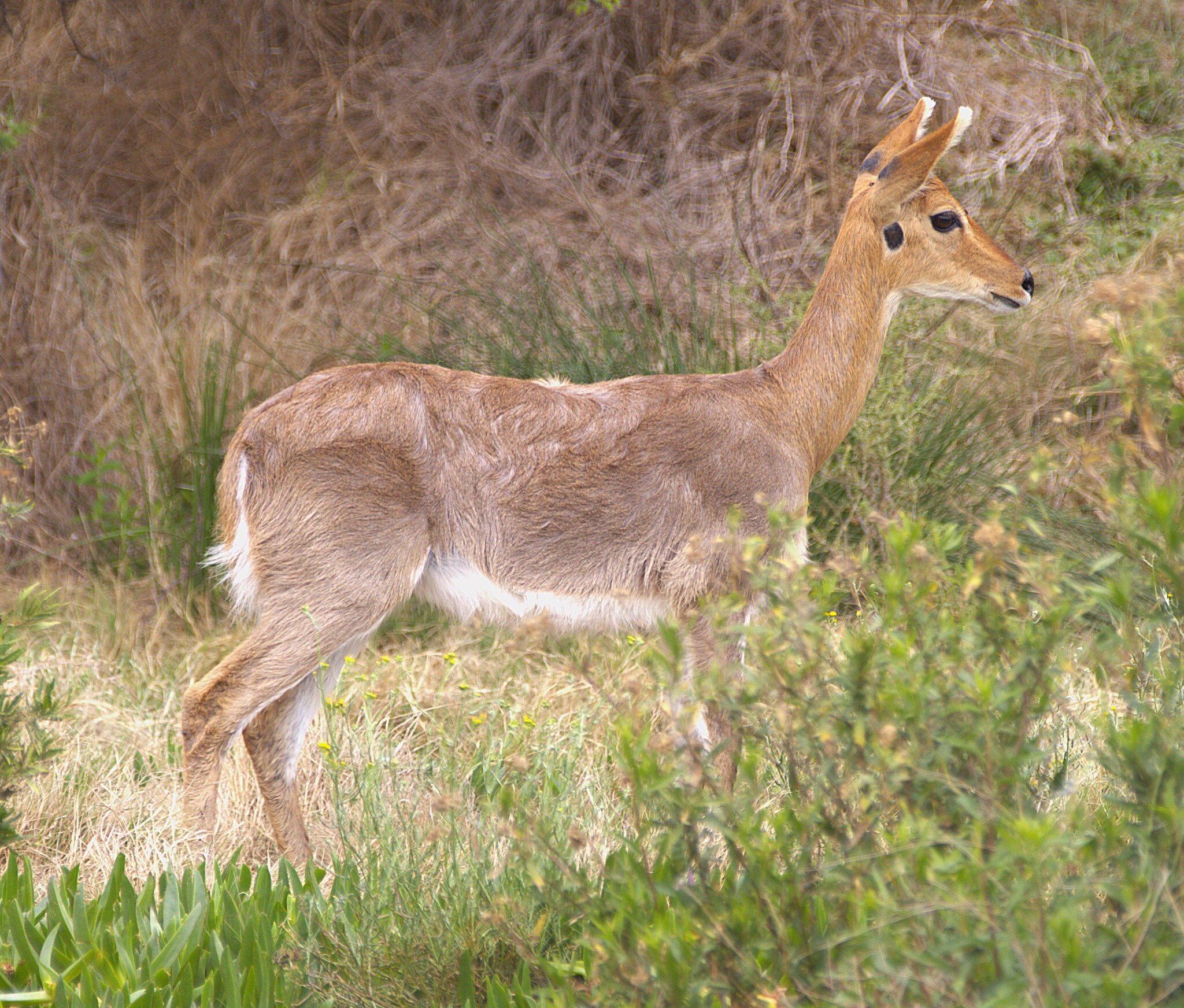
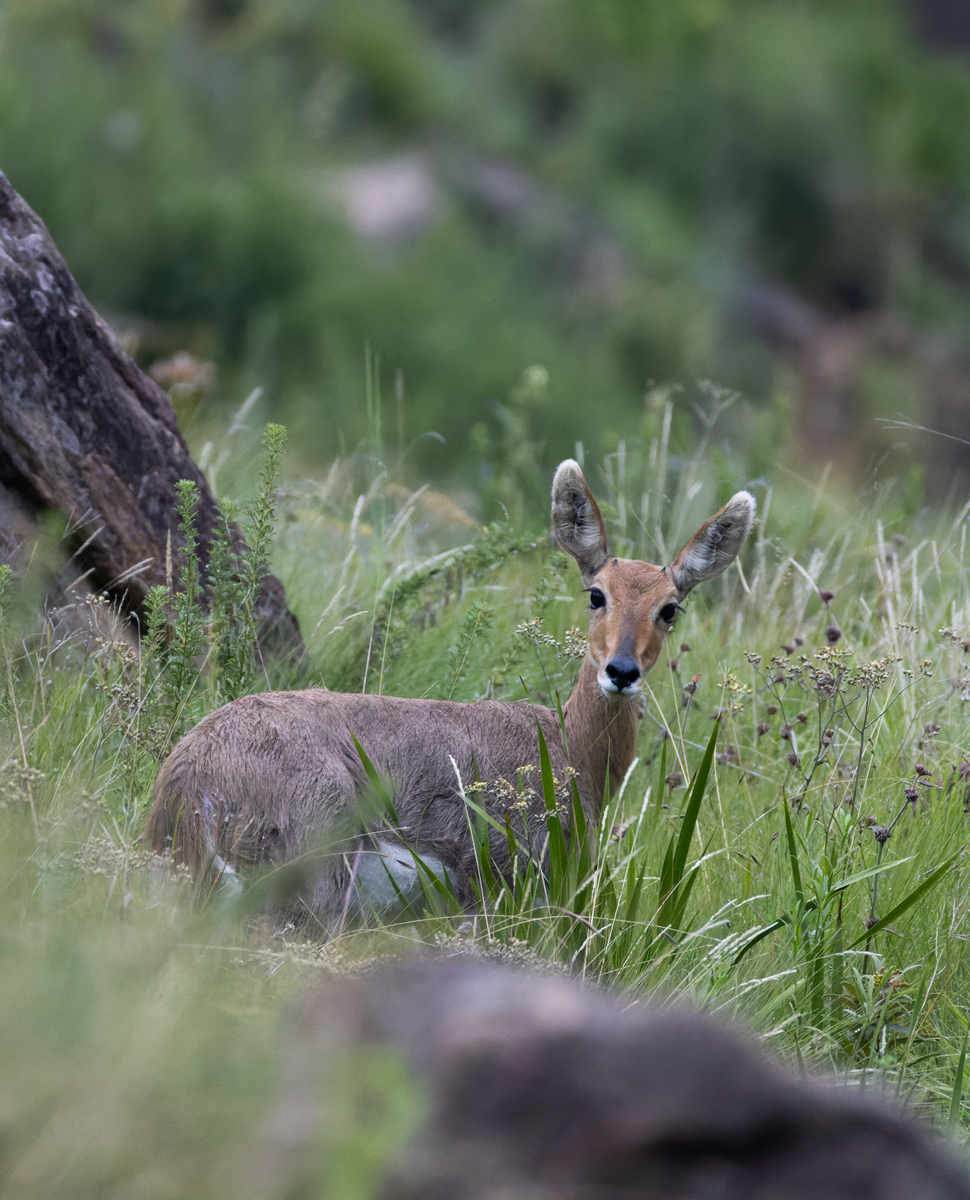
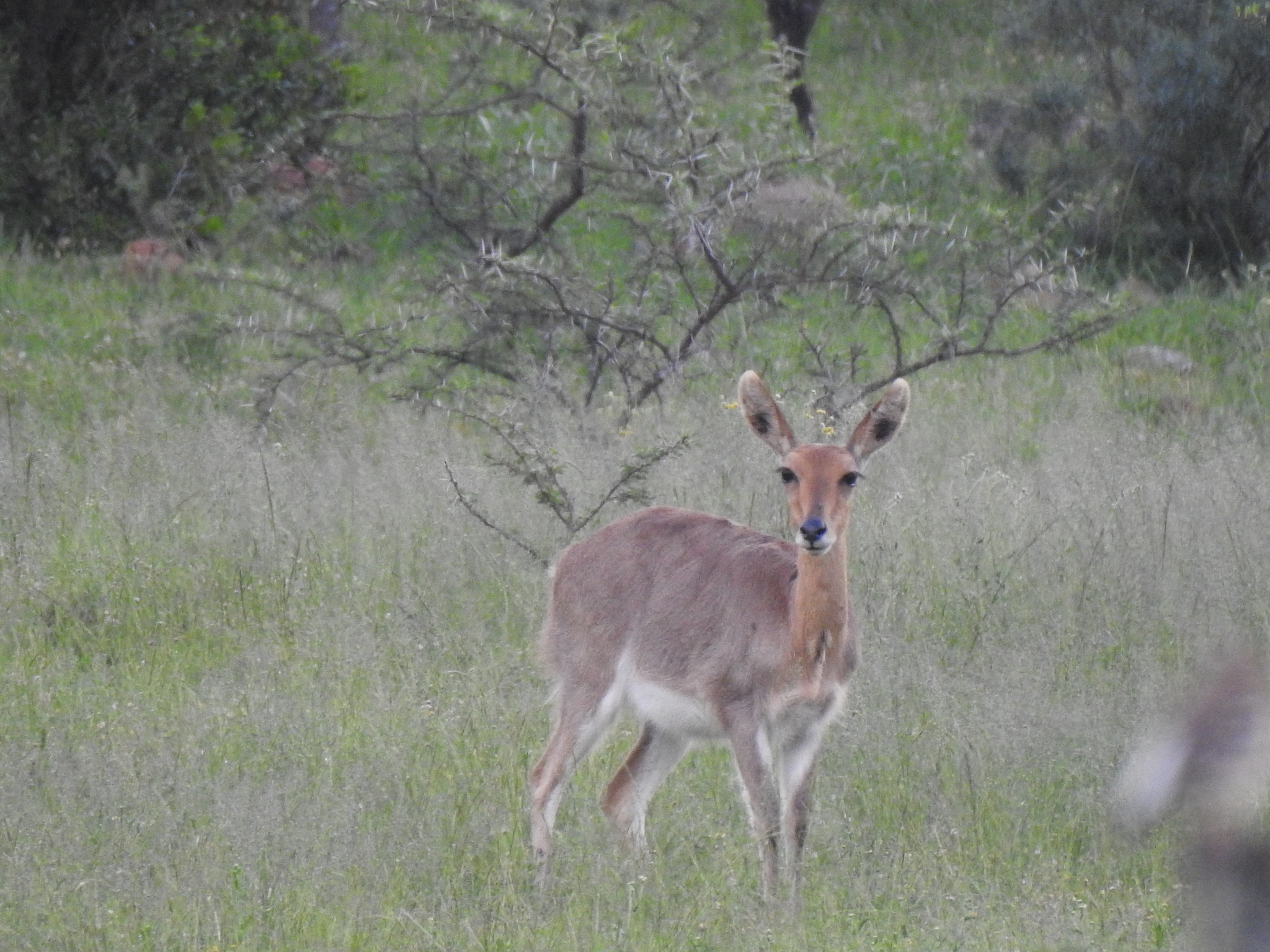
This is that the ear pinnae of R. fulvorufula differ from those of R. redunca in
- shape (being relatively long and narrow), and
- colouration (possessing a nebulous dark patch on the posterior surface, plus a somewhat conspicuously pale tip).
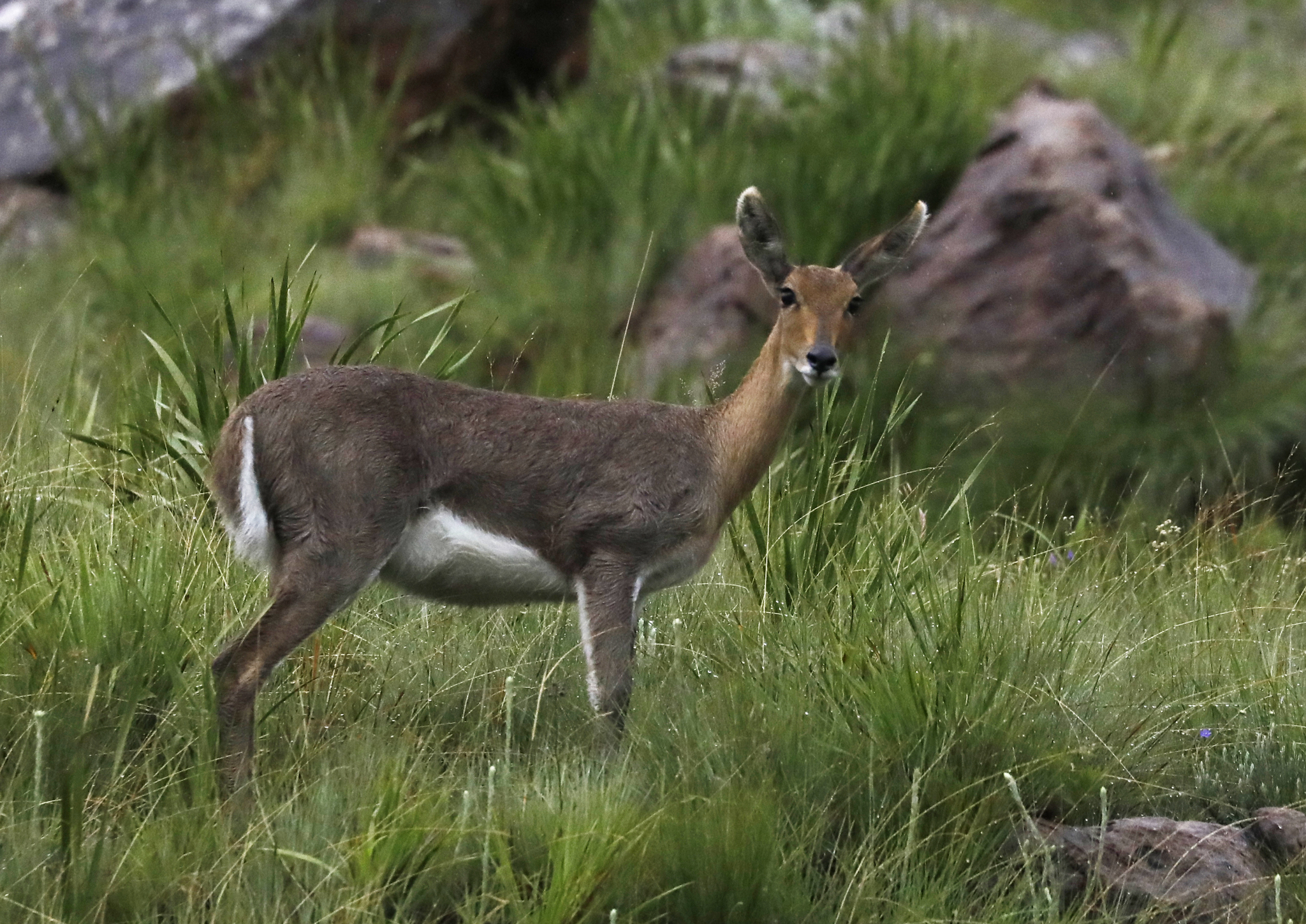
Redunca fulvorufula — also citedTaxon page·Shape (Adobe Stock)·Comparison with grey rhebok
Furthermore, R. fulvorufula differs from its congeners in
- being gregarious, and
- not relying on hiding from predators.
Also citedHerd (Adobe Stock)·Grey rhebok comparison
The following shows a reaction perhaps better-regarded as auricular folding than auricular rotation.
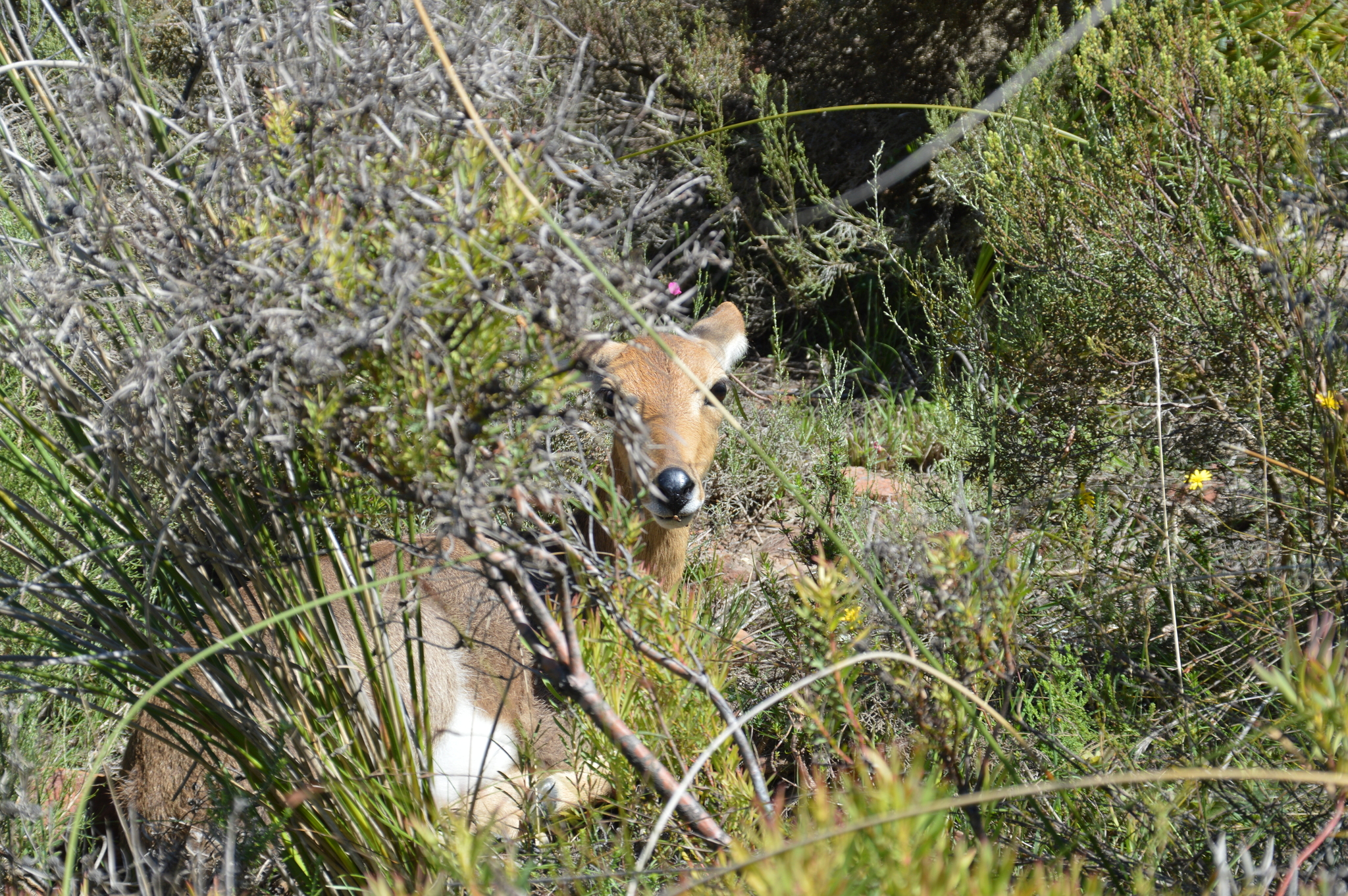
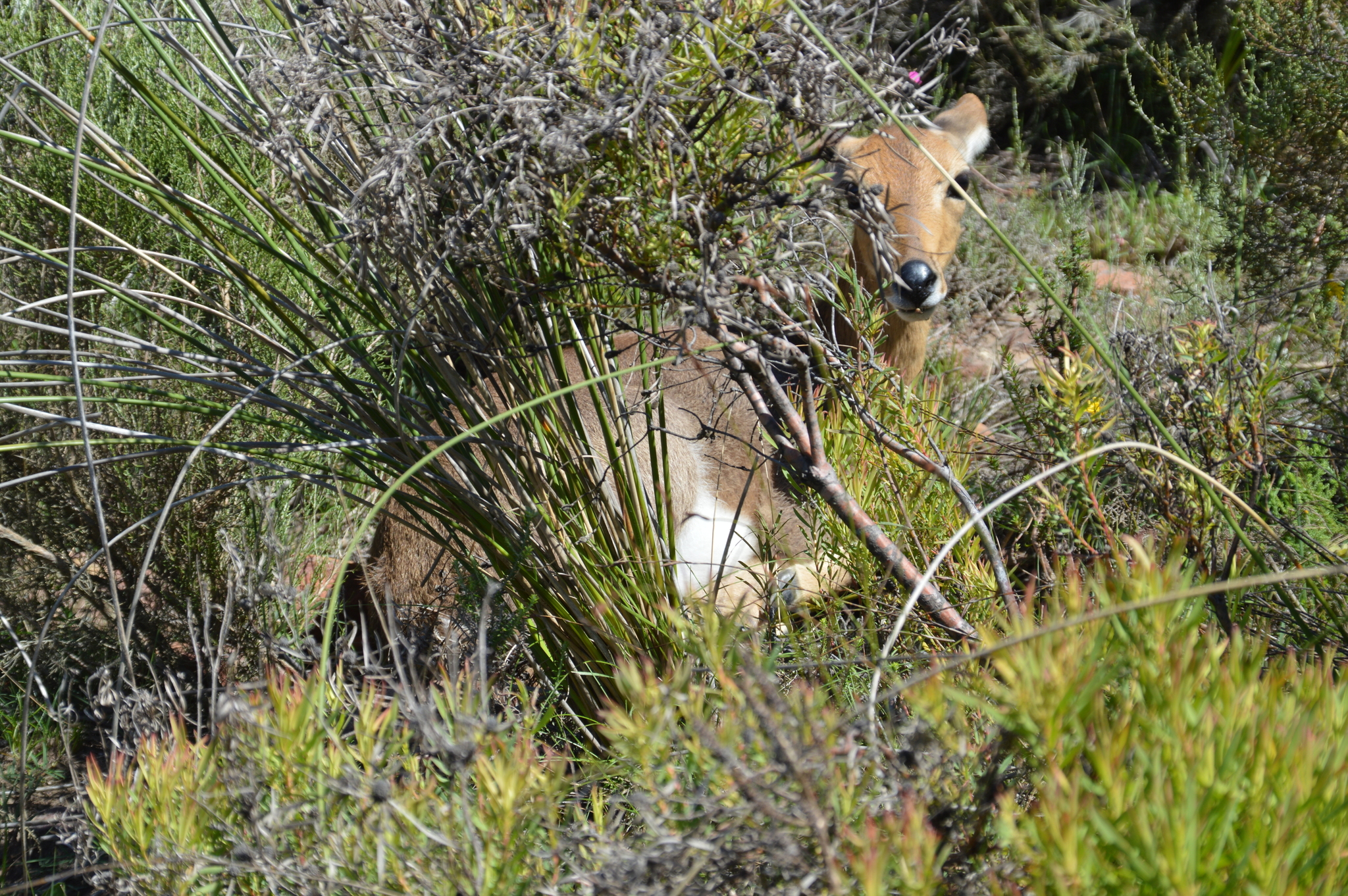
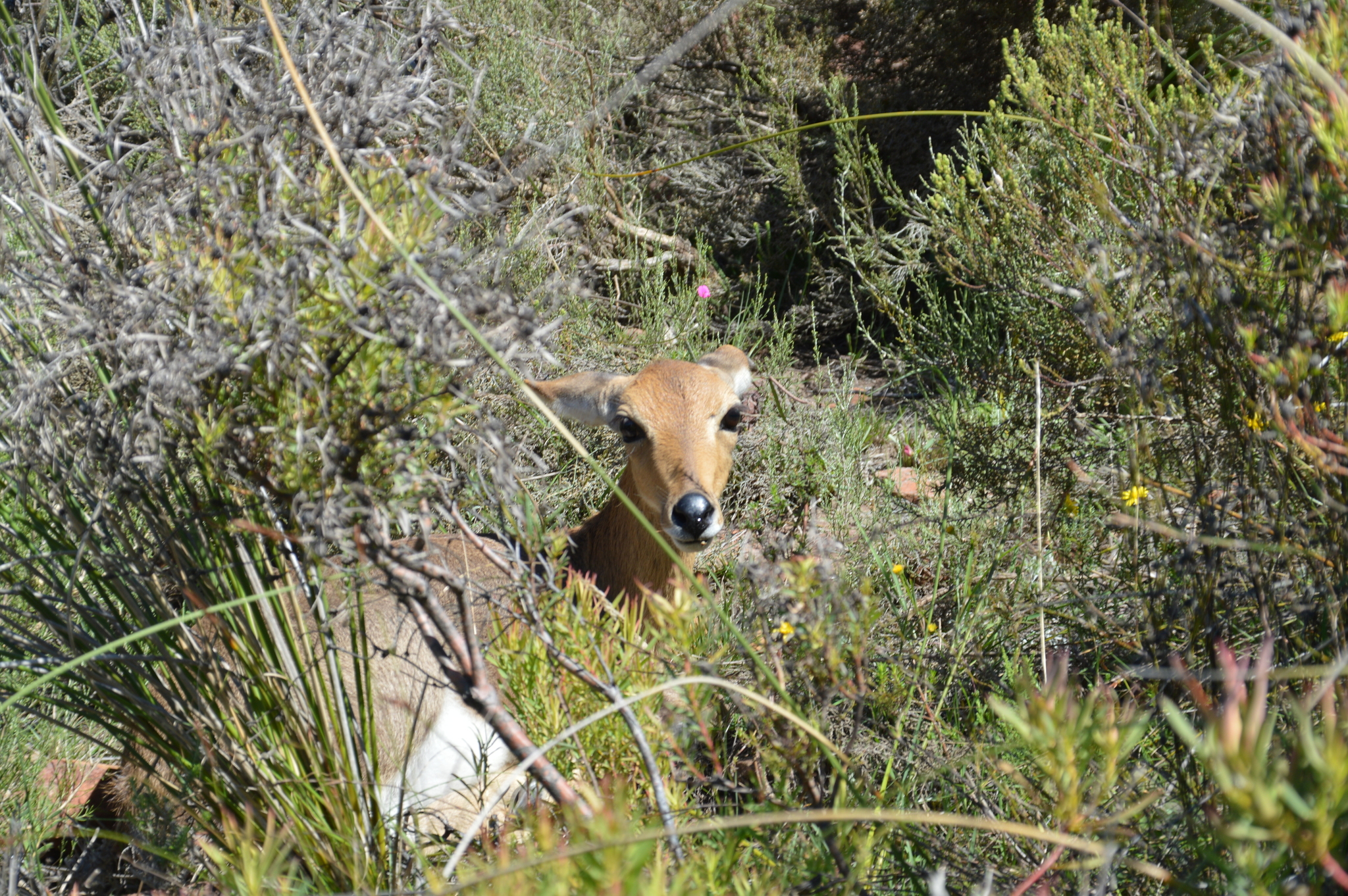
My current view is that each of the three spp. of Redunca is different in the adaptive colouration and anti-predator behaviour of the ear pinnae.
jirizimola noted a video that appears to show the behaviour described here in Redunca arundinum.
VideoYouTube
Possibly similar behaviour in Sylvicapra grimmia.
Also cited on iNaturalistobs. 99477628
Panthera pardus attacking Redunca redunca
CitedGetty 1·Getty 2·Getty 3·Getty 4·Getty 5·Getty 6·Getty 7·Getty 8·Getty 9
The following shows that the colouration of Redunca fulvorufula is more conspicuous than that of Redunca redunca, mainly because the ventral white transcends mere countershading and serves as a lateral flagg.
CitedAdobe Stock
Both Redunca arundinum and Papio ursinus have plain brown colouration.
However, the following shows that R. arundinum can be cryptic even when standing in the open, whereas P. ursinus is dark enough to be conspicuous against a grassy background.
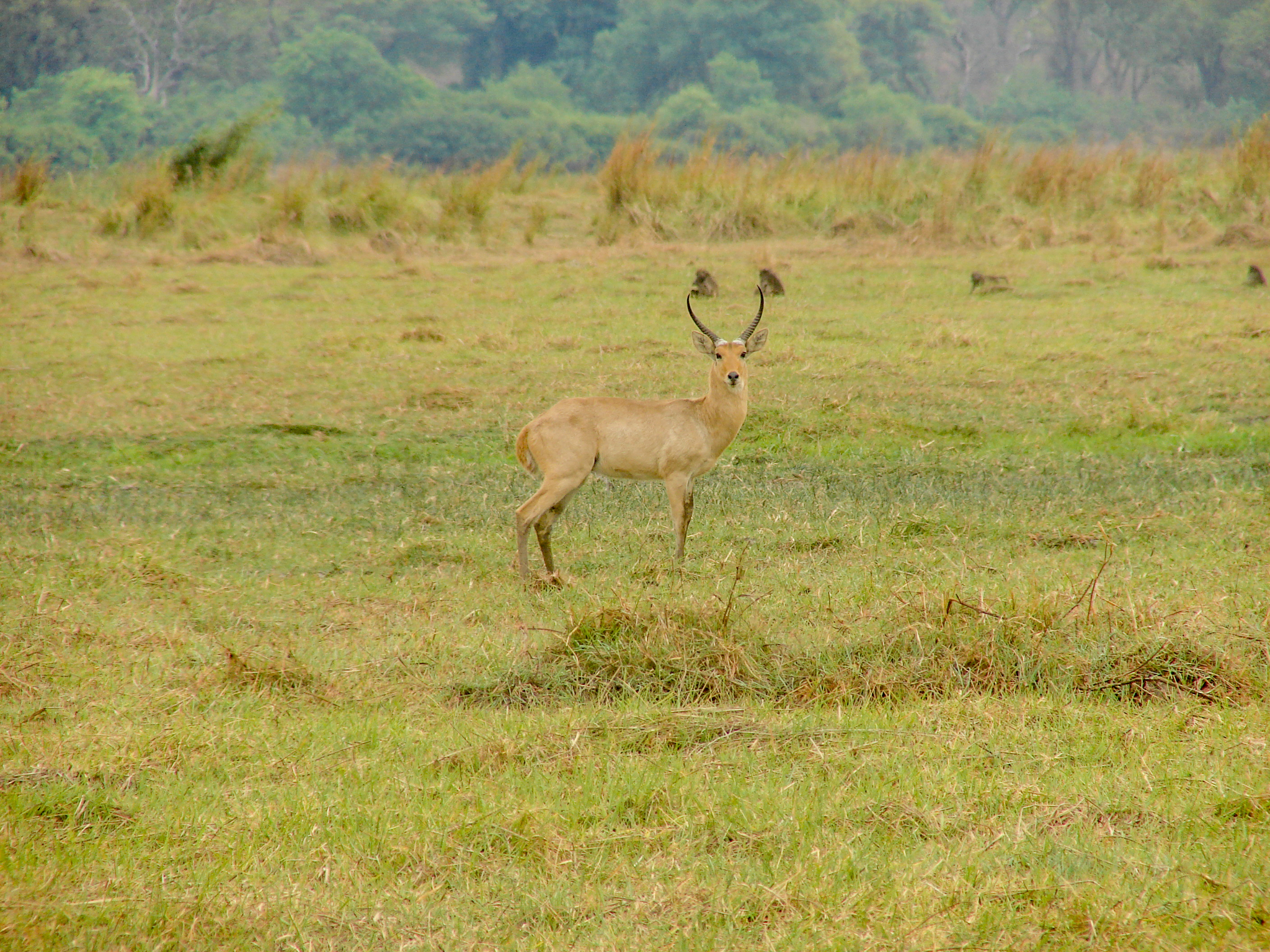
It is an amusing coincidence that this individual of R. arundinum seems to be wearing an individual of P. ursinus on each horn-tip.
Inconsistency of appearance of the anterior surface of the ear pinnae in Redunca redunca
The front-of-ear in R. redunca varies in appearance, in various photographs, from inconspicuously fawn-coloured to conspicuously white.
Redunca redunca differs from most other bovids in that the front-of-ear is almost completely covered in pelage of uniform colour.
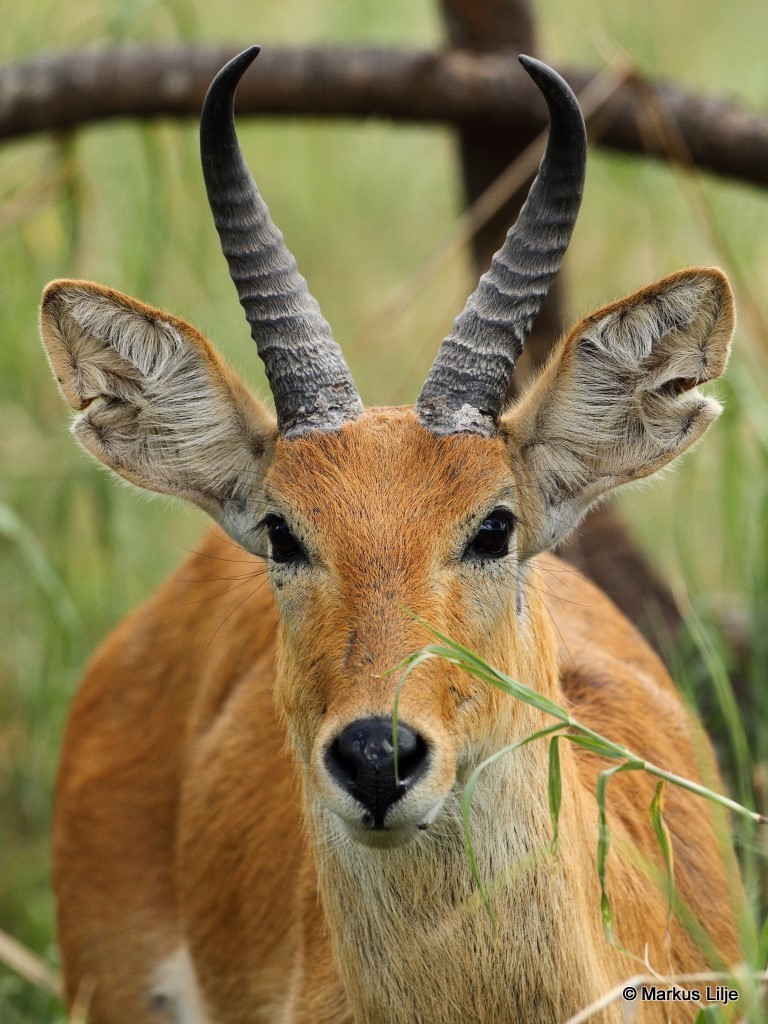
In certain views, this colour is fawn/greyish, making the ears remarkably inconspicuous.
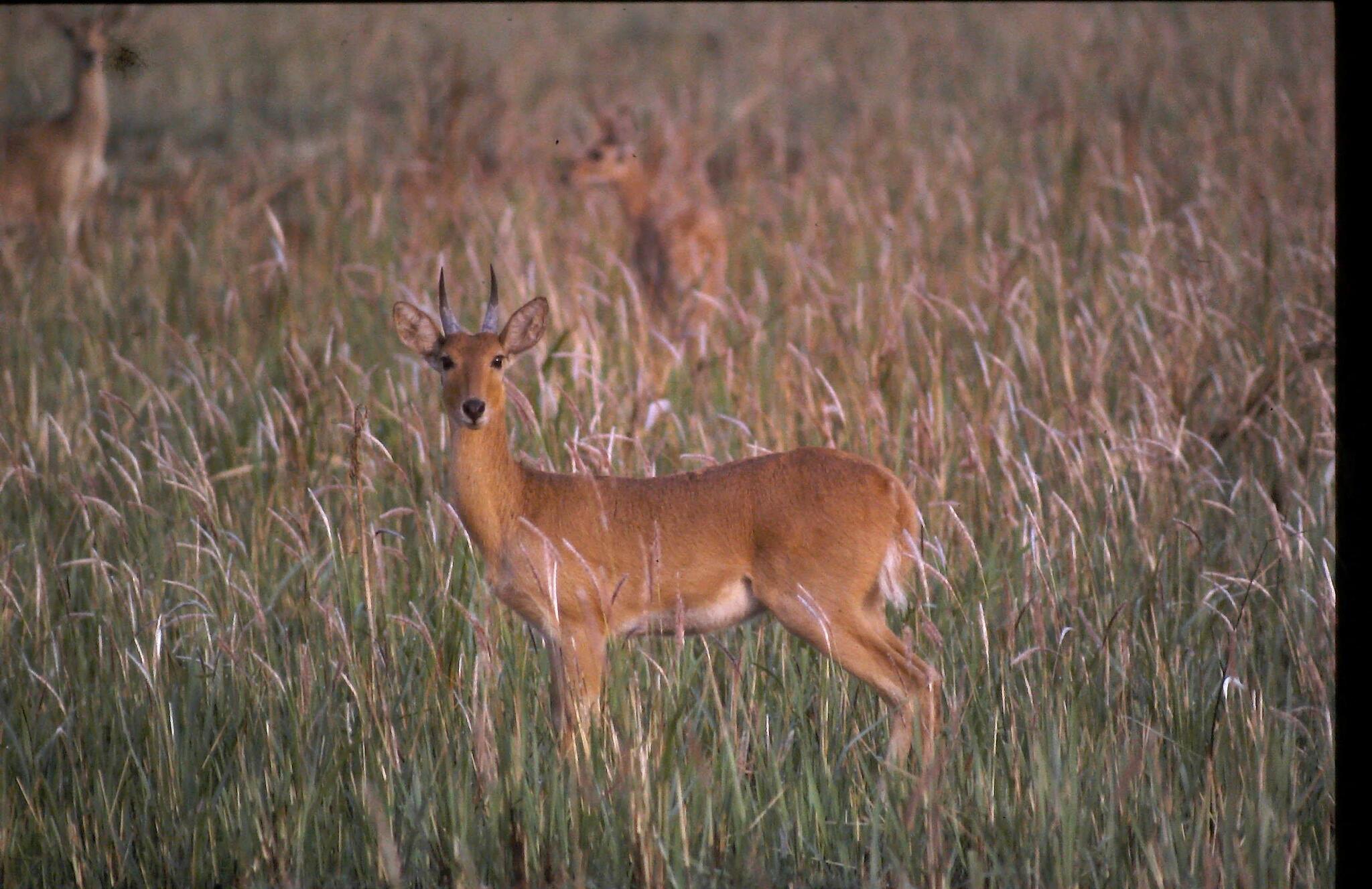
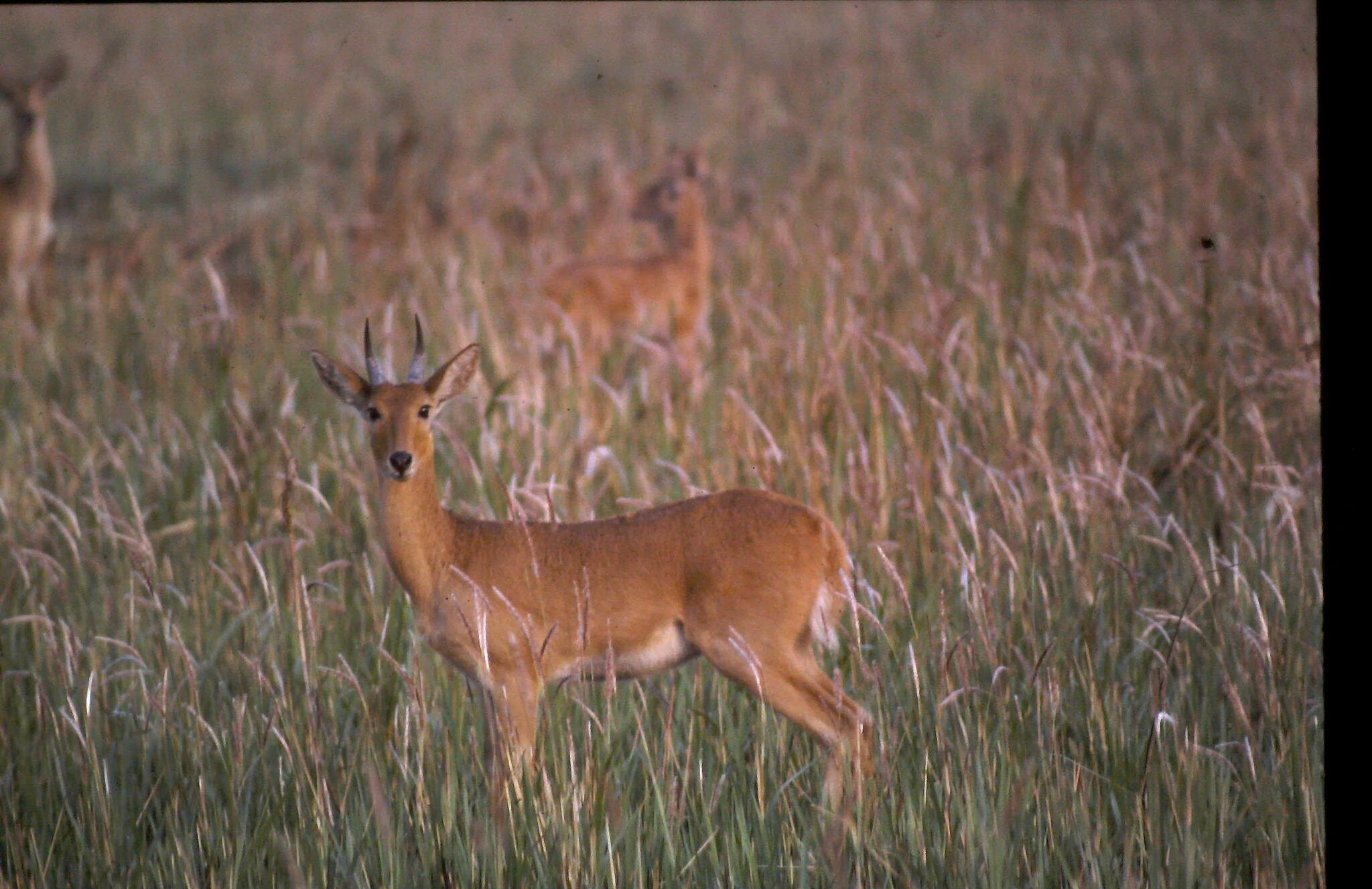
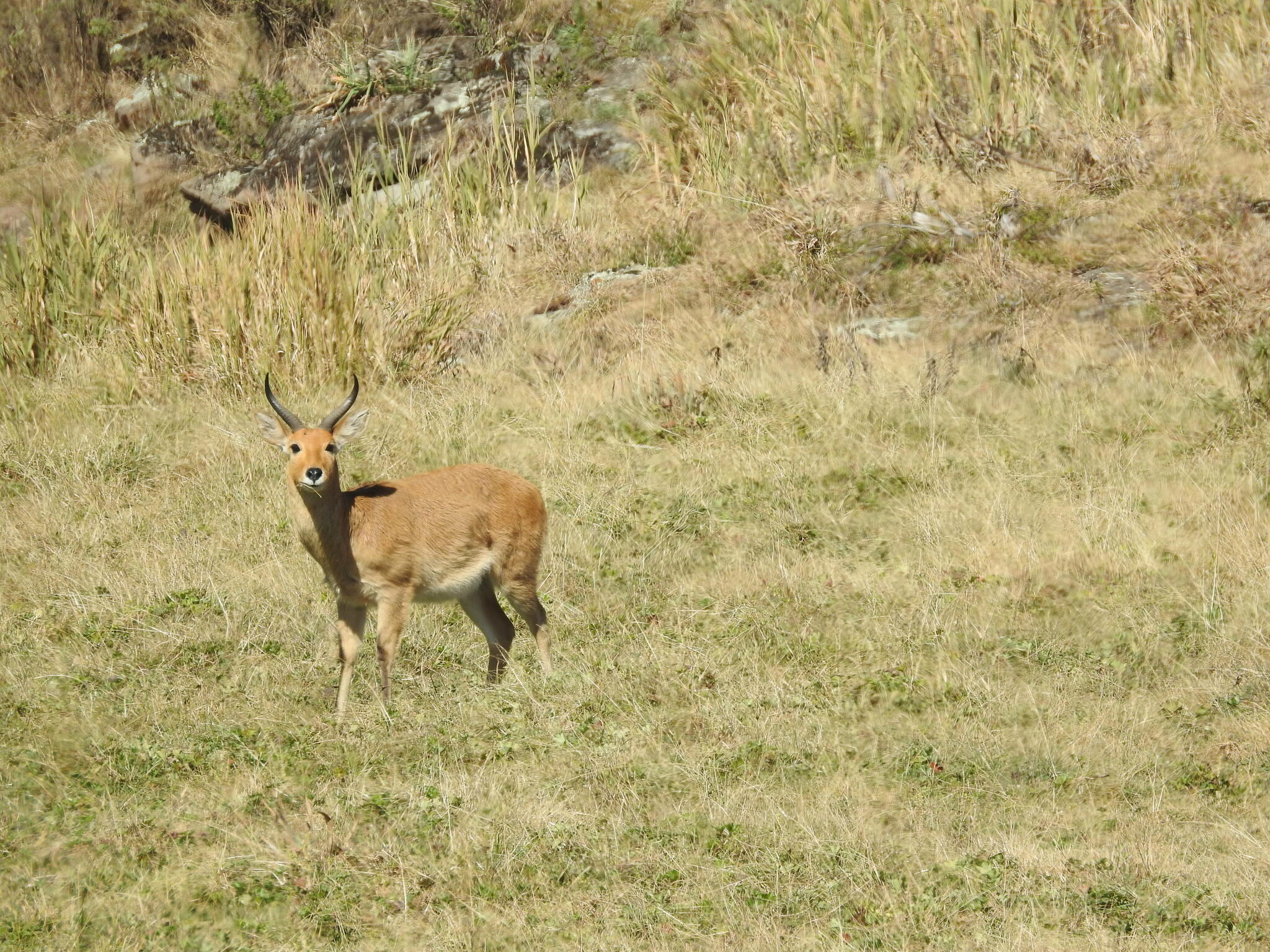
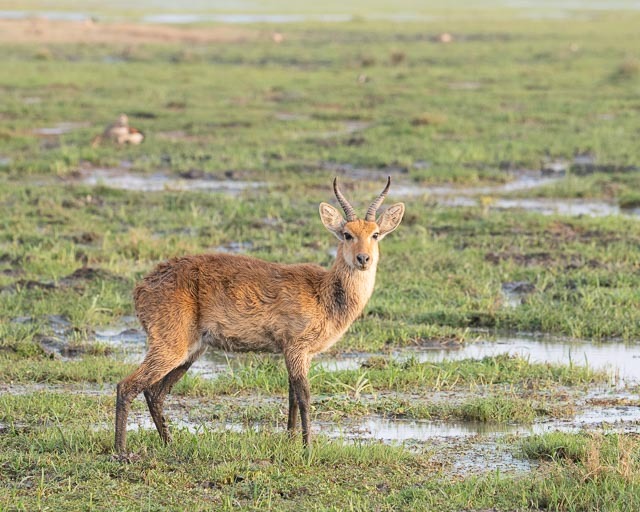
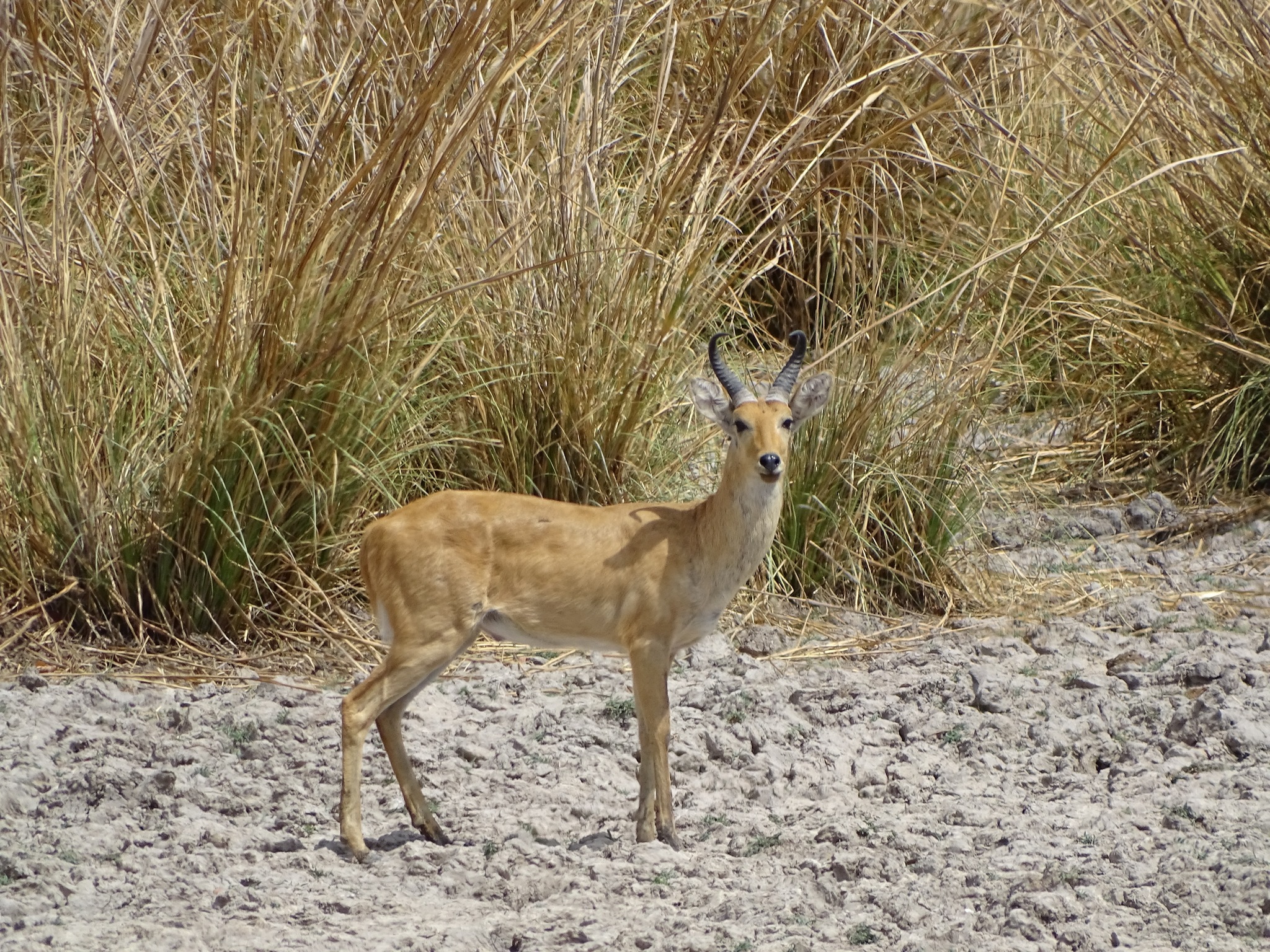
In other views, the colour is white, as if to function adaptively as a signal.
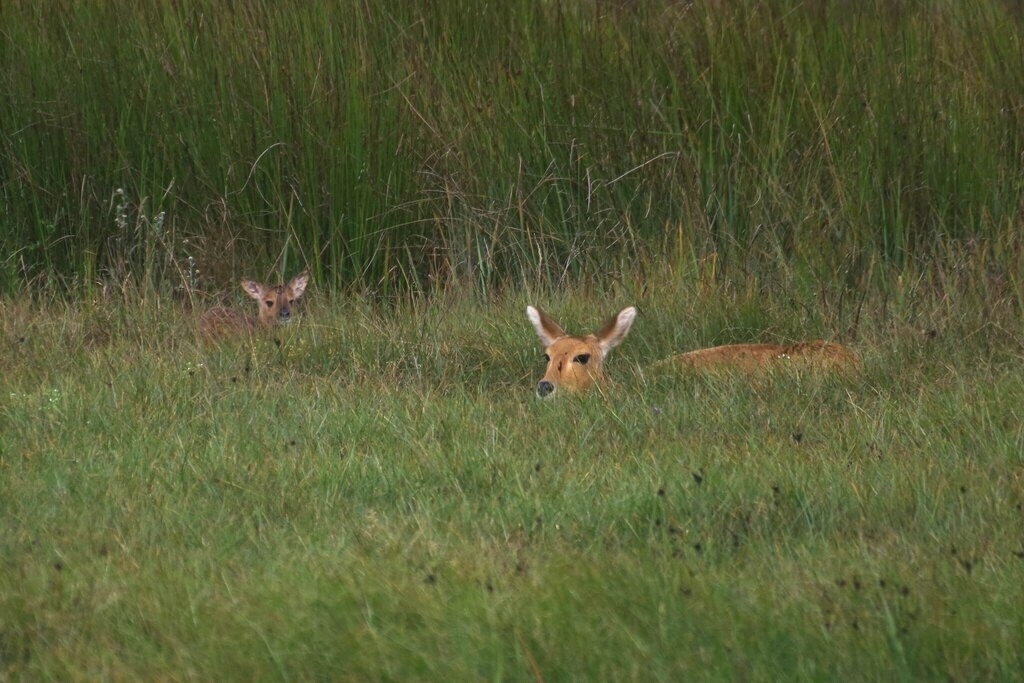
Is this the result of a poorly-studied form of sheen?
Further observations added to the thread: