
The following photo is remarkable for several reasons.
Citedphoto12.com
In the bontebok (Damaliscus pygargus in the strict sense), the ventral surface of the torso is white – to an extent and with a stark contrast that advertises the figure rather than serving as countershading.
CitedWikipedia
In other words, the white ventral surface is part of a lateral bleeze, i.e. a large-scale feature of conspicuous colouration.
CitedRelated post
What has previously escaped notice by naturalists is that, in advanced pregnancy, the vulnerable condition of adult females is actually divulged, rather than concealed, by the white colouration of the belly.
This is surprising because one might expect ‘plains game’ to conceal pregnancy from scanning predators.
Another photo showing advanced pregnancy is.
CitedPhoto on iNaturalist
A second aspect of this scene is the large heaps of the Cape dune mole-rat (Bathyergus suillus, ), a species similarly restricted to the Fynbos Biome.
CitedWikipedia 1·Wikipedia 2
It is remarkable enough that such a large gopher-like rodent occurs anywhere on Earth.
However, it is all the more remarkable that this species forms part of the same trophic guild as the bontebok.
CitedWikipedia
The Cape dune mole-rat eats mainly herbaceous plants, which it approaches from below ground, and pulls into its burrow.
This means that this rodent
- shares the main diet of the bontebok, and
- potentially competes with this ungulate for grass.
CitedRelated post
Indeed, it is possible that the bontebok was originally excluded from sandplains, partly owing to this invisible competition. (The presence of the bontebok in the depicted conservation area, viz. Bushmanskloof, is somewhat artificial.)
Citedbushmanskloof.co.za
Finally, this is the natural habitat of one of the few plants of fynbos that is farmed for consumption by Homo sapiens, viz. rooibos tea.
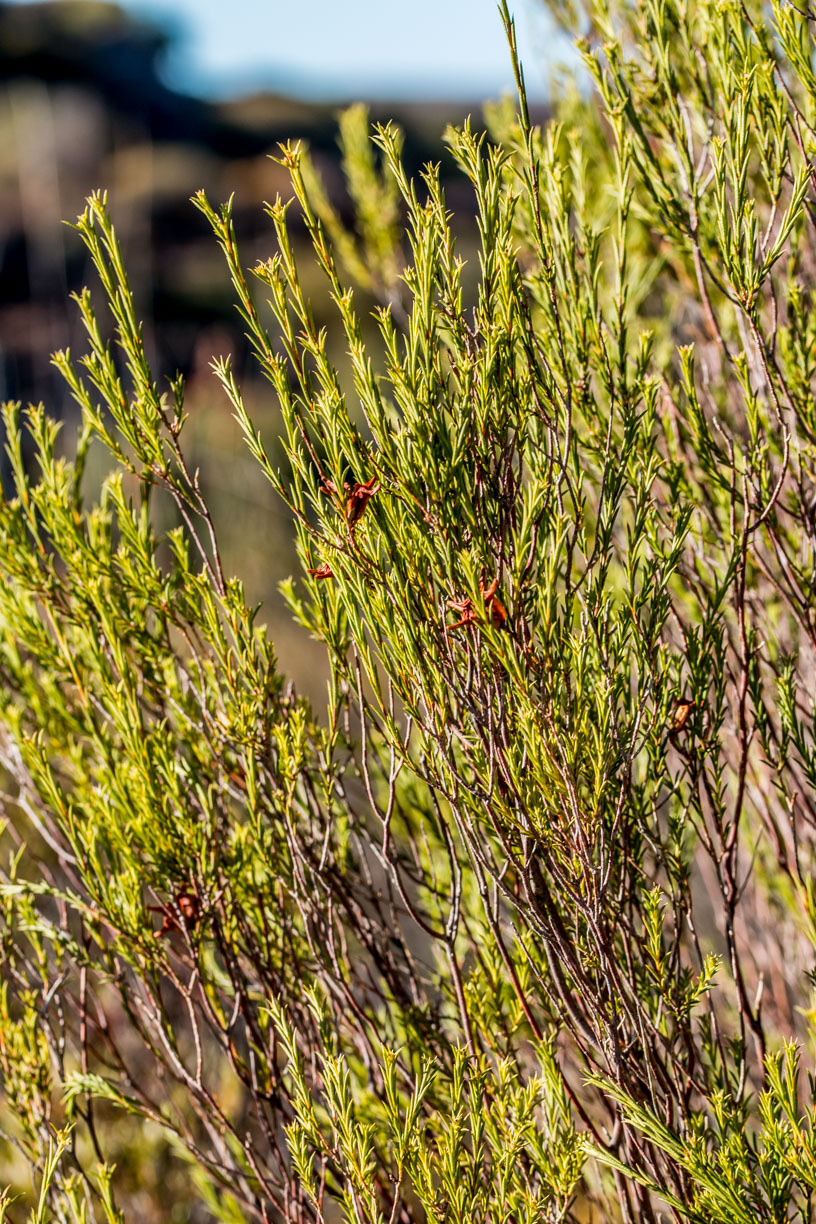
Also cited on iNaturalistobs. 62683156
CitedWikipedia
This ericoid species
CitedWikipedia
- is potentially a (minor) part of the diet of both the bontebok and the Cape dune mole-rat, and
- may perhaps even be present in this very photograph.
Citedphoto12.com
A challenge to iNaturalists:
Can any Reader identify A. linearis in any of the following additional photos of the bontebok from the same location?
and and and and.
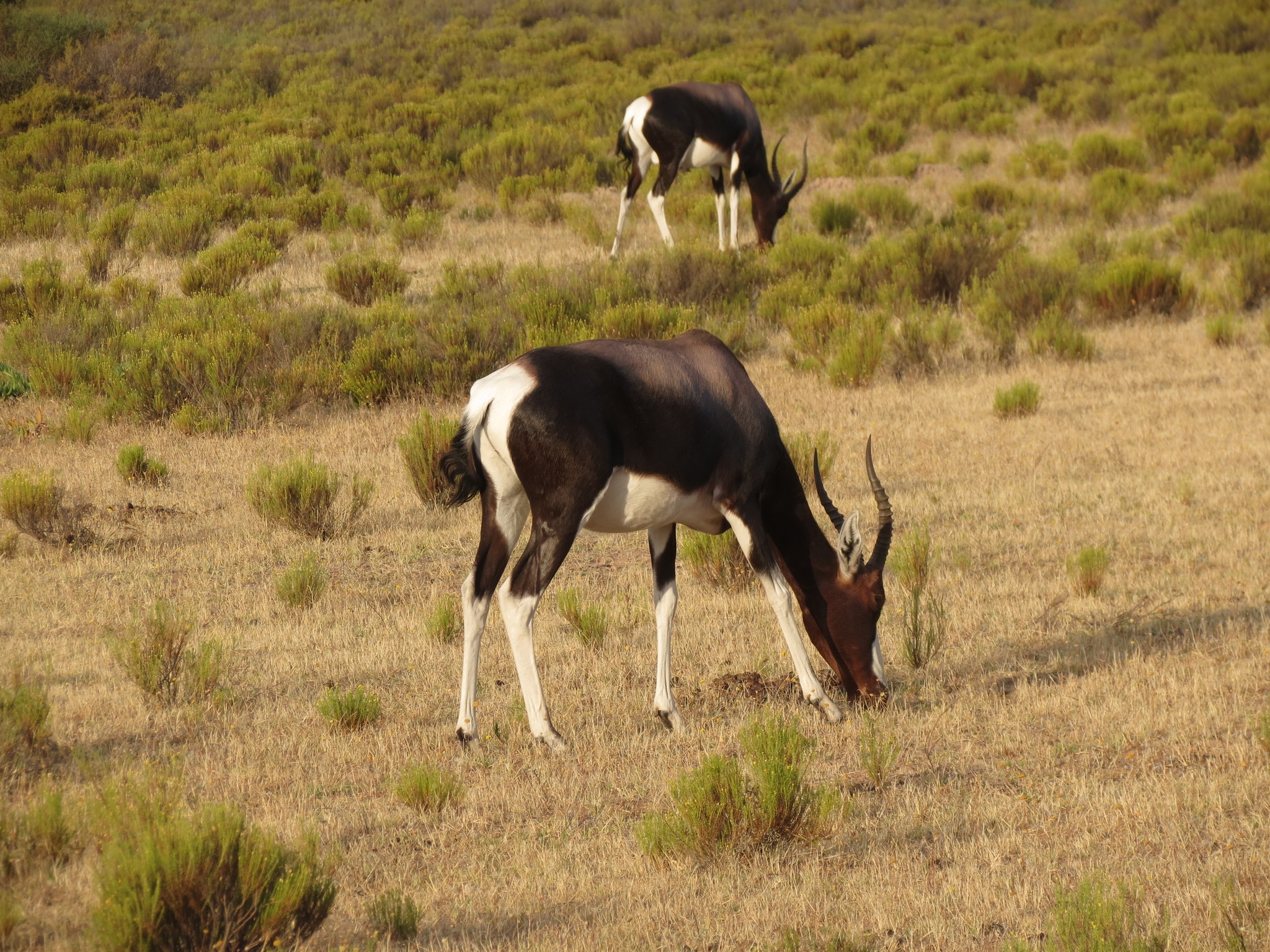
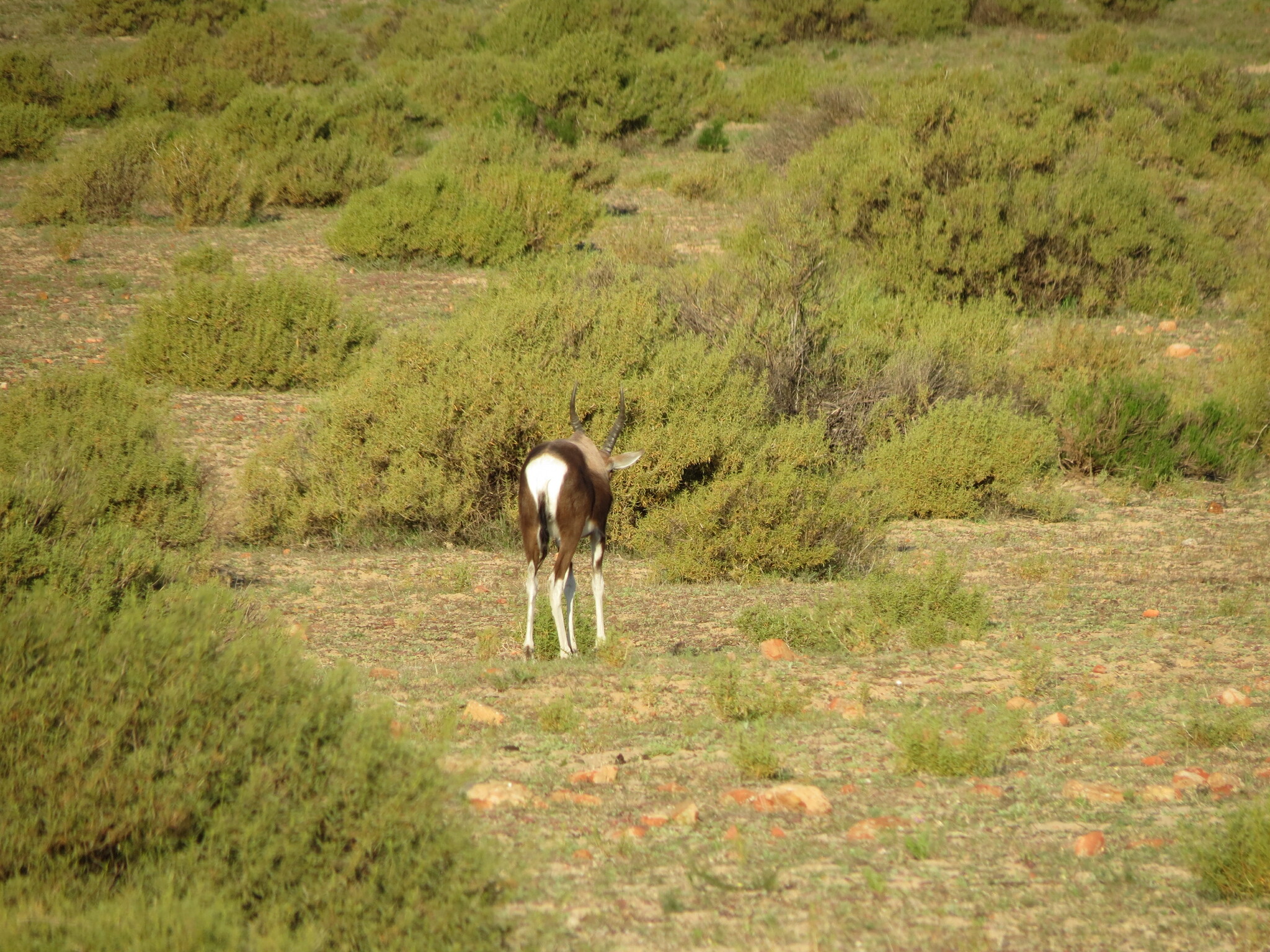
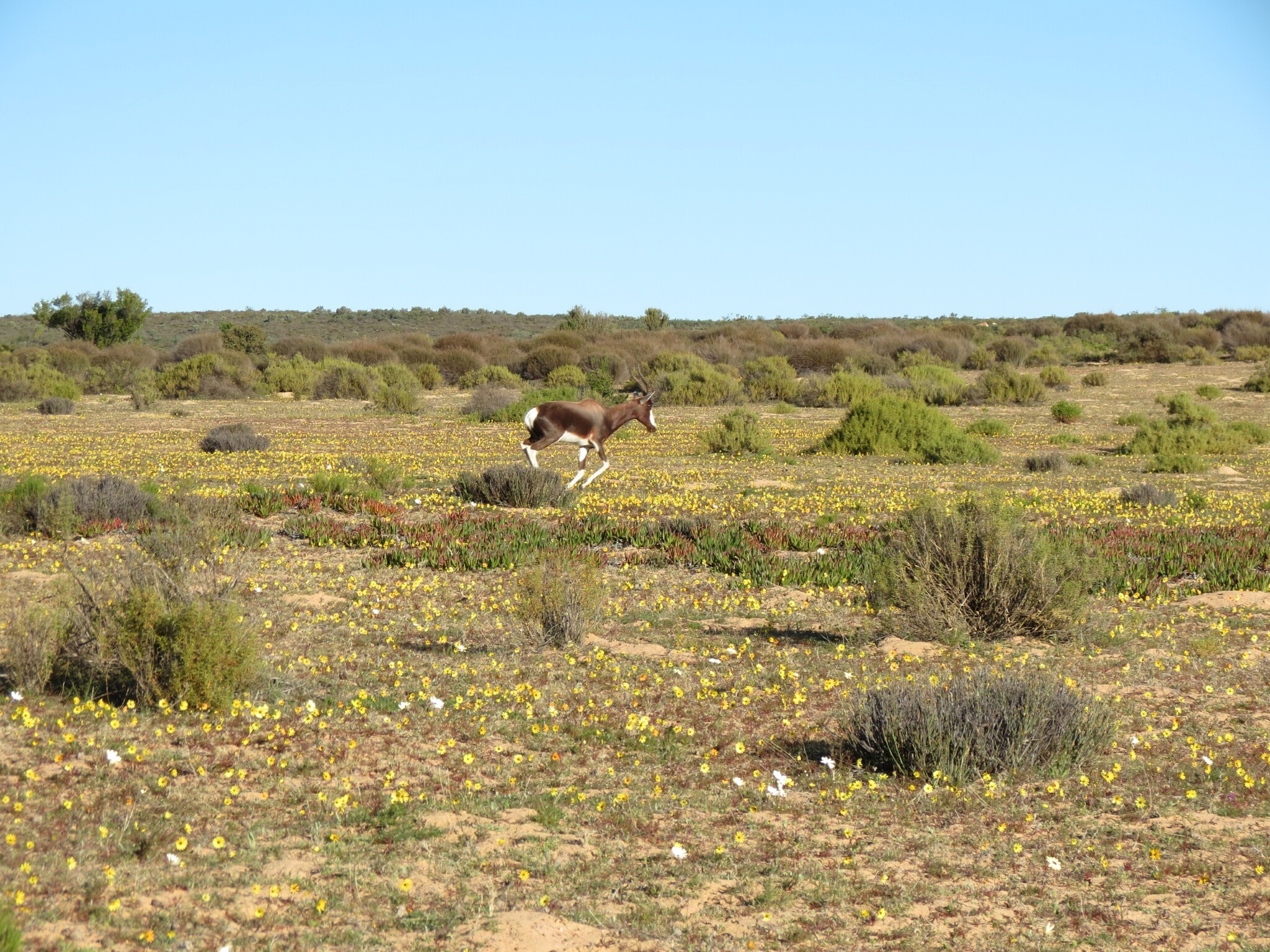
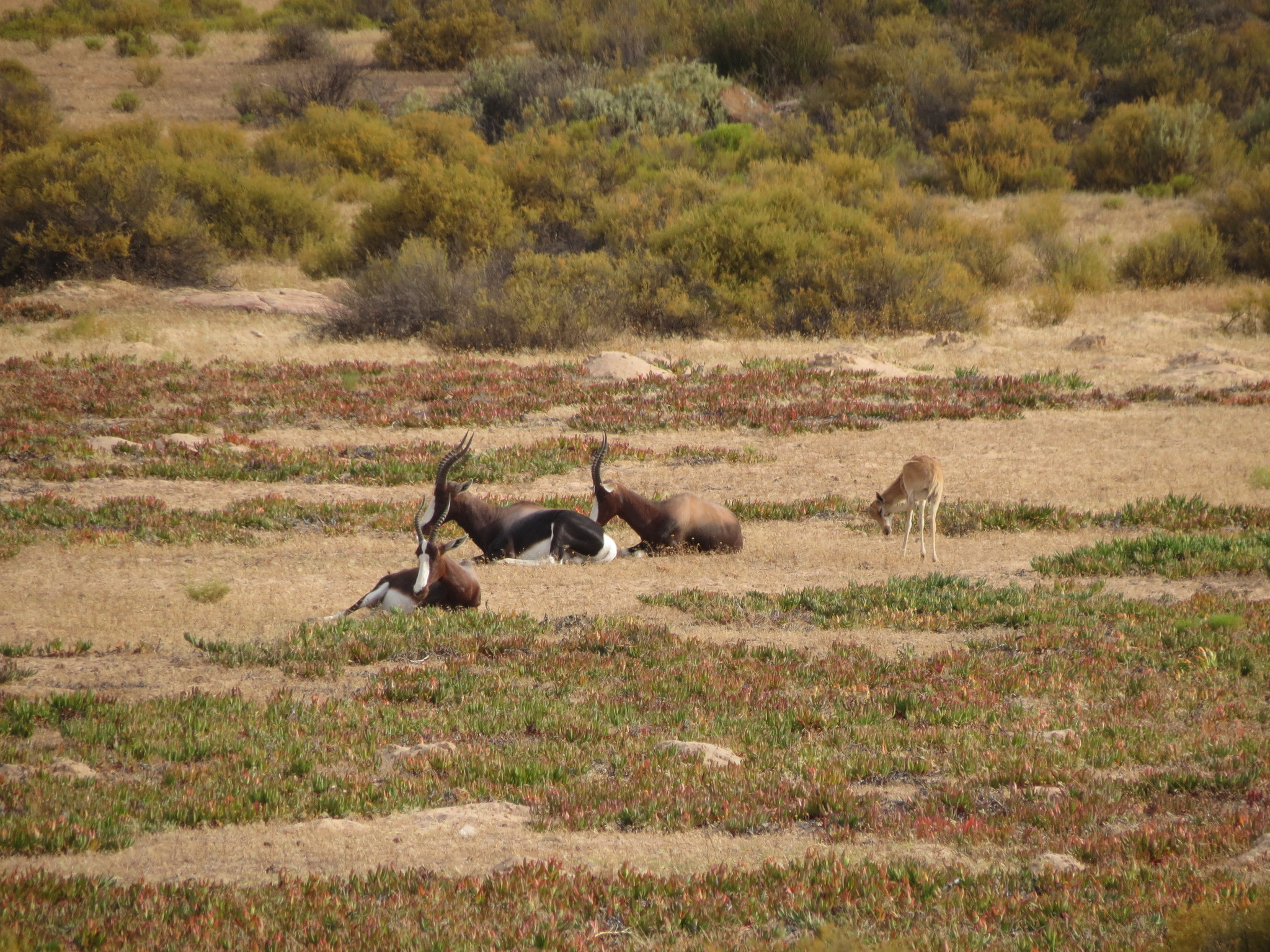
Also cited on iNaturalistobs. 62616665
Posted on June 25, 2026 08:24 PM by
milewski
The author added the following in comments beneath the original post.
Chatgpt
MY QUESTION
Consider all the gopher-like rodents on Earth, which belong to various families. Which species has the greatest body mass? Supply full references.
ANSWER FROM CHATGPT
If by “gopher-like rodents” you mean the broad ecological/morphological guild of fossorial rodents that resemble pocket gophers—i.e., pocket gophers (Geomyidae), tuco-tucos (Ctenomyidae/Octodontidae), zokors (Spalacidae), African mole-rats (Bathyergidae), root-rats, etc.—then the heaviest living species appears to be the giant root-rat, Tachyoryctes macrocephalus, of the Ethiopian Highlands.
Published body masses for the principal contenders are approximately:
Species Maximum or typical adult mass
Tachyoryctes macrocephalus up to c. 1.5 kg (males often >1 kg)
Ctenomys conoveri slightly over 1 kg
Orthogeomys grandis about 0.83 kg, the largest pocket gopher
Zokors (Myospalax spp.) up to about 560 g
The giant pocket gopher, Orthogeomys grandis, is explicitly described as the largest member of the family Geomyidae and averages about 830 g.
Tuco-tucos can exceed 1 kg in the largest species.
Zokors are substantially smaller.
The giant root-rat, however, is generally reported as reaching around 1.5 kg and is therefore the largest living member of this “gopher-like” ecological assemblage.
References
Yalden, D. W. (1985). The rodents of the Bale Mountains, Ethiopia. African Journal of Ecology, 23, 201–225.
Yalden, D. W., Largen, M. J., Kock, D., & Hillman, J. C. (1976). Catalogue of the mammals of Ethiopia. 2. Rodentia. Monitore Zoologico Italiano (N.S.), Supplemento 8, 1–118.
Vaughan, T. A., Ryan, J. M., & Czaplewski, N. J. (2015). Mammalogy (6th ed.). Jones & Bartlett Learning.
Genoways, H. H., & Brown, J. H. (eds.). (1993). Biology of the Heteromyidae. Special Publication, American Society of Mammalogists.
Nowak, R. M. (1999). Walker’s Mammals of the World (6th ed.). Johns Hopkins University Press.
Lessa, E. P., Cook, J. A., & Patton, J. L. (2008). “Genus Ctenomys.” In: Gardner, A. L. (ed.), Mammals of South America, Volume 1: Marsupials, Xenarthrans, Shrews, and Bats. University of Chicago Press.
If you intended “gopher-like” in an even broader sense that includes all subterranean rodents worldwide (including the largest African mole-rats), I can provide a family-by-family comparison with documented maximum body masses.
END OF TRANSCRIPT FROM AI
Chatgpt
MY QUESTION
Consider all the gopher-like rodents on Earth, which belong to various families including Bathyergidae. Which species has the greatest body mass? Supply full references.
ANSWER FROM CHATGPT
If by “gopher-like rodents” you mean the various convergently evolved fossorial rodents that resemble pocket gophers—particularly members of the families Bathyergidae (African mole-rats), Geomyidae (pocket gophers), Spalacidae (blind mole-rats and bamboo rats), and related subterranean forms—then the largest living species appears to be the African mole-rat Cape dune mole-rat.
Published accounts give the following body masses:
Species Family Maximum reported mass
Cape dune mole-rat Bathyergidae up to 2.0–2.5 kg
Giant root-rat Spalacidae (Rhizomyinae) generally around 0.5–1 kg
Largest pocket gophers (Geomys spp.) Geomyidae usually <1 kg
Bamboo rats (Rhizomys spp.) Spalacidae commonly up to about 2 kg, occasionally slightly more
The strongest evidence for the largest species comes from Bathyergus suillus. Bennett’s species account in Mammalian Species states that it is “the largest (up to 2 kg) of all bathyergids in Africa.”
Other authoritative summaries report a weight range of 1–2.5 kg for the species.
Accordingly, among the living gopher-like subterranean rodents, the Cape dune mole-rat (Bathyergus suillus) is generally regarded as the heaviest species known.
References
Bennett, N. C. 2007. Bathyergus suillus (Rodentia: Bathyergidae). Mammalian Species 828: 1–7.
Hart, L., and T. H. Bennett. 2006. Craniometric sexual dimorphism and age variation in the South African Cape dune mole-rat, Bathyergus suillus. Journal of Mammalogy 87: 657–666.
Skinner, J. D., and R. H. N. Smithers. 1990. The Mammals of the Southern African Subregion. University of Pretoria, Pretoria.
Wilson, D. E., and D. M. Reeder (eds.). 2005. Mammal Species of the World: A Taxonomic and Geographic Reference. 3rd ed. Johns Hopkins University Press, Baltimore.
One caveat: if you broaden “gopher-like” to include all bamboo rats (Rhizomyinae), some exceptionally large individuals of the Hoary bamboo rat may approach the mass of Bathyergus suillus. However, the literature most consistently identifies Bathyergus suillus as the largest living fully subterranean rodent in Africa and among the heaviest of all gopher-like rodents.
END OF TRANSCRIPT FROM AI
Chatgpt
MY QUESTION
Aspalathus linearis is farmed in Western Cape province. Which animals interfere with this horticulture, by eating the plant? Supply full references.
ANSWER FROM CHATGPT
The published literature on cultivated Aspalathus linearis is surprisingly sparse regarding vertebrate herbivores. Most work on rooibos crop losses has focused on insect pests rather than mammals or birds. Nevertheless, a few vertebrates are documented as interfering with cultivation, while others are mentioned in agricultural extension literature rather than the peer-reviewed literature.
Lagomorphs (hares and rabbits)
The best-documented vertebrate browsers of cultivated rooibos are hares, particularly when plants are young. Farmers in the Cederberg and Bokkeveld regions commonly report browsing of seedlings and recently established plantations. Although the peer-reviewed literature mentions this only briefly, agricultural extension manuals for rooibos production recommend fencing against hare damage.
The principal culprit is generally considered to be:
Cape hare
In some localities the:
Smith’s red rock hare
may also browse young shrubs where plantations border natural rocky habitat, although explicit documentation on rooibos is much weaker.
Rodents
Rodents occasionally damage rooibos by clipping seedlings or gnawing stems.
Species reported by South African agricultural sources include:
Striped mouse
Cape gerbil
The evidence is largely observational from farmers and extension officers rather than experimental.
Domestic livestock
Where fencing is inadequate, grazing animals may browse rooibos:
Domestic sheep
Domestic goat
Commercial plantations are therefore normally fenced to exclude stock.
Wild antelope
Small antelope occasionally browse cultivated rooibos on plantation margins, especially adjacent to natural fynbos.
Reported species include:
Common duiker
Grey rhebok (locally)
Again, these reports are largely from agricultural practice rather than formal ecological studies.
What the scientific literature clearly documents
By contrast, insect herbivores are very well documented and are regarded as the principal animal pests of rooibos cultivation. The major defoliators include:
Isturgia exerraria
Acantholipes trimeni
Felderiola candescens
Molopopterus theae
These insects can completely defoliate plantations and are considered far more economically important than vertebrate herbivores.
References
Hatting, J. L. (2017). Major insect pests and their natural enemies associated with cultivation of Rooibos, Aspalathus linearis (Burm. f.) R. Dahlgren, in South Africa: A review. South African Journal of Botany, 110, 118–123.
Hawkins, H.-J., Malgas, R., & Biénabe, E. (2011). Ecotypes of wild rooibos (Aspalathus linearis (Burm. F.) Dahlg., Fabaceae) are ecologically distinct. South African Journal of Botany, 77(2), 360–370.
Kraaij, T., & Pretorius, G. C. P. (2025). Population Ecology and Harvesting of Rooibos (Aspalathus linearis) and Its Ecotypes in the Wild, South Africa. Plant–Environment Interactions, 6, e70079.
After reviewing both the peer-reviewed literature and available agricultural sources, I could not find rigorous published evidence that any wild vertebrate species other than general browsing mammals (especially hares, and occasionally rodents or antelope) are important consumers of cultivated rooibos. If your interest is specifically restricted to vertebrates proven by published field studies to eat Aspalathus linearis, the evidence is remarkably limited, whereas the insect fauna has been studied extensively.
END OF TRANSCRIPT FROM AI
Chrysocoma ciliata at/near Bushmanskloof:
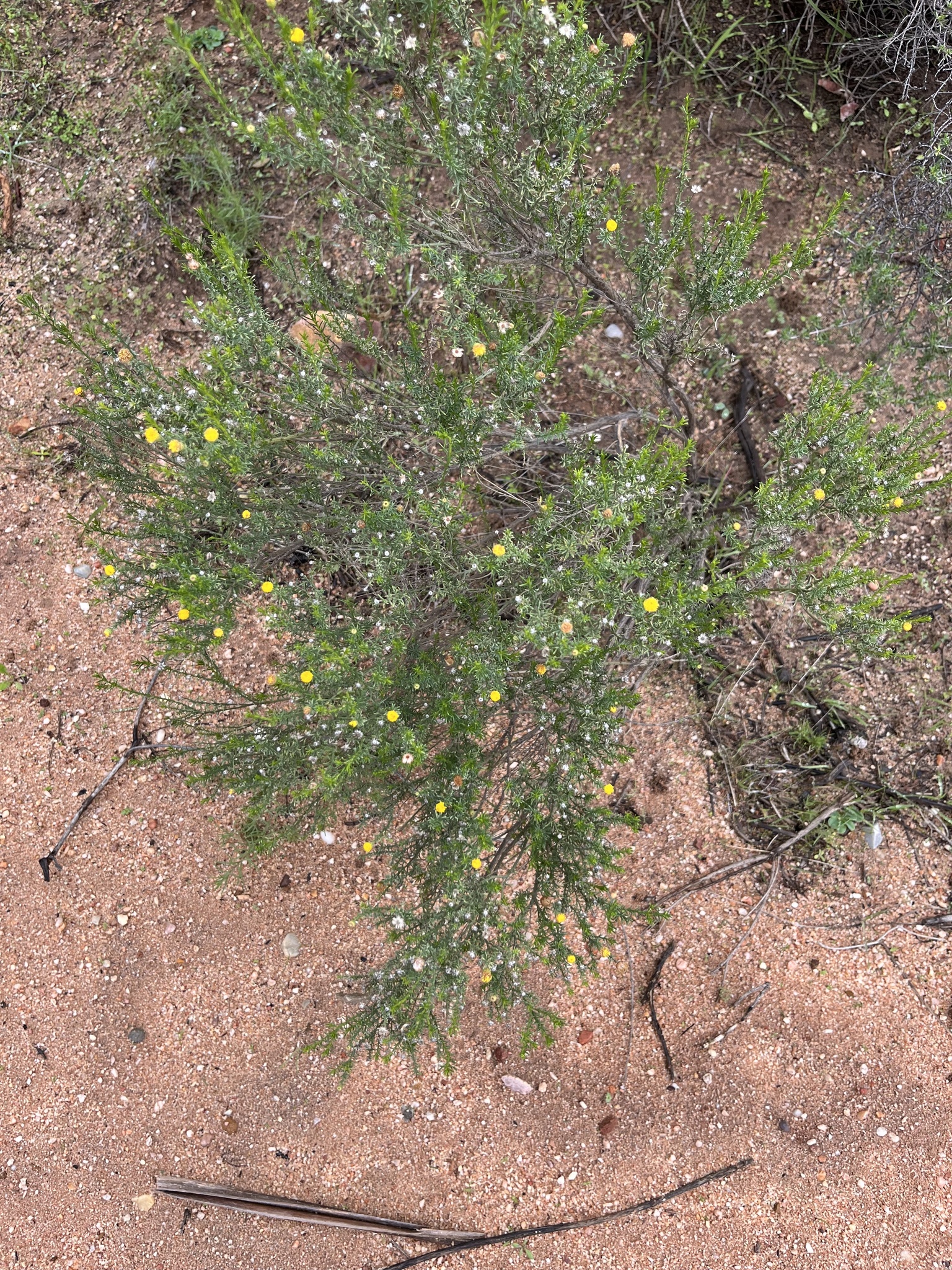
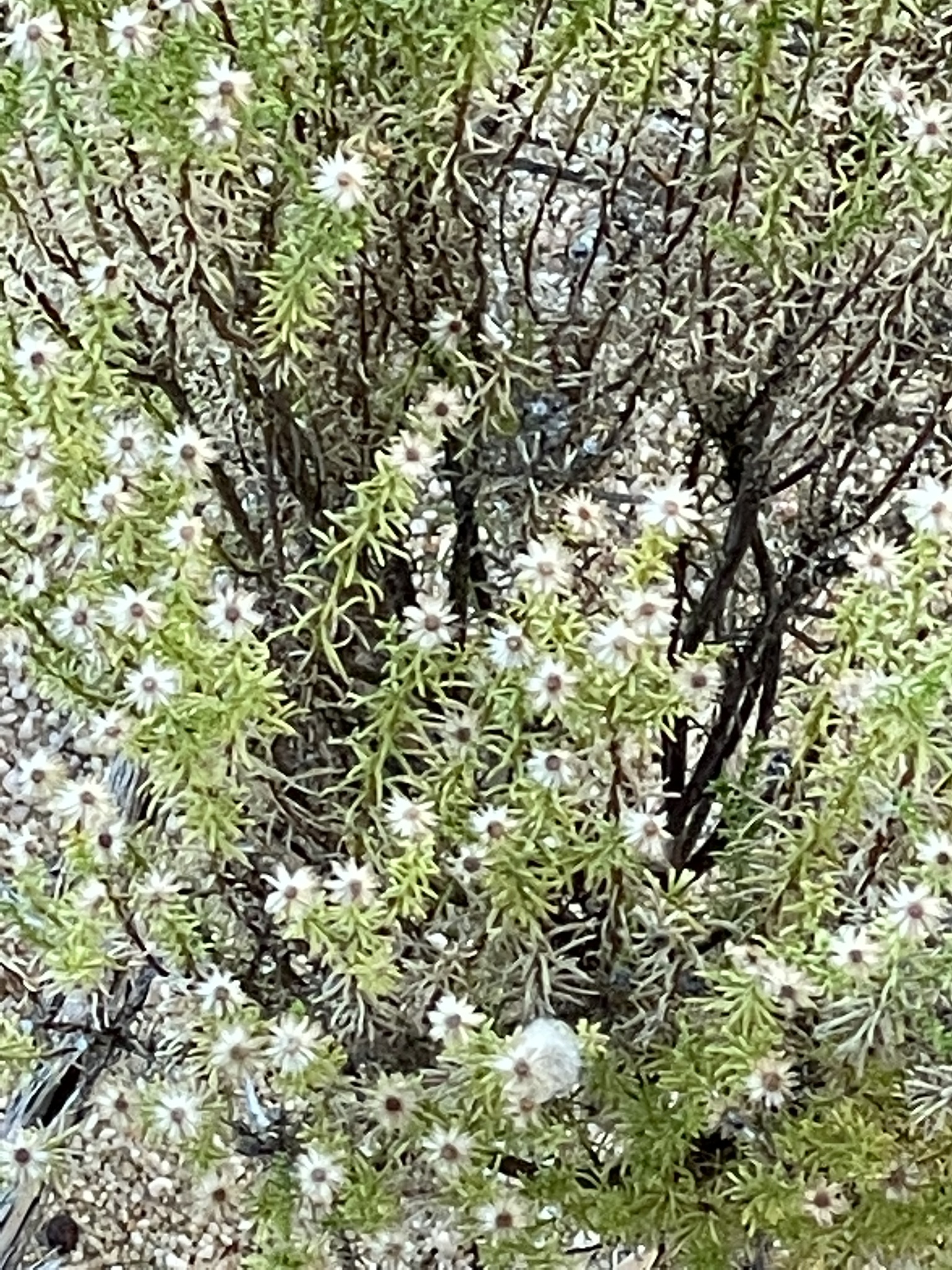
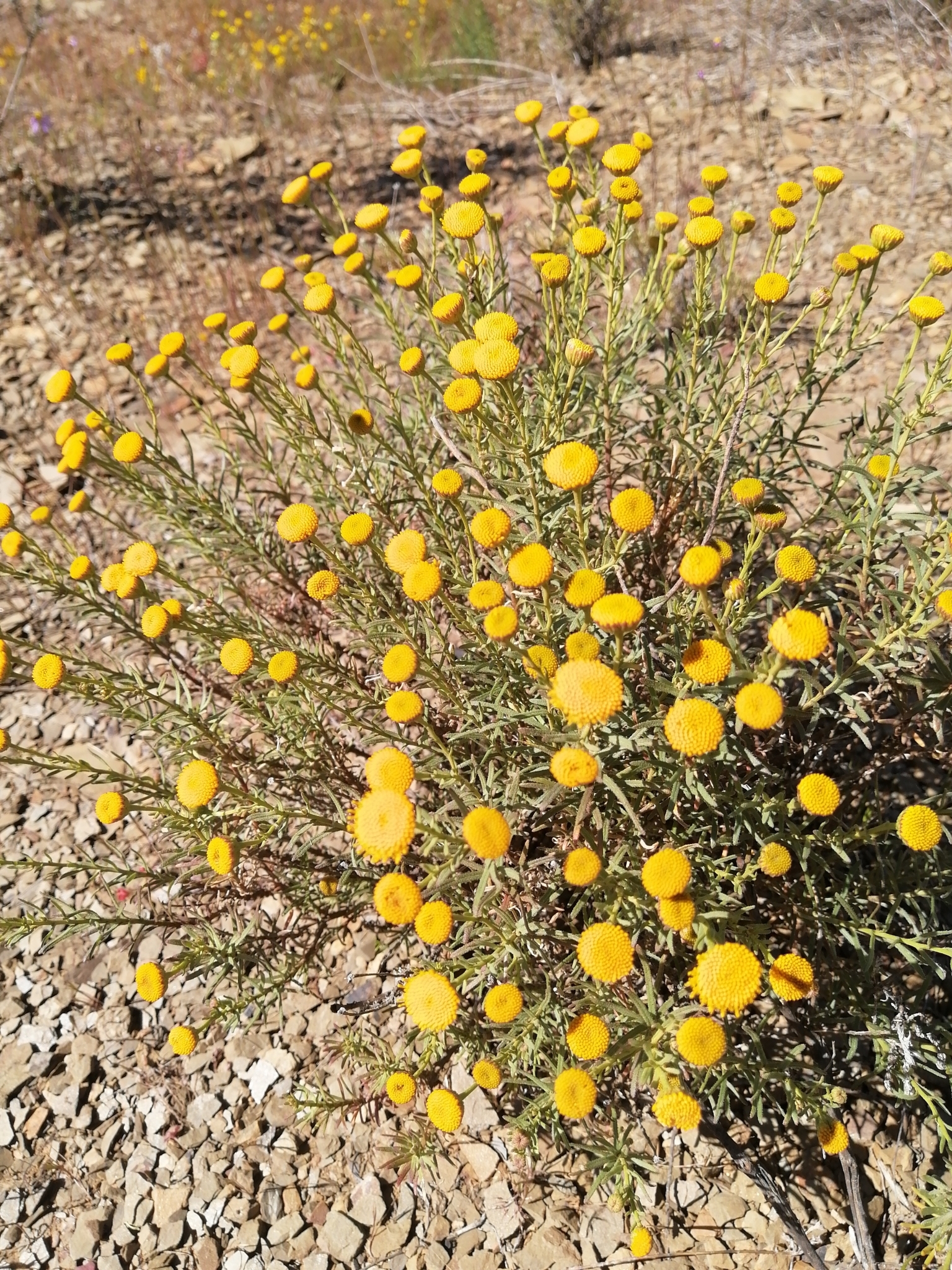
Also cited on iNaturalistobs. 140057701
Chatgpt
MY QUESTION
Which herbivores have been recorded eating Chrysocoma ciliata? Supply full references.
ANSWER FROM CHATGPT
The published evidence is surprisingly sparse. I could find direct records for only a few herbivores. Many sources describe Chrysocoma ciliata as “unpalatable”, but very few identify the animals that actually consume it.
Herbivore Evidence that it eats Chrysocoma ciliata Source
Domestic goat (Capra hircus) Direct observations of browsing in the Lesotho Highlands; goats were “frequently” seen browsing the shrub. Toxicological literature also documents poisoning after ingestion.
Domestic sheep (Ovis aries) Direct observations of browsing in the Lesotho Highlands; Merino sheep were observed browsing. Toxicological literature also documents ingestion causing disease, although Merinos are reported to avoid the plant under some circumstances.
Domestic cattle (Bos taurus) Veterinary reports document that cattle ingesting large amounts develop “lakseersiekte” (purging disease), demonstrating consumption.
What the literature actually says
The strongest field evidence comes from Smit & Janse van Rensburg (2021), who noted:
“…both merino sheep and angora goats on the slopes of the Lets’eng-la-Letsie catchment frequently browse on C. ciliata, often in areas with seemingly adequate availability of more palatable herbaceous plants…”
This is noteworthy because C. ciliata has long been regarded as an unpalatable shrub.
The veterinary literature further confirms consumption:
Sheep, goats and cattle may all ingest sufficient quantities to develop toxicoses, especially lakseersiekte in adults.
Nursing lambs and kids may develop kaalsiekte after their dams consume the plant.
One veterinary manual additionally remarks that usually only the flowers are eaten, suggesting selective feeding rather than wholesale browsing of the shrub.
Species I could not verify
I found no primary published evidence that the following have been recorded eating Chrysocoma ciliata:
bontebok
springbok
eland
kudu
gemsbok
steenbok
Cape hare
rock hyrax
Cape dune mole-rat
rabbits
Some recent browse floras list C. ciliata as an indigenous browse species within particular vegetation regions, but they do not identify the herbivore species actually consuming it.
Full references
Botha, C.J. & Venter, E. 2002. Chrysocoma ciliata. Toxicology section, Faculty of Veterinary Science, University of Pretoria, Onderstepoort. Repository record documenting poisoning in sheep, goats and cattle.
Smit, G.N. & Janse van Rensburg, G. 2021. Phytomass and ecological significance of Chrysocoma ciliata L. within the Lets’eng-la-Letsie catchment area of Lesotho, southern Africa. African Journal of Range & Forage Science 38(1): 57–66. Field observations of browsing by Merino sheep and Angora goats.
Kellerman, T.S., Naudé, T.W., Fourie, N. & Schultz, R.A. (eds.). 2012 (revised edition). Toxic Plants of Veterinary Importance in Namibia. Directorate of Veterinary Services, Windhoek. Documents ingestion by sheep, goats and cattle and notes that usually only the flowers are eaten.
END OF TRANSCRIPT FROM AI
Many thanks for your useful information…
CitedRelated post
Also cited on iNaturalistobs. 387173426