
INTRODUCTION
The following footage inadvertently illustrates several aspects of adaptive colouration in ruminants.
CitedAdobe Stock
Here we have a scene in the Serengeti Ecosystem, featuring
- Nanger granti robertsi (an adult female and another adult),
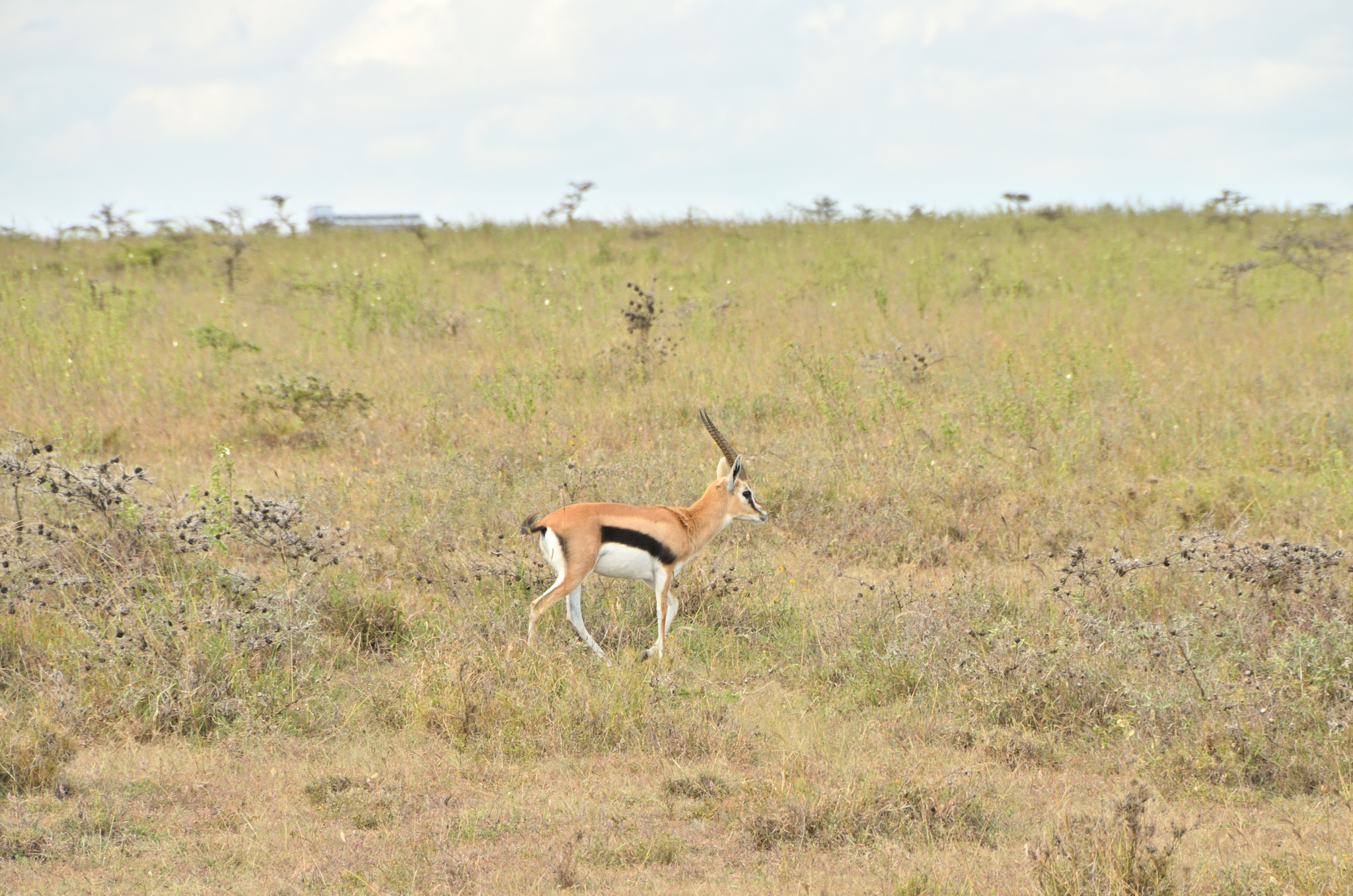
- Eudorcas thomsoni nasalis (adult male), and
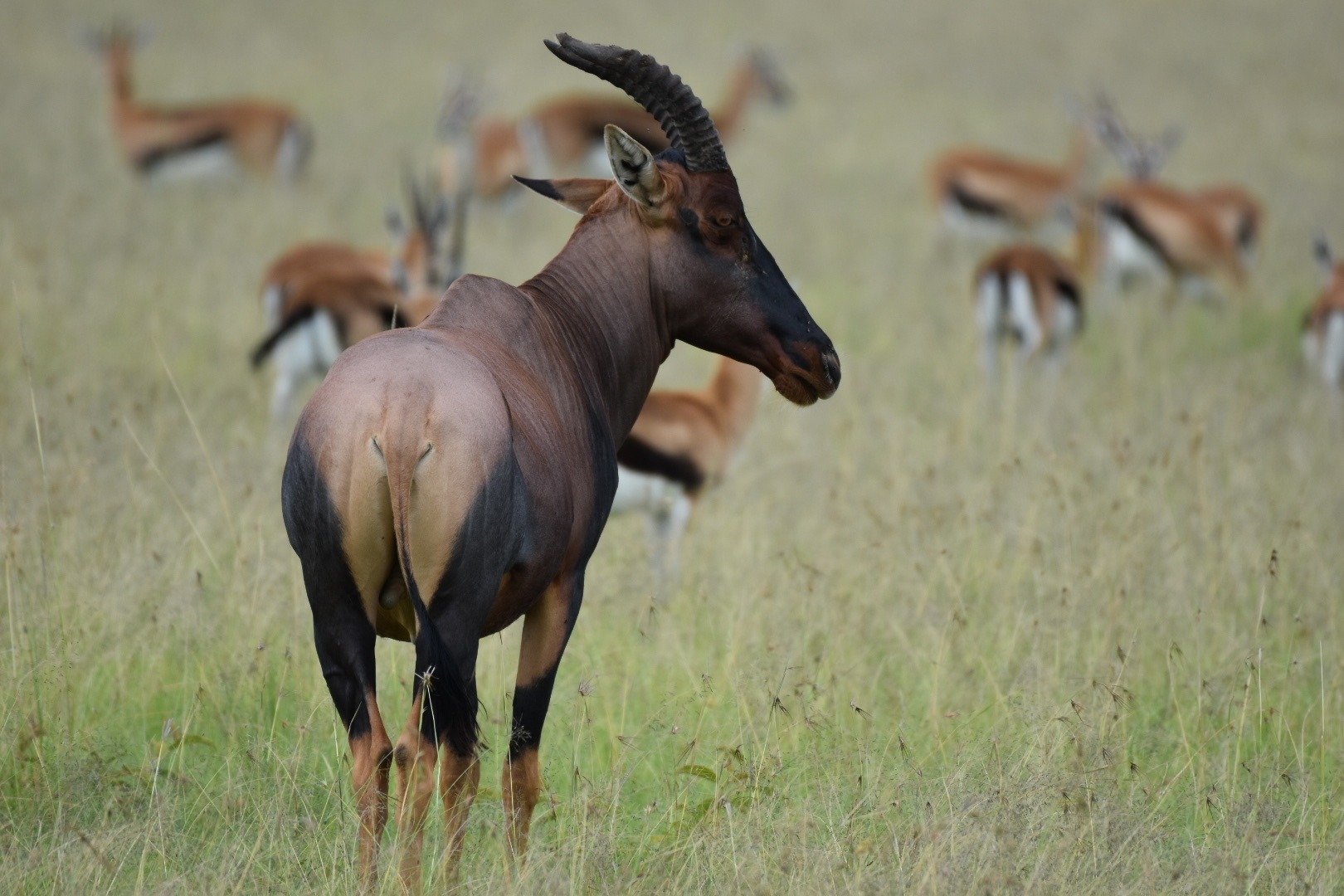
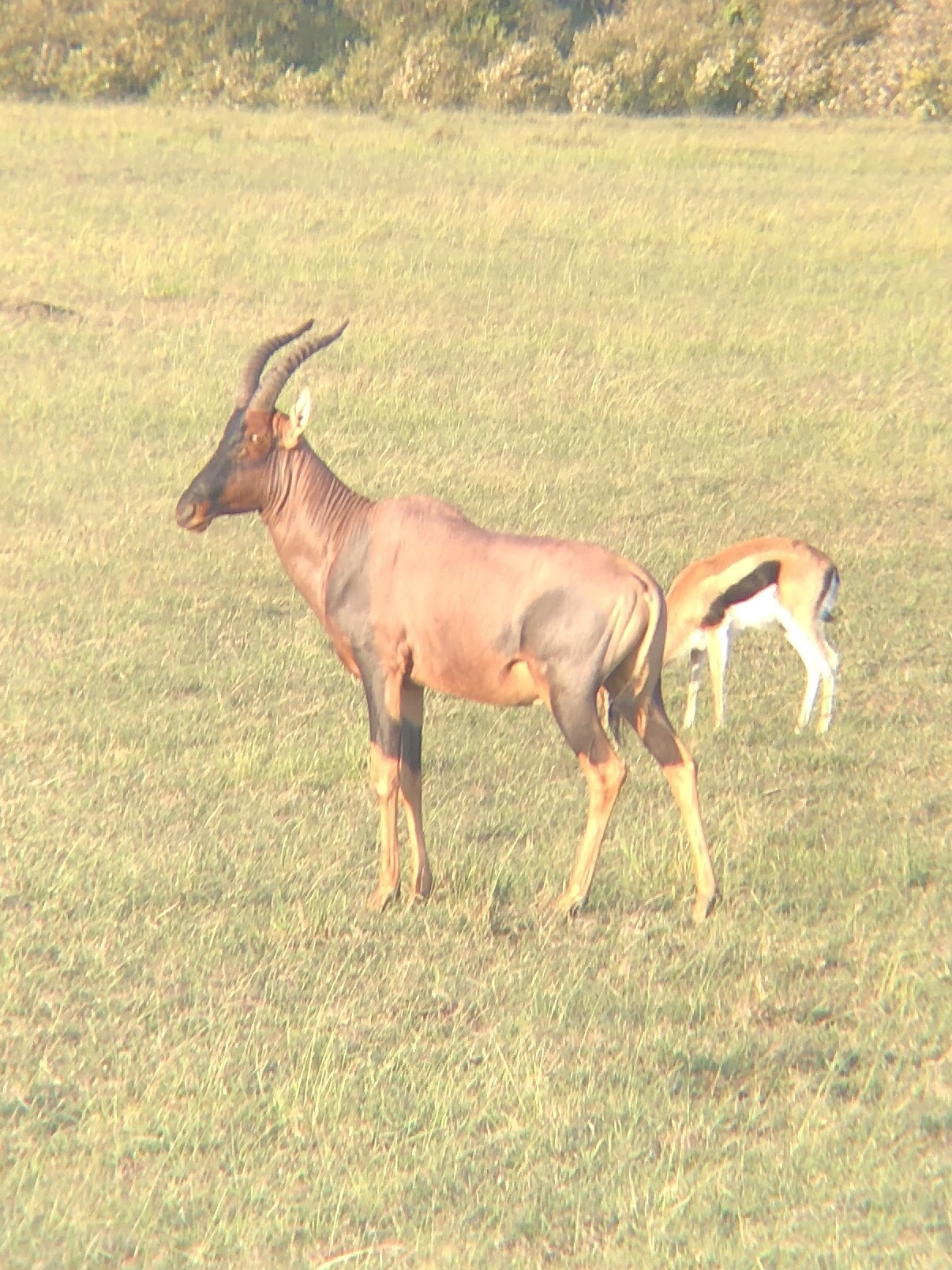
- Damaliscus korrigum jimela (adult male).
The relevant features of adaptive colouration are
- bleezes, in the two spp. of gazelles,
- a flagg, relevant to the smaller species of gazelle in particular, and
- semets, relevant to the alcelaphine and the larger species of gazelle.
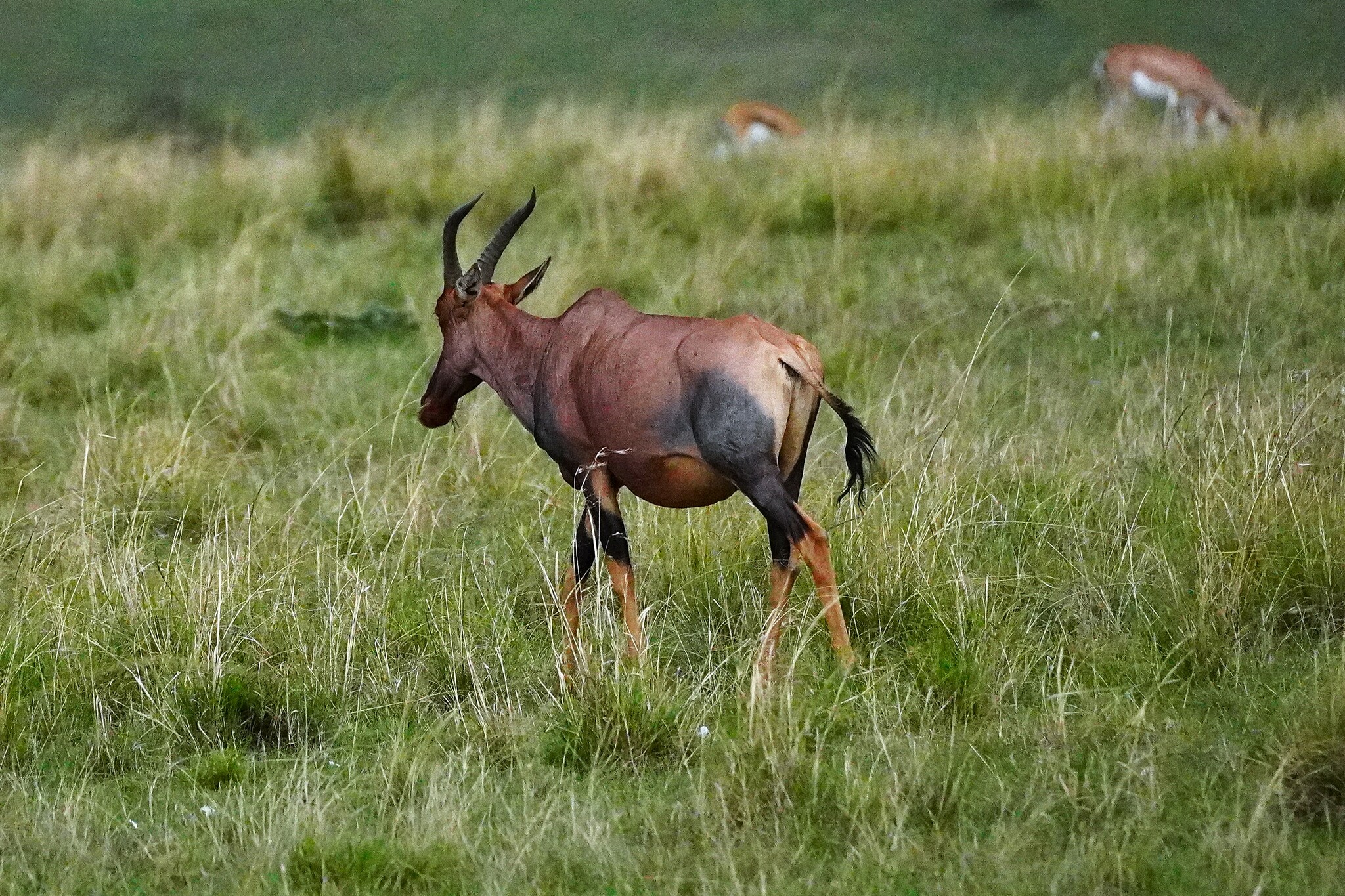
BLEEZES (large-scale patterns of dark/pale that make the figure conspicuous even at distance and even when stationary):
Eudorcas t. nasalis features two bleezes, located
- on the flanks, and
- on the buttocks.
Also cited on iNaturalistobs. 351911465
CitedAlamy 1·Dreamstime·Alamy 2·Alamy 3
These patterns, in E. t. nasalis, respectively constitute
- a lateral bleeze, and
- an ischial bleeze (complemented by a caudal flagg, see below).
CitedAdobe Stock
Nanger g. robertsi features white on not only the buttocks but also the rump. This extends to a conspicuous corner of the figure, highlighting the animal despite minimal dark/pale contrast.
FLAGGS (medium-scale patterns of dark/pale that, when moved, advertise the whole figure):
Eudorcas t. nasalis features a dark tail, which is habitually wagged during normal activity.
Citedvimeo.com 1·vimeo.com 2
This accentuates the dark/pale contrast on the buttocks.
A similar effect is visible in the larger gazelle, N. g. robertsi, despite the fact that the dark tail-tassel is so small that this species may not qualify for a caudal flagg.
CitedAlamy
SEMETS (small-scale patterns of relative dark/pale that, when moved, are analogous with ‘facial expressions’ for intraspecific communication):
No semets are visible in the scene in question.
CitedAdobe Stock
However, a chewing motion is visible in both D. k. jimela and N. g. robertsi. This provides an opportunity to point out certain principles.
In the gazelle, the small-scale motion of the mouth is conspicuously highlit.
This accentuation is not because of any graphic pattern on the lips, chin, and rhinarium.
CitedDreamstime 1·iStock·Dreamstime 2
Instead, it may possibly result from a poorly-documented ‘sheen’ in ultraviolet, visible to gazelles albeit not to the human visual system.
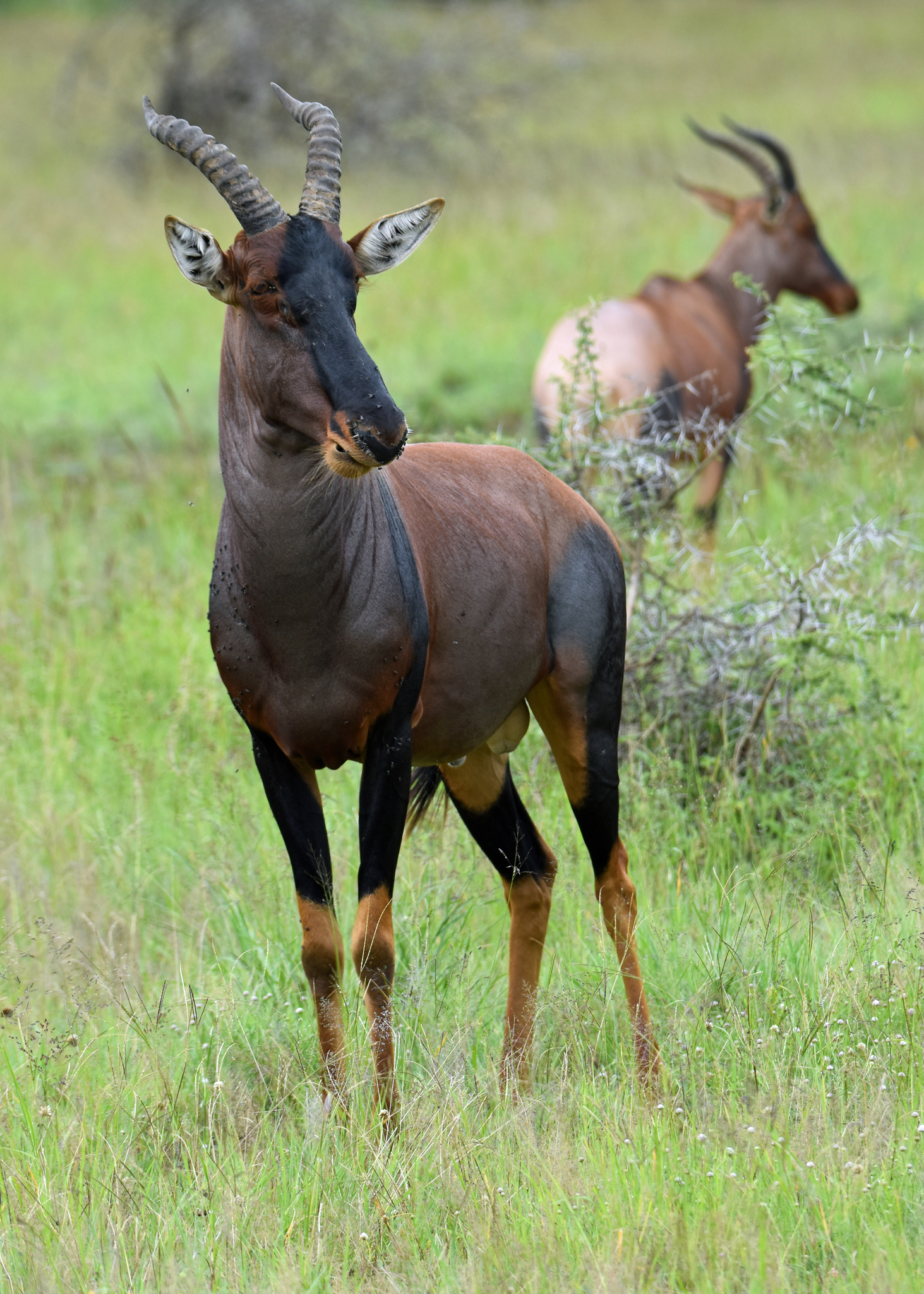
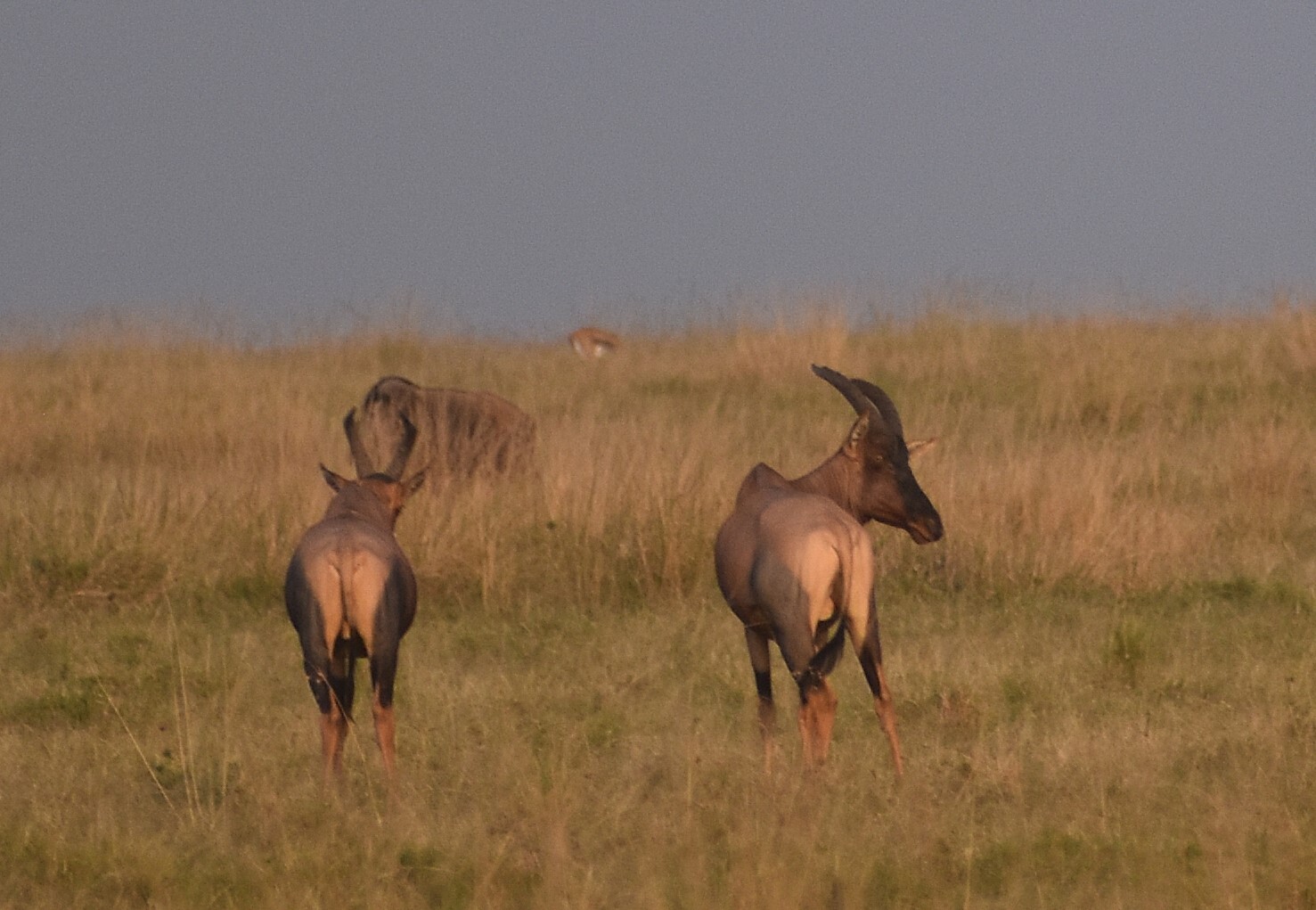
In the case of D. k. jimela, there is dark pigmentation on the upper lip, and the rostrum near the mouth.
Citedjkwildimages.co.uk
There is no pale/dark contrast via depigmentation, which means that I cannot describe a buccal semet comparable to that obvious in.
CitedAdobe Stock
However, once again it is possible that a conspicuous pattern exists in ultraviolet, invisible to the human eye but visible to the eyes of ruminants. More particularly, I refer to the ‘sheen’ (pilocatoptric effect) on the anterior cheek, which alternates rhythmically to a visible degree in this footage.
Posted on June 29, 2026 04:54 PM by
milewski
The author added the following in comments beneath the original post.
Nanger granti notata
CitedAlamy
CitedAlamy
Nanger granti petersi
CitedAlamy
Gazella leptoceros:
Citedcolumbuszoo.org
Location:
CitedWikipedia
CitedAdobe Stock
CitedAlamy
Buccal semet in Alcelaphus lelwel:
CitedAdobe Stock
Citedvimeo.com
Damaliscus korrigum jimela:
The following are relevant to the question of a buccal semet (based on pilocatoptric effects, rather than pigmentary effects):
(also note the long vibrissae on the chin)
CitedAlamy
CitedRelated post
Citedgettyimages.ie