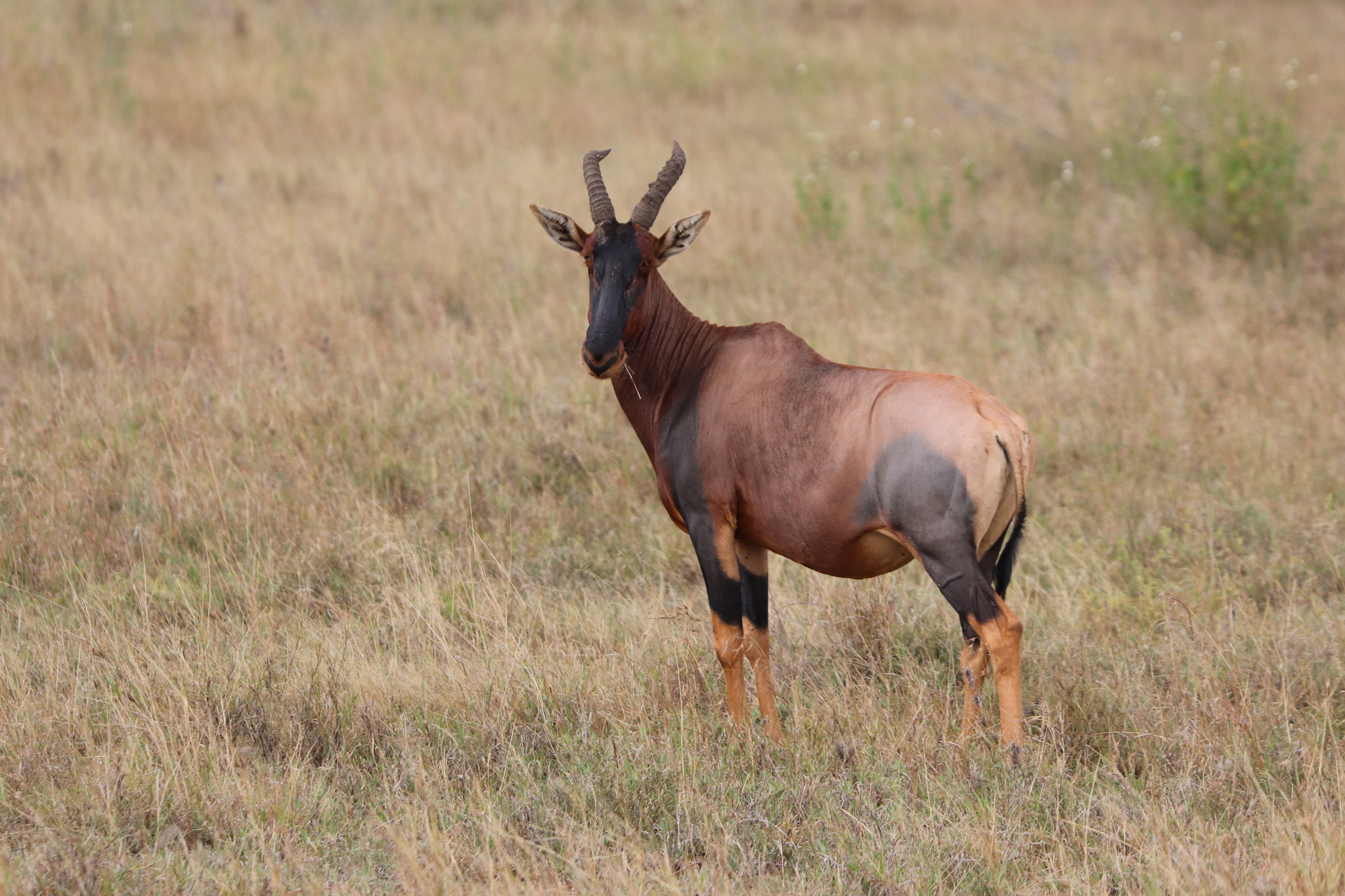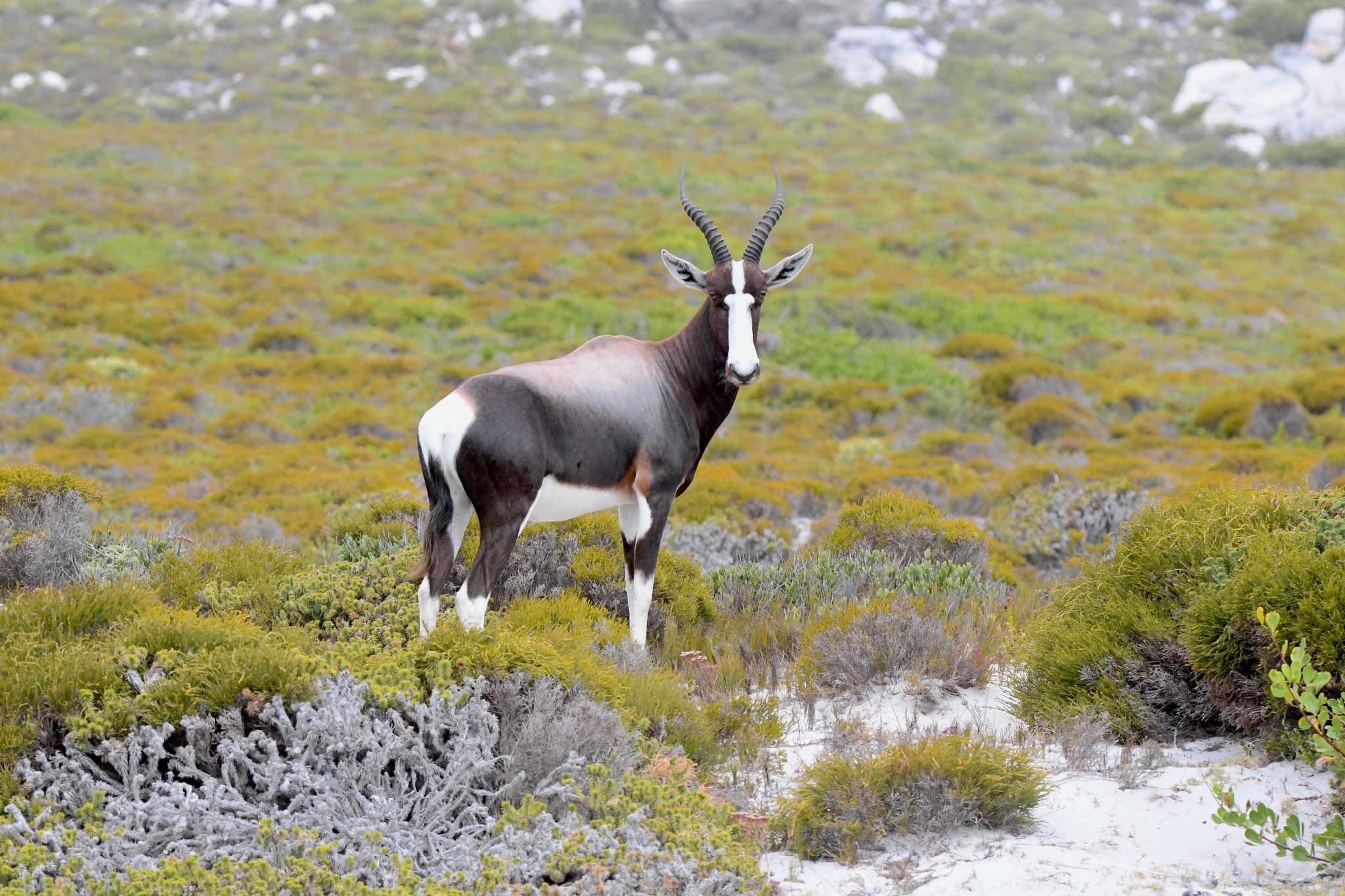
Look carefully at this photo:
Citedgettyimages.co.uk
INTRODUCTION
A familiar aspect of adaptive colouration is countershading.
CitedWikipedia
The principle is simple, as follows:
Animals are adapted to be inconspicuous to their predators
But the figure tends to be revealed by the shadow on its underside
To compensate for this, the shaded surface needs to be made paler
So, the ventral surface of the figure is adaptively depigmented.
However, what is relatively poorly appreciated by naturalists is that animals, in some circumstances, benefit from
- being conspicuous, and even
- exaggerating their body size.
This accentuation can be achieved, partly, by pigmentation of the ventral surface, to produce an effect converse to countershading.
Instead of ‘background-matching’, we have an ‘underscored figure.’
The syndrome in question has previously been acknowledged.
However, an actual term has been lacking.
AIMS
In this Post, I
- introduce a new term for the converse of countershading, and
- provide examples in the adaptive colouration of ungulates.
A NEW TERM IN BIOLOGY: ‘PROSHADING’
I propose the term ‘proshading.’
This suitable because it is
- new and therefore unambiguous,
- easily-enough to pronounce,
- etymologically sound, and
- self-explanatory.
CitedWikipedia
EXAMPLES AMONG UNGULATES
Citedupload.wikimedia.org
CitedAdobe Stock
CitedAdobe Stock
CitedDreamstime
Citedfreeimages.com
CitediStock
CitedAdobe Stock
Citedanimalkingdom.org
Illustrates conspicuousness of dark ventral (figure in distance):
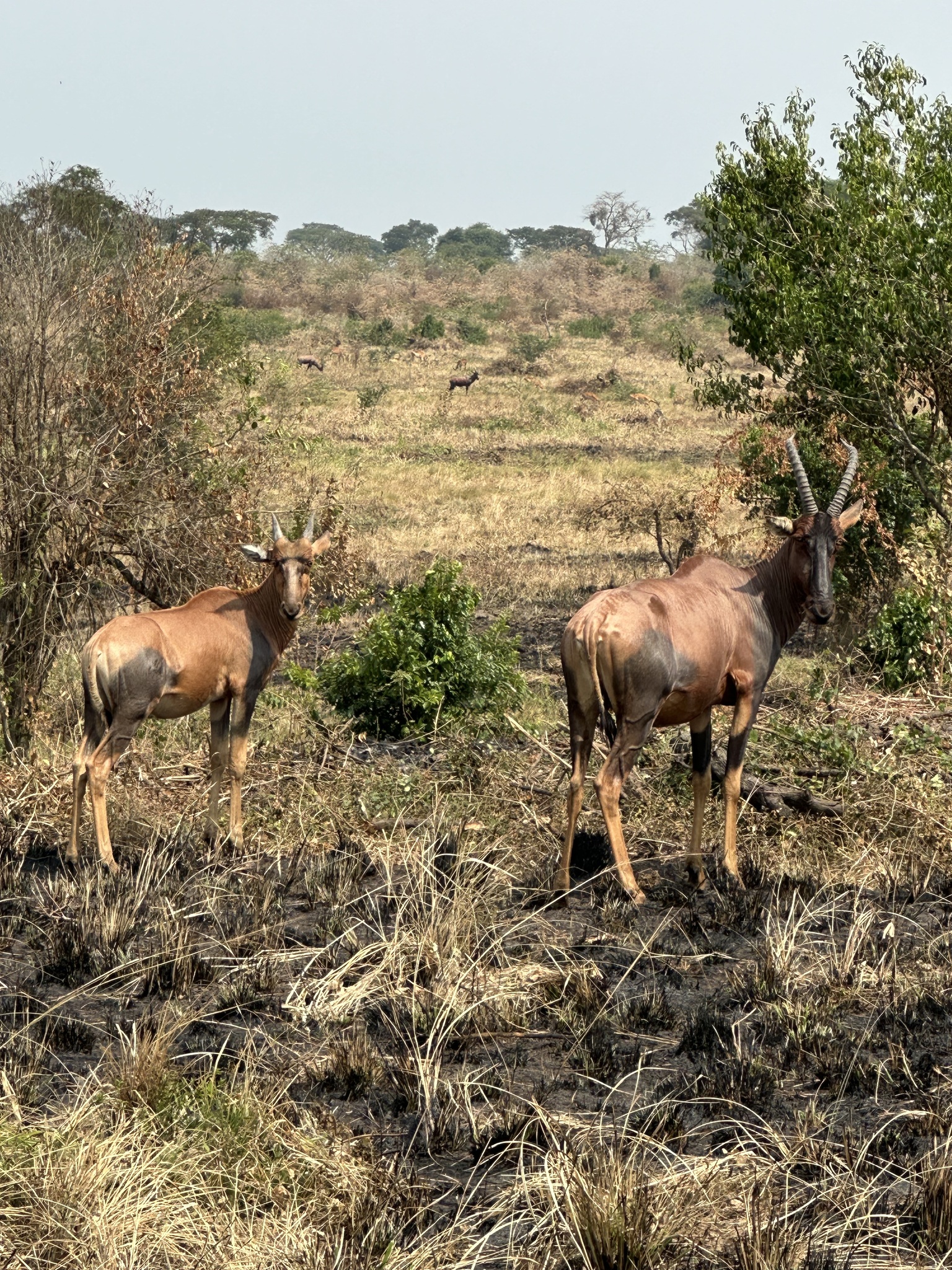
Gemini
MY QUESTION
In adaptive colouration, there is ‘countershading’, consisting of depigmentation that compensates for shading, to make a figure seem ‘flat’ and blended into the background. In some large animals, there is the ‘opposite/converse’ effect, in which the ventral surface is dark-pigmented, to make the figure stand out (e.g. for masculine display). I seek to invent a new technical term to describe this pattern. So, ‘countershading’ versus what, exactly? Use your linguistic and etymological skills to create a new, unambiguous word.
ANSWER FROM GEMINI
To match the structural and functional logic of countershading, we need to unpack exactly what the existing term does etymologically, and then invert it.
“Countershading” uses the prefix counter- (from the Latin contra, meaning “against” or “opposite”) because the biological pigmentation actively works against or neutralizes the natural gradient of light and shadow. By placing light pigment where shadows fall (the belly) and dark pigment where light hits (the back), it cancels out visual depth, rendering the animal optically flat.
For your phenomenon—where ventral darkening actively exaggerates the three-dimensional form, heightens contrast, or projects conspicuousness—the new term should ideally be concise, structurally parallel, and etiologically accurate.
Here are three distinct etymological pathways to coin this new technical term, depending on whether you want to emphasize the action of the pigment, the optical result, or its behavioral utility.
The Direct Structural Inverse (Prefix-Driven)
If you want a term that directly pairs with countershading in textbooks, we can swap the prefix to one that means “with,” “supporting,” or “augmenting.”
Proshading
Etymology: From the Greek/Latin prefix pro- (in favor of, forward, enhancing) + shading.
Rationale: Just as counter- works against the shadow, pro- works with the shadow. It reinforces the natural gradient of ambient light. Since overhead sunlight already casts a shadow on the belly, adding dark melanin to that exact zone multiplies the shading effect, making the contours look starker and more pronounced.
Intensishading
Etymology: From the Latin intensus (stretched, strained, heightened) + shading.
Rationale: Highly descriptive and unambiguous. It immediately conveys that the animal’s pigmentation is magnifying the existing shadow rather than neutralizing it.
The Optical Mechanism (Process-Driven)
If you want the term to describe the optical illusion created by the dark ventral surface—namely, making a three-dimensional object look even more profoundly three-dimensional or volumetric.
Stereoshading (or Stereochromism)
Etymology: From the Greek stereos (solid, three-dimensional, having depth) + shading / chroma (color).
Rationale: Countershading aims for optical flattening (aplanation). Ventral darkening achieves the exact opposite: it maximizes the perception of volume, bulk, and physical depth. Stereoshading implies a pattern evolved specifically to project a hyper-solid, prominent three-dimensional silhouette.
The Functional/Display Intention (Purpose-Driven)
If the term should capture the biological intent of the pattern—standing out rather than blending in, particularly for sexual selection or agonistic (rivalry) displays.
Anticryptic Shading
Etymology: From the Greek anti- (opposite) + kryptos (hidden).
Rationale: Countershading is fundamentally a cryptic (camouflage) adaptation. A converse pattern meant for masculine display or signaling is inherently anticryptic—it is optimized for high discoverability and visual salience.
Phaneroshading
Etymology: From the Greek phaneros (visible, manifest, conspicuous) + shading.
Rationale: This creates an elegant pairing with existing ecological terms like Phaneroptera or phanerophyte. It explicitly defines the shading pattern as one designed for manifestation and visibility.
The Recommendation
If the goal is an elegant, textbook-ready counterweight to “countershading” that a morphologist or behavioral ecologist would instantly understand without an explanation, the most precise coinage is:
Proshading (Noun) / Proshaded (Adjective)
The distribution of darker pigmentation on the ventral or shaded surfaces of an animal, which accentuates natural shadowing to increase visual conspicuity, depth perception, or display salience.
It maintains the exact linguistic rhythm of the original term while perfectly inverting its mechanical function.
Chatgpt
MY QUESTION
In adaptive colouration, there is ‘countershading’, consisting of depigmentation that compensates for shading, to make a figure seem ‘flat’ and blended into the background. In some large animals, there is the ‘opposite/converse’ effect, in which the ventral surface is dark-pigmented, to make the figure stand out (e.g. for masculine display). I seek to invent a new technical term to describe this pattern. So, ‘countershading’ versus what, exactly? Use your linguistic and etymological skills to create a new, unambiguous word.
ANSWER FROM CHATGPT
This is an attractive nomenclatural problem because countershading is itself a transparent compound:
counter- (“against, in opposition to”) + shading (“the optical effect of illumination”).
The biological phenomenon you describe is not merely the absence of countershading but the deliberate enhancement of apparent three-dimensionality by reinforcing natural shadowing. The ideal neologism should express that idea.
Here are some possibilities, ranked from most to least suitable.
- Proshading ★★★★★
- proshading /ˈproʊˌʃeɪdɪŋ/
- Pigmentation that reinforces natural illumination and shadow, increasing the apparent solidity or conspicuousness of the body.
- Advantages:
- perfectly parallels countershading
- pro- is the antonym of counter- (“for, in favour of”)
- immediately intelligible
- concise and memorable
- Thus:
- Many antelopes exhibit countershading for crypsis, whereas certain display-oriented mammals possess proshading that accentuates body form.
- Concordant shading (or concordant pigmentation)
- The pigmentation works with the natural pattern of illumination rather than against it.
- Pros:
- semantically precise
- suitable for formal papers
- Cons:
- rather long.
- Amplishading
- from amplify + shading.
- Meaning:
- shading that amplifies natural shadows.
- Elegant, although slightly less transparent.
- Reliefshading
- Borrowed from cartography, where relief shading exaggerates topography.
- Meaning:
- pigmentation producing enhanced visual relief.
- This nicely captures the optical effect but is perhaps too closely associated with maps.
- Sculptural shading
- Emphasises that the body appears more sculpted or three-dimensional.
- Useful descriptively but unlikely to become technical terminology.
- Greek-derived alternatives
- If one prefers classical compounds:
- episkiaphany
- from Greek
- epi- = upon, in addition
- skia = shadow
- phainein = to show
- literally:
- “showing by means of shadow.”
- This is elegant but rather opaque.
- auxioskia
- from
- auxio- (increase)
- skia (shadow)
- meaning:
- increased shadow.
- Again, classical but unlikely to be immediately understood.
- Latin-derived alternatives
- adumbration
- Unfortunately this already means “outline” or “foreshadowing.”
- conumbration
- from cum + umbra (“with the shadow”).
- Etymologically neat but unfamiliar.
- Which is best?
- If the goal is a term that could plausibly enter zoological literature and be instantly understood by readers already familiar with countershading, I would recommend:
- proshading — pigmentation that reinforces rather than counteracts natural illumination, thereby enhancing apparent relief and conspicuousness.
- It has exactly the same morphology as countershading, is short, unambiguous, and naturally conveys the converse optical principle.
- One could even define the pair symmetrically:
- Countershading: pigmentation that reduces apparent relief by cancelling illumination gradients.
- Proshading: pigmentation that enhances apparent relief by reinforcing illumination gradients.
- That symmetry is, from both a linguistic and conceptual perspective, unusually satisfying.
END OF TRANSCRIPTS FROM AI
Posted on June 21, 2026 08:54 PM by
milewski
The author added the following in comments beneath the original post.
CitedRelated post
Citedlink.springer.com
Citedjournals.plos.org
Citedbooks.google.com.au
Chatgpt
Valerius Geist, in his book on deer, discusses a pattern of self-advertisement in which the ventral surface of the torso is emphasised by being darkened. Which term does he use for what is effectively the converse of countershading? Do not lie by claiming that he used ‘proshading’. Supply full references.
As far as I can determine from Valerius Geist’s published work on deer, he did not coin or employ a special technical term equivalent to “the converse of countershading”.
In particular, in his major monograph
Geist, V. (1998). Deer of the World: Their Evolution, Behaviour, and Ecology. Stackpole Books, Mechanicsburg, Pennsylvania. 421 pp.
Geist discusses a recurrent pattern in cervids in which:
the ventral surface is darkened rather than lightened,
this dark ventrum increases visual contrast instead of obliterating it,
the effect is associated with social display, advertisement, and apparent body enlargement, especially in large-bodied species and in males.
However, he describes the phenomenon functionally rather than by introducing a formal technical name.
He uses language such as:
ventral darkening,
emphasis of the ventral surface,
advertising coloration,
display coloration, and
descriptions that the pattern accentuates the body profile or makes the animal stand out,
rather than proposing a single technical opposite of countershading. I can find no evidence that he used a term analogous to “reverse countershading”, “inverse countershading”, or any coined expression such as “proshading”.
Context
Countershading, in the classical sense of Abbott Thayer and Hugh Cott, is:
dark dorsum + light ventrum, producing optical flattening and crypsis.
The opposite arrangement:
light dorsum + dark ventrum
has subsequently been described in the camouflage literature simply as reverse countershading or the reverse of countershading, where it is interpreted as enhancing contrast and conspicuousness rather than concealing form.
Full references
Geist, Valerius.
Geist, V. 1998. Deer of the World: Their Evolution, Behaviour, and Ecology. Mechanicsburg, PA: Stackpole Books. ISBN 978-0811704960.
Rowland, Hannah M.
Rowland, H. M. 2009. “From Abbott Thayer to the present day: what have we learned about the function of countershading?” Philosophical Transactions of the Royal Society B 364: 519–527. doi:10.1098/rstb.2008.0261.
Ruxton, Graeme D., Allen, William L., Sherratt, Thomas N., & Speed, Michael P.
Ruxton, G. D., Allen, W. L., Sherratt, T. N., & Speed, M. P. 2018. “Countershading.” In: Avoiding Attack: The Evolutionary Ecology of Crypsis, Aposematism, and Mimicry, 2nd ed., Oxford University Press, pp. 41–56.
If you are referring to a specific passage in Deer of the World (or an earlier Geist publication on cervid colour patterns), I can also identify the exact page and quote the terminology he used there.
Gemini
MY QUESTION
Does the word ‘proshading’ exist in the English language?
ANSWER FROM GEMINI
No, the word “proshading” does not officially exist as an established lexical entry in the English language. You will not find it in major standard or unabridged dictionaries (such as Oxford, Merriam-Webster, or Collins).
When it does appear, it is typically confined to a few niche, non-standard contexts:
Proprietary/Commercial Names: It is used occasionally as a brand name or portmanteau for commercial businesses, such as window treatment, blind, or architectural awning companies (e.g., “ProShading LLC”).
WayUp
Digital Art Colloquialism: In online digital art, animation, or miniature-painting forums, users occasionally mash together the prefix pro- (in favor of / professional) with shading to describe high-quality rendering or to express a preference for a specific shading style (e.g., using it as a hashtag like #proshading).
If you are looking for a formal biological, physical, or optical term relating to light and shadow distribution, words like countershading (thayerism), reverse shading, or umbrage are typically used.
END OF TRANSCRIPT FROM AI
Citedgrida.no
CitedRelated post

Shift to pigmentation in Bubalus
CitedAlamy
CitedAdobe Stock
CitedAdobe Stock
CitedAdobe Stock