
The argument
The mainly nocturnal side-striped jackal (Lupulella adusta) blends into the background, even by day.
However, the patterns of its colouration suggest a particular anti-predator strategy. This strategy is based on ‘buying time with confusion’, once this jackal is spotted by an animal potentially predatory on jackals.
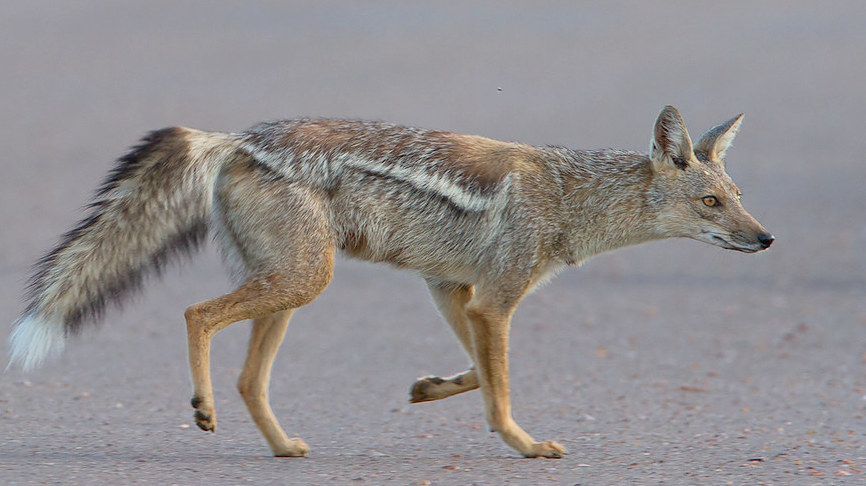
The appearance of L. adusta is so individually and ontogenetically variable that — given its secretive ways and sparse populations — the superior predators in its habitat are unlikely to be able to recognise it immediately. This would tend to stall any attack, giving the side-striped jackal precious seconds to slip away.
Variation in the tail
First let us look at individual variation in the tail, which includes bushiness, darkness, and the presence of a pale tip.
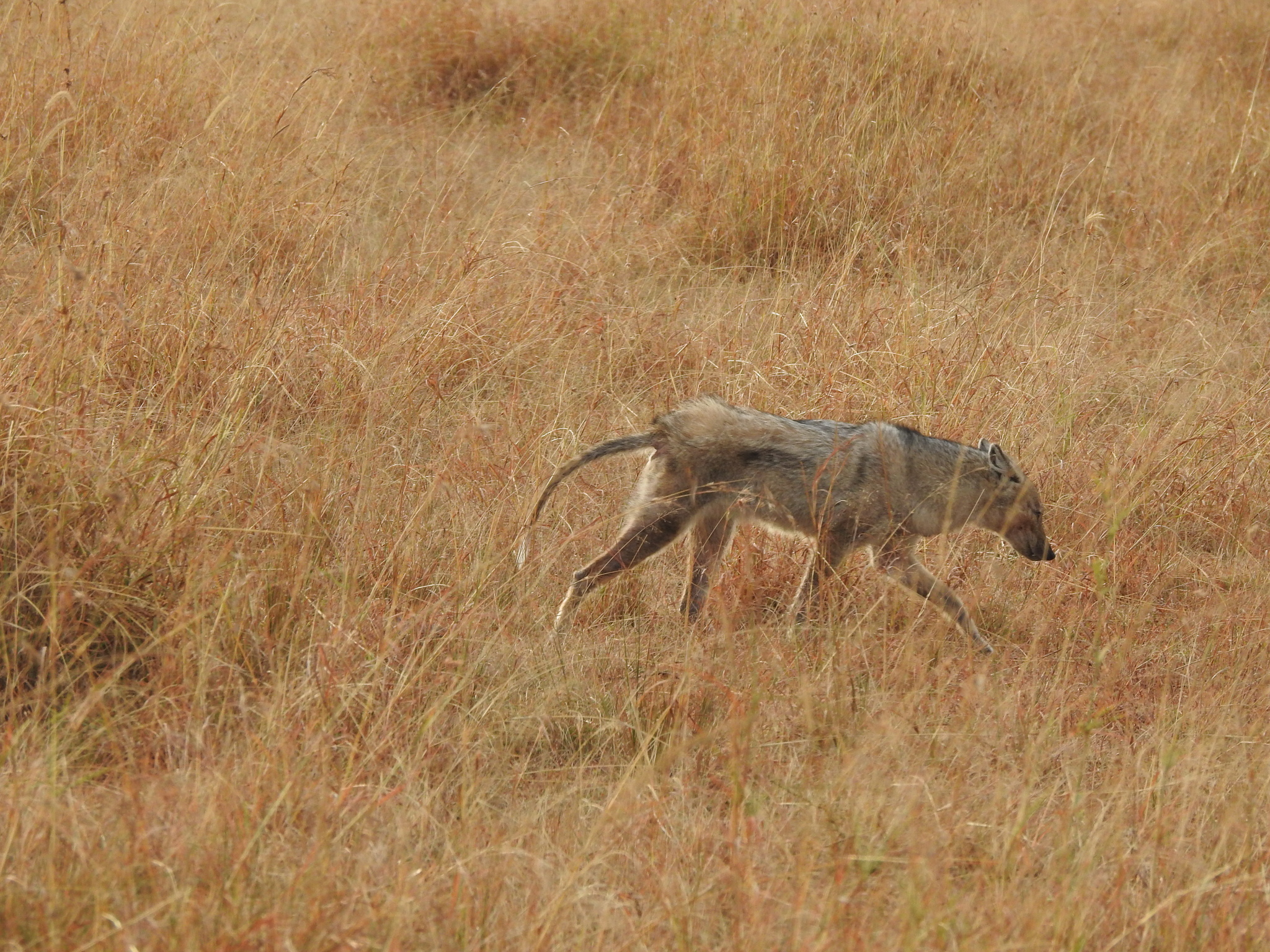
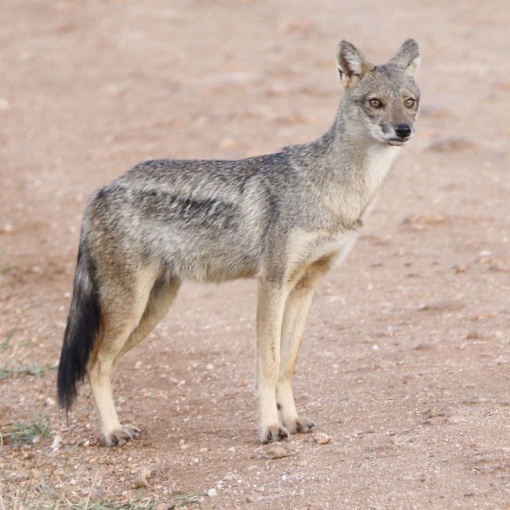
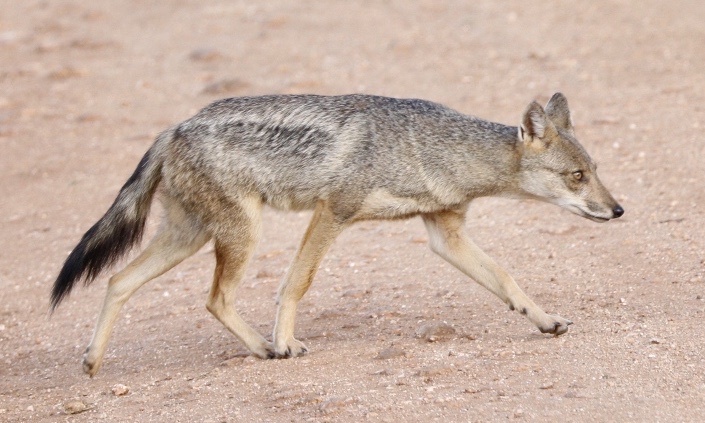
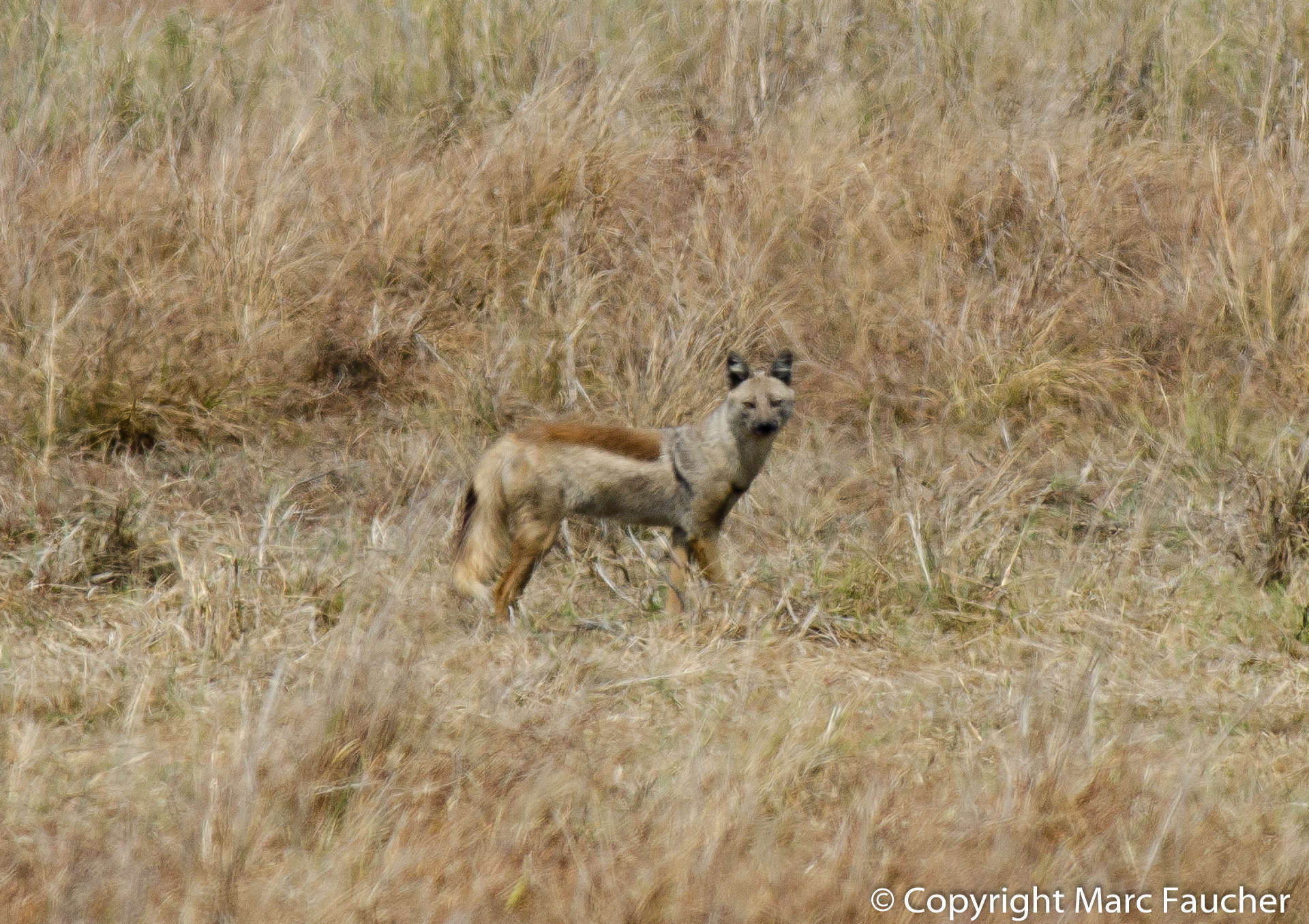
Pale tail-tip absent — also cited1·2·3·4·5·6
Variation on the flank and haunch
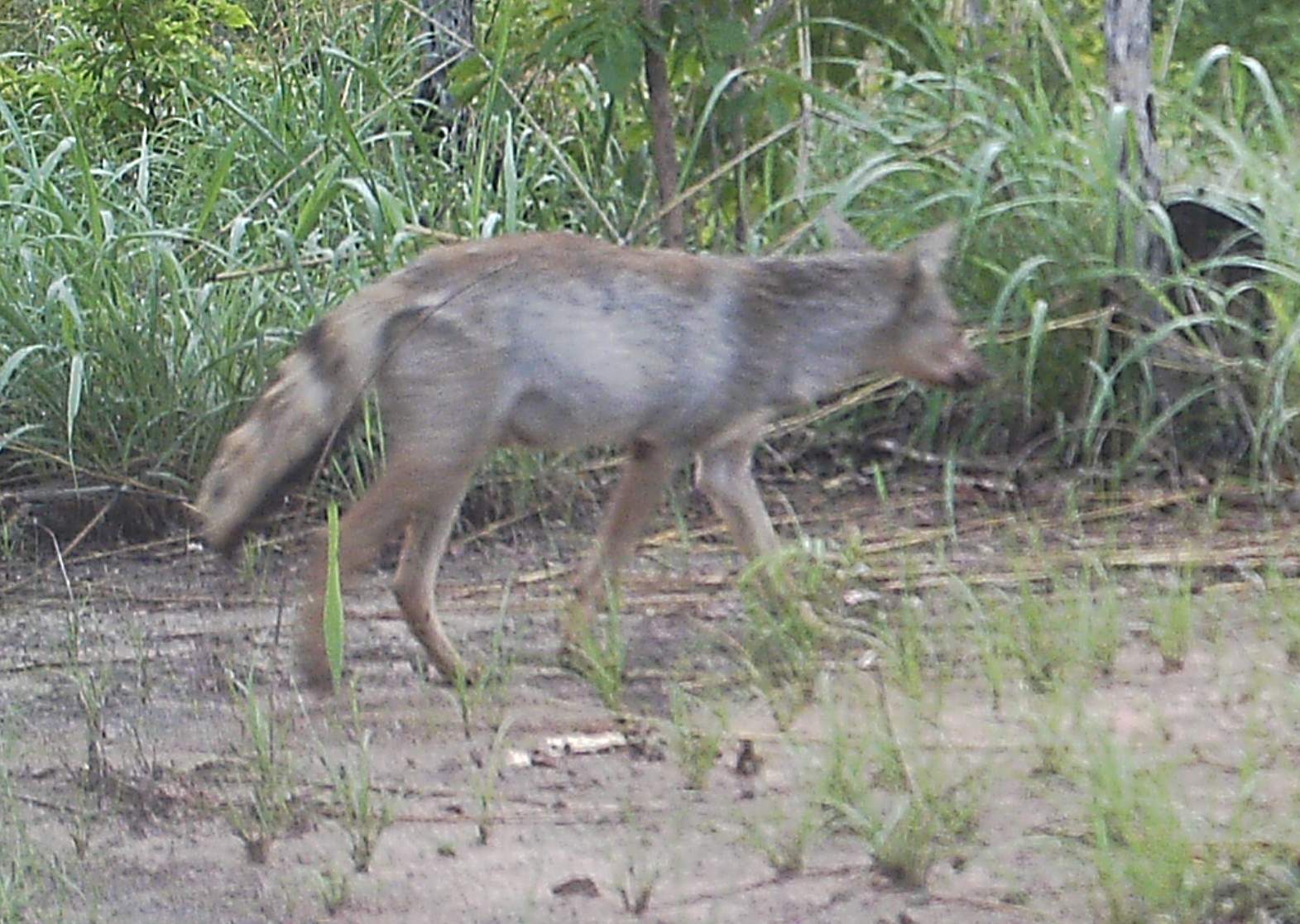
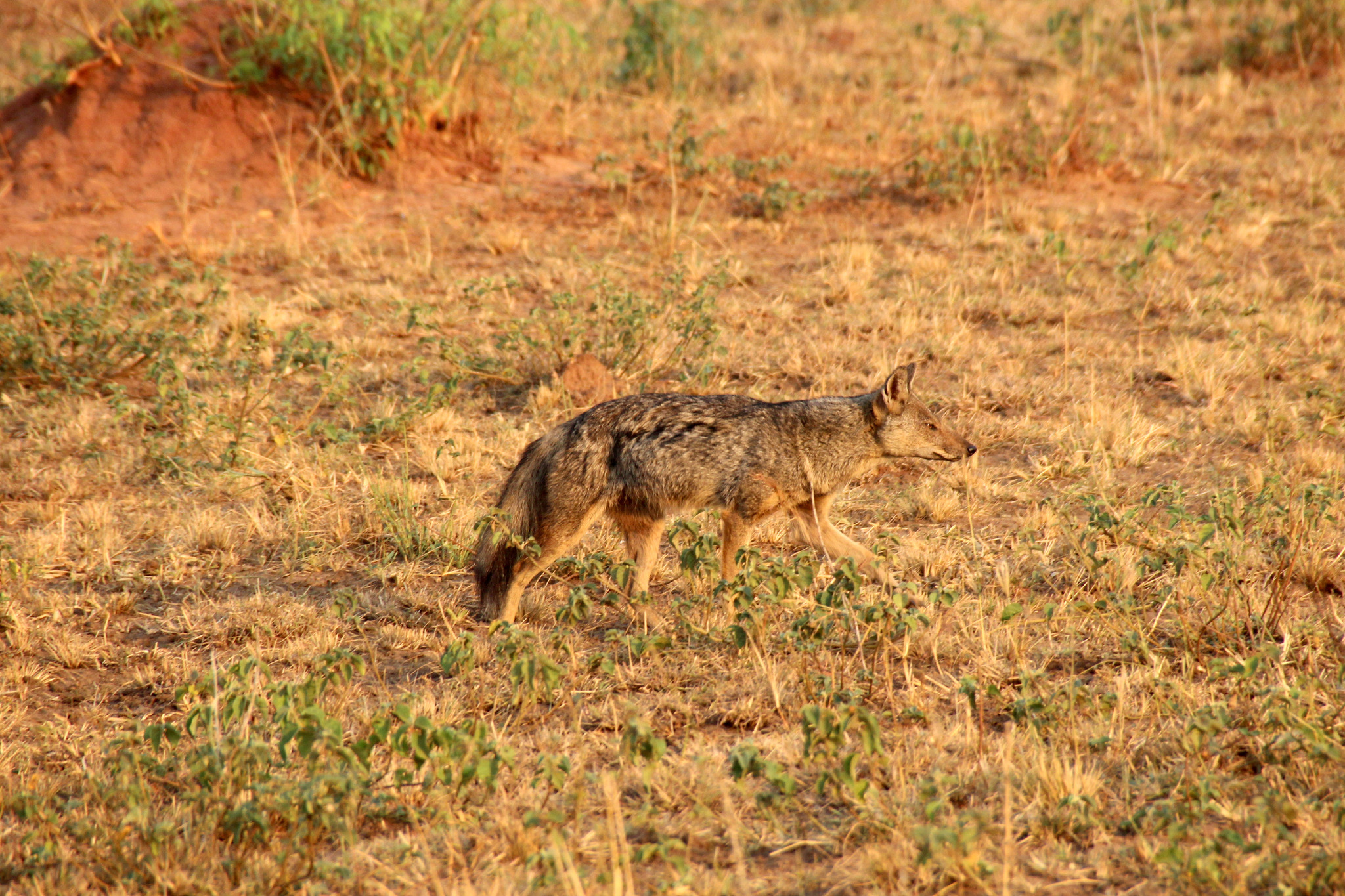
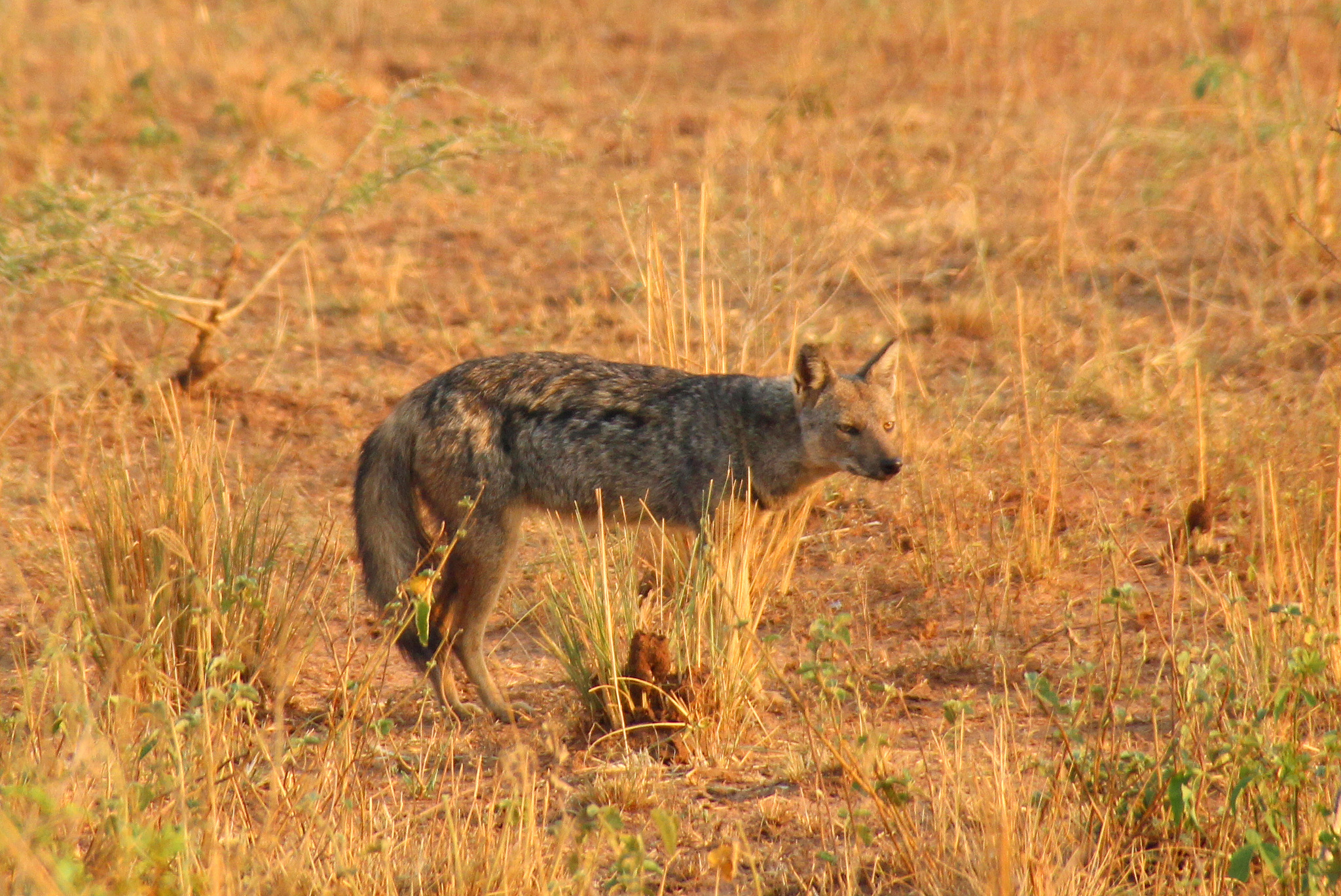
In some individuals there is virtually no banding; in others there is a definite pale band sandwiched between two dark bands. Other individuals again show various combinations and intermediate patterns, the pale band varying in shape and orientation. These bewildering variations only partly correlate with subspecies.
Rights reserved — linked onlyobs. 85742147 (markus lilje)
Flank pattern — also citedno banding (Getty)·banded (Getty)·banded (agefotostock)·variation (naturepl)·variation (Getty 1)·variation (Getty 2)·variation (Getty 3)
There is also independent variation in the presence and shape of a subsidiary pattern on the haunch.
Haunch pattern — also citedzoochat
Ontogenetic variation
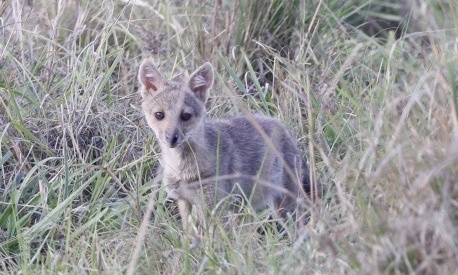
Finally, the following show how different juveniles look from the adults above.
Discussion
The two species of Lupulella differ in their dependence on cover, their times of activity, and their diets. Both have odd colouration — particularly on the flanks — for canids.
However, the conspicuous colouration of L. mesomelas makes sense for a partly diurnal species of open vegetation, which tends to hunt relatively large prey cooperatively.
On L. mesomelasillustration·Why is the black-backed jackal the only carnivore marked like a gazelle?
In the case of the timid, omnivorous side-striped jackal, the oddness is mainly in the inconsistency — which has the opposite effect from promoting rapid recognition.
This ‘baffledog’ seems to play on the likelihood that superior predators will not yet have formed an appropriate search-image, while at the same time boosting the number of encounters needed for them to form this search-image.
Variation in body proportions
There is surprising variation in the body proportions of Lupulella adusta. Canids have proportionately short legs and large heads when juvenile; however, what can be seen in photographs seems to exceed anything explicable ontogenetically.
Two individuals photographed not far apart, and probably of the same subspecies — one at Bangweulu in Zambia, the other at Moremi in the Okavango — differ strikingly. The first is so dumpy that, if its tail were docked and its colouration made plain brown, it might pass as Speothos venaticus. The second is so gracile and small-headed that, if it were more rufous with bigger ears, it might be reminiscent of Chrysocyon — virtually the opposite. The tails are correspondingly very different in length relative to the size of the head.
The adult body mass is about 10 kg, but it seems unlikely that animals with such different proportions have similar body masses. Does L. adusta have something approaching indeterminate growth, from adulthood through middle age? Or polymorphism in body form, in which endomorphic and ectomorphic individuals are born in a single litter, along similar lines to the colour-polymorphism of Vulpes vulpes? If so, I have not heard of this kind of polymorphism in any other canid. I have examined the photographic material on L. mesomelas and found no such variation in body form in that species.
The two individuals comparedBangweulu, Zambia·Moremi, Okavango (Wolfgang Kaehler)