
INTRODUCTION
Various ungulates share a previously unexplained feature of adaptive colouration: dark on the anterior surface of the forelegs.
In this series of Posts, I refer to this as ‘dark leg-front’.
This feature deserves explanation, because it has evolved repeatedly in a surprising number of clades.
PRINCIPLES OF ADAPTIVE COLOURATION
In any feature of adaptive colouration, a basic distinction is between two opposite functions, viz. conspicuousness and inconspicuousness.
All ungulates are adapted to be both conspicuous in certain situations/contexts, and inconspicuous in other situations/contexts.
A crucial concept is that the function of any given feature of colouration depends on situation/context.
More particularly, situation/context consists of scale, corresponding to distance from the observer: some features are so large that they make the whole figure obvious even at distance, whereas others are so small that they are unnoticed except at close range; distraction: a given feature may be overlooked because it is situated near a more noticeable feature; nestedness: a given feature can be a component of a larger feature; motion: all features are more conspicuous when moved, and this is most important for small features viewed at distance; and illumination: pale features can be conspicuous even in dim light, whereas bright light is needed for dark features to be conspicuous.
RATIONALE
An insight into the adaptive function of ‘dark leg-front’ (= a dark anterior surface on the forelegs) is that it may be configured to switch from inconspicuous to conspicuous, according to shifts of situation/context.
When the figure is stationary, at some distance, dark leg-front tends to act as camouflage (= disruptive colouration). This helps the ungulate to be overlooked by scanning predators.
However, the prey animal may notice the approach of the predator, and stand its ground rather than fleeing. Delaying departure is preferable in various situations, because fleeing is itself risky in various ways, a loss of the advantage of surprise may preclude attack, and denouncing, and thus embarrassing, the predator may be more effective than fleeing, inasmuch as it draws the attention of other animals antagonistic to the predator.
Accordingly, the ungulate may divulge its presence, e.g. by alarm calling and stamping the forefeet.
Once the ungulate announces itself in this way, dark leg-front can, in a sense, accentuate the accusing ‘gaze’ of the prey animal, underscoring the interspecific message to the approaching predator ‘I and others are watching you’.
In other words, a single feature, such as dark leg-front, can – according to situation/context – switch function from hiding to self-advertisement.
The forelegs are part of a frontal surface, which includes the face, front-of-neck, and chest. This frontal surface is presented when ungulates face an approaching predator in stationary apprehension.
The forelegs are the least apparent part of this multifaceted surface, because they are low enough often to be hidden by grass or other vertically-oriented plants.
The darkness of the dark leg-front is only conspicuous by day. However, the paleness of adjacent, contrasting surfaces can be conspicuous even at night, given the extreme sensitivity (based on retinas favouring rods over cones) of vision in ungulates and Carnivora.
AIMS
The above interpretation can be tested by examining the various clades of ungulates in detail.
I begin with duikers (Bovidae: Cephalophinae).
SYLVICAPRA GRIMMIA
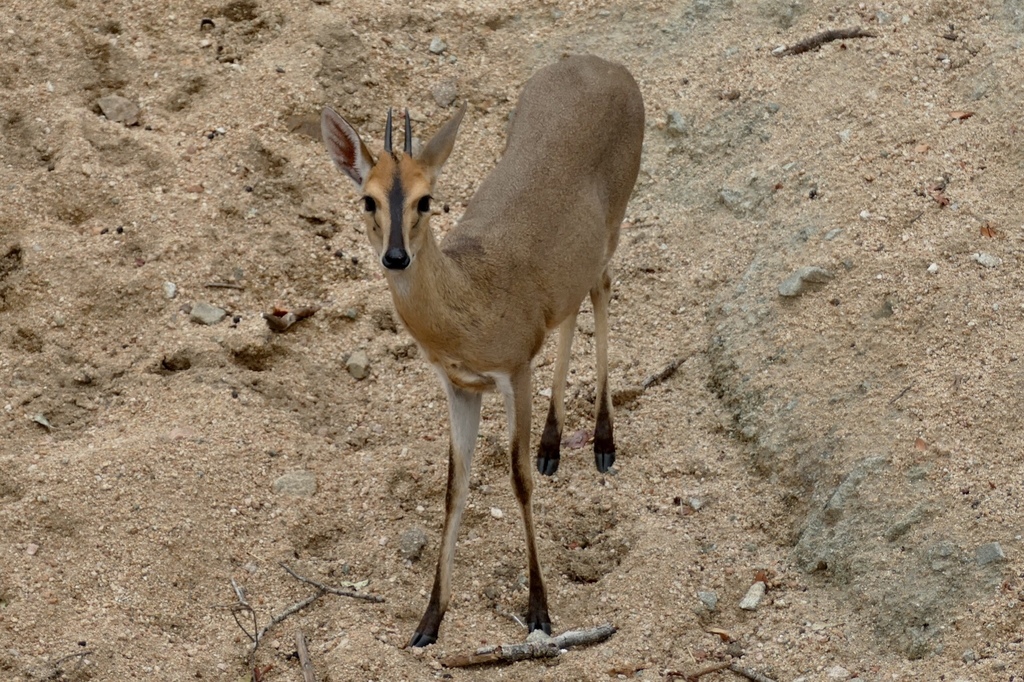
The only duiker that exemplifies the feature in question is the common duiker (Sylvicapra grimmia).
In this species, dark leg-front is accentuated by pale on the adjacent surfaces (medial and lateral) of the legs:
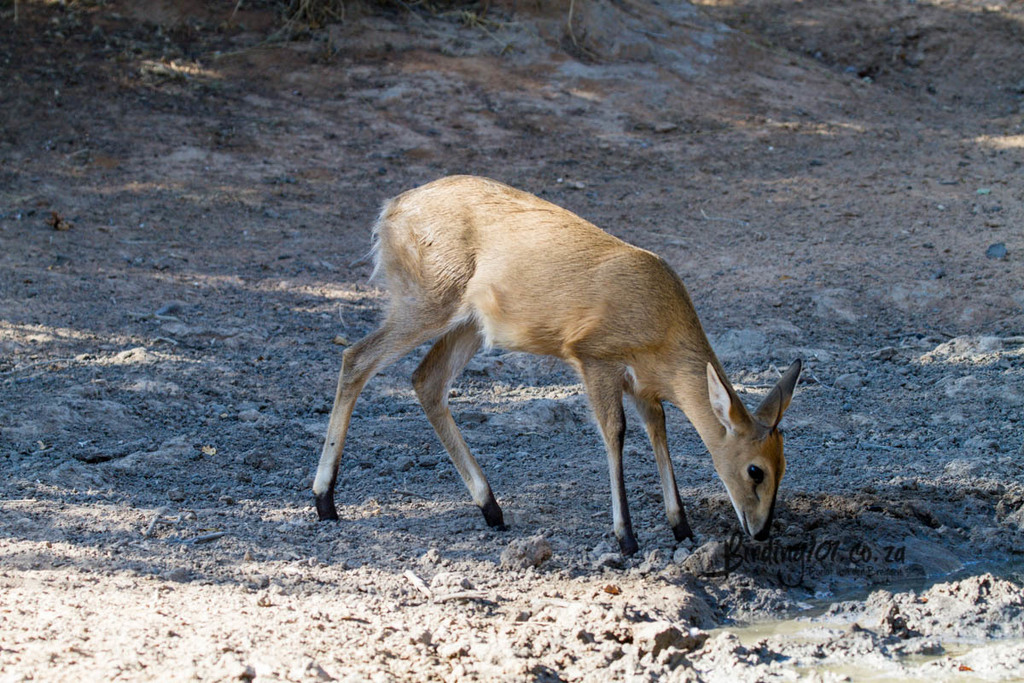
The dark feature runs vertically from the forehoof, through the carpal joint, to about halfway up the upper foreleg.
There is an ‘echo’ of the feature on the hindlegs. Here, the dark anterior feature runs from the hoof to about halfway up the lower hindleg.
This pattern applies to both sexes and all stages of growth from infancy to adulthood.
However, dark leg-front in S. grimmia is variable, as follows: absent in some individuals (regardless of subspecies), and present but lacking pale accentuation, particularly in the nominate subspecies (S. grimmia grimmia).
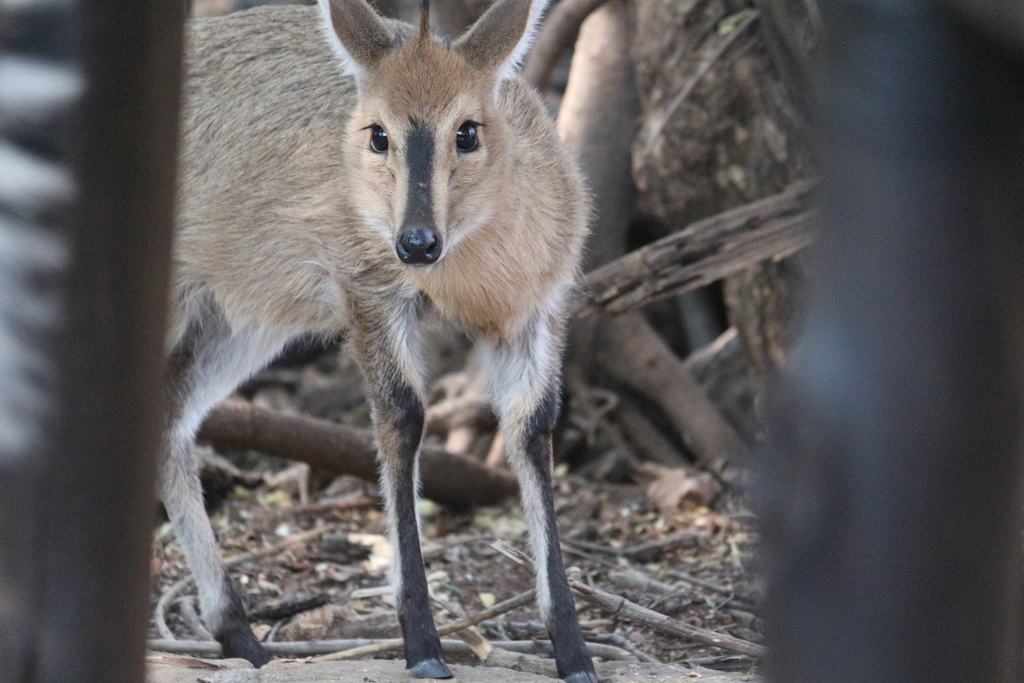
An intriguing aspect to dark leg-front in S. grimmia is that there is an ‘adjunct’ pattern on the face, at least in some individuals of some subspecies.
The facial pattern consists of pale lateral accentuation (including the ‘eyebrows’) of the dark (extending from the black rhinarium, along the rostrum, to the adjacent forehead) that is normal in S. grimmia:
stock.adobe.comcommon duiker, Kruger National Park
Shutterstockcommon duiker portrait
The result is an overall effect of ‘dark face-front’ together with dark leg-front in some specimens of S. grimmia:
stock.adobe.comgrey duiker·crowned duiker, adult male foraging
iStockduiker antelope·common grey duiker
The following show dark leg-front in S. grimmia in typical form:
Shutterstockcommon duiker on high alert
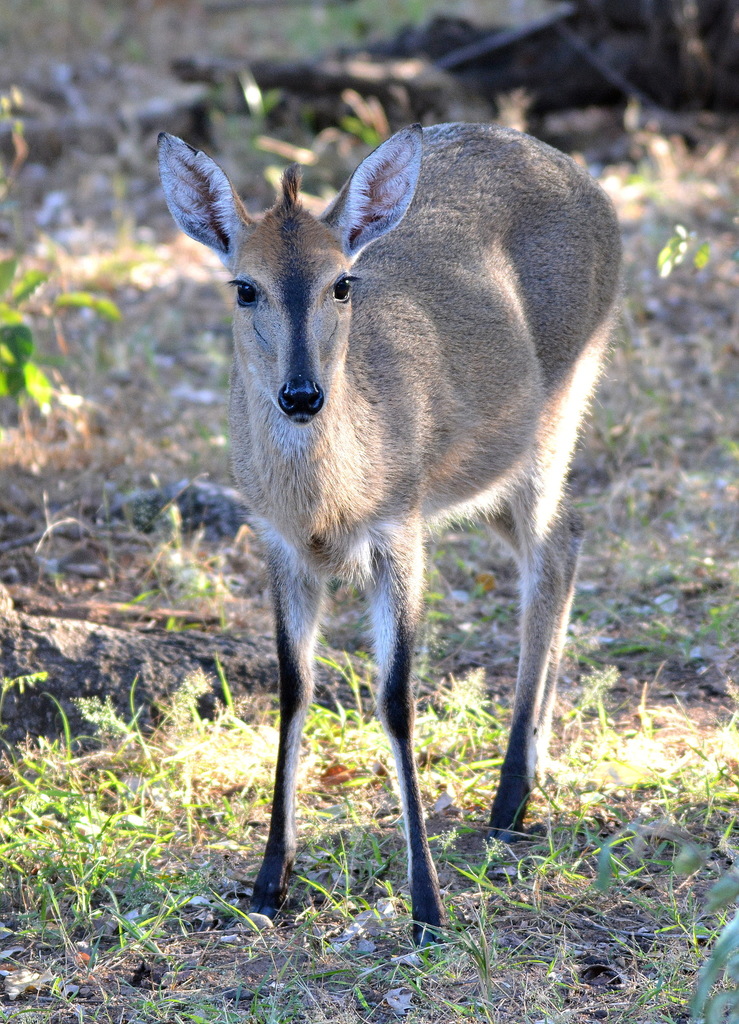
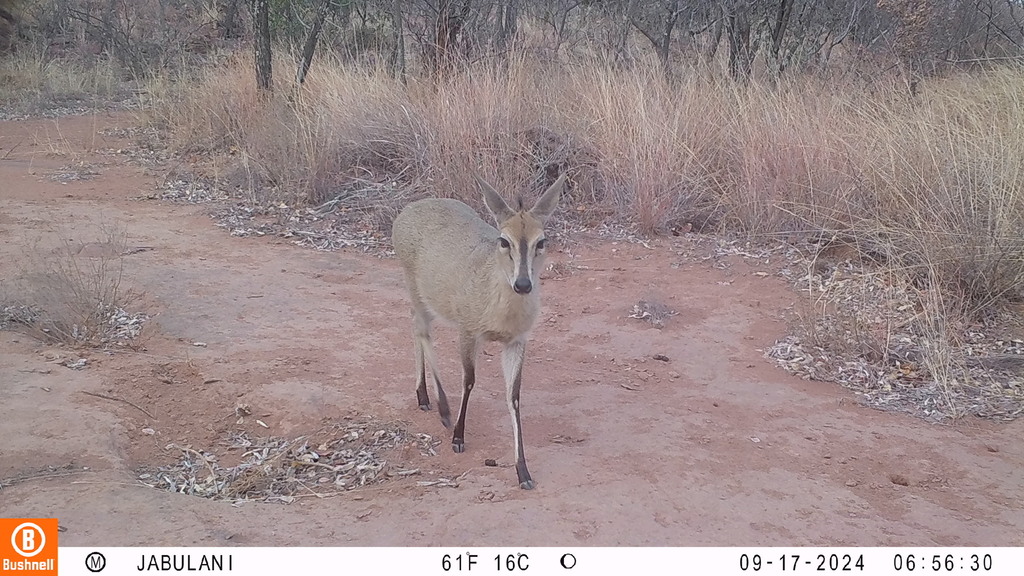
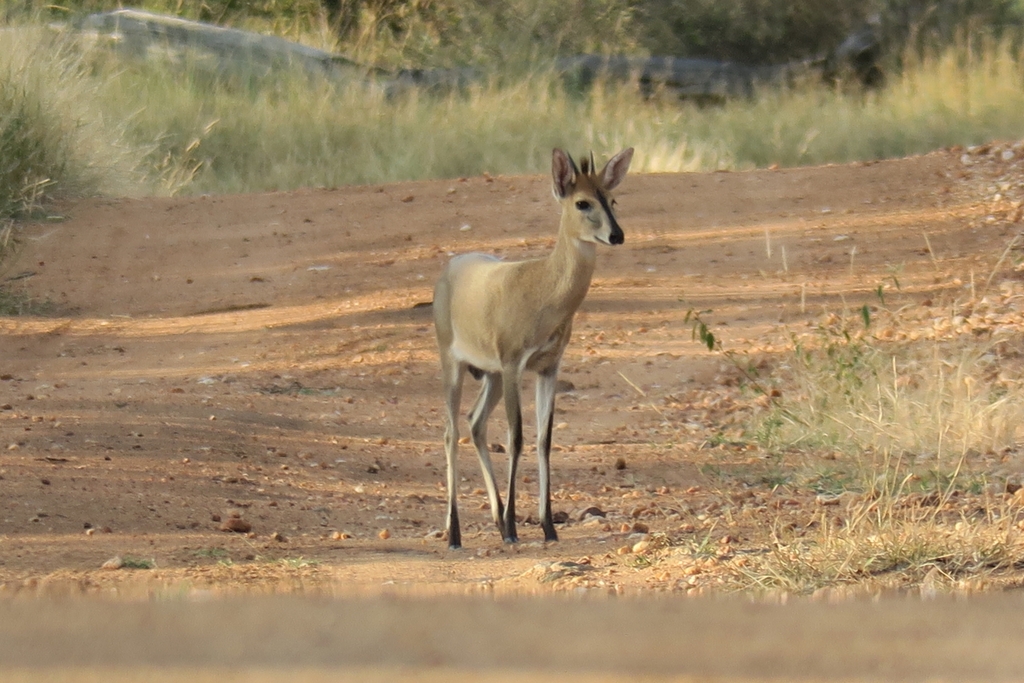
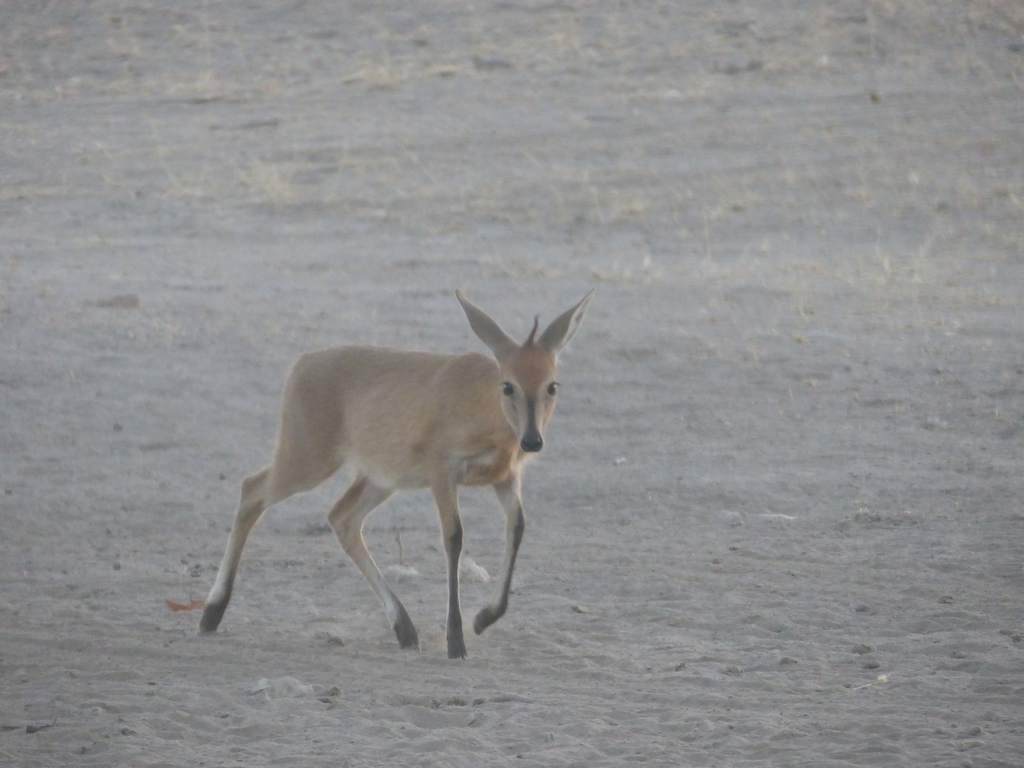
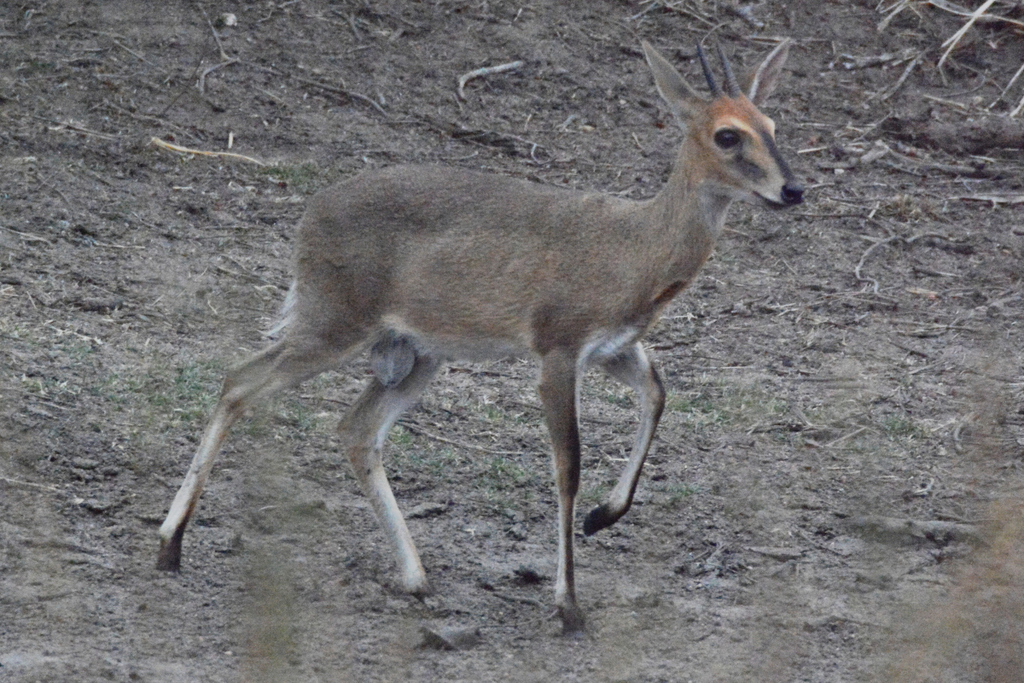
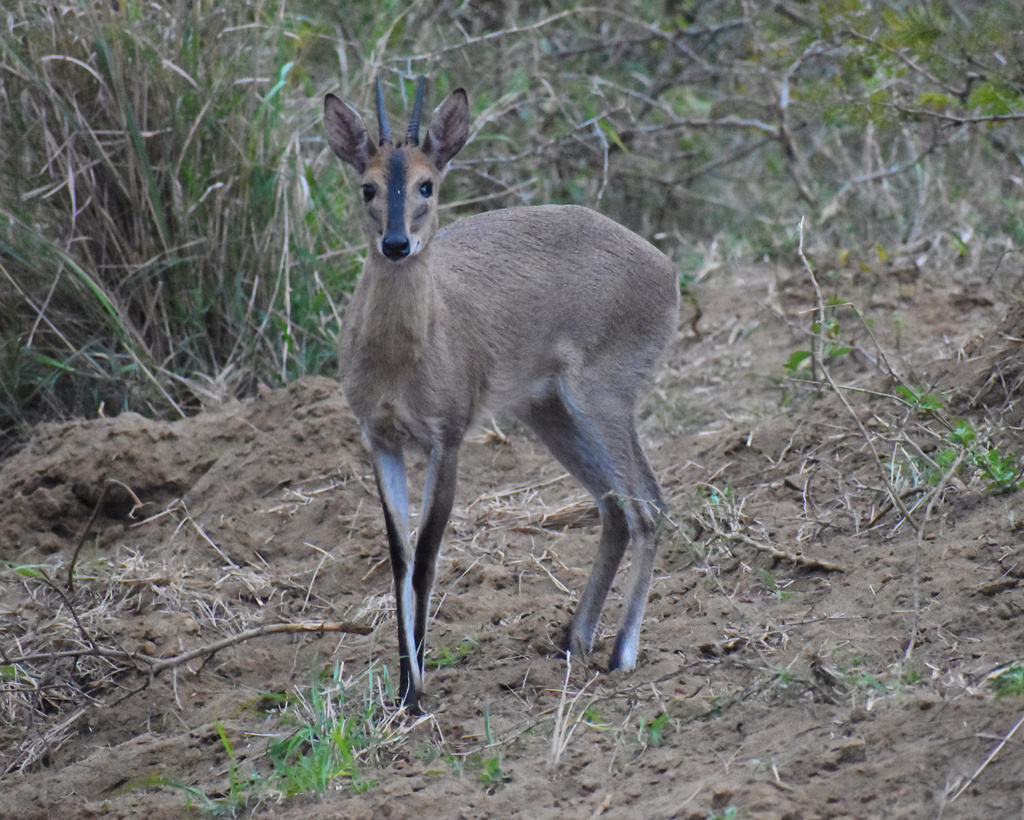
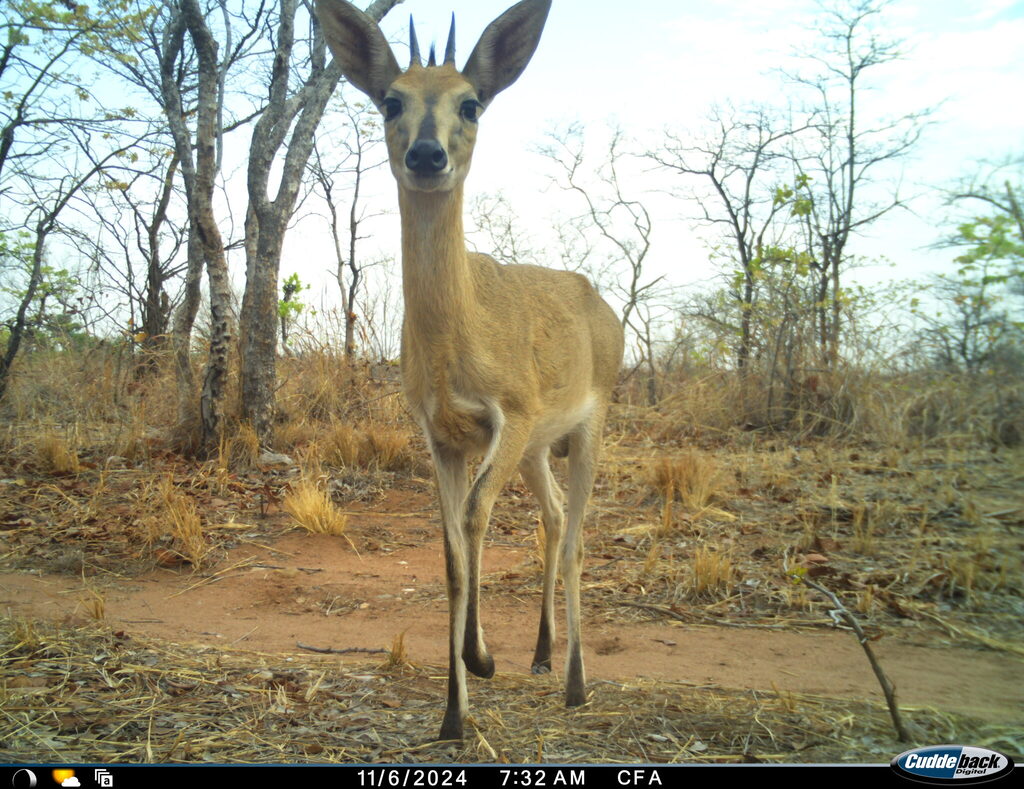
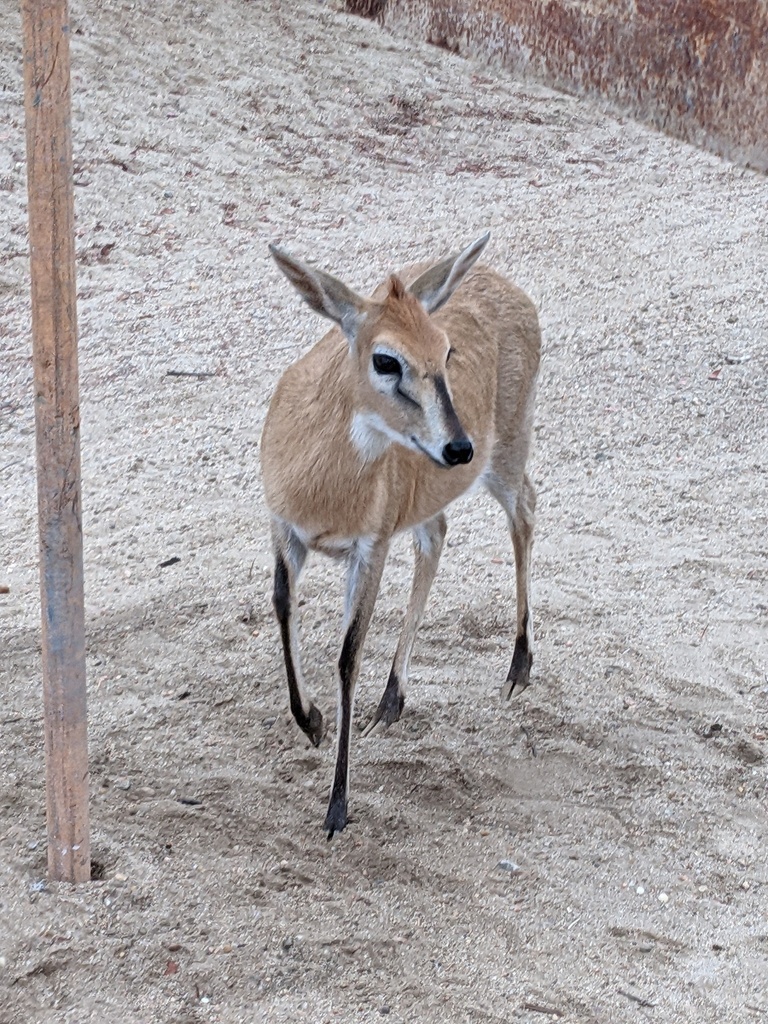
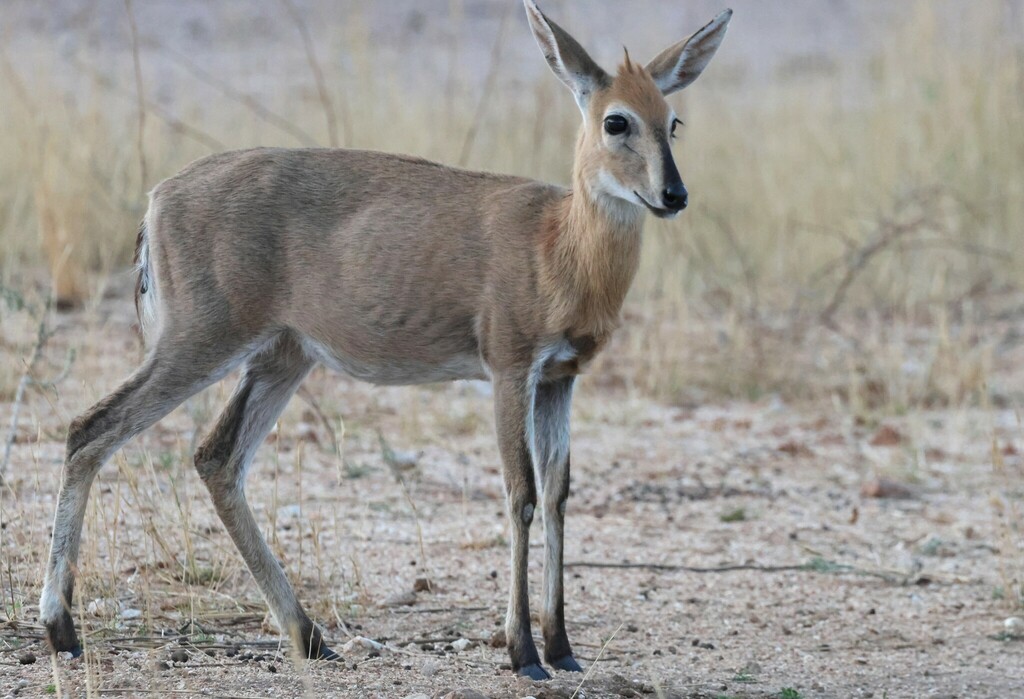
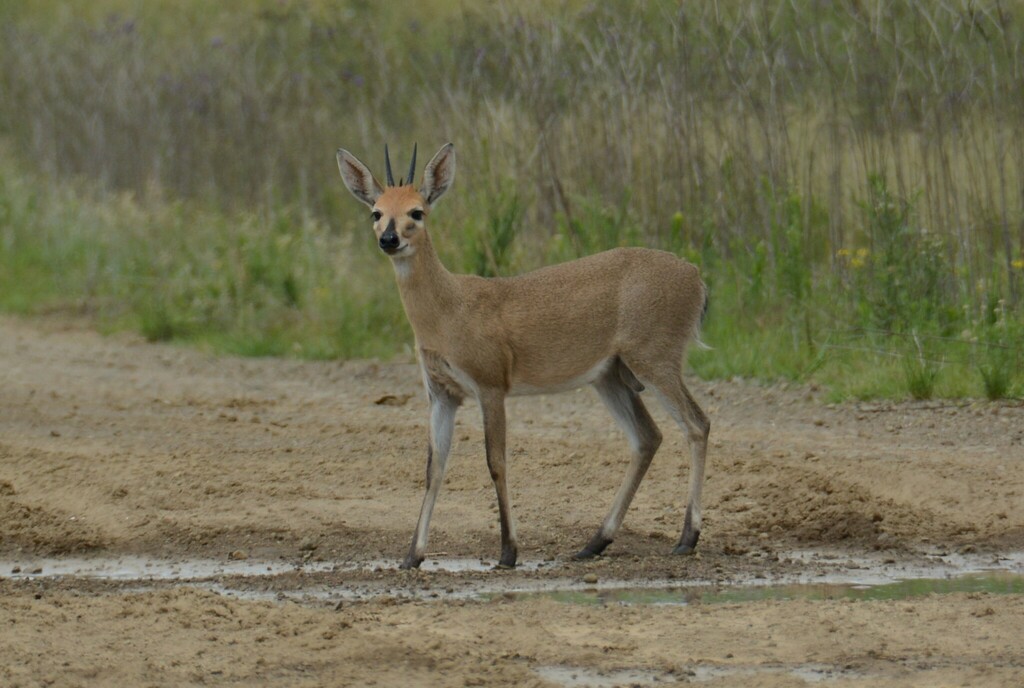
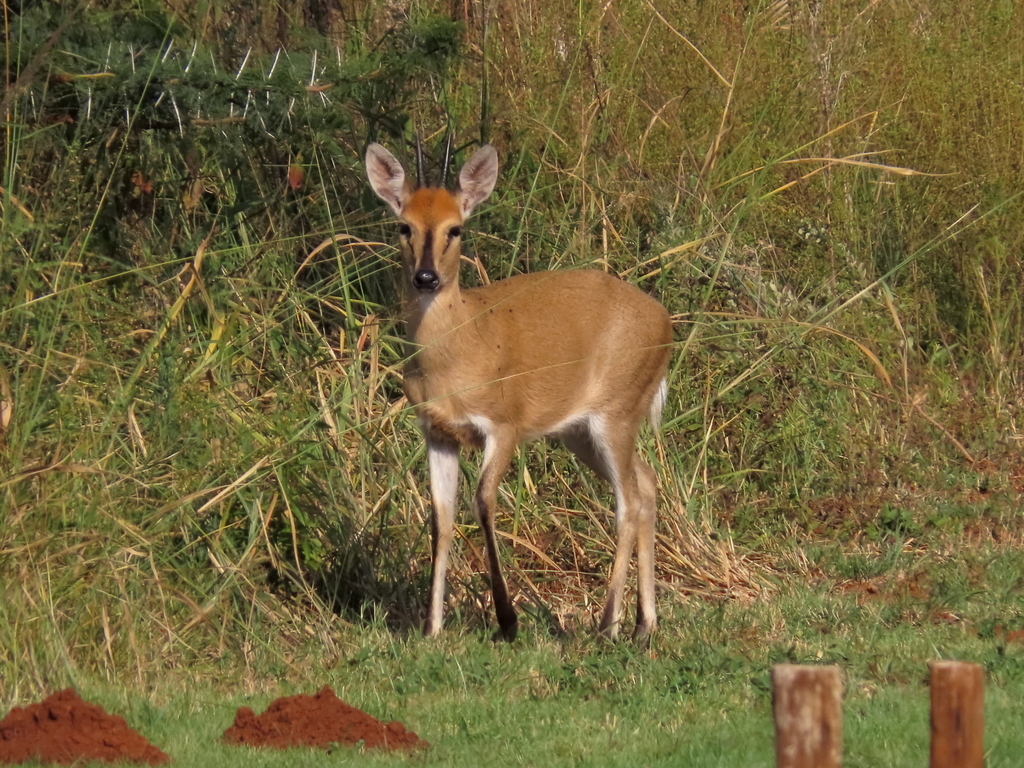
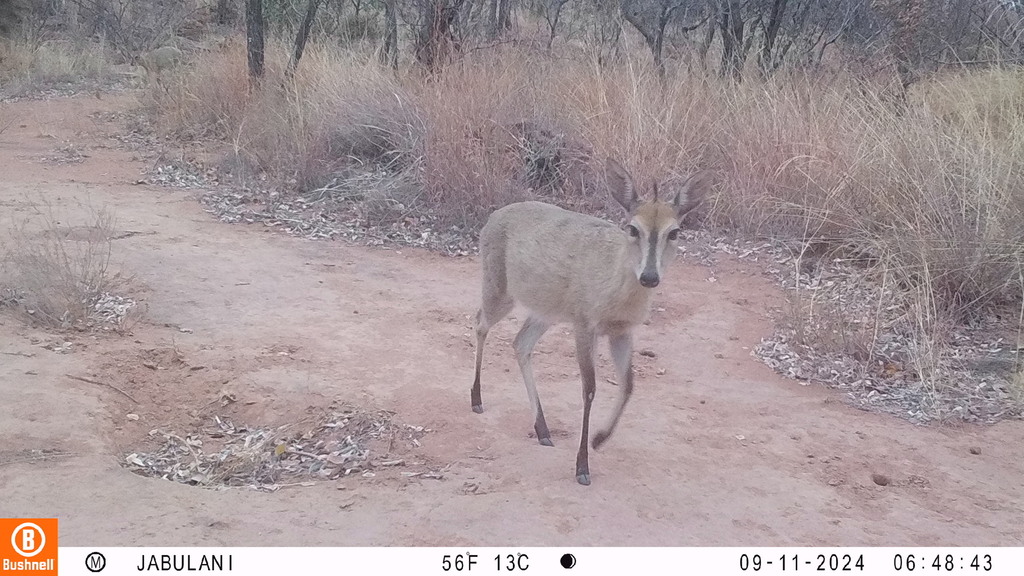
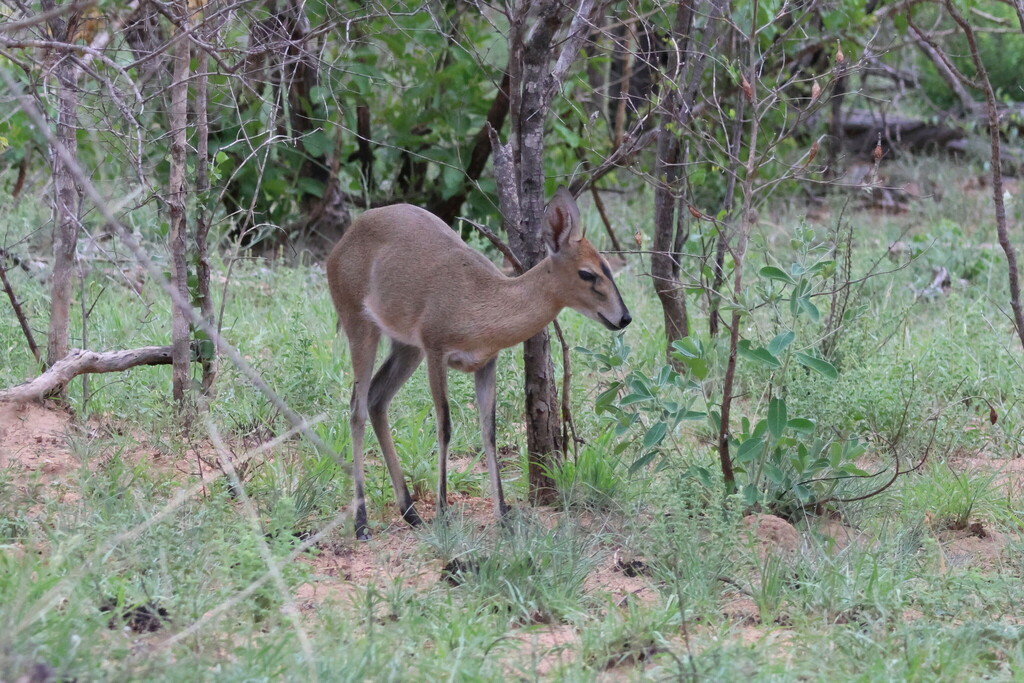
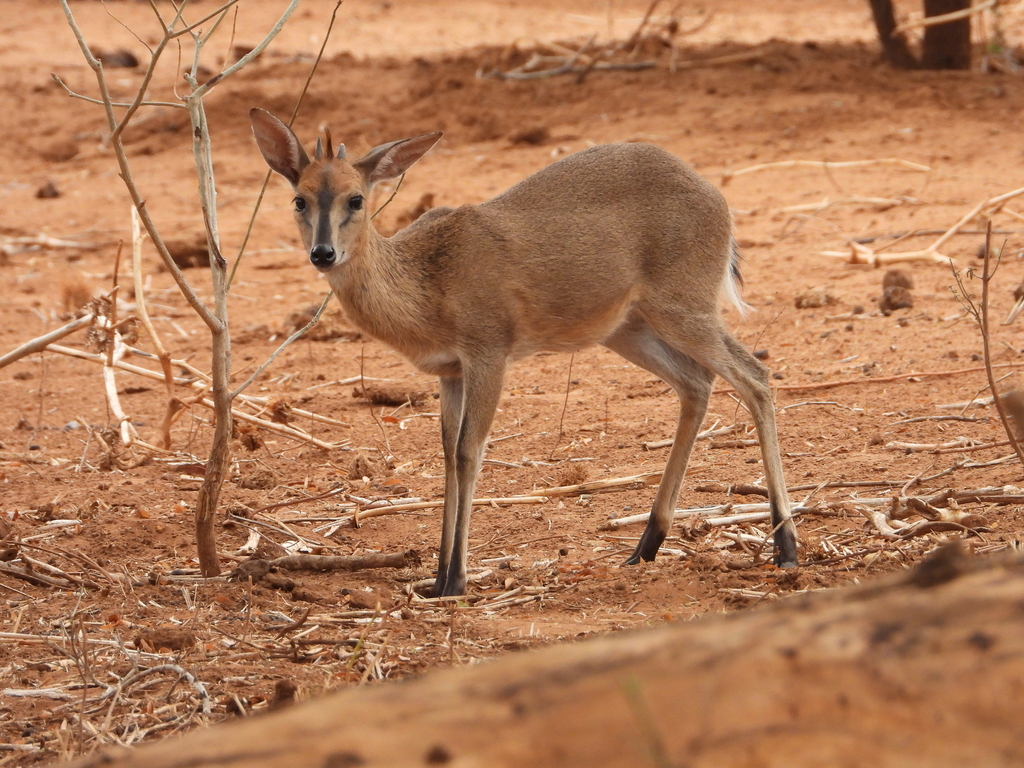
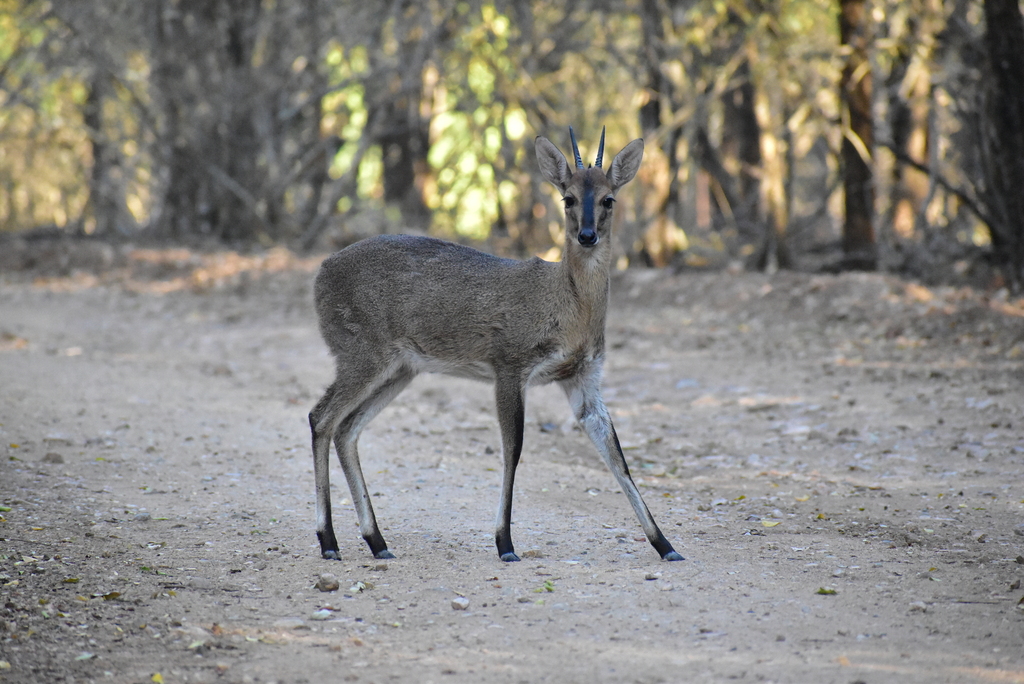
The following show that, in S. g. grimmia (the nominate, southernmost subspecies, confined to temperate climates), the dark leg-front is virtually annulled by the lack of pale contrast, despite the full expression of the darkness:
The following show that, in northern subspecies (e.g. campbelliae, nyansae, hindei), some/many individuals lack pale contrast to the dark leg-front:
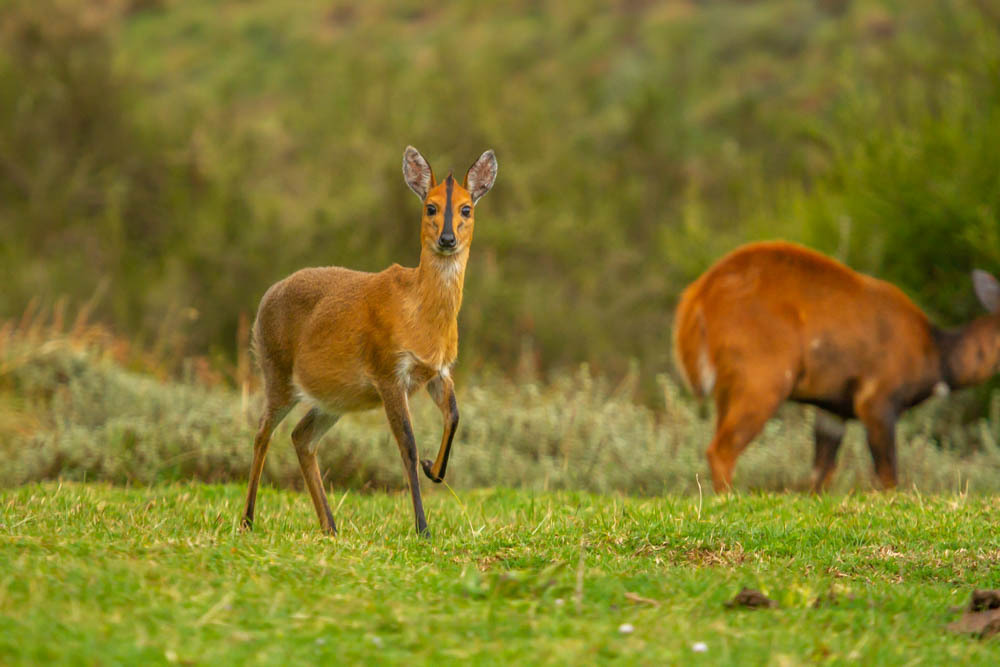
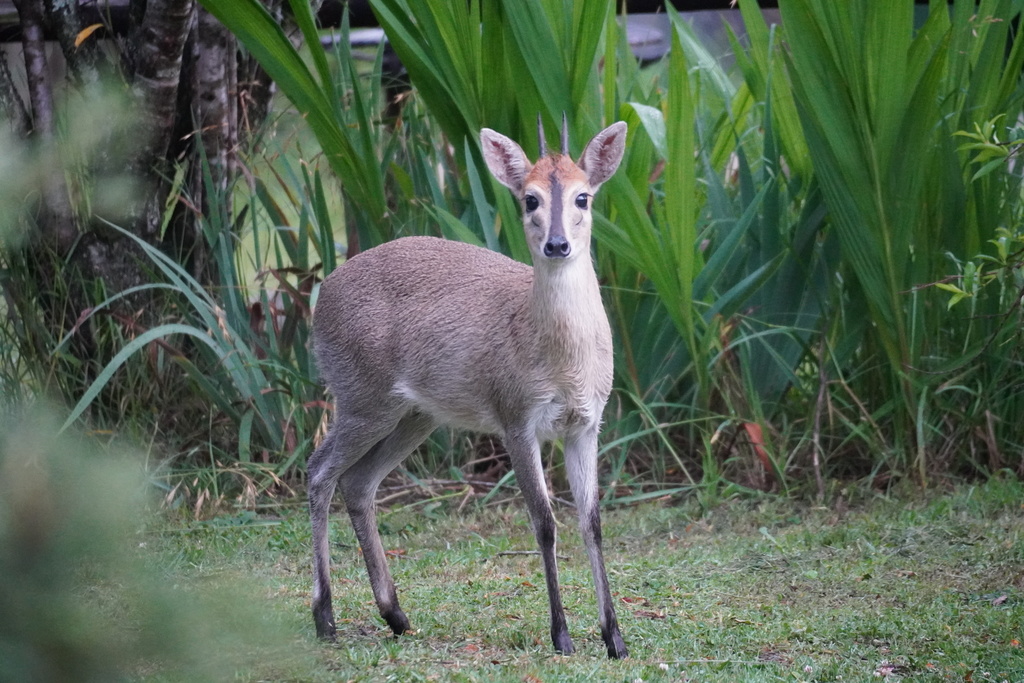
The following show dark leg-front in S. grimmia in relatively faint form, in an individual basis:
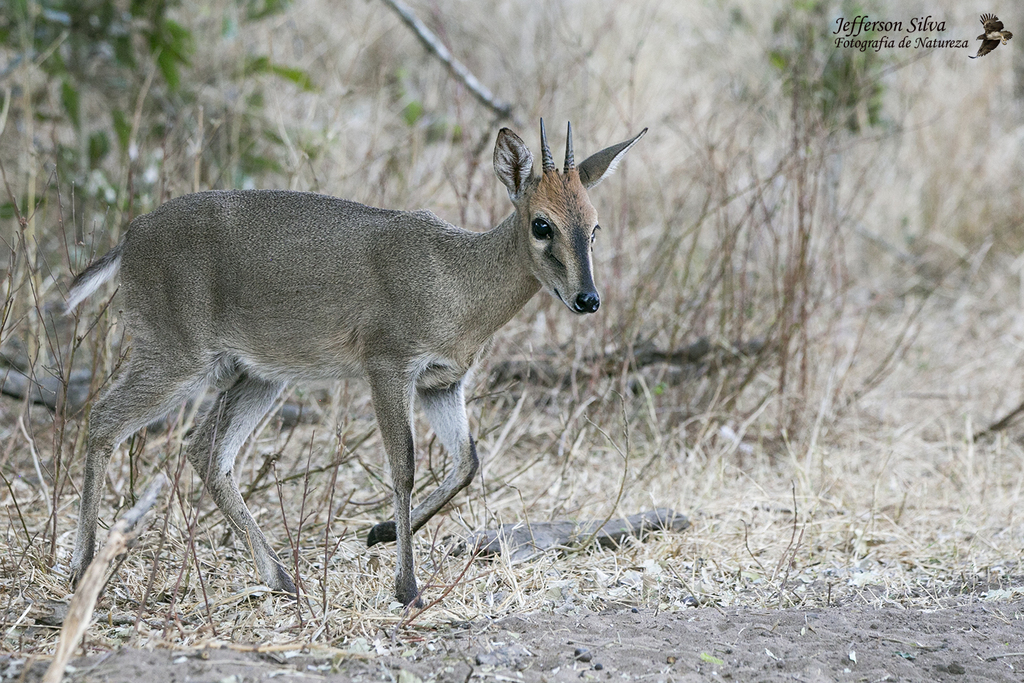
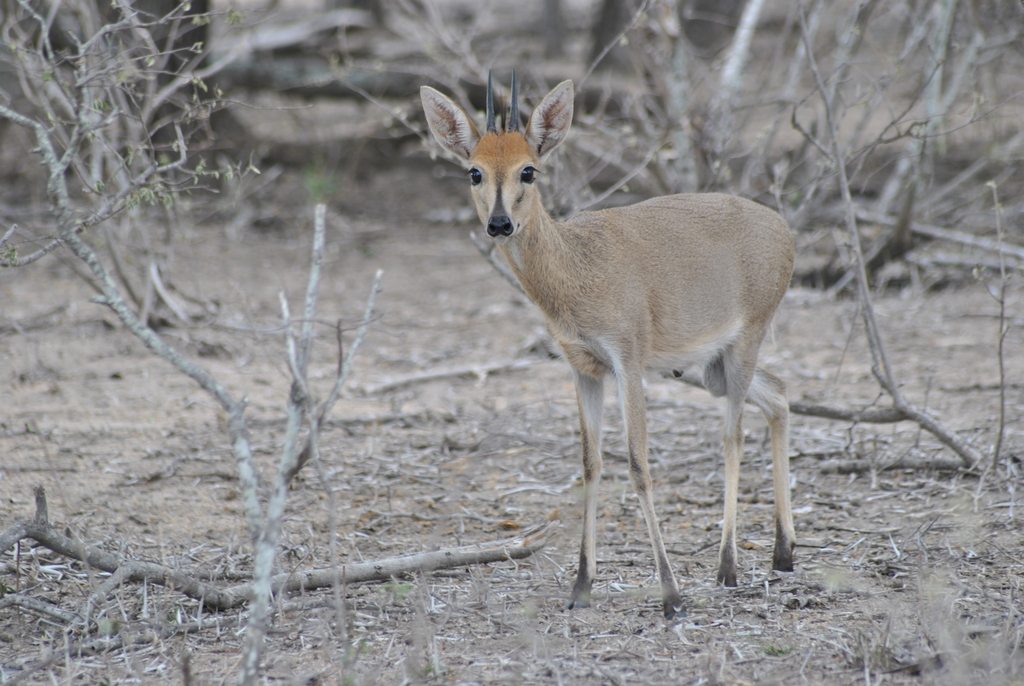

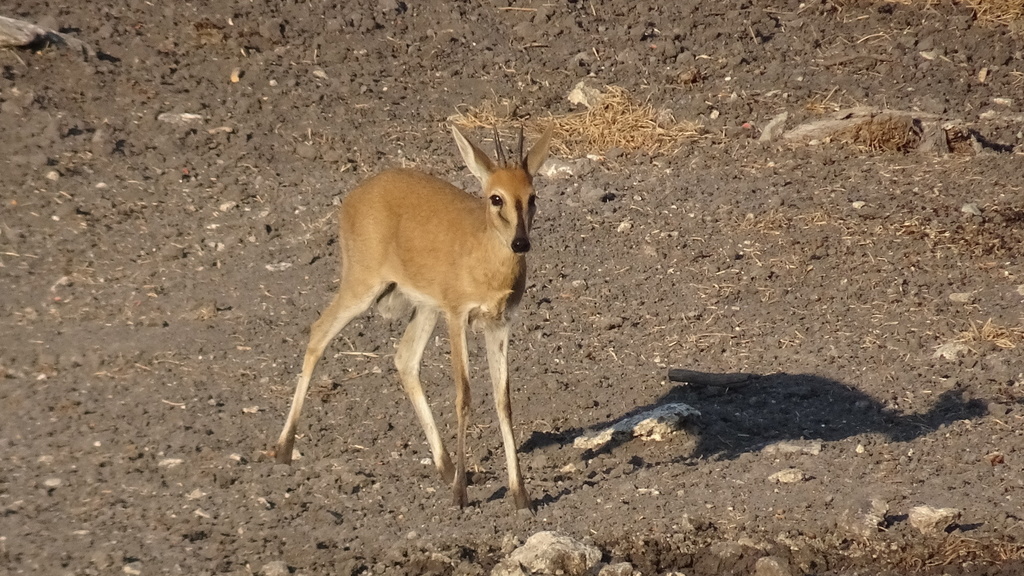
The following shows an individual in which with dark leg-front is faint, but the dark on the face is not faint:
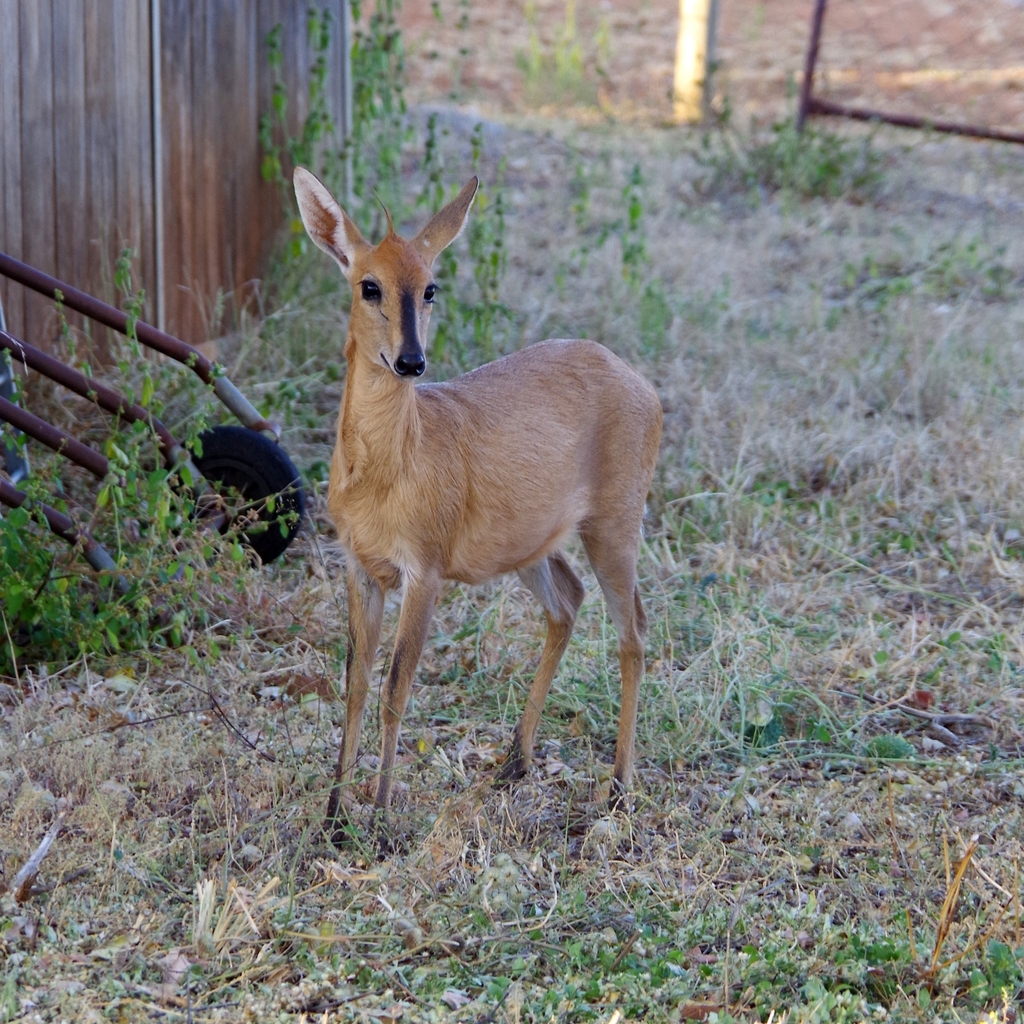
ultimateungulate.comSylvicapra grimmia
The following show ‘dark face-front’ in combination with dark leg-front:
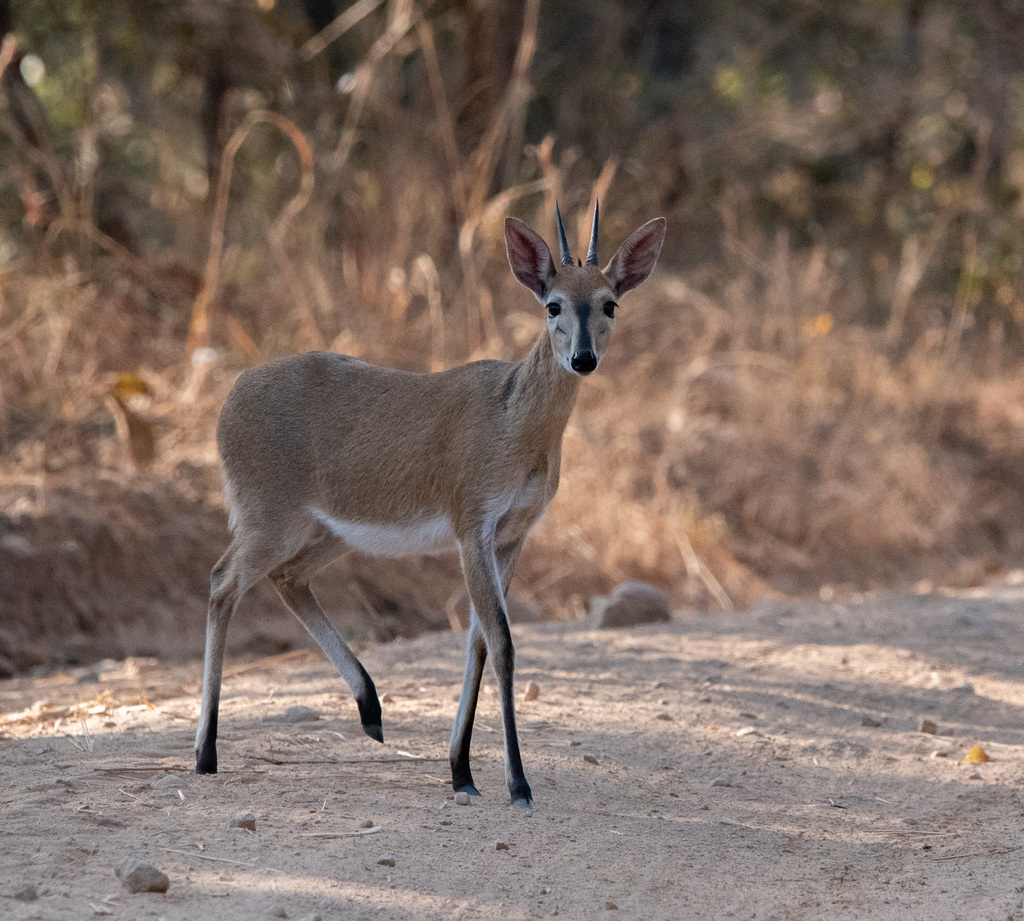
The following show individuals virtually lacking dark leg-front:
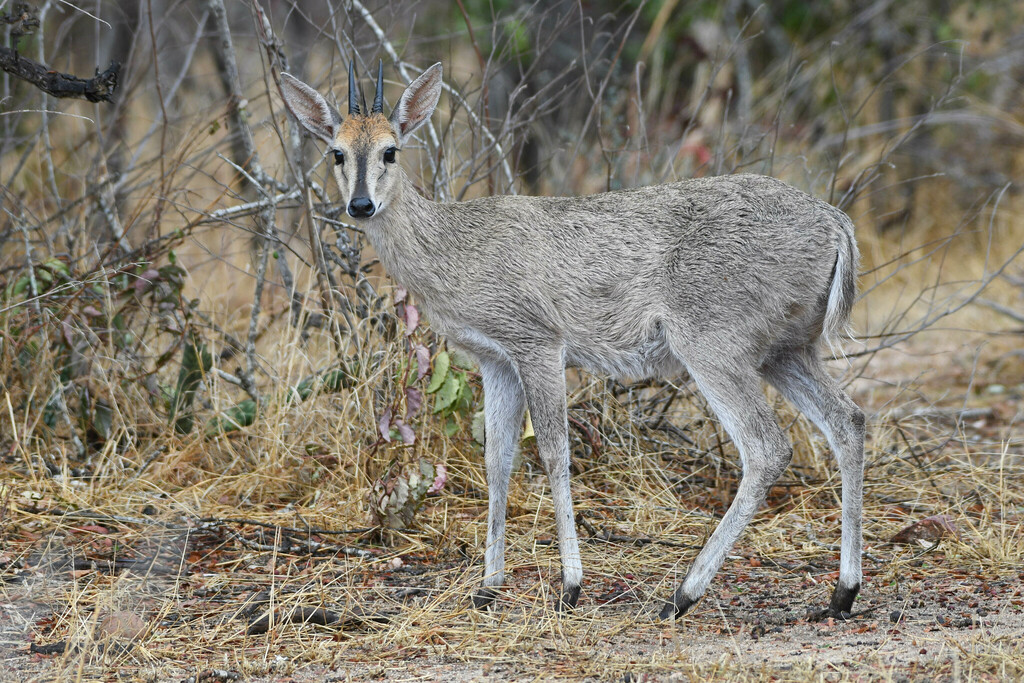
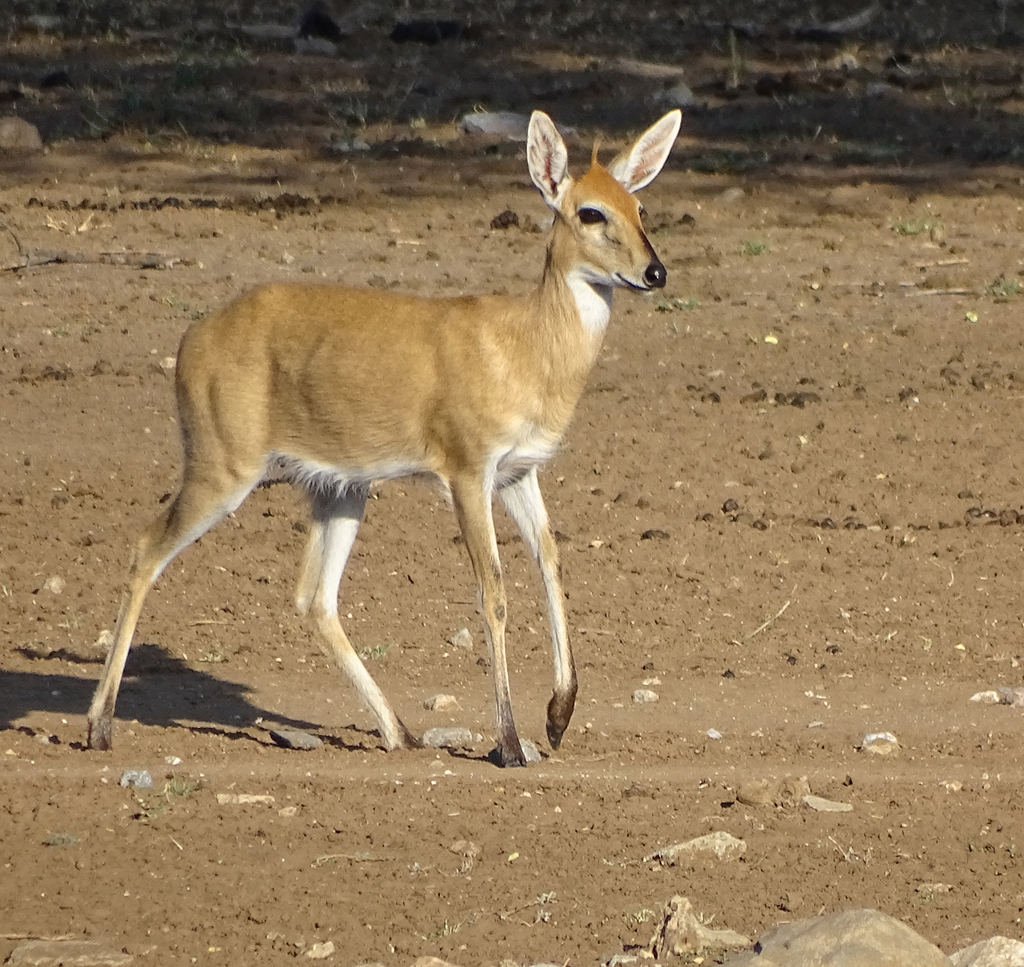
destinationuganda.comgrey duiker / common duiker
DISCUSSION
In previous Posts, I have described and named (for the first time) the following features of adaptive colouration in Sylvicapra grimmia: pedal flagg, caudal flagg, and buccal semet.
Related postsA succinct photo-guide to subspecies of the bush duiker (Sylvicapra grimmia)·The buccal semet of the common duiker (Sylvicapra grimmia)
Does dark foreleg qualify as bleeze, flagg, or semet? If not, then which category of conspicuous colouration does it conform to?
Bleeze can be ruled out, because dark foreleg-front certainly is not conspicuous enough to advertise the stationary figure at distance.
Semet is unlikely, because dark foreleg-front is too large-scale, and has no plausible function in intraspecific communication.
Dark foreleg-front may possibly qualify as a flagg, or at least part of a frontal flagg that includes the facial pattern in a disjunct composite.
However, I hesitate to nominate a flagg here, because: dark/pale contrast is absent in the case of S. g. grimmia, dark/pale contrast is absent or limited in the case of some individuals of other subspp., and many individuals of the several northern subspp., and the supplementary/adjunct pattern on the face is uncommon even in the subspp. in which it occurs (probably only splendidula, orbicularis, and caffra).
I therefore plan to re-assess S. grimmia after applying similar scrutiny to various other ungulates.
Shutterstockduiker, Kruger National Park (1)·duiker, Kruger National Park (2)
Getty Imagescrowned duiker, running (1)·crowned duiker, foraging (1)·crowned duiker, running (2)·crowned duiker, foraging (2)·crowned duiker, running (3)
wildlifeofkenya.comcommon duiker
I suspect that the first photo in the following is actually of subspecies coronata, at Niokolo-Koba in Senegal:
destinationuganda.comcommon grey duiker
If so, this would be significant, because there are so few photos of this distinctive subspecies. Subspecies coronata was named in 1842, which is 183 years ago. Furthermore, its range is hardly remote. Therefore, the scarcity of photos of this subspecies is one of the most remarkable aspects of the biology of the common duiker.
zoochat.comCape duiker (Sylvicapra grimmia grimmia)
Subspecies coronata is intriguing, because most other ungulates (e.g. kob, reedbuck, roan, oribi, giant eland) do not have distinct sspp. in far-West Africa. This is particularly because ssp. campbelliae is otherwise so widespread, if one includes the forms in Ethiopia, Uganda, and parts of Kenya and Tanzania as similar to campbelliae and different from coronata. I suspect some sort of ecological link between ssp. coronata and the coexisting form of Papio, which is similarly confined to far-West Africa. In Papio as in Sylvicapra, the form (anubis) otherwise occurring in West Africa is remarkably widespread, extending all the way to central Tanzania. A functional link between duiker and baboon seems plausible because duikers often benefit from wastage that would otherwise be out of reach.
stock.adobe.comsmall antelope, Kruger National Park
iStockMenelik bushbuck, Bale Mountains National Park
stock.adobe.comUgandan kob, females (video)