
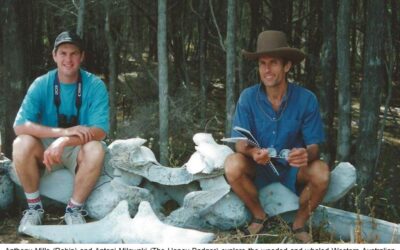
Behind the bio-edge
A scientific training is a privilege and a joy. But it has a downside: as graduate students we learn, sometimes a hard way, to be only so imaginative and no more. How much fun is that? Speculation isn’t exactly a dirty word, but is seen as a vice in science. Publication by peer review is a measured walk on a short leash…
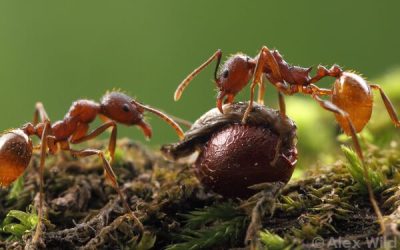
The first triangular mutualism: plant – ant – butterfly
Triangulating mutual favours between potential foes

Could the Australian tortoise trump the hare?
Land tortoises are fully terrestrial, mainly plant-eating members of the Order Testudines. Oddly, Australia – despite having an impressive radiation of two suborders and eight genera of amphibious testudines – today lacks land tortoises or convergent reptiles derived from other lineages. There are two possible explanations for this lack…

An ogle to the classic predator
Large felids are watchable, perhaps mesmerising. And yet it has gradually dawned on us, during about three decades of watching the lion, watching biologists watch the lion, and watching the scientific literature on the lion: some obvious points about the appearance of this species keep on being missed by both expert and layperson…

A best-kept secret of wild cats: the aposematic bar code
No mammalian family more thoroughly exploits camouflage than the cats. Whether by stripes, rosettes, blotches, mottles, melanism, or plain countershading, cats are highly adept at blending into their surroundings. Indeed, the variations of patterning and colouration, found in the 14 genera and 38 wild species of felids, make interpreting their evolutionarily adaptive value a complex task…
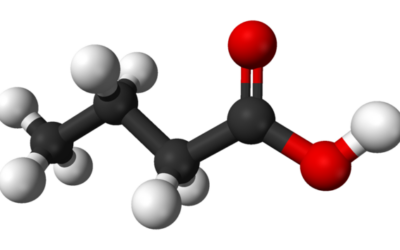
Is butyric acid a new vitamin for humans?
Butyric acid is an unlikely contender for a newly discovered vitamin in the human species. Yet that is what we contend – apparently for the first time – here at Exploring the Bio-edge…

A biological secret of the Maasai
The Maasai of East Africa claim a staple of bovine milk as their birthright. Such a diet in adulthood has no precedent among mammals. Furthermore, no physiological adaptation in the Maasai to such specialisation has been discovered. We investigated how humans might achieve…

Salvation by the yellowest of tides in the bluest of seas
The most famous castaway of all time, Jose Salvador Alvarenga, estimated age 37 years, has now returned to obscurity in central America. The media circus has moved on, ready for the next miracle. The limited information contained in news bulletins, with only superficial interpretation…

Austral-avian intelligence
Although much richer in bird species, South America cannot match Australia’s large, brainy passerines. With a relatively well-watered, reliable environment, it’s not surprising that South America supports many bird species, each specialized in its own way. By contrast, the unreliability of Australia’s resources, particularly rainfall, is likely to limit specialisation in birds while at the same time favouring braininess on the island continent…

Fluffy chitulose dreams
On the face of it, cellulose is the most mundane of biological products. Everyday cotton.
When you put on pyjamas of 100% cotton, you’re donning a product made simply from one natural polymer called cellulose, produced directly by plant cells, harvested by humans, and tweaked into shape as a garment without chemical transformation…

The pied panda
Most biologists know that conservation of the giant panda is biased, but we introduce clarity here on three counts. Firstly, part of the bias is for pied colouration. Secondly, this piophilia deserves a name. Thirdly, piophilia seems to have contributed to the salvation of several other large mammals…

Anthropological whisperings from the ear lobe
The Bio-edge starts with the human body. So many enigmatic body parts to choose from: chin, appendix, eye whites, thumb, foot, penis, mammaries, sinuses, kidneys . . We could start anywhere in this list and more of puzzles. But we’ve chosen something almost arcane: the ear lobe.Is the ear lobe restricted to humans among primates?

Would you like your paradox with a pinch of salt?
Is there a reader who hasn’t scratched a head over the role of sodium in the human diet? The behaviour of Na in diet, health and ecology seems illogical. This is partly because sodium has an addictive aspect – and all addiction is paradoxical from an adaptive point of view. Personal experience plus ongoing scientific investigation allow us to suggest some original hypotheses on this subject…

Giant panda, giant cavy, and a pastural allegory
For more than a year Robin and the Honey Badger have felt inspired to compare the giant panda of China with the capybara of South America. What has lagged, however, is a creative way to combine the relevant biological principle with the right expository form. Without both, this comparison may seem far-fetched, its subjects too disparate…

Lateral thoughts on the leatherback turtle
At the mention of the leatherback turtle, most people generally knowledgeable about animals may visualise merely one of the half dozen-odd types of marine turtles collectively associated with tropical seas. However, this particular species deserves a special shelf in the mind of the nature-lover because it differs from all other turtles…

Nesting a tangle of cause and effect
Grand constructions by non-human organisms seem to defy our self-concept as the engineering animal. Yet some of the greatest feats of engineering can be found in Nature itself beaver dams and lodges; mima mounds on a landscape scale; termitaria five metres high; and the breakwater of coral reefs…