
The brightest of steroid hormones is also the most confused.
Prof. Mumblebard claims: “Vitamin D is a good example of a vitamin because it is required in small amounts, is supplied partly by the diet, and produces clear symptoms in deficiency. Furthermore, deficiency can be remedied by supplementing the vitamin without any other changes to the diet. The solving of widespread rickets in the 1930’s by feeding suitably enriched milk to children is a classic example of the effectiveness of supplementation of vitamins.”
Robin and the Honey Badger respond: “Vitamins by definition are acquired mainly from food. ‘Vitamin D’ is a sterol and does not qualify as a vitamin for humans for five main reasons. Firstly, the main source of ‘vitamin D’ in humans is not the environment but auto-synthesis within human cells. Secondly, a dependence on sunlight for the photosynthesis of calciferol in skin cells is not equivalent to a dependence on dietary sources. Thirdly, too few foods naturally contain significant concentrations of ‘vitamin D’ for a dietary dependence to have evolved in humans. This is because the only food capable of serving as a supplement for ‘vitamin D’ at a wide range of latitudes would have been liver. Fourthly, the role of liver, as the only plausible dietary source of ‘vitamin D’ for human ancestors, is correlative rather than causal. This is because of its value for several other vitamins, including vitamin B12. And fifthly, whether auto-synthesised or absorbed from food, ‘vitamin D’ is largely inactive in all human cells until converted to a hormone. For these reasons, there is no likely scenario, in terms of ancestral natural selection, for the evolution of a dietary dependence on ‘vitamin D’ in humans. Liver could hardly have been such a reliable food in the Palaeolithic that dependence on it could plausibly have evolved; the form absorbed from the gut is a precursor rather than being active in the human body; and the active hormonal form is synthesised in the kidney and not acquired from any diet. The treatment of rickets hardly vindicates ‘vitamin D’ because milk contains negligible calciferol without pharmaceutical interventions; and the ‘milk’ administered was a fortified formula in which artificial calciferol acted as a prodrug. Beyond mere semantic reasons, the steroid hormone called ‘vitamin D’ – which is administered like a drug – should be removed from the list of vitamins for humans.”

***
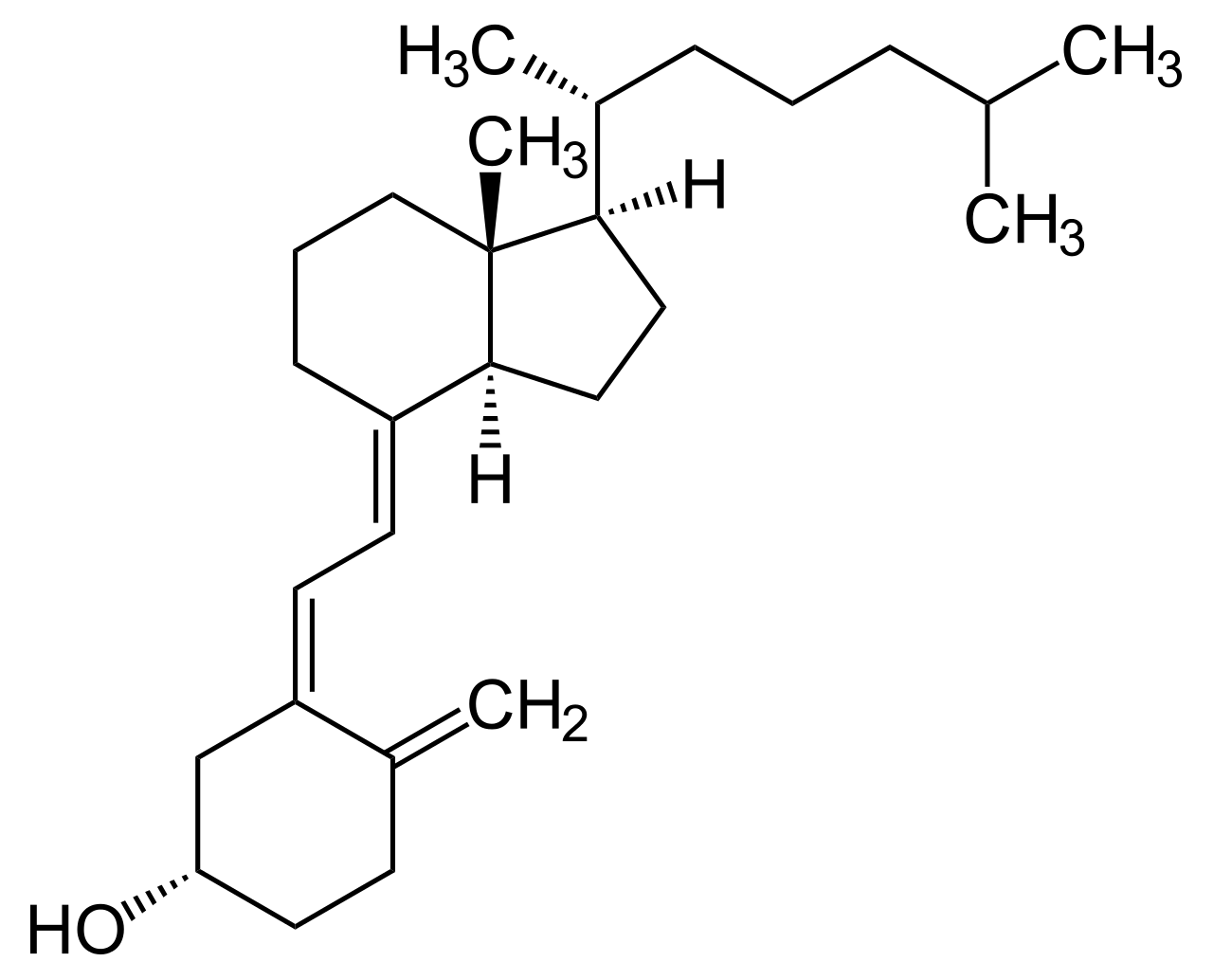
Featured image: Structure of cholecalciferol (vitamin D3) by NEUROtiker (Public Domain, Cholecalciferol)