Is Müllerian mimicry a misnomer and a non-concept in Lepidoptera?

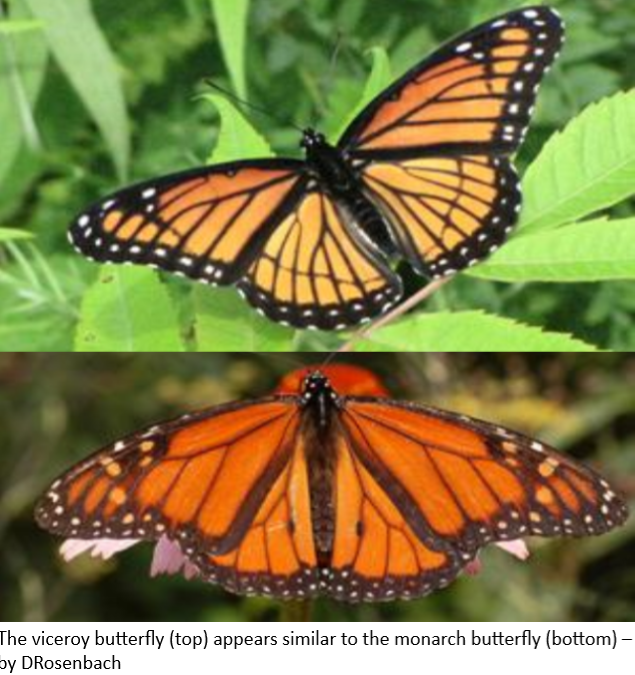
Prof. Mumblebard claims: “Coexisting butterflies with warning colouration tend to resemble each other even where all the mimicking species are genuinely noxious to predators. These Müllerian mimicry rings – which are rightly regarded as a textbook example of deceptive colouration in animals – have been adequately explained for more than a century. Because recognition of aposematic patterns by birds is learned rather than instinctive, it’s advantageous to both the avian predators and the vulnerable butterflies if the signal of one model species of butterfly is copied by several noxious species. Such mimicry enables each species to advertise its identity as a dangerous food item.”
Robin and the Honey Badger respond: “’Müllerian mimicry’ is too poorly named and explained to deserve its current status in biological textbooks. Mimicry is deception by definition, yet in ‘Müllerian mimicry’ all the butterflies in the ring display gaudy warnings of real toxicity – which means that the butterflies’ communication with their potential predators is not deceptive but honest. A further flaw in the term mimicry in ‘Müllerian mimicry’ is that it’s practically impossible to identify any one species as the ‘model’ in the evolution of these patterns. We suggest a better term, ‘aposematic uniformism’, which drops the concept of mimicry from both the name and the explanation. The reason why existing accounts of aposematic uniformism (= ‘Müllerian mimicry’) are unsatisfactory is as follows. Warning colouration by definition promotes identification, but aposematic uniformism blurs distinctions between species of butterflies and hence types of toxicity. This compromises the communication between butterfly and predator, which boosts the risk of mistaken attacks on butterflies by birds. Thinking laterally in our re-assessment leads us to the following novel explanation: aposematic uniformism among butterfly species is adaptive to predation by mixed-species foraging flocks of birds. The crucial observation is that, worldwide, unrelated insect-eating bird species tend to forage collectively. Their aggregations pass like waves through the vegetation, flushing insects – both noxious and harmless – into flight. Under such pressure, the butterflies run a gauntlet in which the birds in the mob have minimal time to gauge whether any particular insect is dangerous. Because the birds include species tolerant of certain toxins and individuals naive with regards to warning signals, even the most noxious butterfly species – with conspicuous warning colouration – risks being the victim of an error that the bird, too, will regret. Because the gauntlet is one of hasty decisions under pressure, both the prey and the aggregated predators benefit if various species of noxious butterflies share a common pattern. Aposematic uniformism allows every member of the mixed-species foraging flock to ignore any butterfly thus coloured despite the hectic confusion of the encounter and the competitive urgency of the birds. This new explanation is based on a trade-off of quality of communication for quantity of communication.”