
Plasticfruits seriesPart 1·Part 2·Part 3·Part 4·Part 5·Part 6·Part 7·Part 8
The principle
I have noticed a principle in the biology of plants that seems missing from textbooks.
Ponder the scientific implications of the observation that ‘flower’ is less ambiguous than ‘fruit’.
TermsFlower·Fruit·Source paper
The principle emerging from this is: flowers tend to be evolutionarily fixed, but fruits tend to be evolutionarily plastic.
This is why it is better to classify, and easier to identify, plants by their flowers than by their fruits.
It is also why the word ‘flower’ is less confusing, in botanical descriptions, than the word ‘fruit’.
‘Fruit’ technically includes
- dry, dehiscent/ballistic pods and capsules,
- papery to woody follicles, and
- diverse other structures.
These
- include compound structures incorporating calyces, peduncles, hypanthia, etc., and
- can contain from one seed to hundreds.
However, ‘fruit’ is usually taken to mean something closer to the category of fruit in human diets.
Another way of saying this is that plants tend to be conservative in their sexual organs, but versatile in their organs of seed-dispersal. Or relatively fixed vs relatively modifiable. Fruits seem more adaptable than flowers within any given evolutionary lineage.
In this series of posts, I focus on various examples of this principle at the level of genus.
So many genera, worldwide, illustrate the principle of ‘plasticfruits’ that my choices must be arbitrary. However, I would like to show diverse ways in which fruits have converged, evolutionarily, in producing enough ‘fleshiness’ to provide edible rewards for seed-dispersing animals.
I start with simple — but surprising — examples, building to morphologically more complex examples.
Osteospermum
My first choice is the daisy genus Osteospermum, which occurs mainly in southern Africa.
The fruit in Osteospermum, as in other daisies (Asteraceae), is a cypsela containing a single seed.
ReferenceOsteospermum·Cypsela·Genus
It is often stated that daisies bear achenes but this is, strictly speaking, incorrect. A cypsela is similar to an achene but differs technically in the number of carpels.
CarpelsWikipedia
It is the modification of the exocarp, or outer layer, of the cypsela that provides the main variation — which can be surprisingly eye-catching — in the fruits of various species of Osteospermum.
In some species, the cypsela bears three small wings plus an apical air-chamber, facilitating dispersal by wind. These species tend to occur in dry environments. I do not know whether the wings develop from the exocarp or from the calyx, but I suspect the former.
The fruit in this case would be described by most naturalists as a seed. It is actually a seed contained in the dead, dry carpels, but equates to a seed for practical purposes. (When you shuck a sunflower ‘seed’, discarding the hull to obtain the real seed inside, you are actually handling a whole fruit of Helianthus.)
CitedHelianthus
In other species, e.g. Osteospermum spinosum, the cylindrical cypsela has no wing, but its exocarp is thinly fleshy.
Osteospermum spinosumTaxon page·JSTOR Global Plants
This provides a meagre food-body designed to be eaten by ants, as a reward for dispersal and sowing by these insects.
Dispersal by antsJournal article·Global survey
The fleshy layer is thin and colourless, and not noticeable to the human eye. The fruit is not displayed, but dropped to the ground immediately on ripening. If the fallen cypsela is not immediately collected by ants, the exocarp dries out and wrinkles, within days or perhaps hours.
Here is another example: Osteospermum asperulum.
Osteospermum asperulumTaxon page·ScienceDirect
The structure described above is, again, a fruit in botanical terms but would not be described as such colloquially.
In yet other species, the cypsela is ribbed and/or pitted, or kidney-shaped, warty and pitted. The adaptive significance is unknown, but this shows how variable the diaspores are within this single genus.
DiasporeWikipedia
Finally, in a few species of Osteospermum the exocarp of the cypsela is fleshy enough to form something clearly recognisable as a fruit — and one that is perfectly edible for humans, albeit too small and fiddly for most naturalists to bother with.
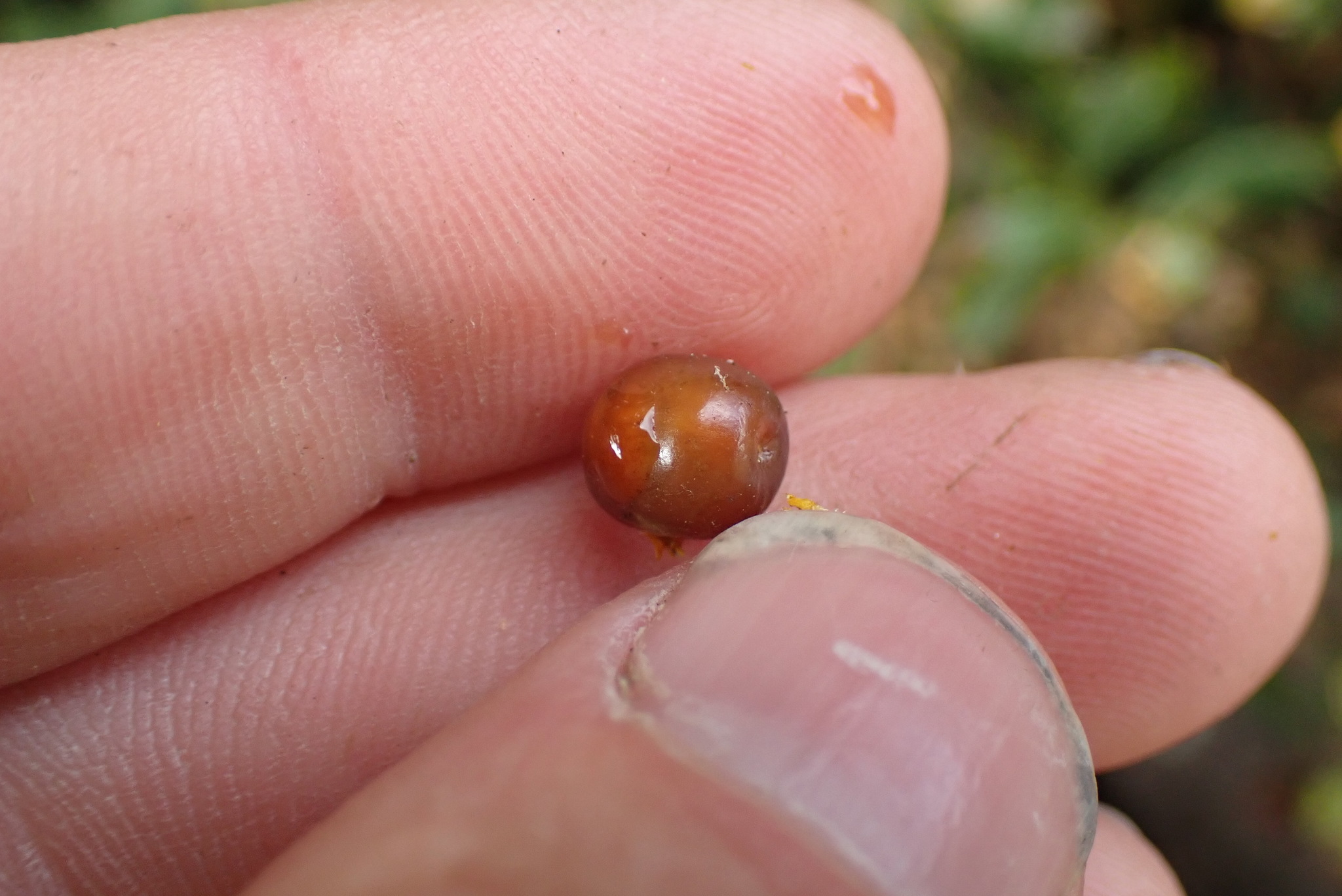
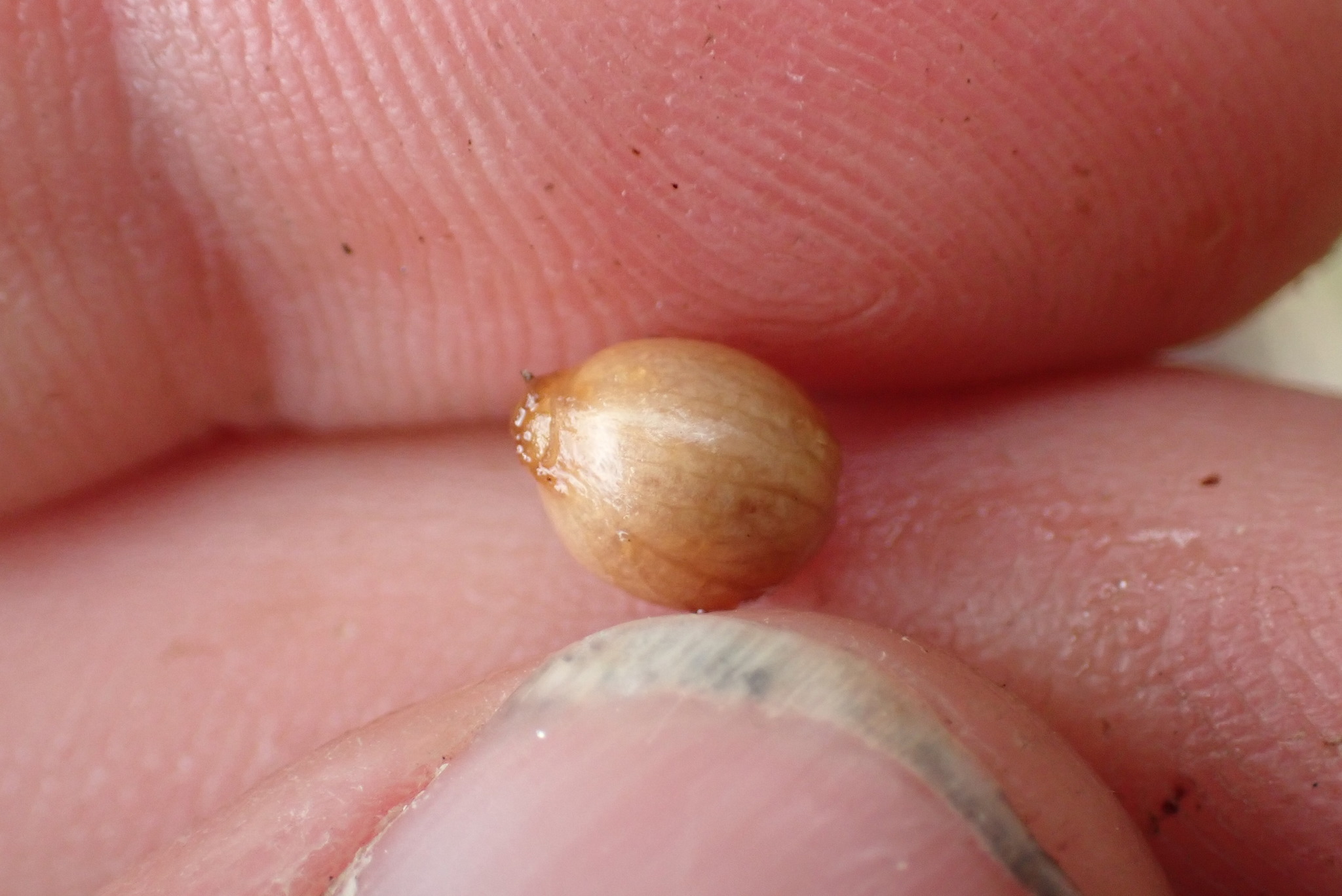
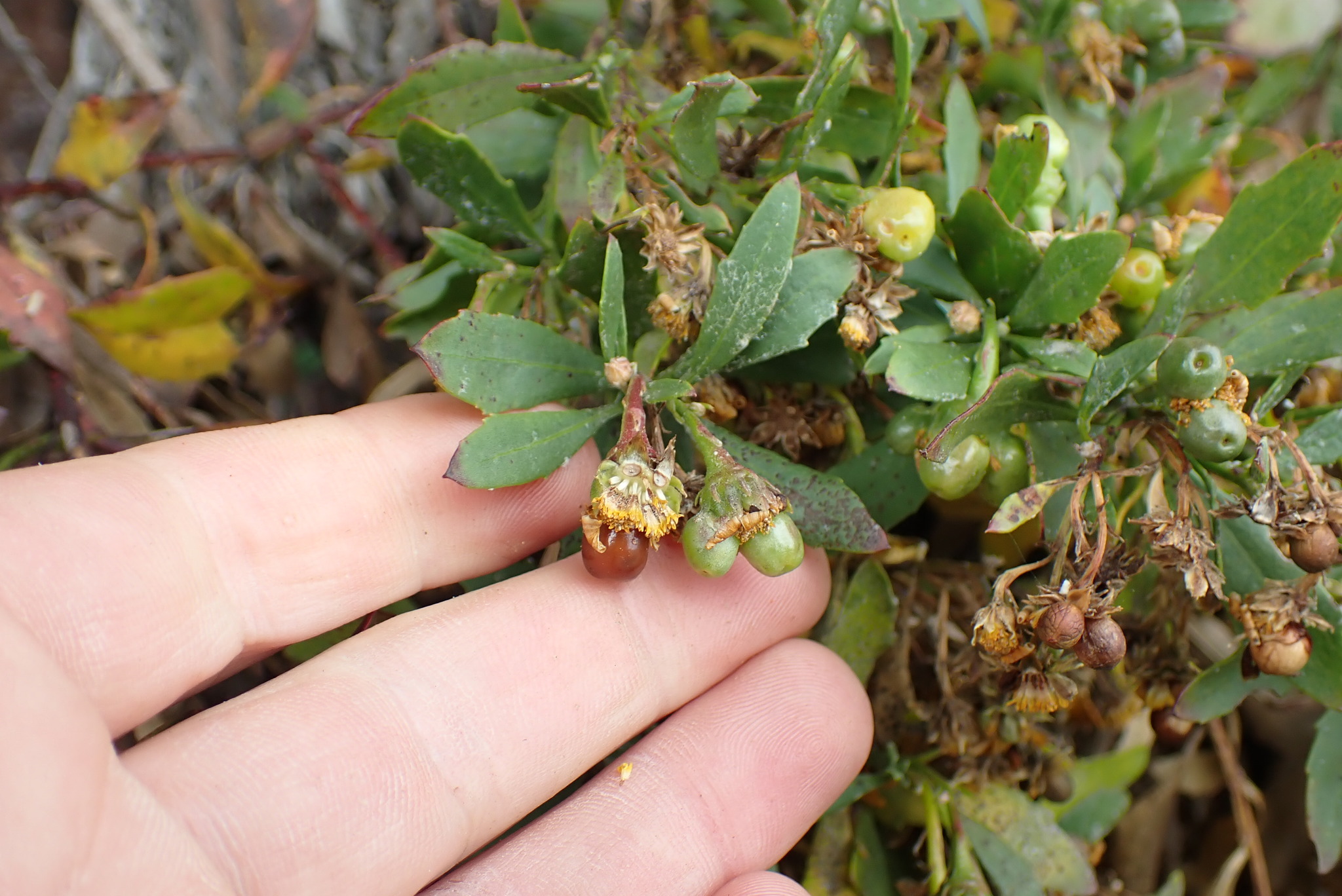
In these cases, the exocarp is thick and succulent enough to provide a jam-like reward to birds that
- swallow the whole cypsela,
- digest the sugary exocarp, and
- defecate or regurgitate the seed contained in it, which remains intact after digestion.
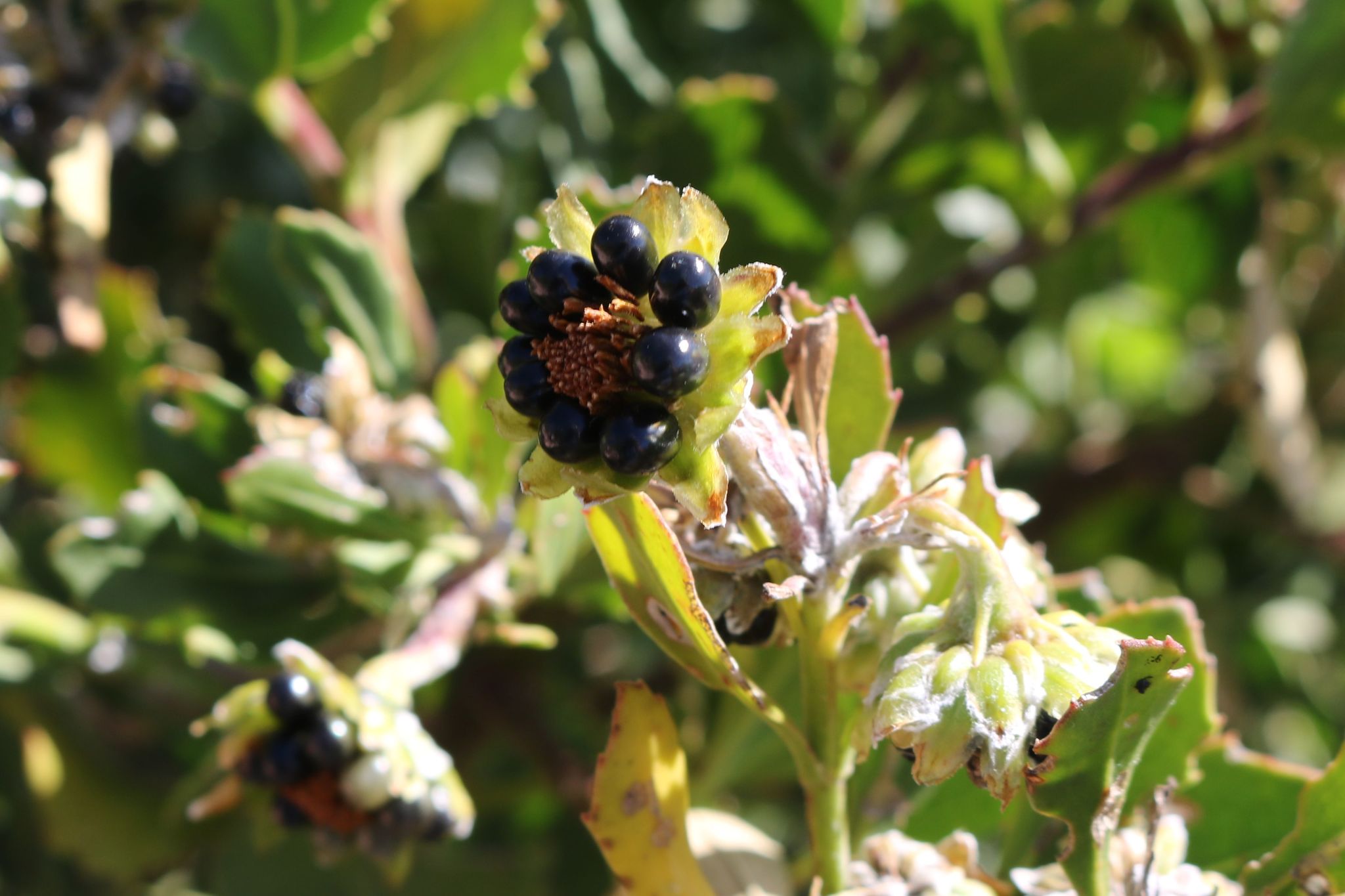
The cypsela in these cases not only conforms to the search-image for an edible, fleshy fruit, but changes in hue to present a pre-ripe display. The sequence, from green through yellow and red to blackish, flags to birds the imminent availability of the ripe, palatable exocarp.
The important point. The flowers of all these species are similar, and unremarkable for daisies. Yet the fruits vary categorically in appearance and function, and this is achieved by evolutionary modification of a single part of the fruit: the exocarp.
If taxonomists were to use the fruits for classification, they would split Osteospermum into different genera. But what fits the evidence better is that this is one genus, with ‘plasticfruits’.
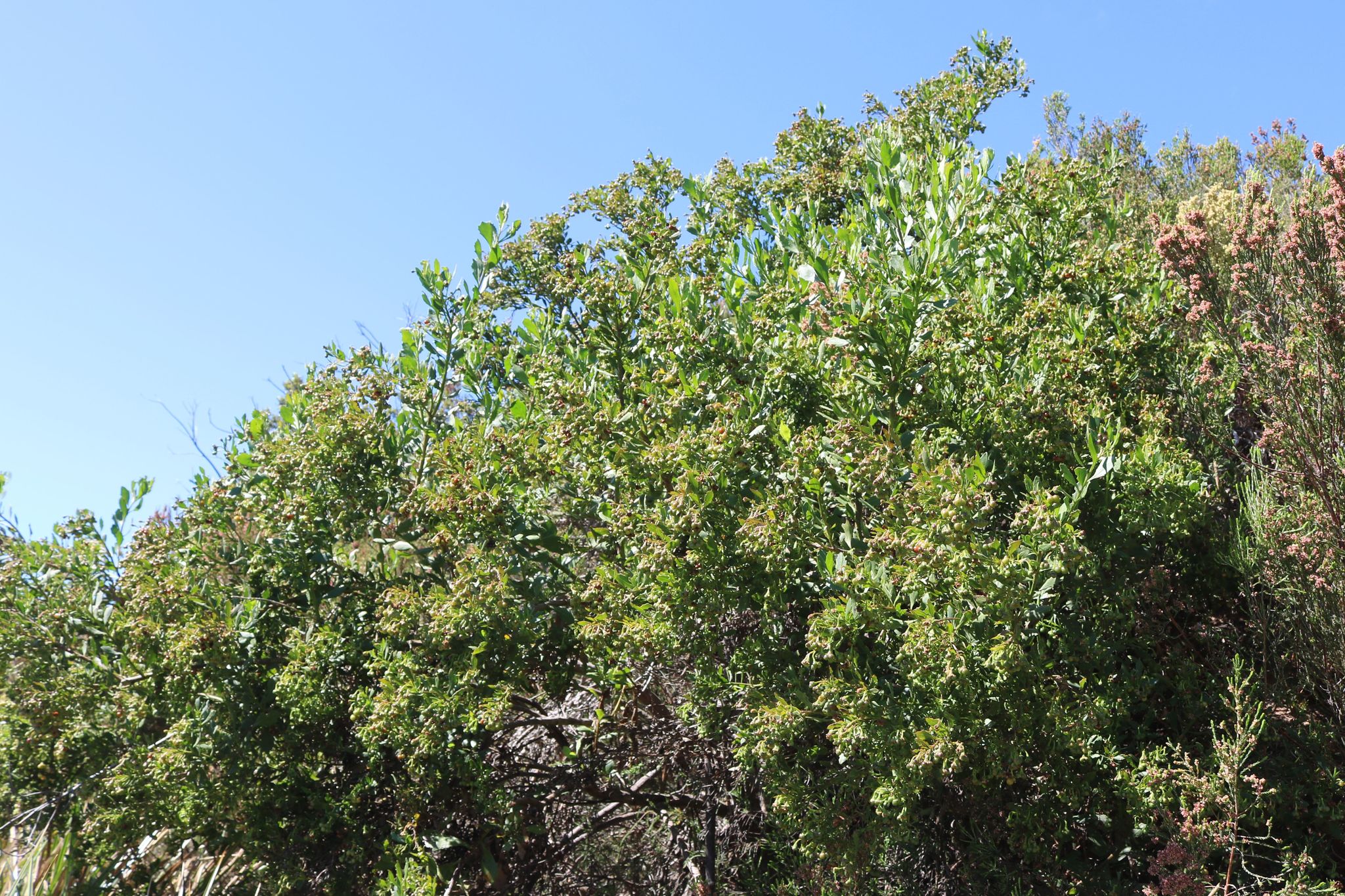
Osteospermum moniliferum
Illustrations of the flower-heads, fruits and seeds of Osteospermum moniliferum are available on Wikipedia.
CitedChrysanthemoides monilifera
This species is
- dispersed mainly by birds, but
- one of the few species of daisies, worldwide, that presents fruit-flesh fully edible for humans.
In my experience, the fruits are best eaten when black, at which stage the fruit-pulp has changed from coherent/crisp to fluid. The taste is sweet, with no sourness or astringency. I collect about 40 at a time in my mouth, burst them with my tongue one by one, swallow the jam, and spit out the seeds as I go along.
I am hardly an agent of dispersal of O. moniliferum, because
- my instinct is not to swallow the seeds, and
- I tend to linger at individual plants laden with fruit.
The sequence of colours is as follows.
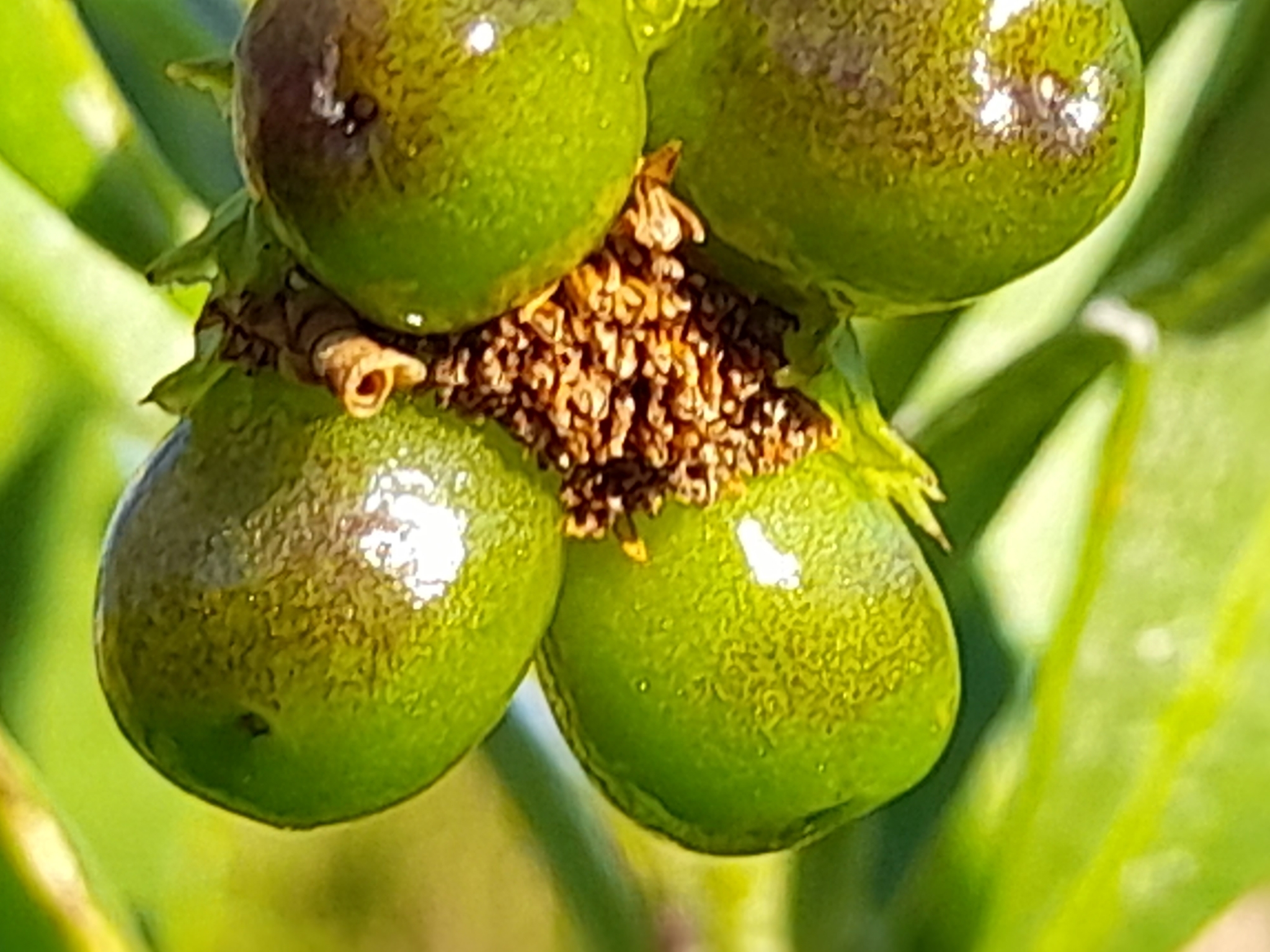
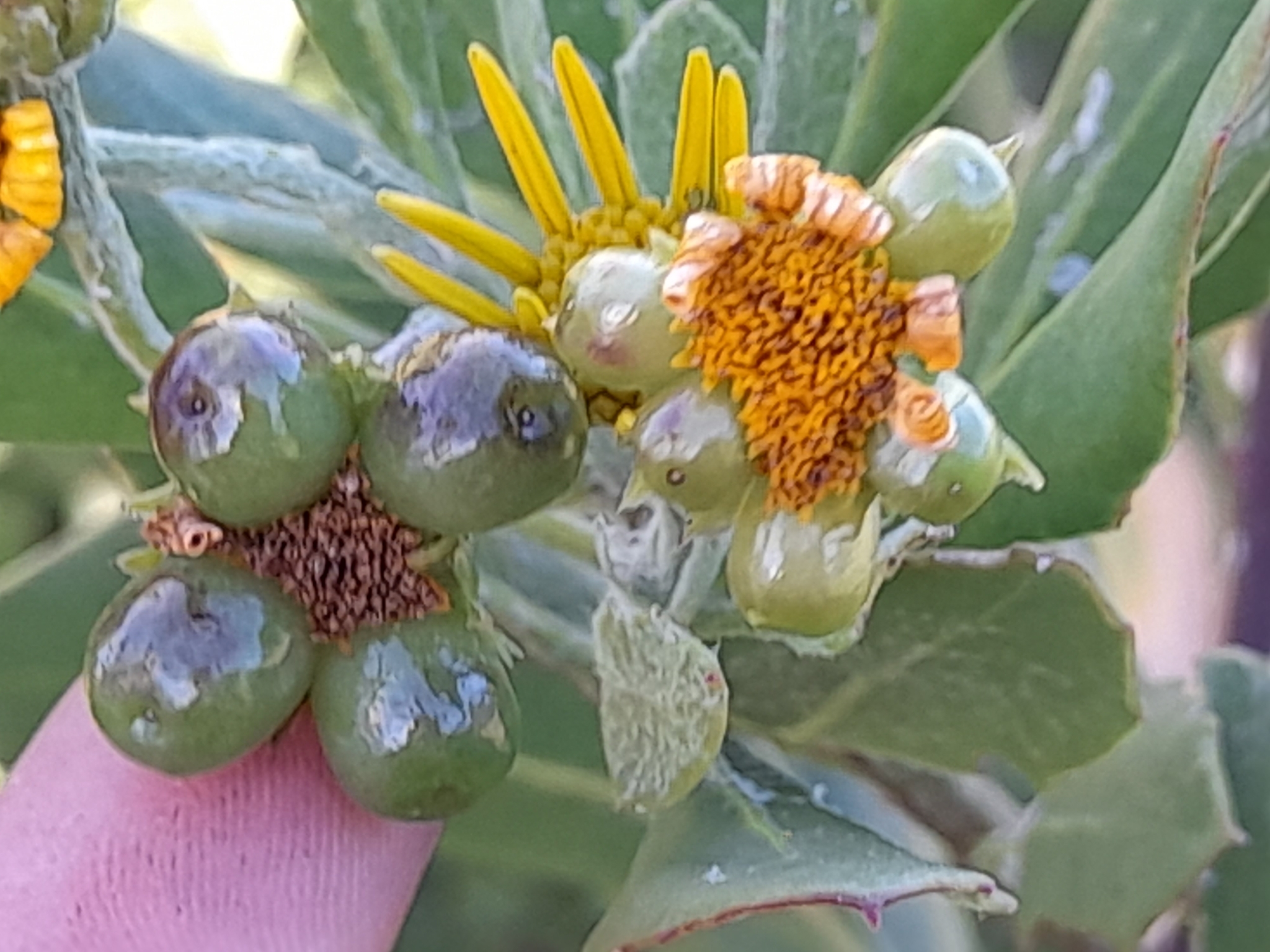
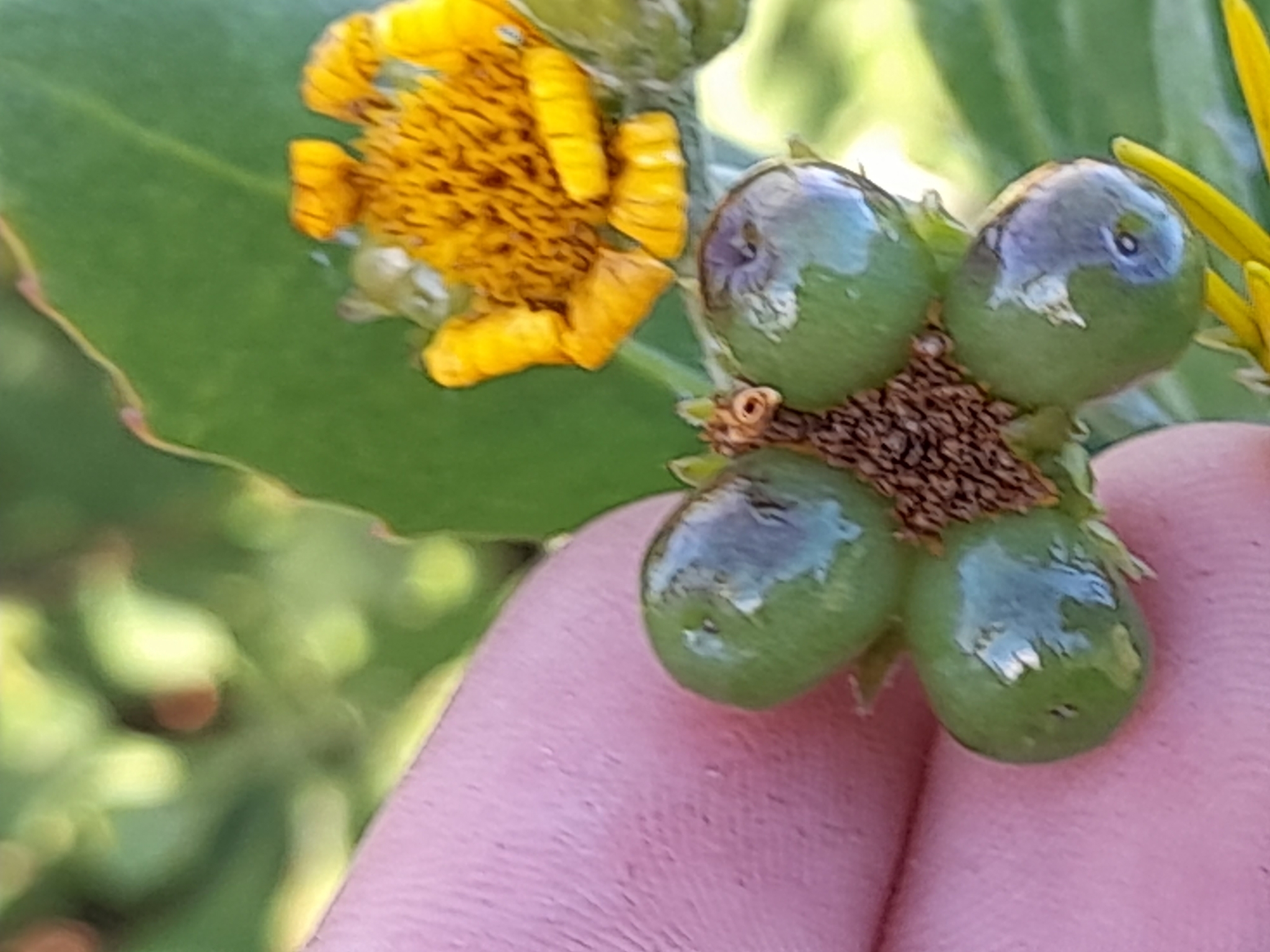
- The nearly full-size, but still completely unripe fruits are leaf-green with a purple blush.
- The full-size but unripe fruits are dull yellowish green.
- The ripe fruits are brown.
The fruit actually shrinks from the yellowish stage to the fully ripe stage, without wrinkling. The fruit-pulp seems to lose some bulk in the conversion from the turgid (still hardly sweet) fruit-pulp at the yellowish stage — which I find myself spitting out, rather than eating it — to the ripe, jammy stage.
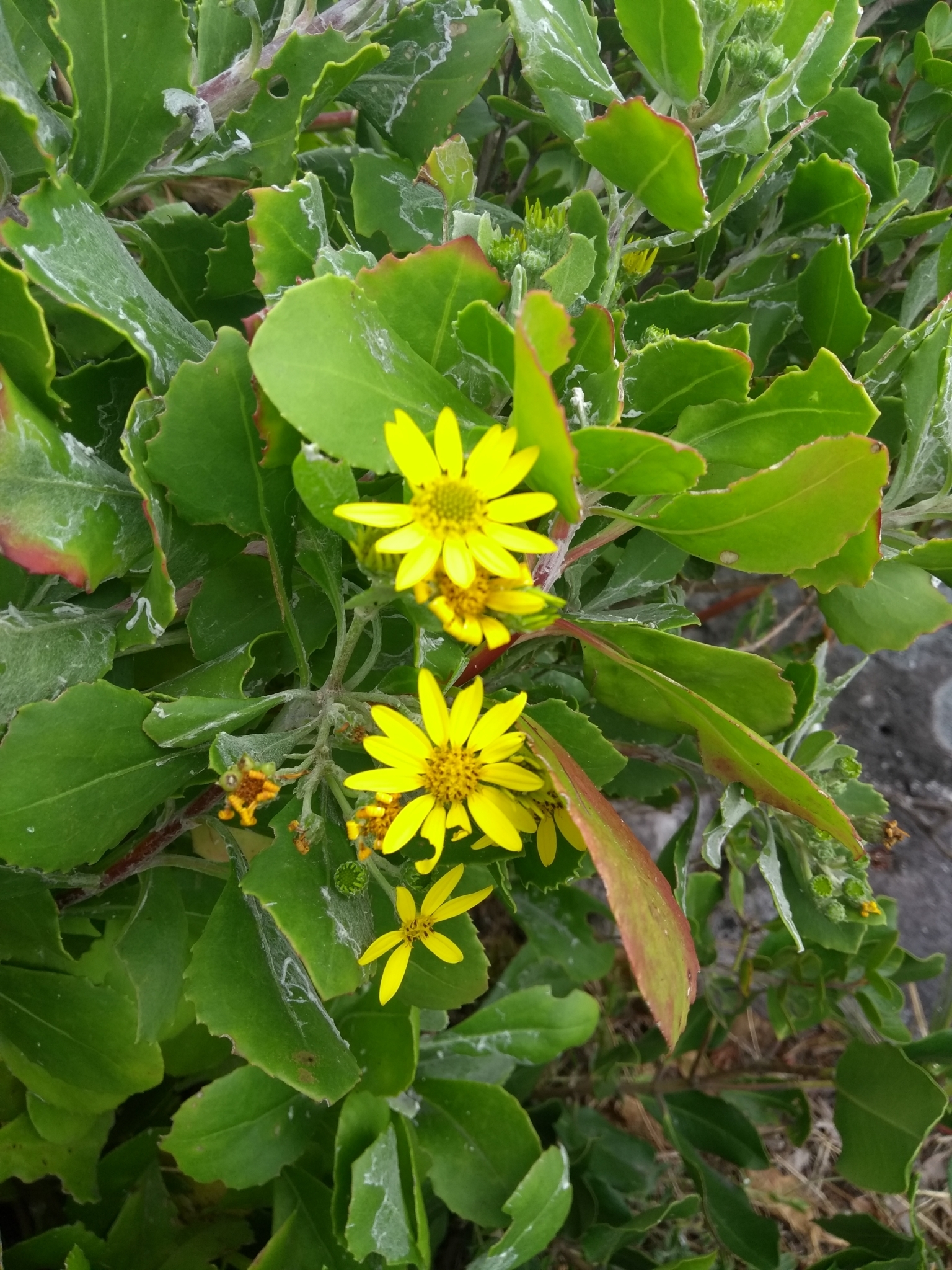
The following shows that the composite flower-heads are similar to those of thousands of species of daisies worldwide.
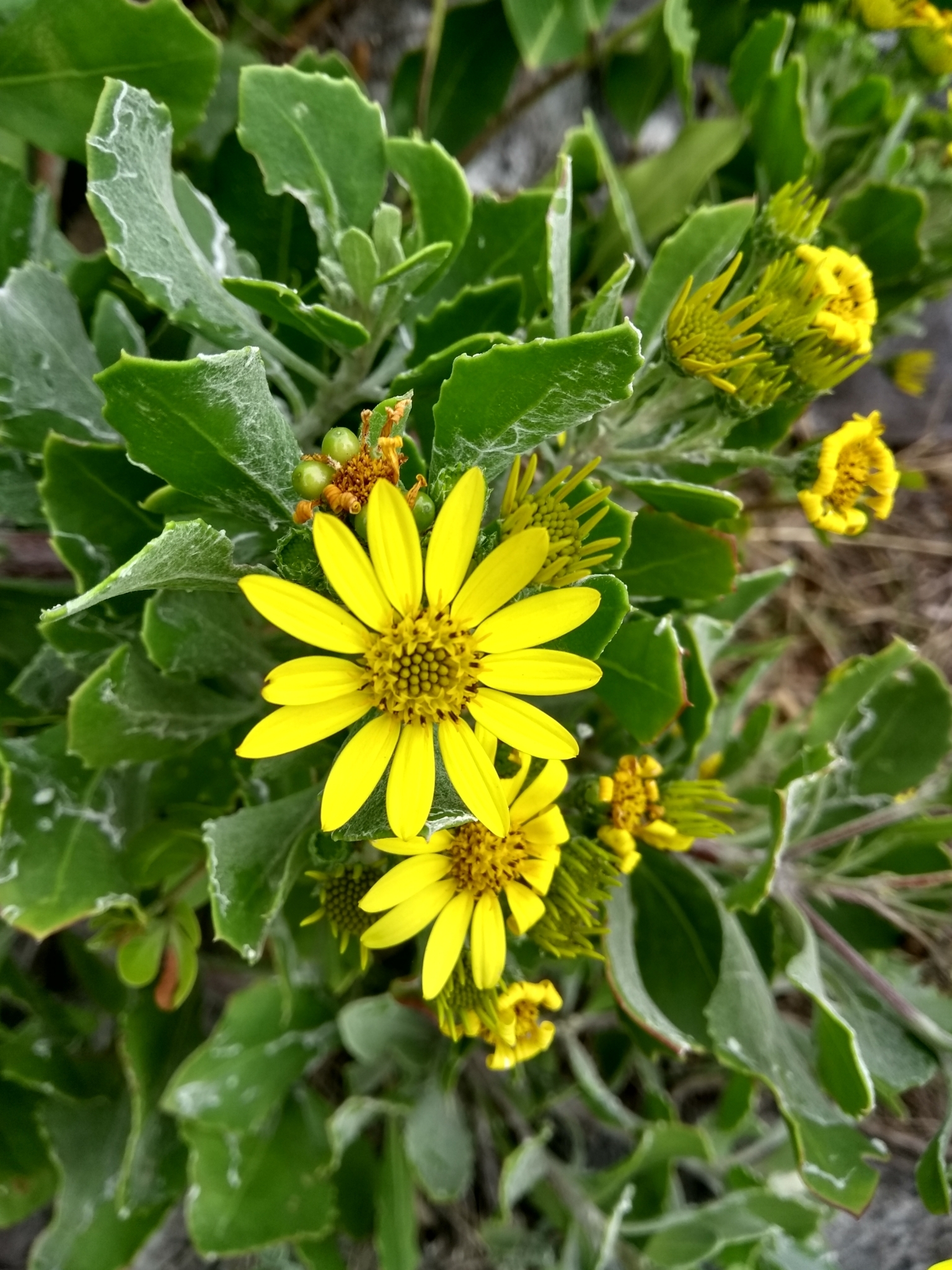
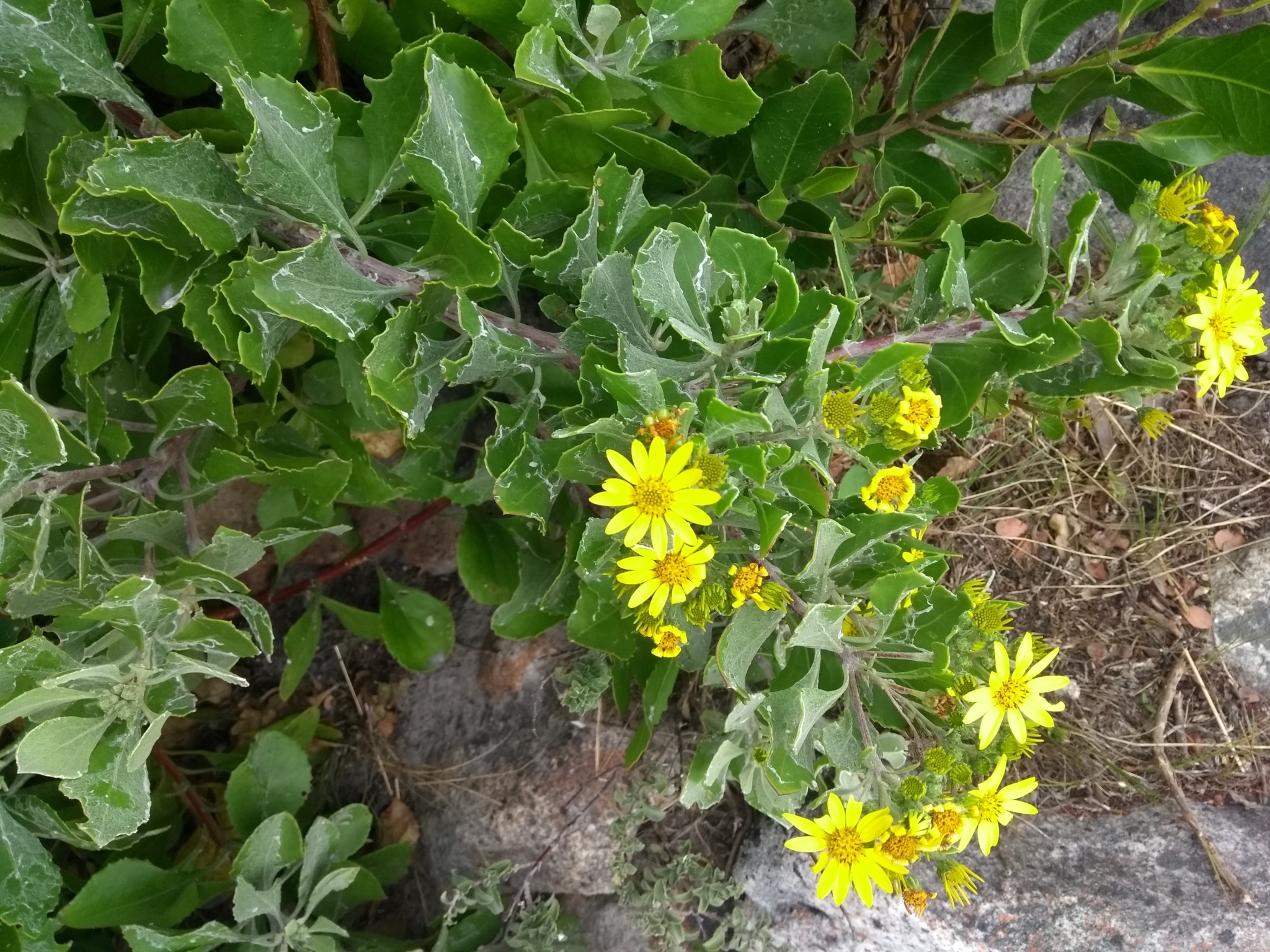
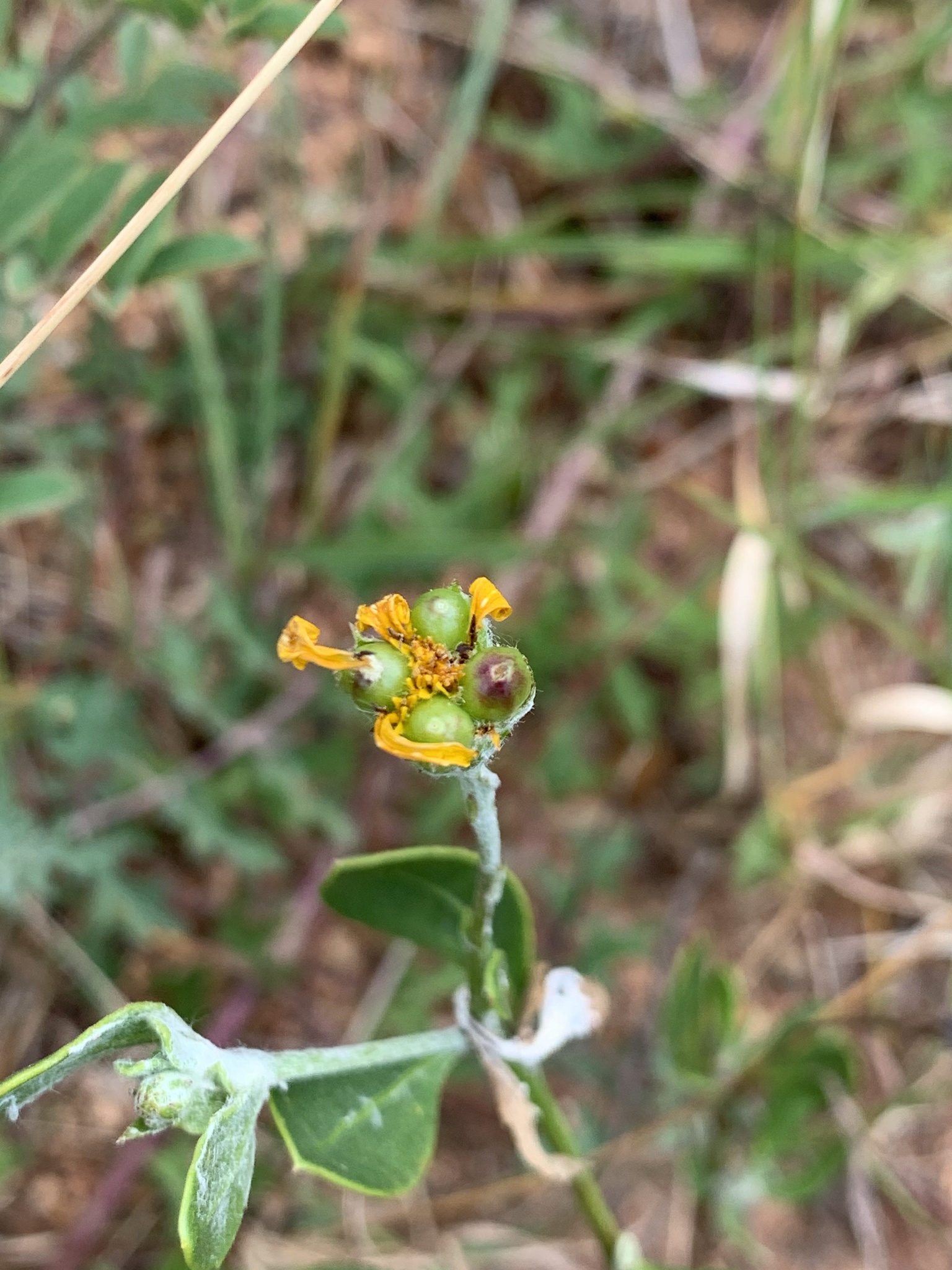
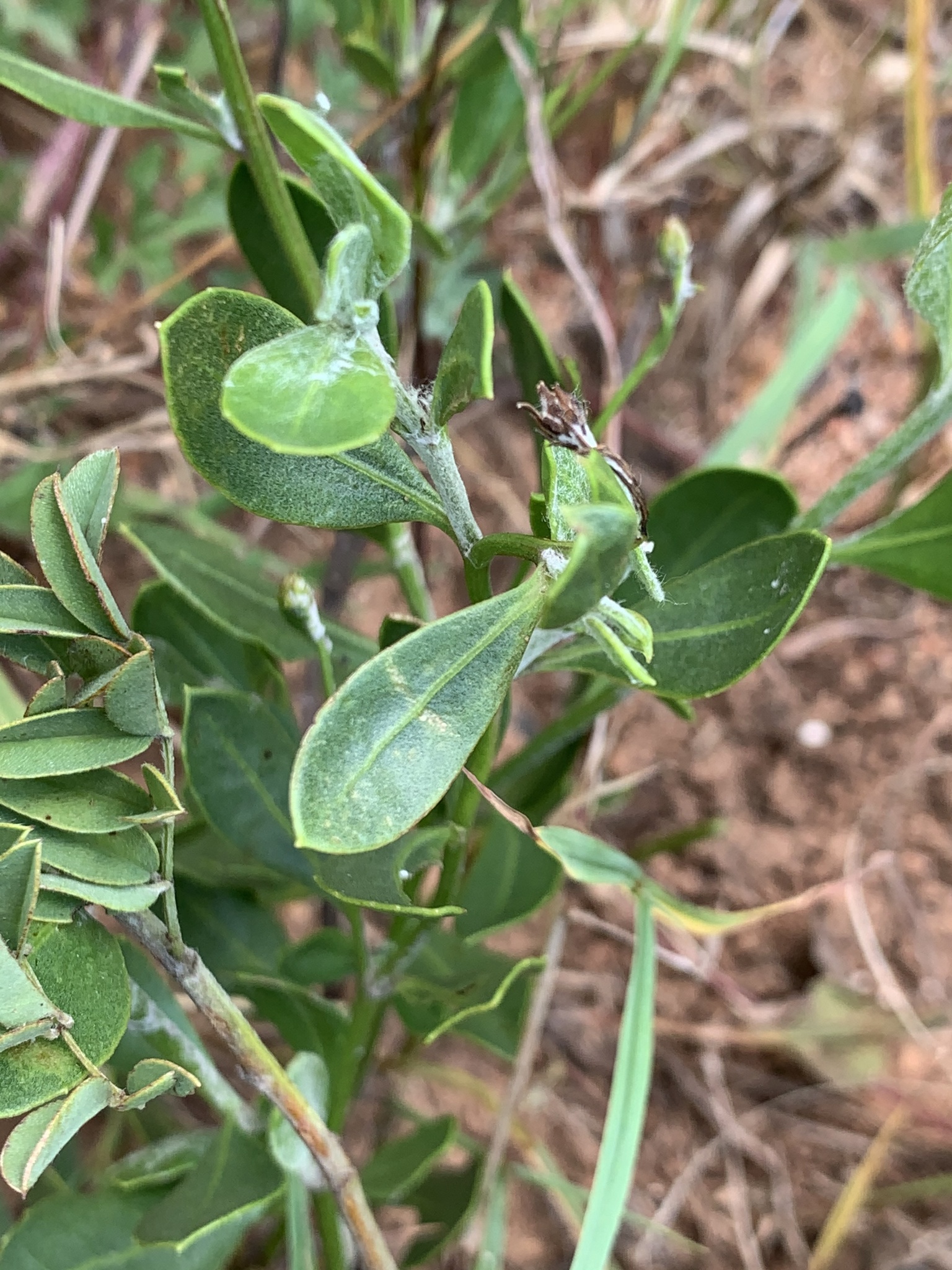
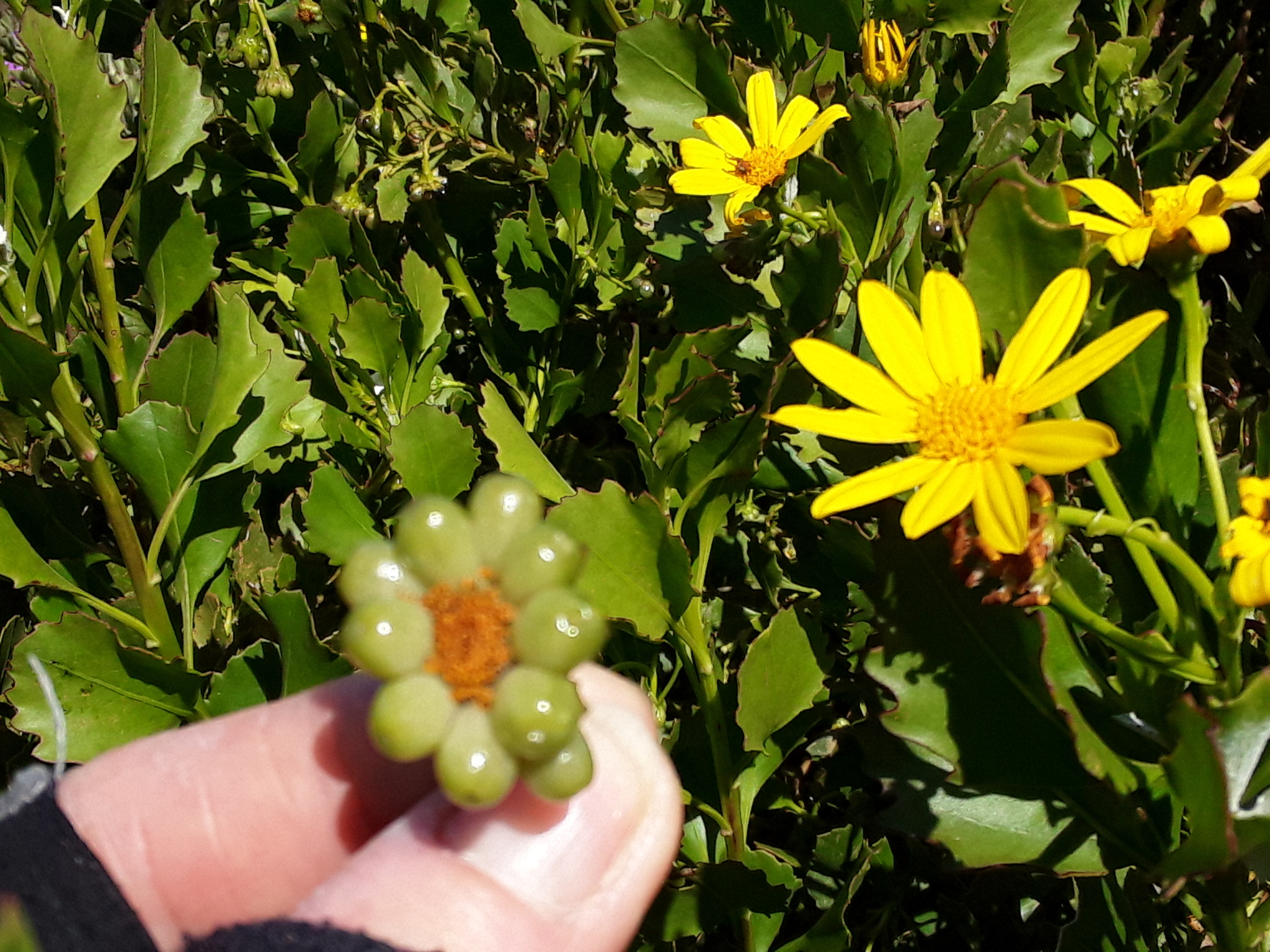
The following show that a limited number of the flowers on each flower-head produce fruits, owing to constraints on space.
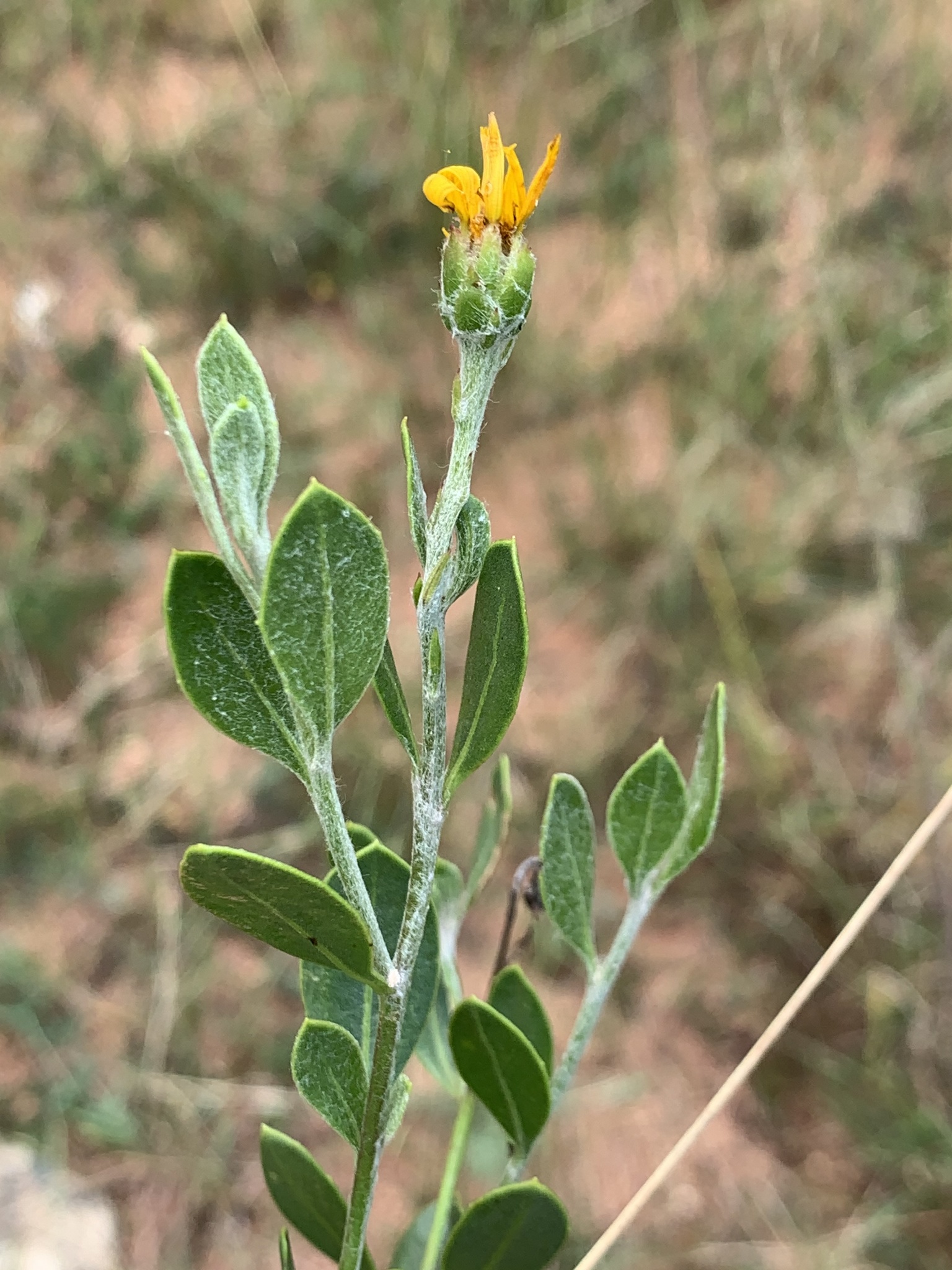
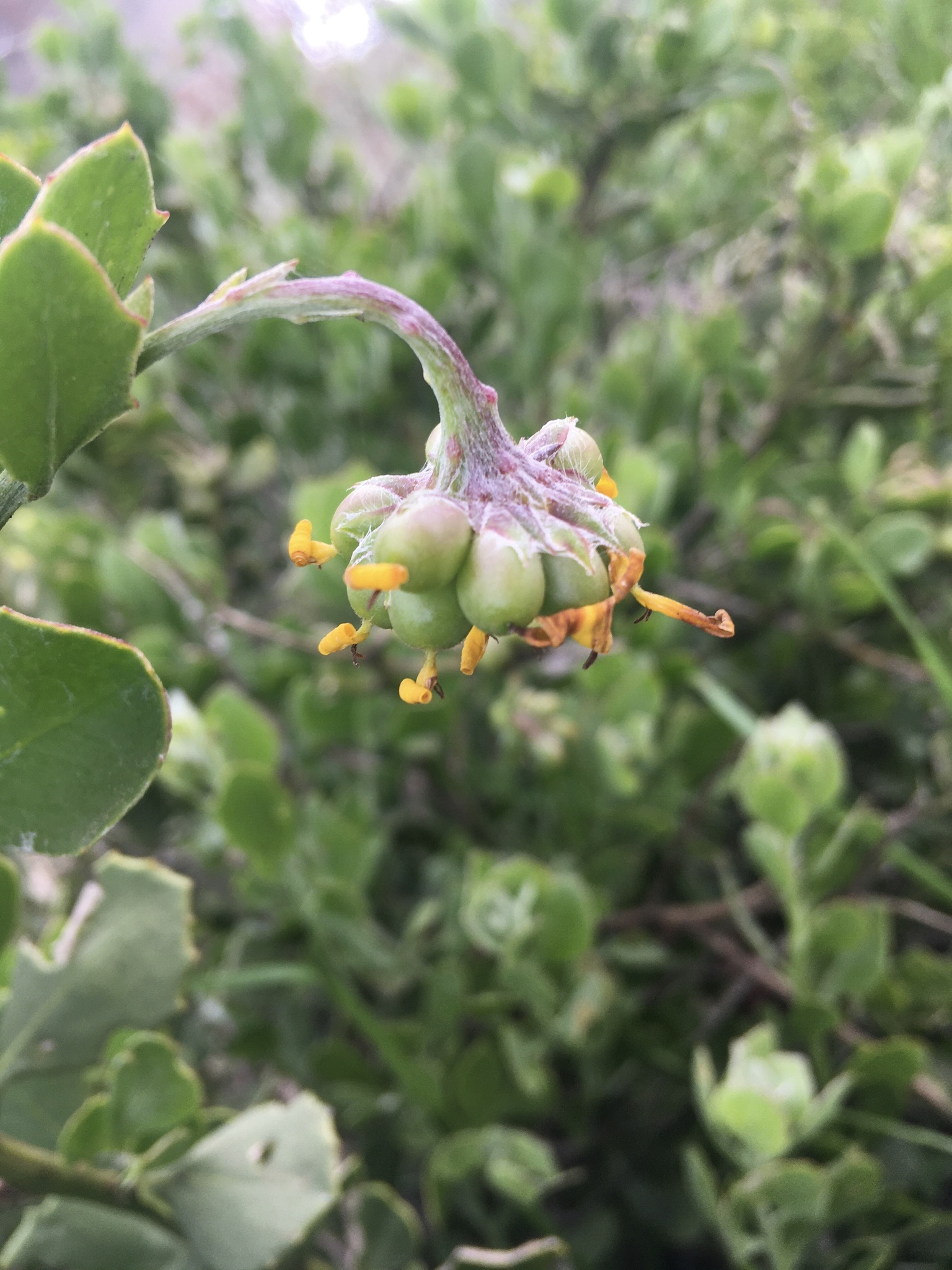
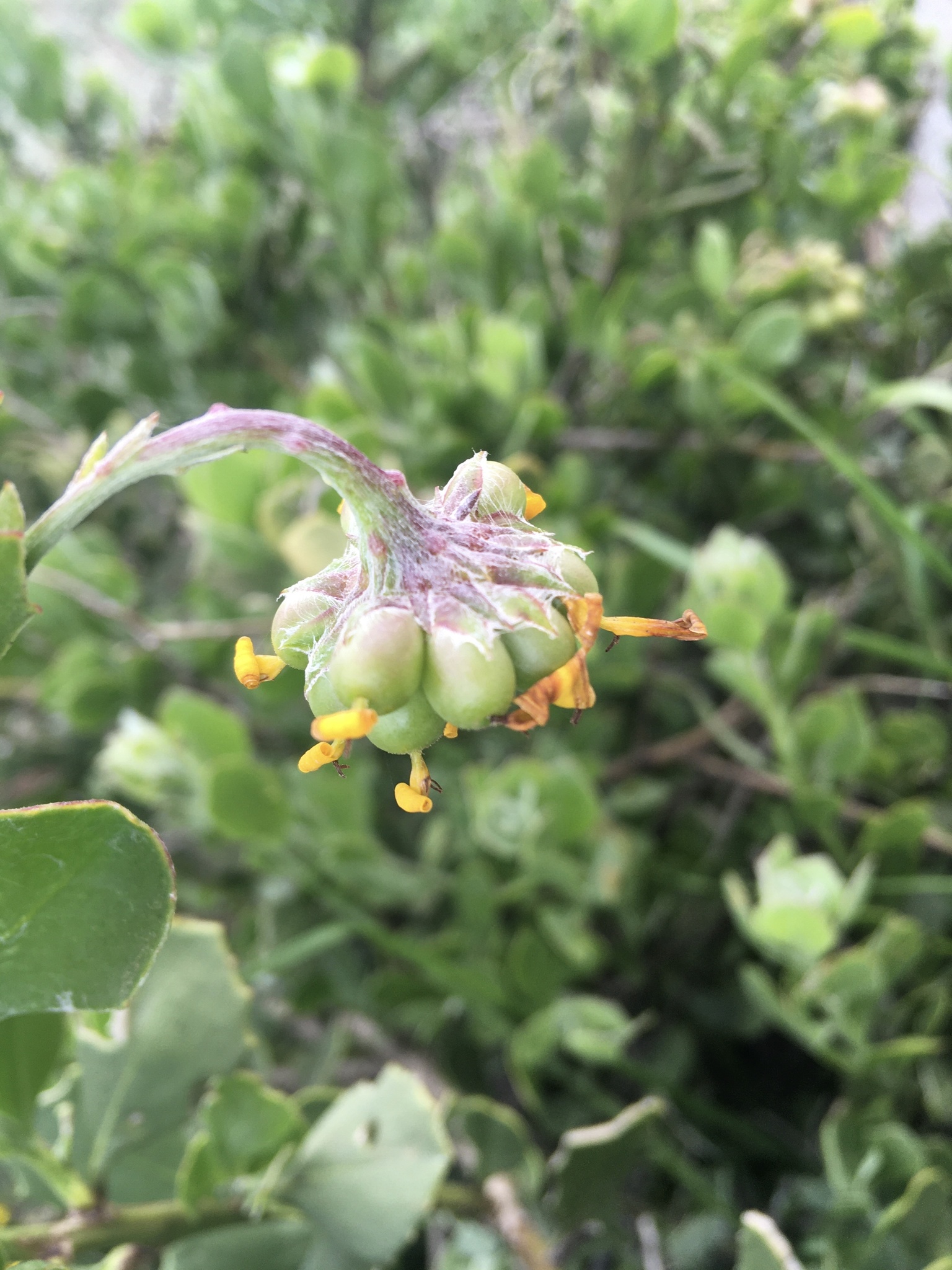
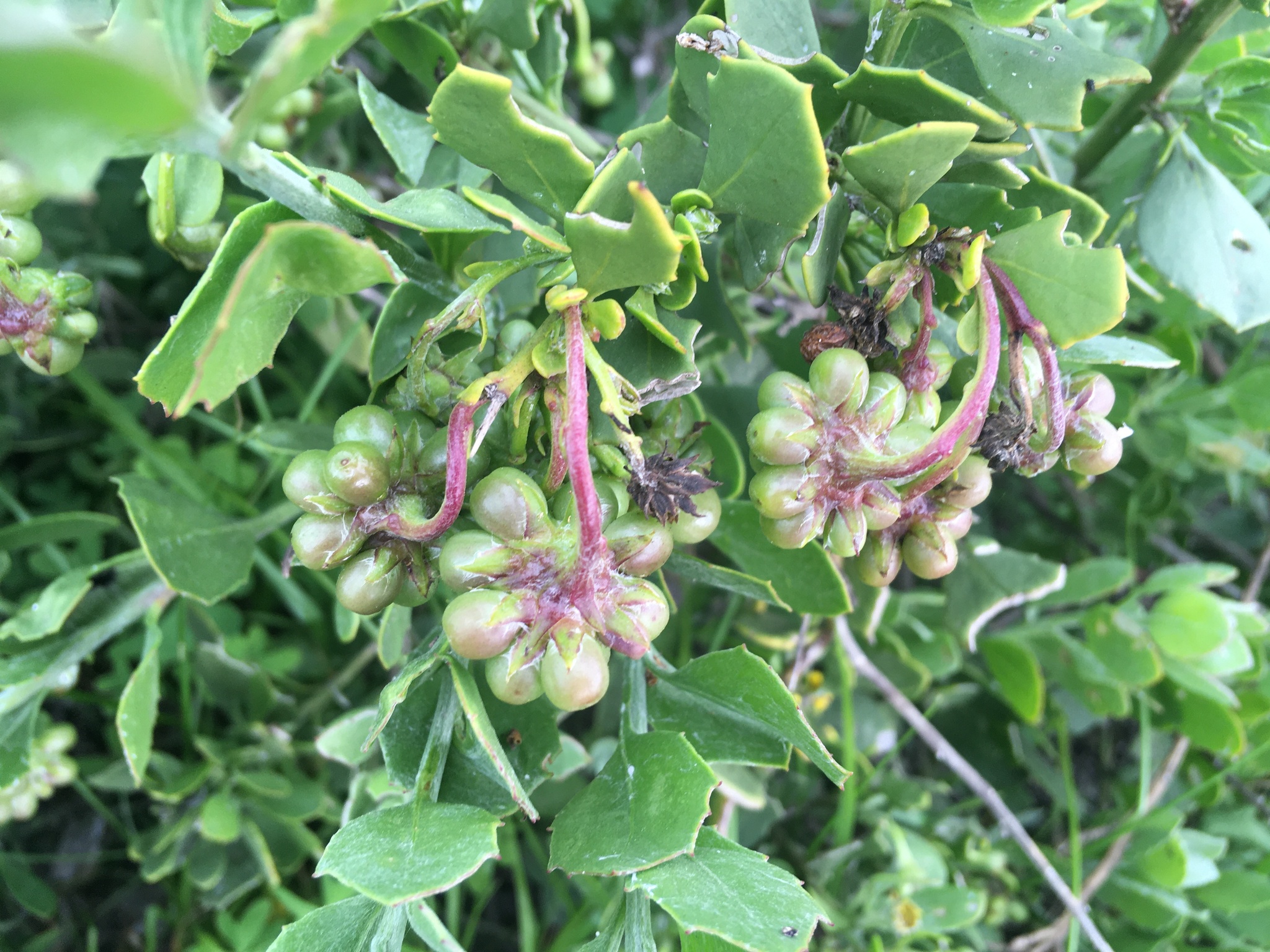
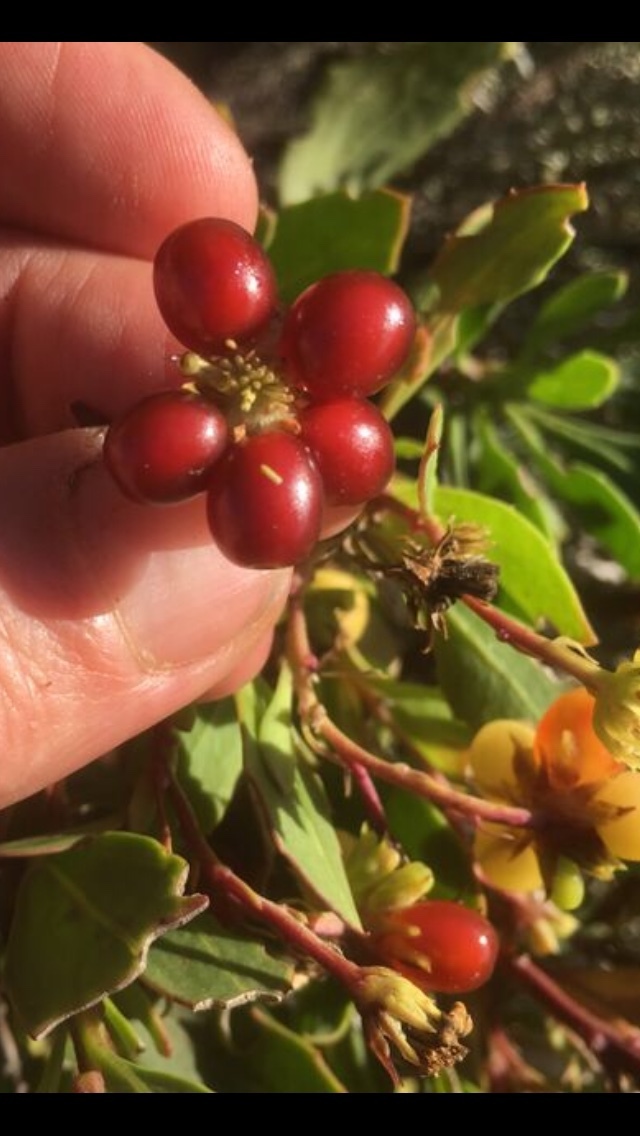
The following show the development of hues in the pre-ripe display.
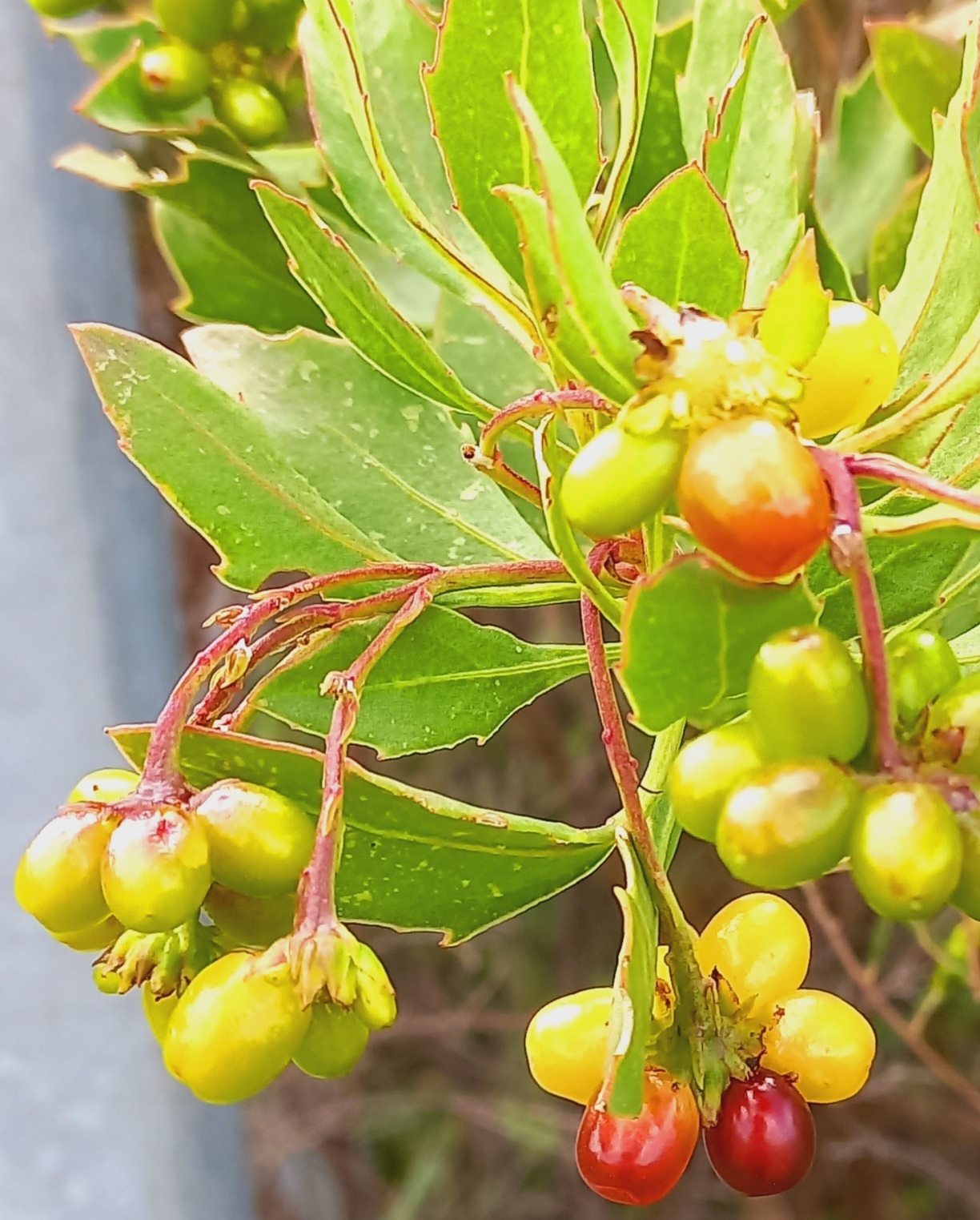
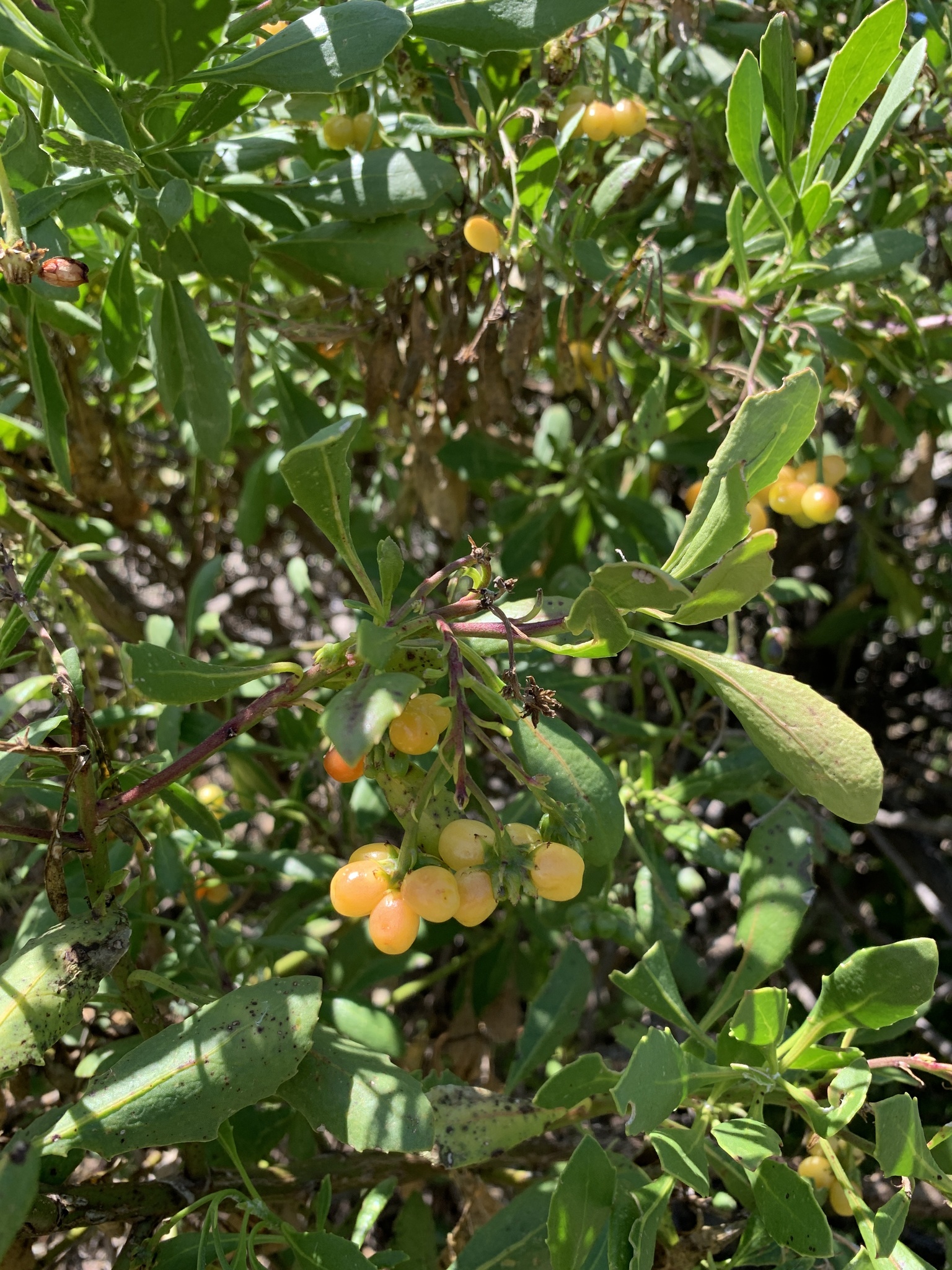
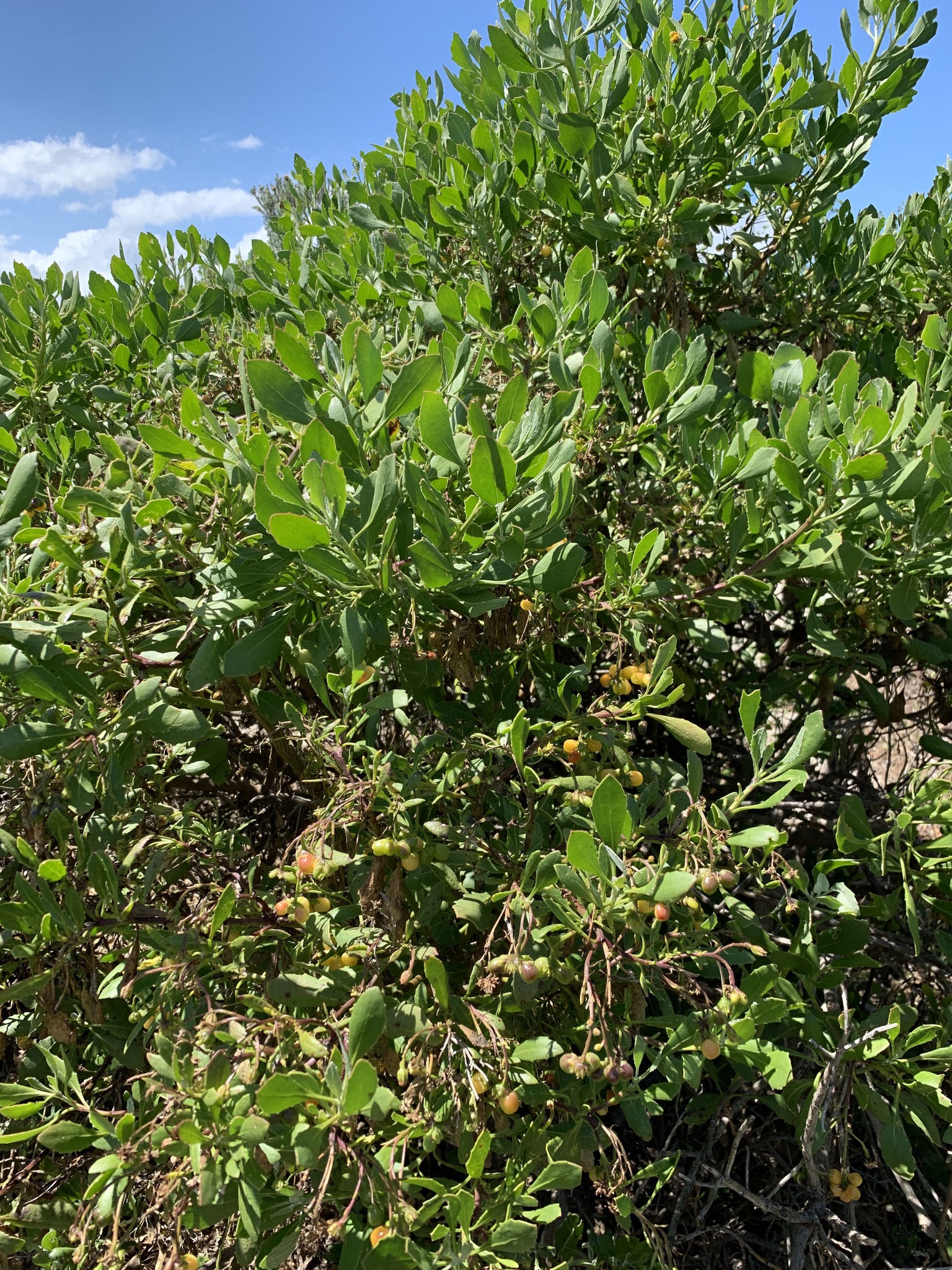
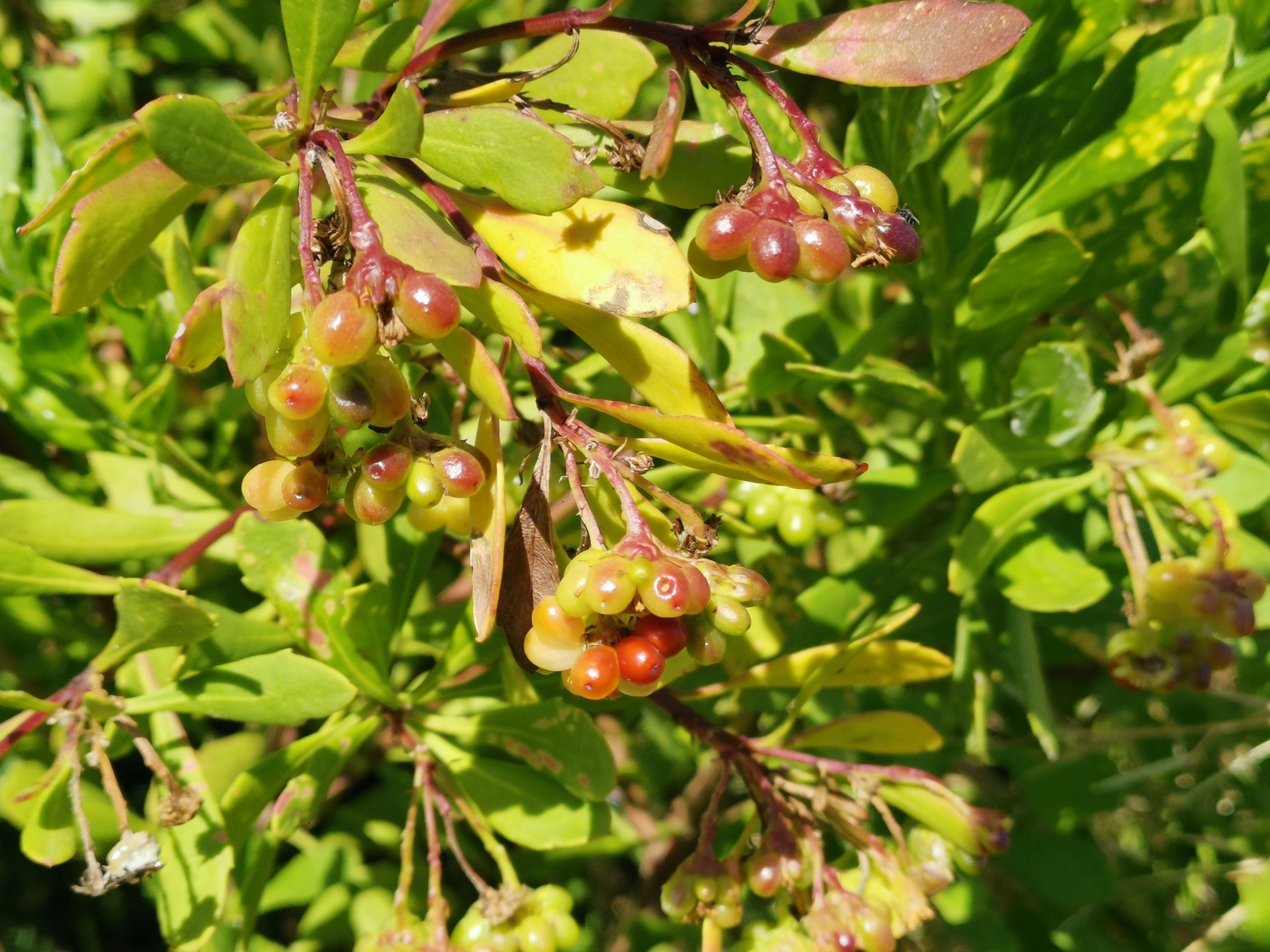
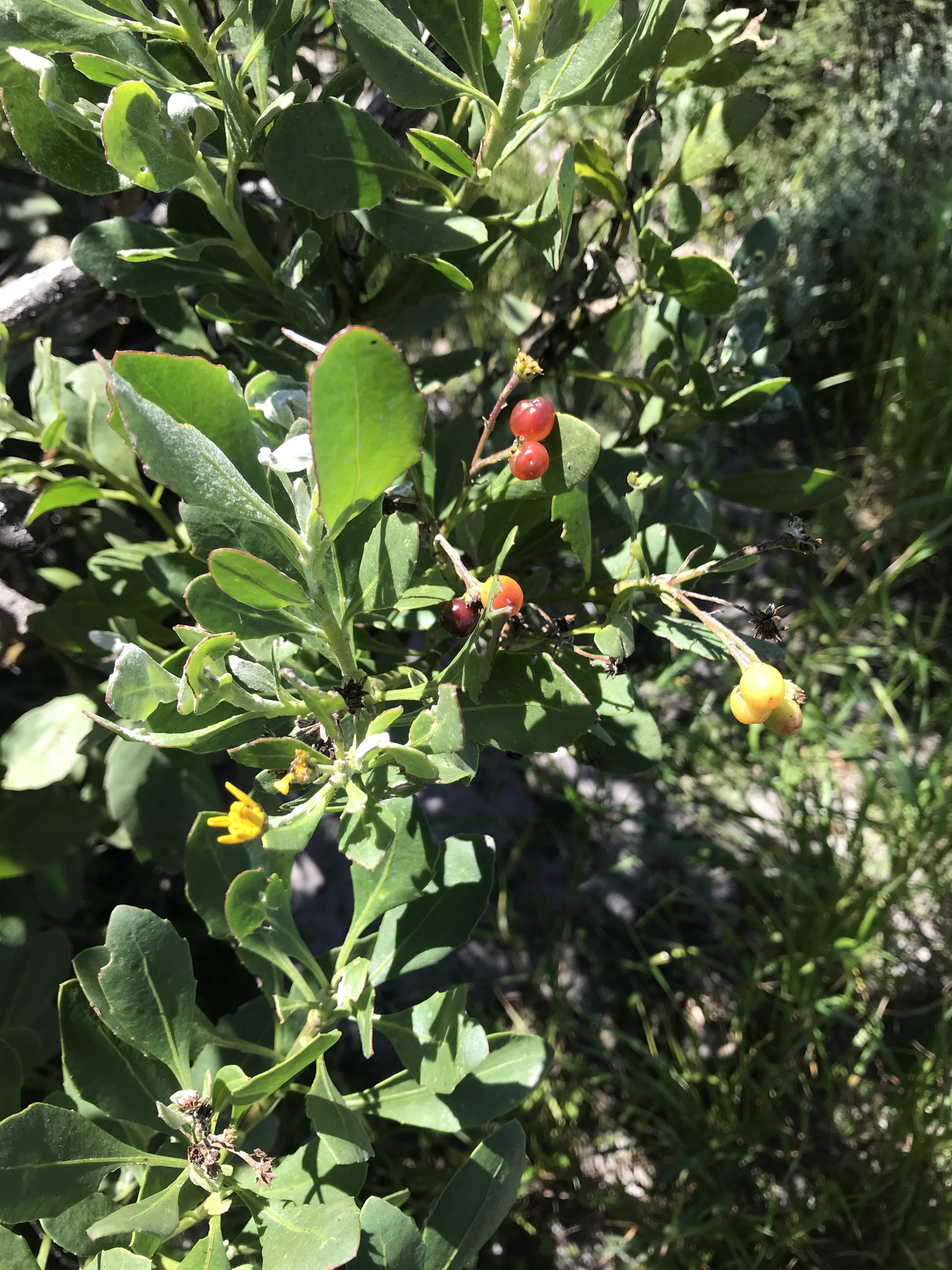
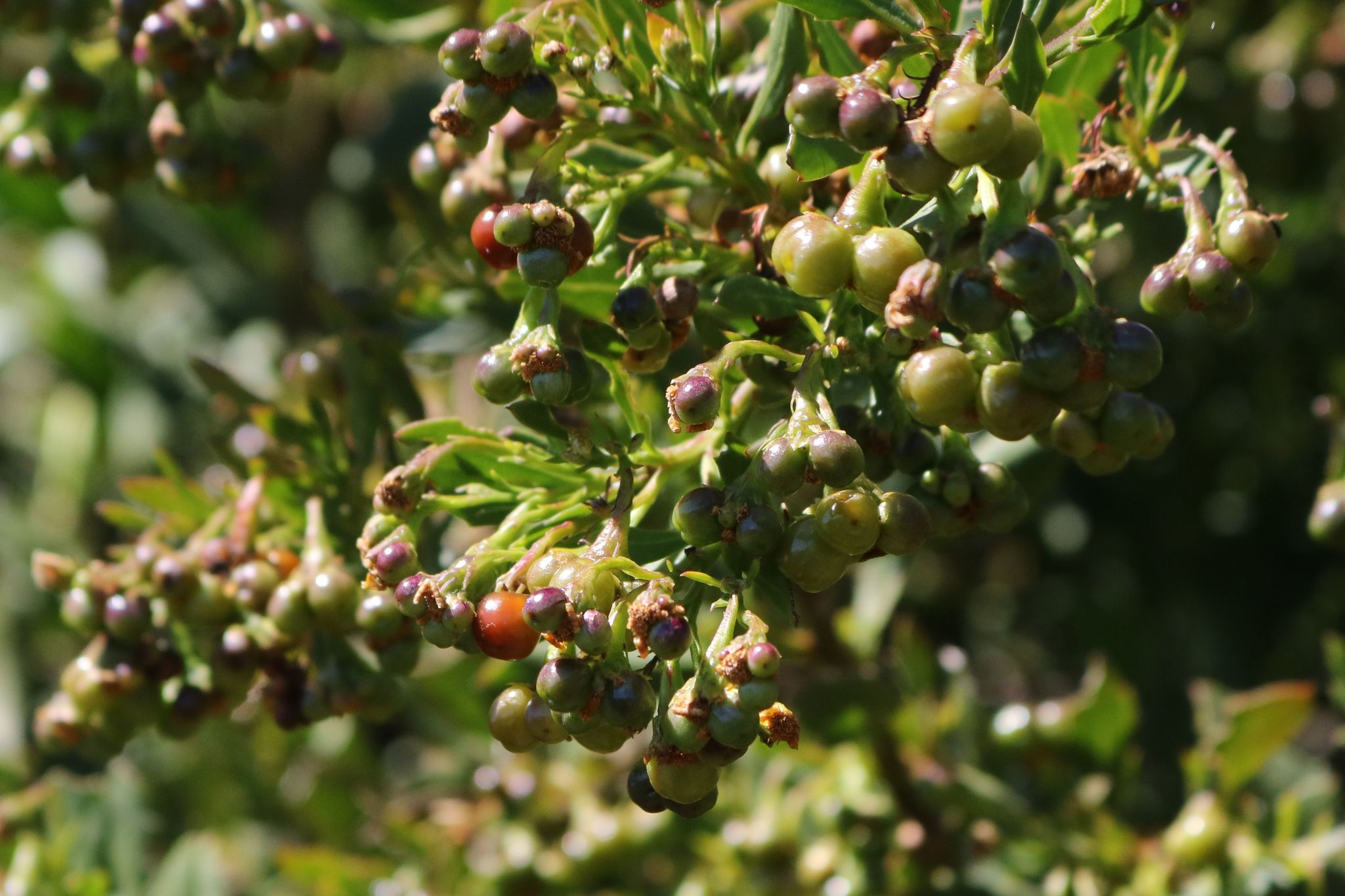
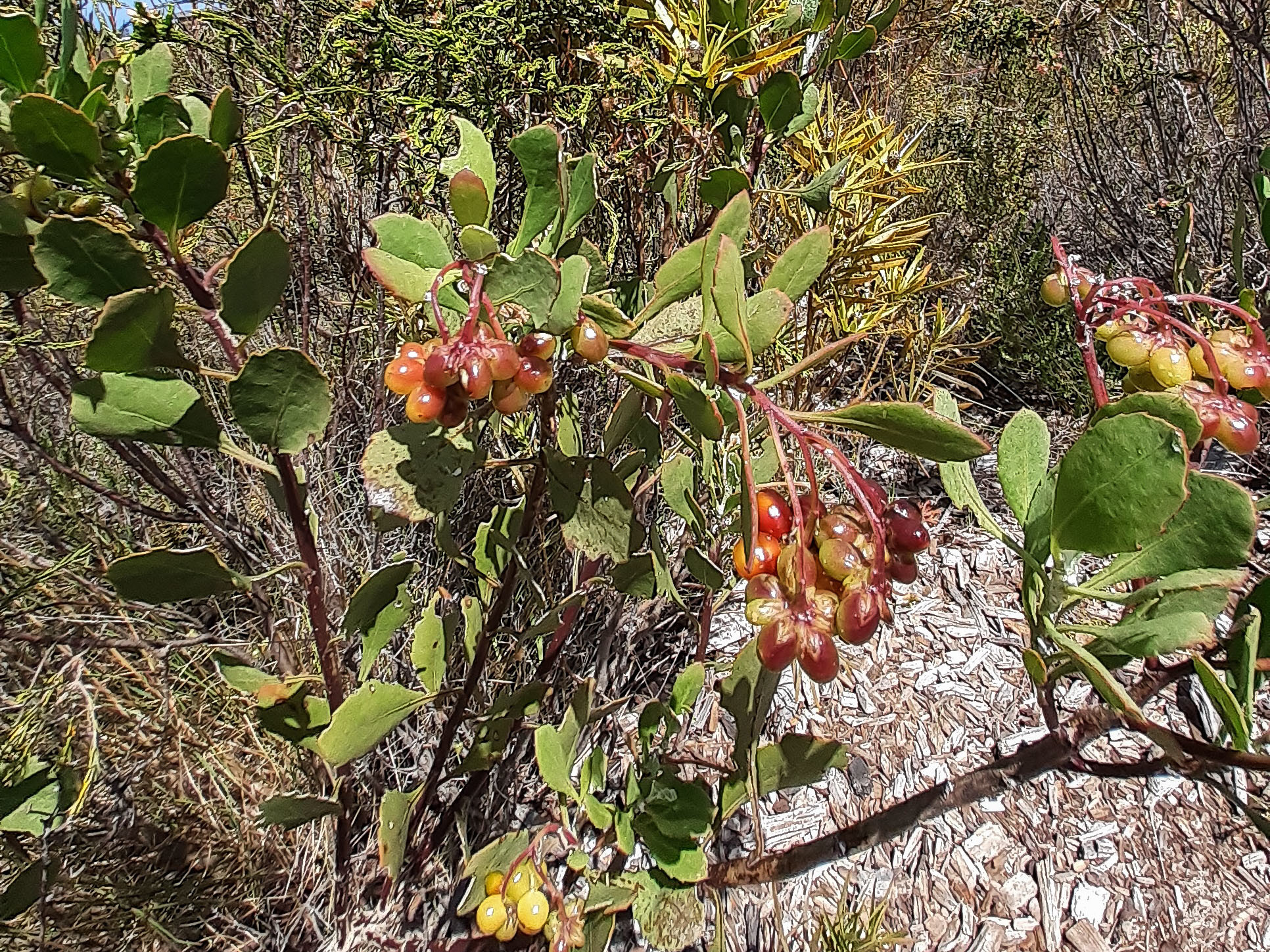
Also cited on iNaturalistobs. 98605375·obs. 76086368·obs. 76088858
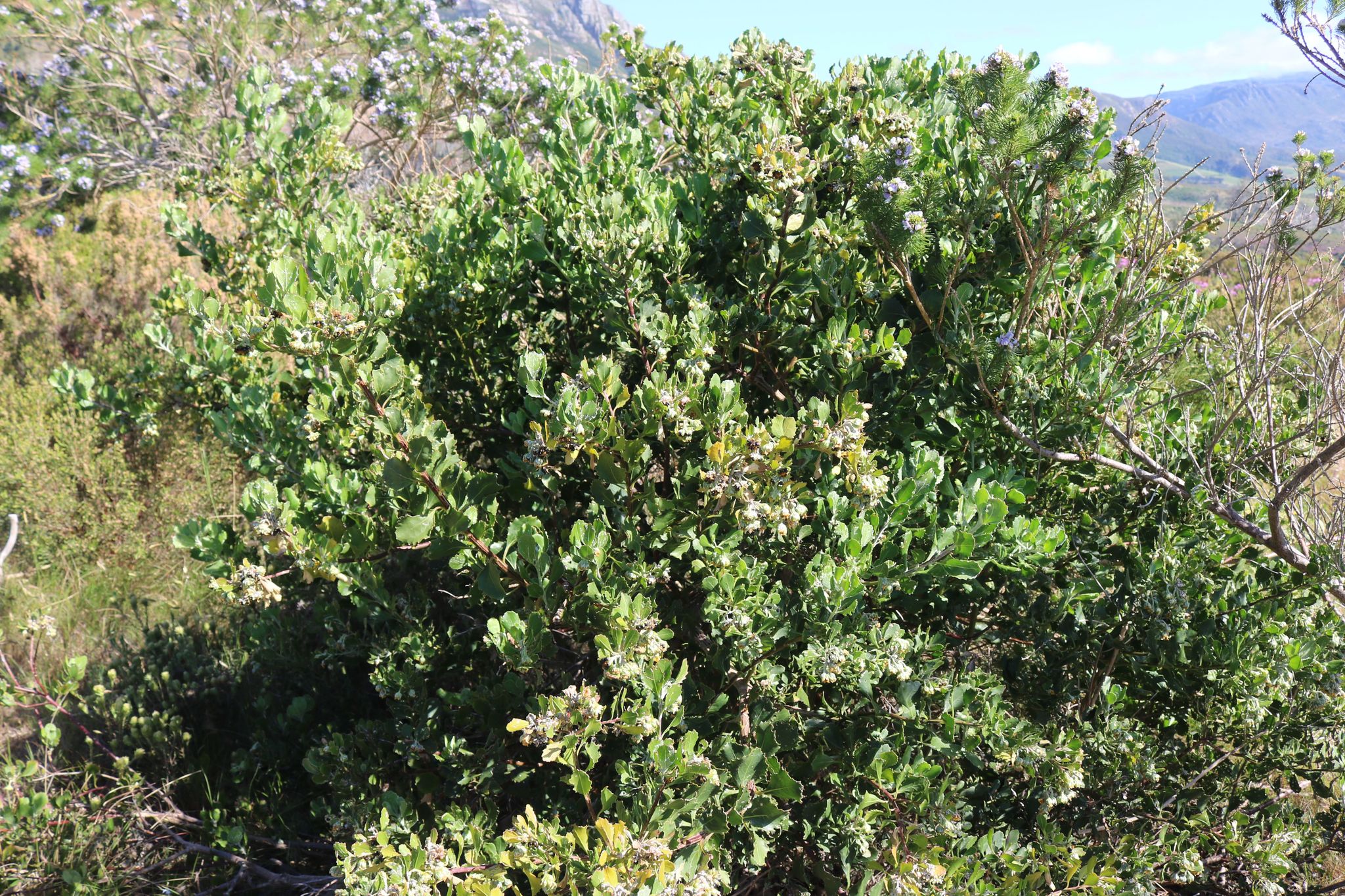
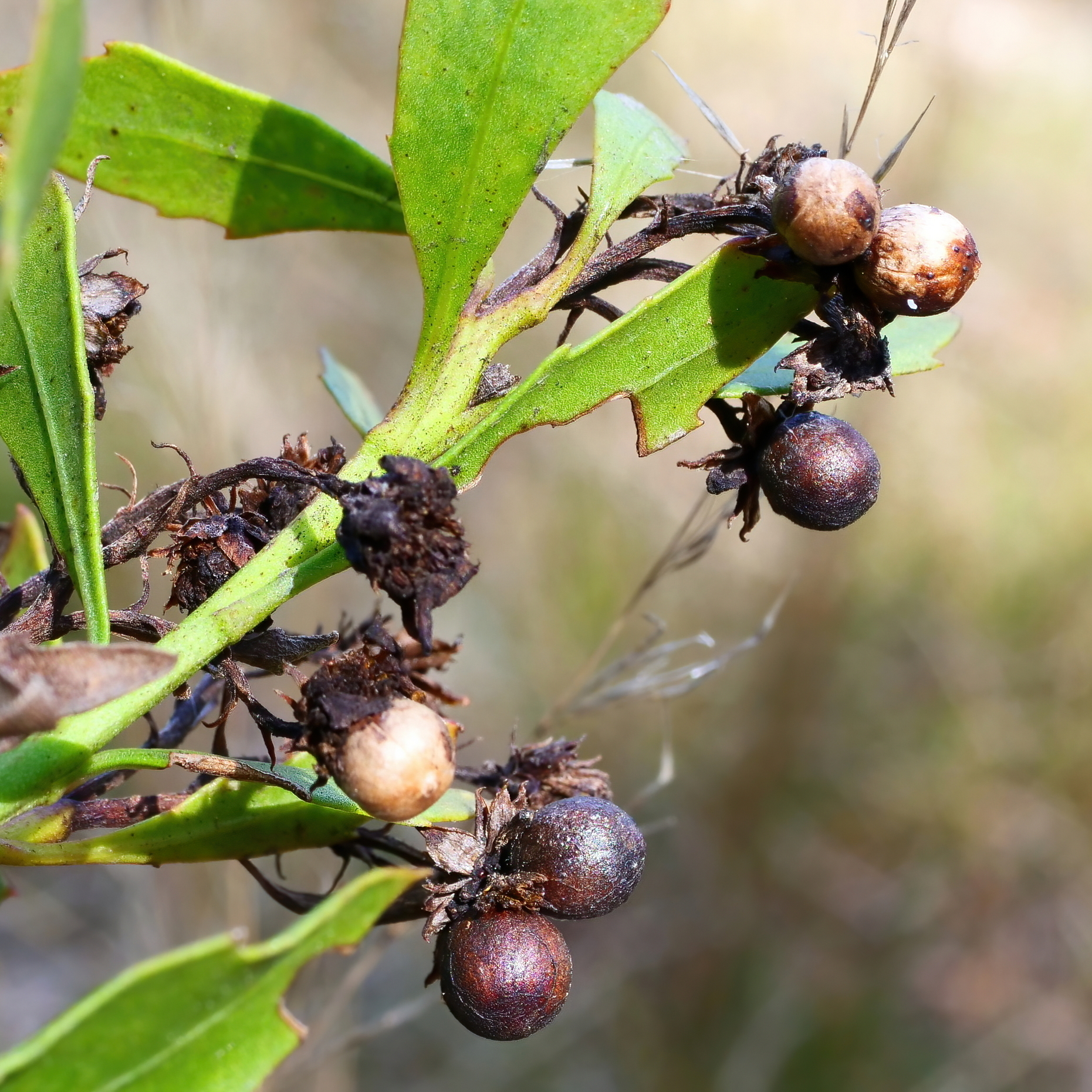
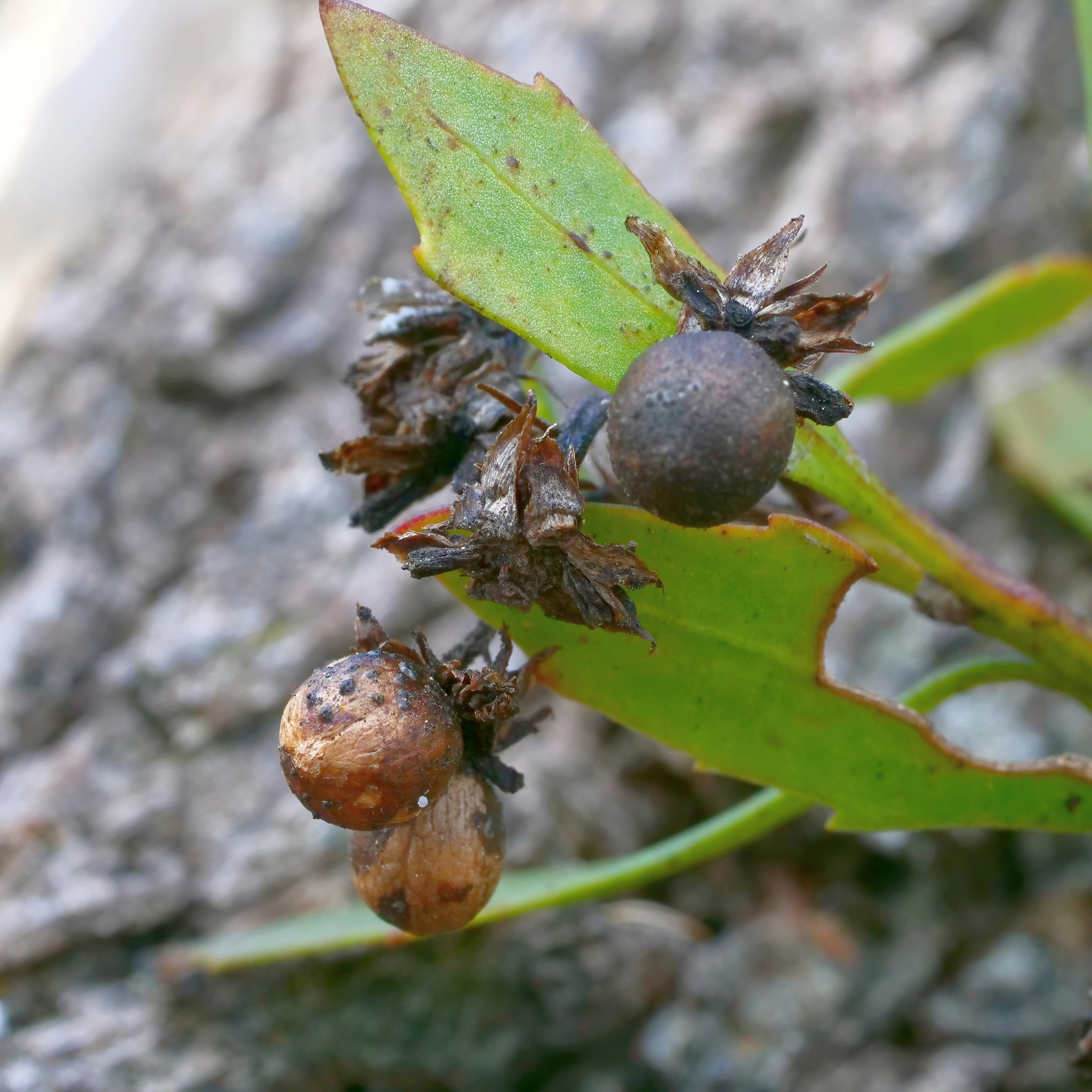
The following show the fully-ripe fruits.
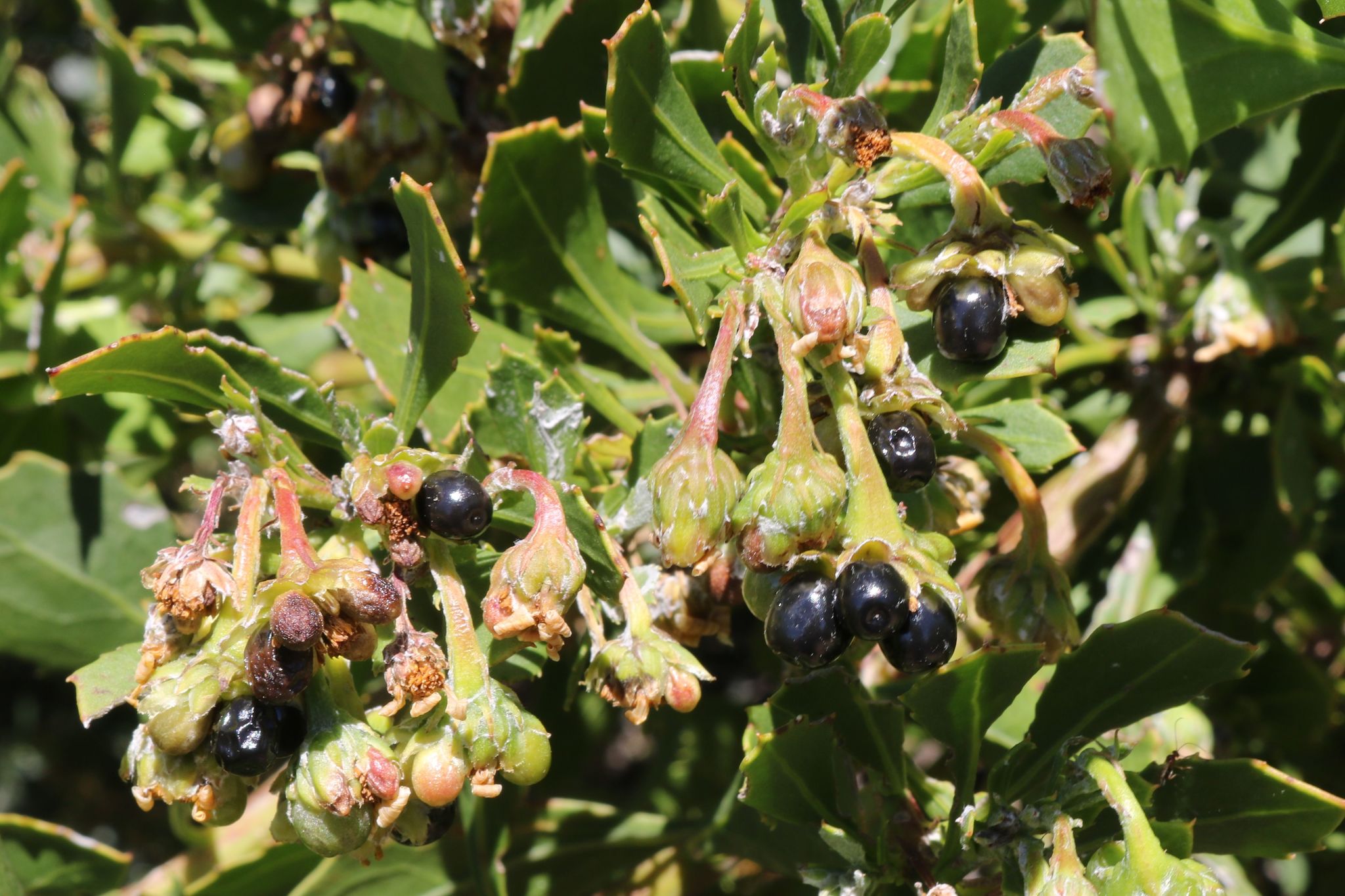
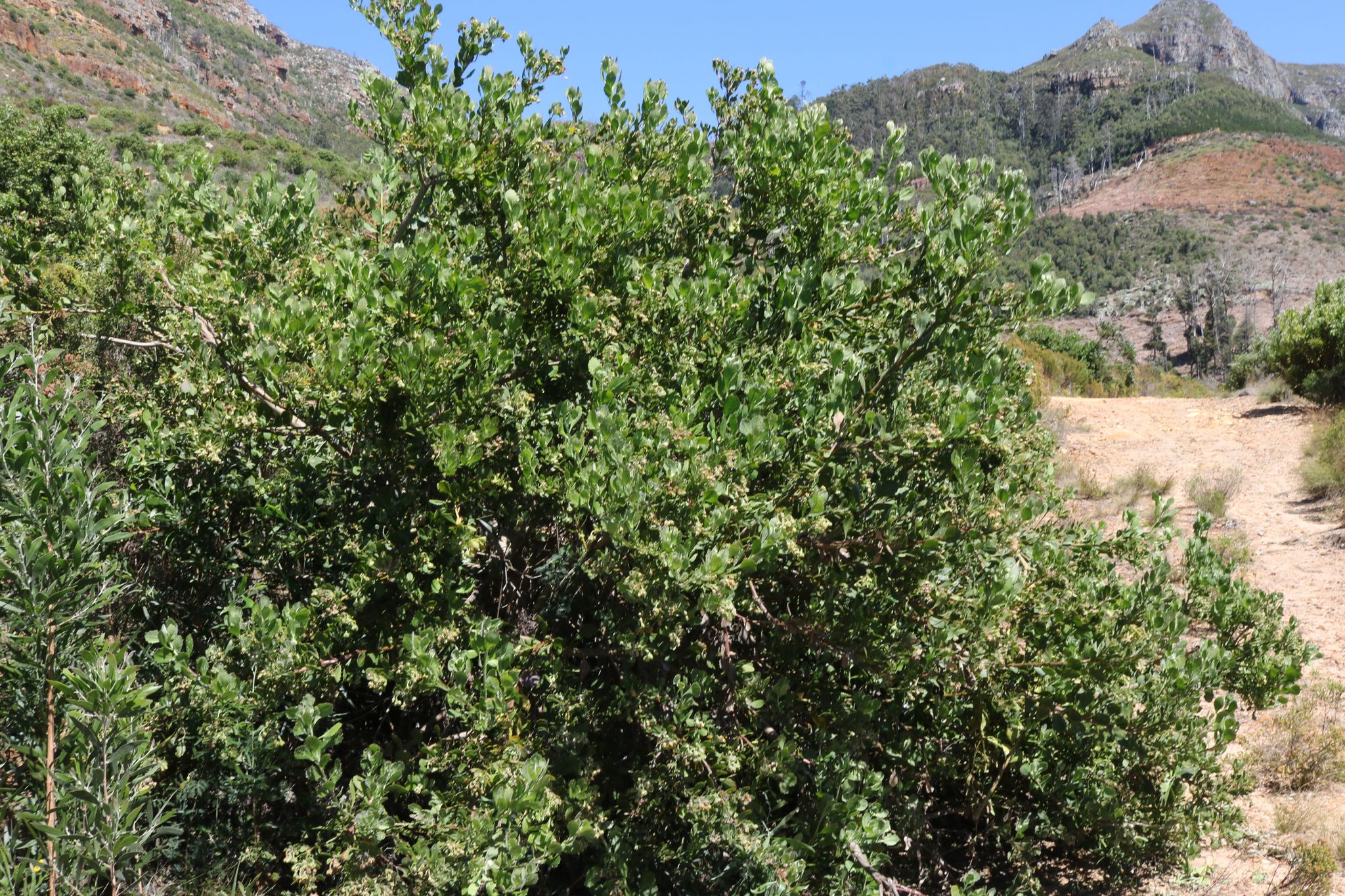
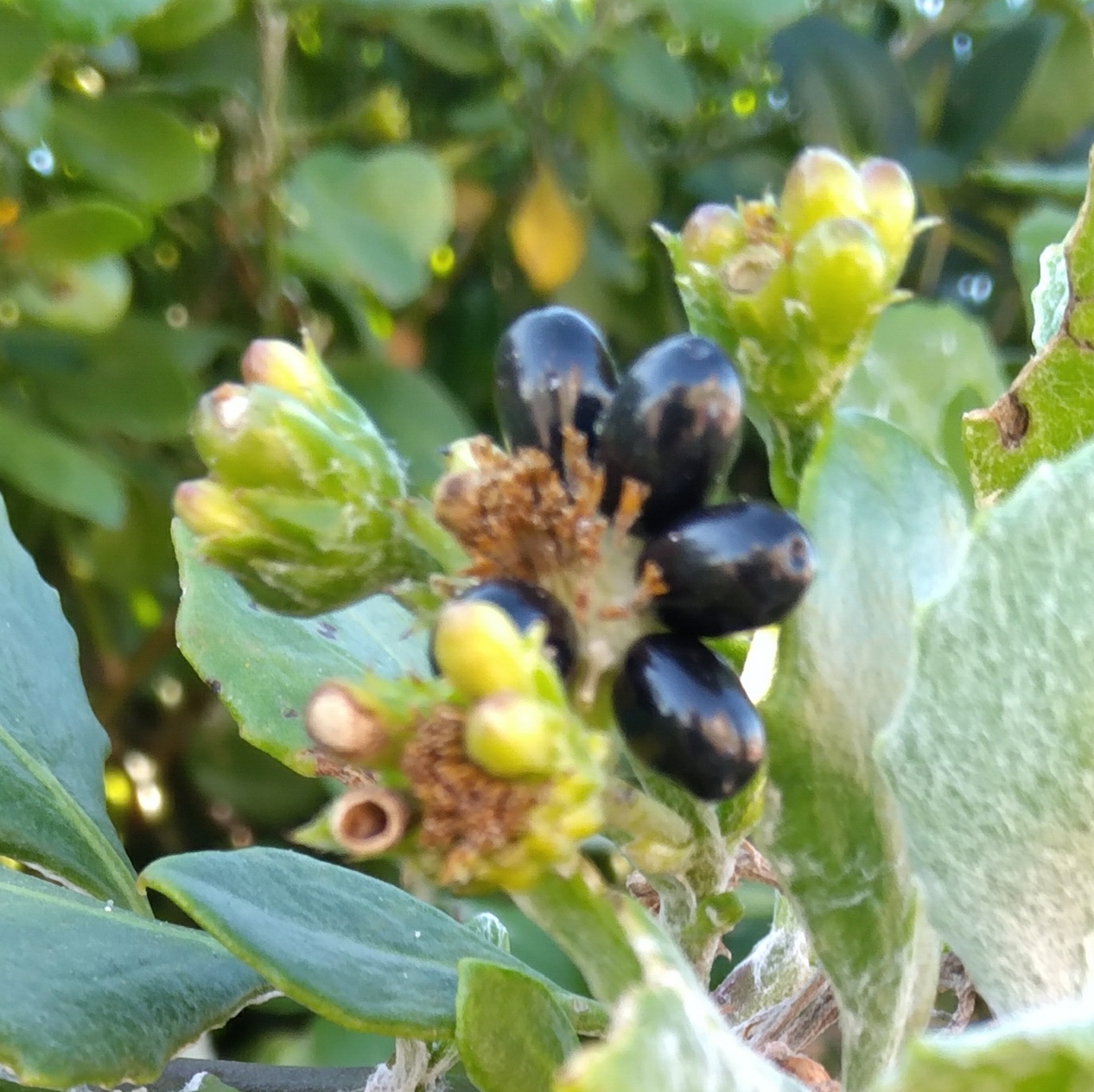
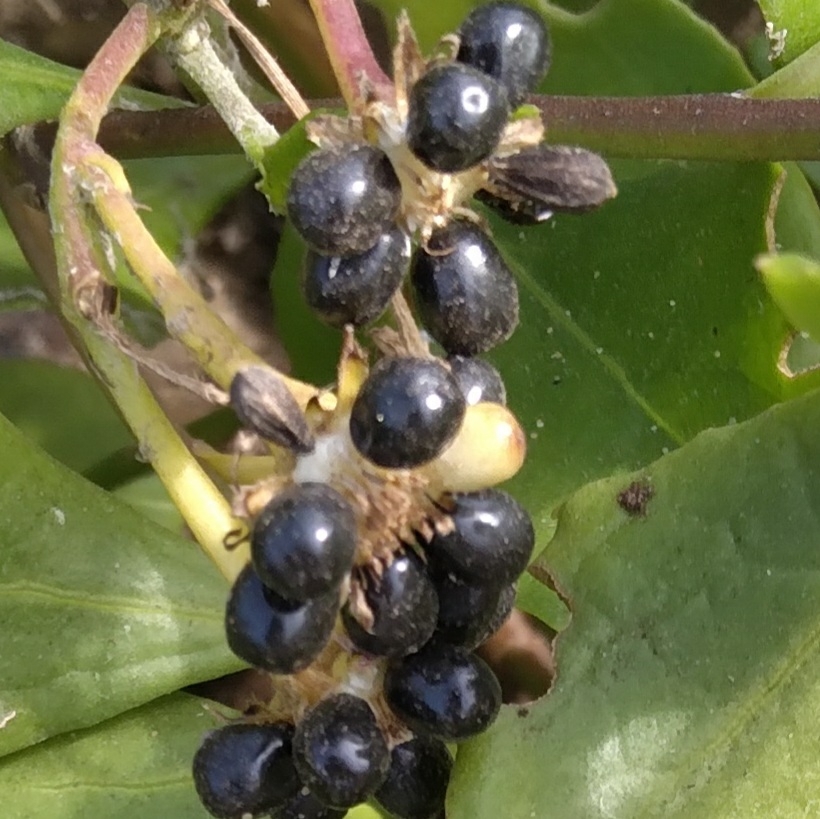
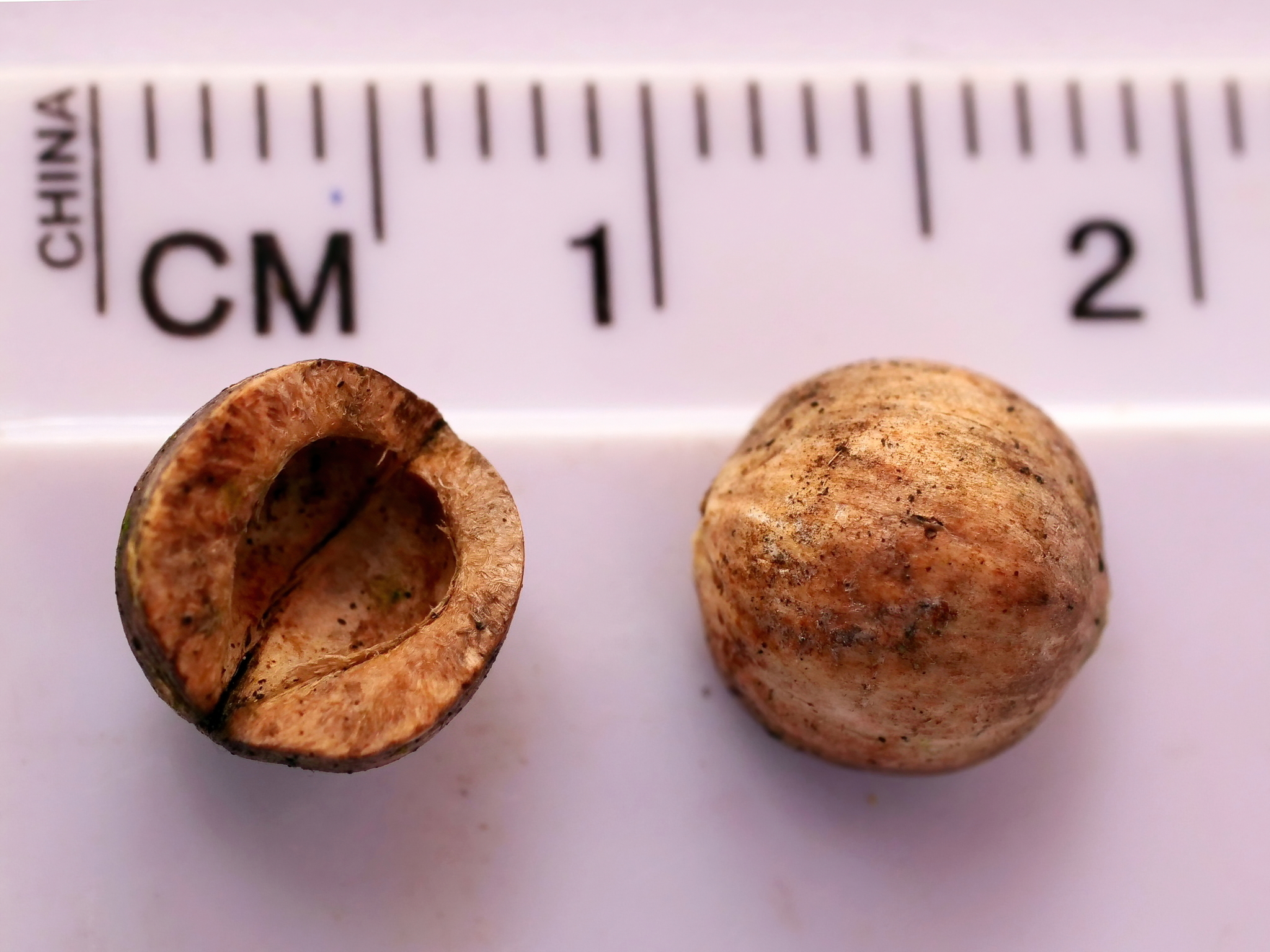
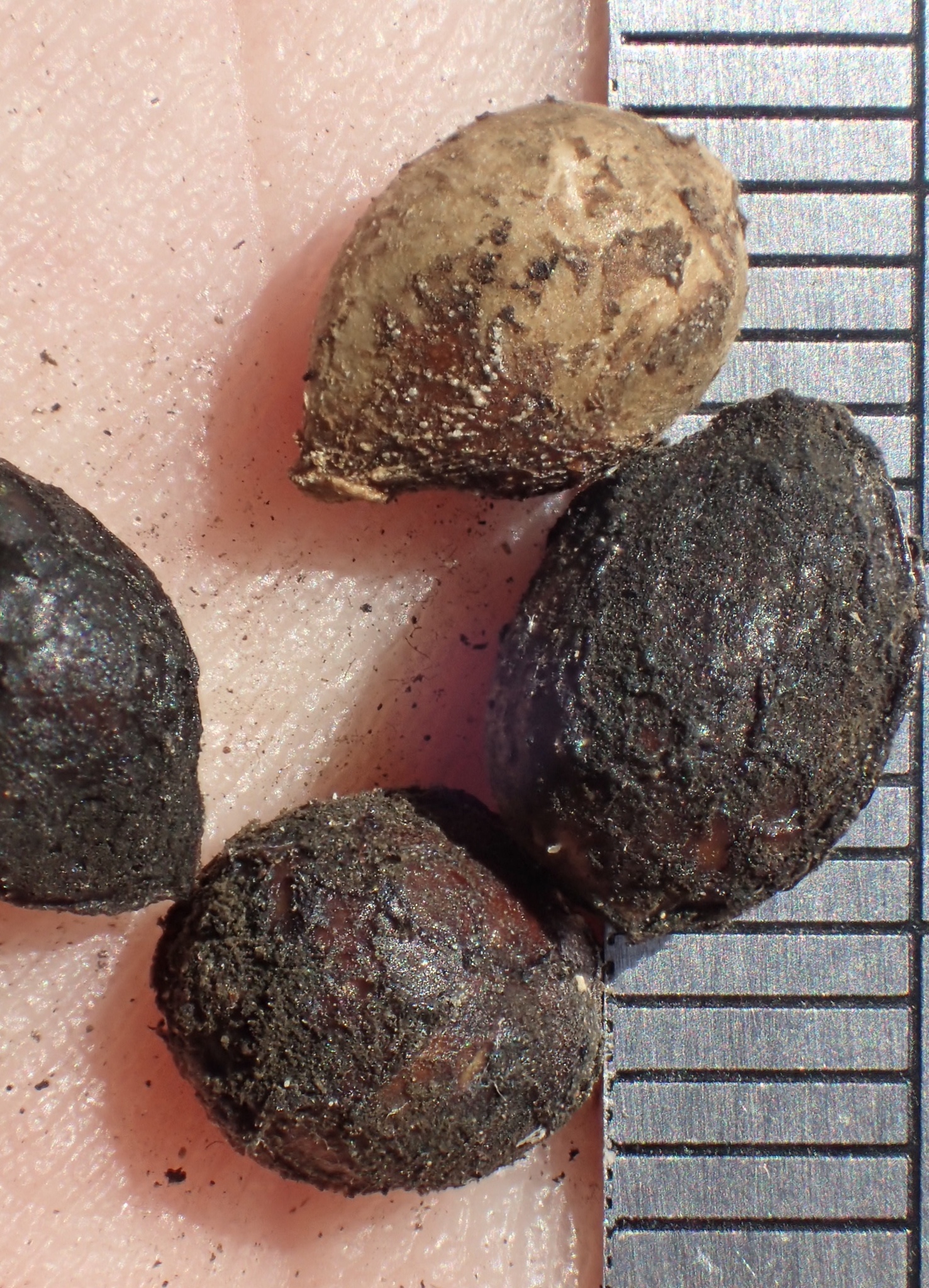
The following show the seeds divested of fruit-pulp by digestion or weathering.
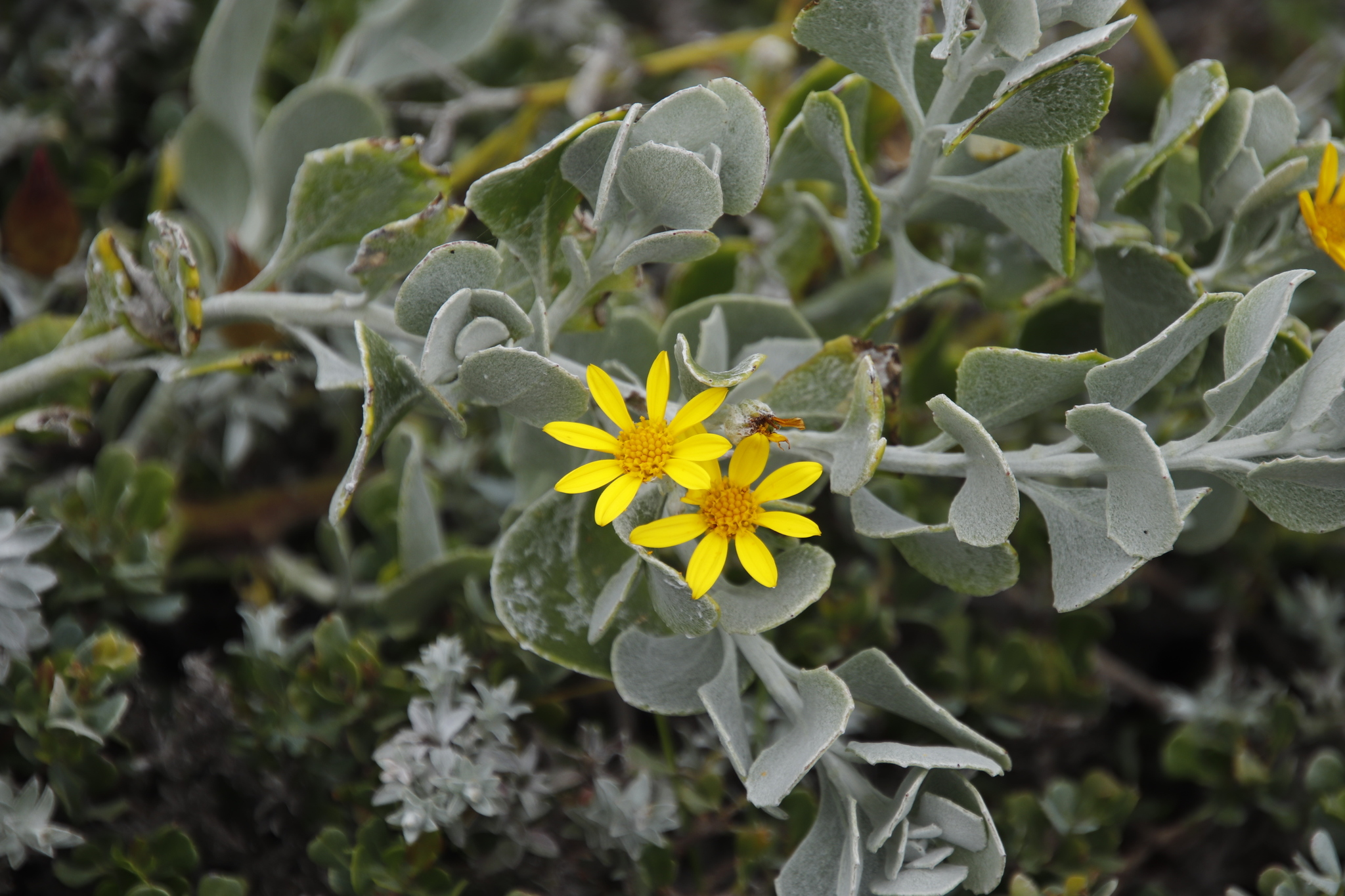
Two other species of Osteospermum producing fleshy fruits are Osteospermum incanum and Osteospermum junceum.
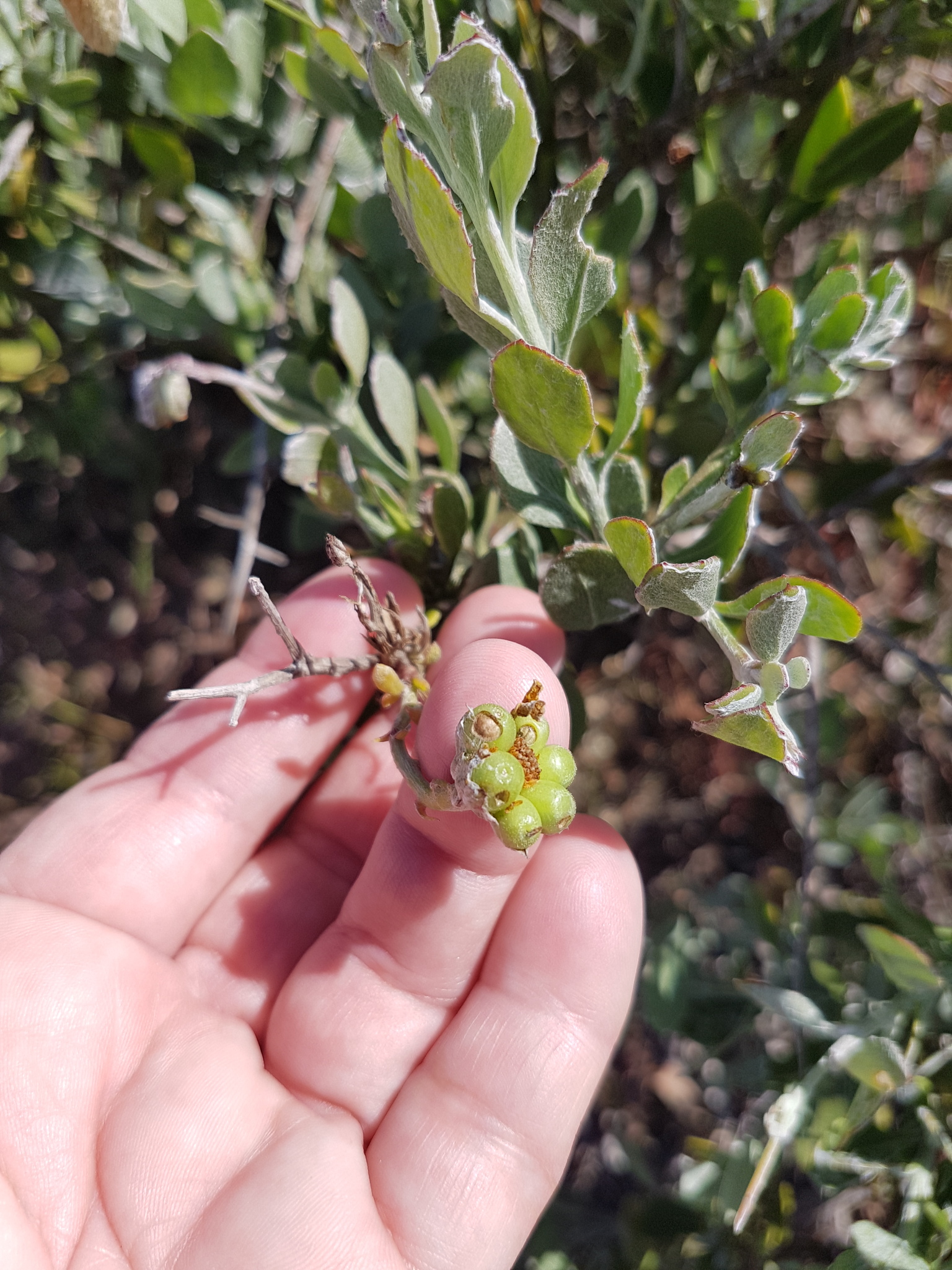
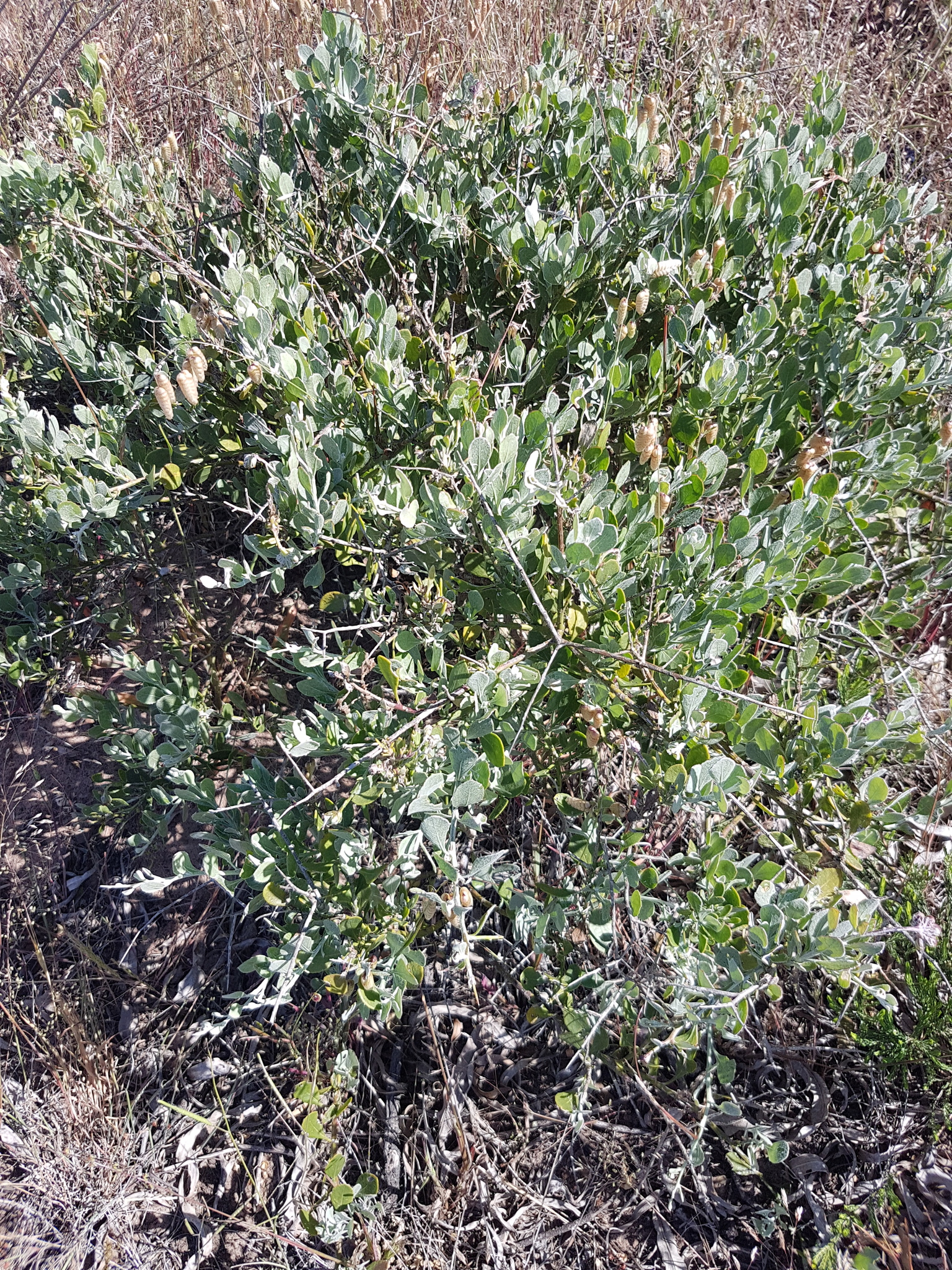
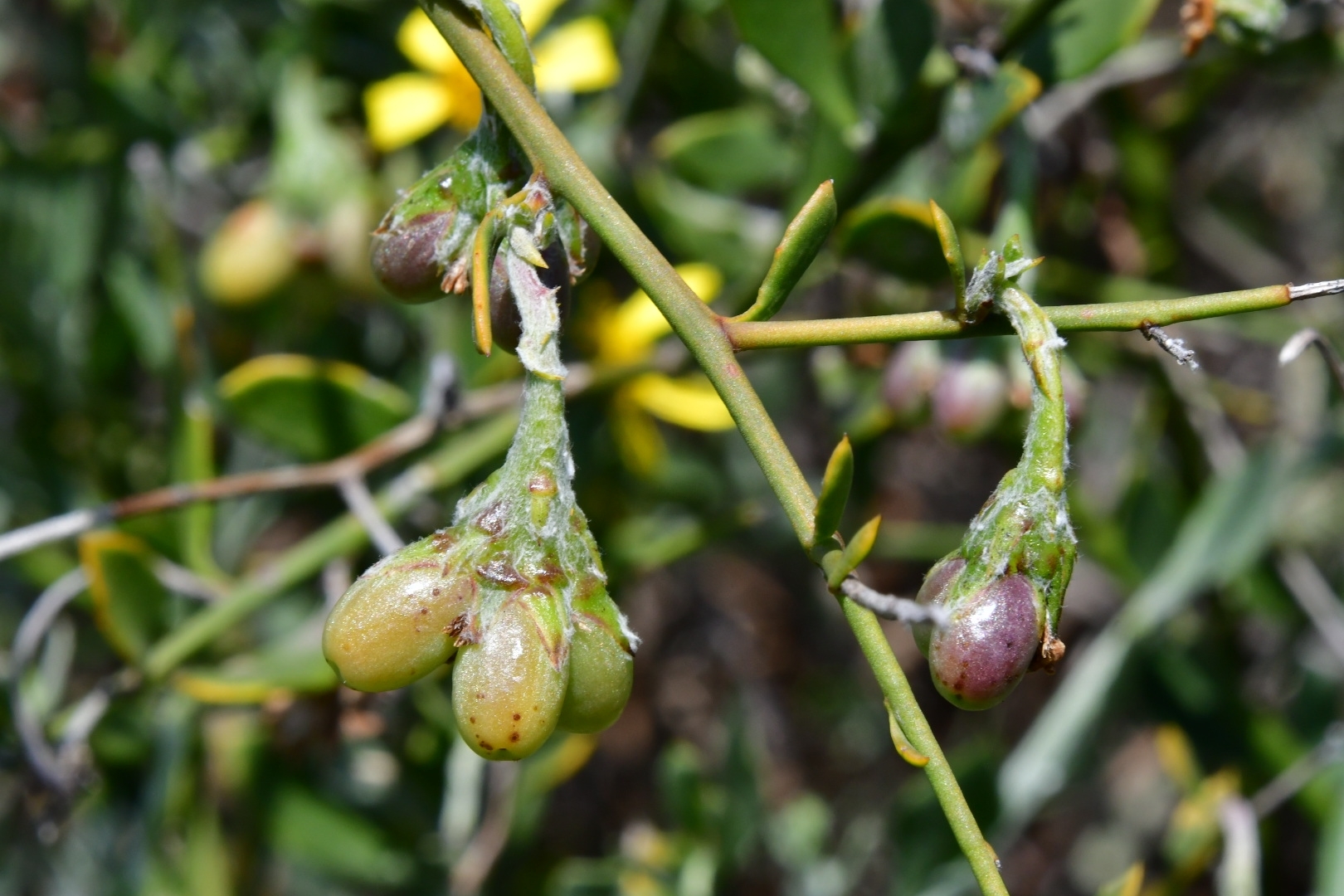
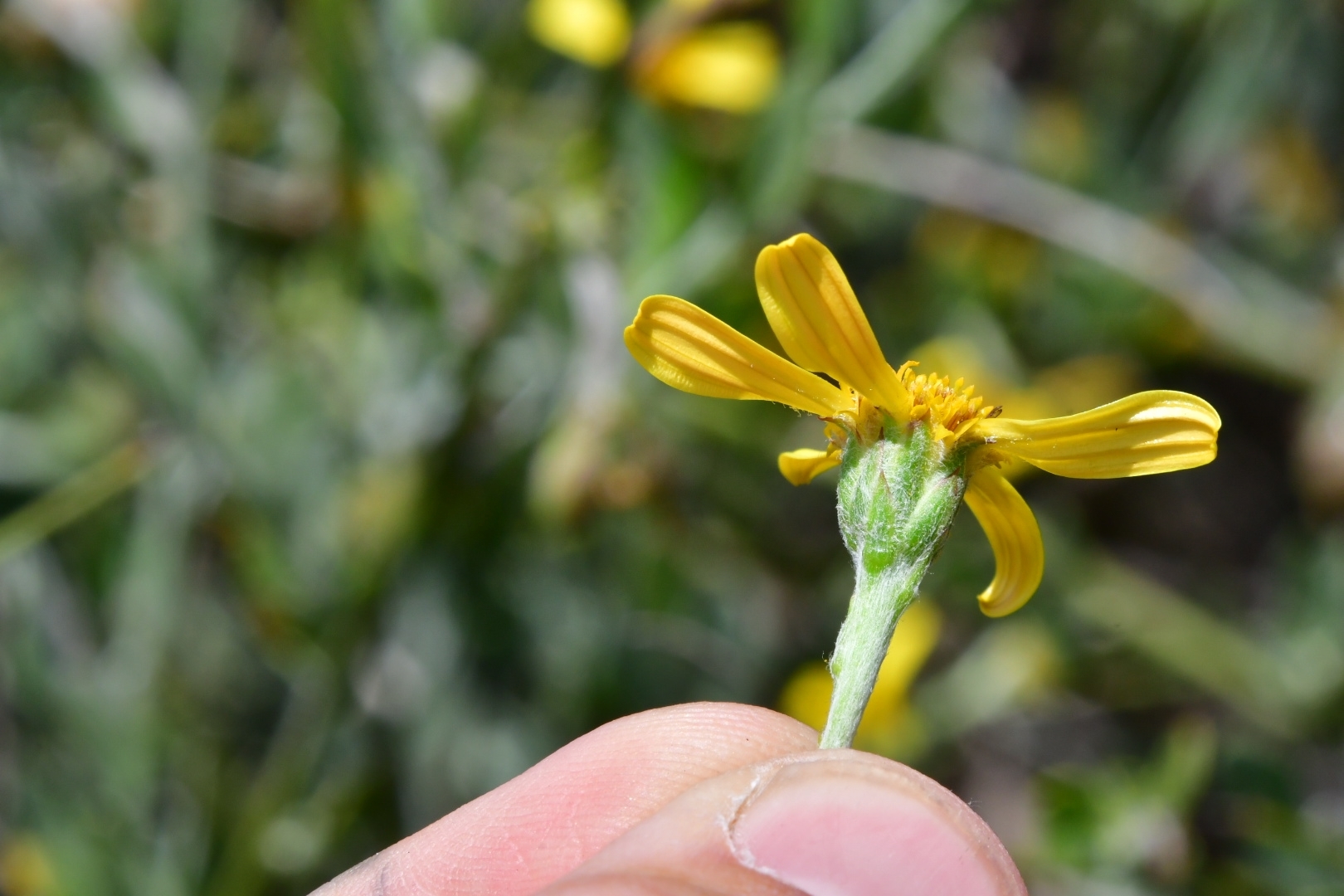
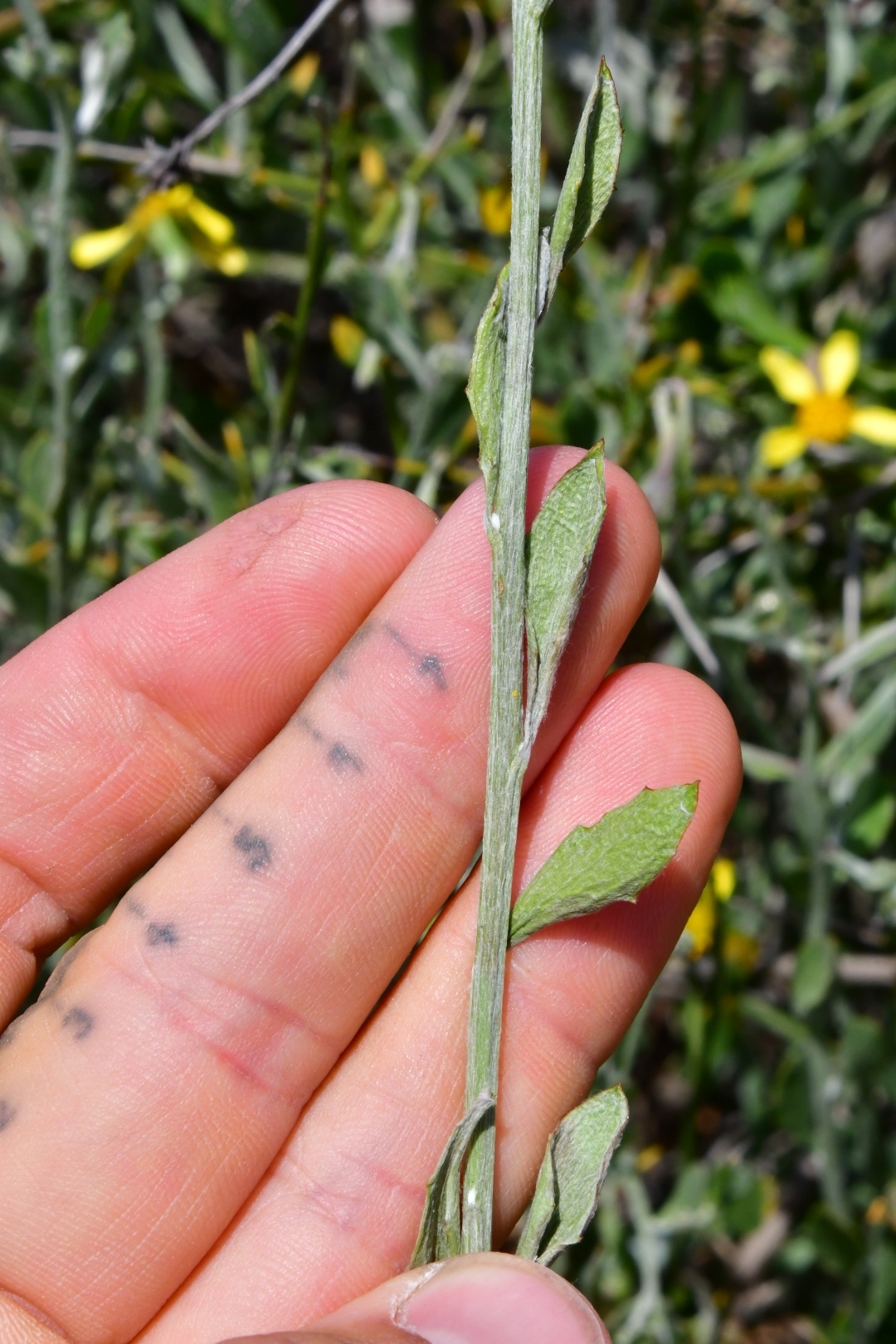
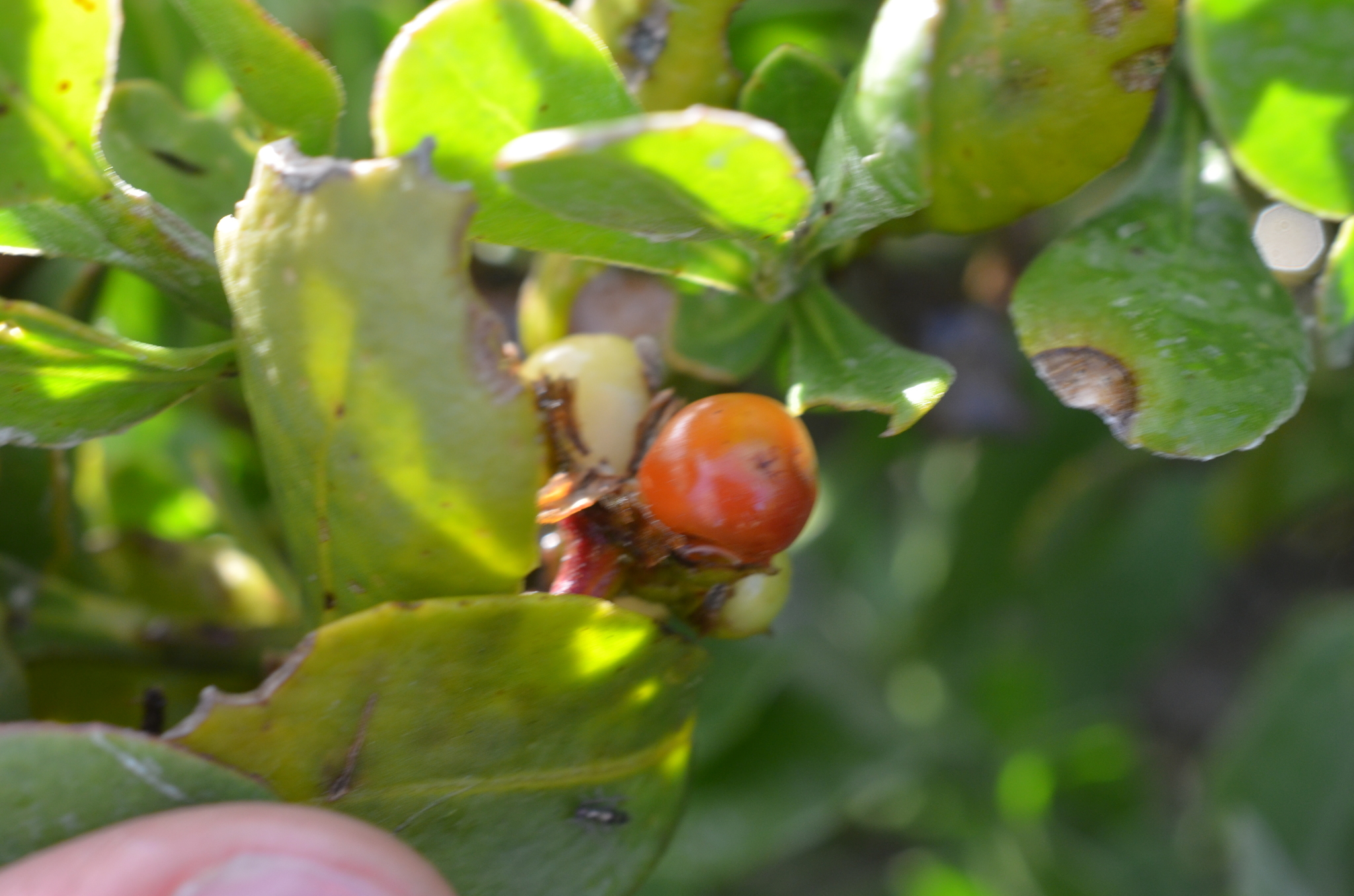
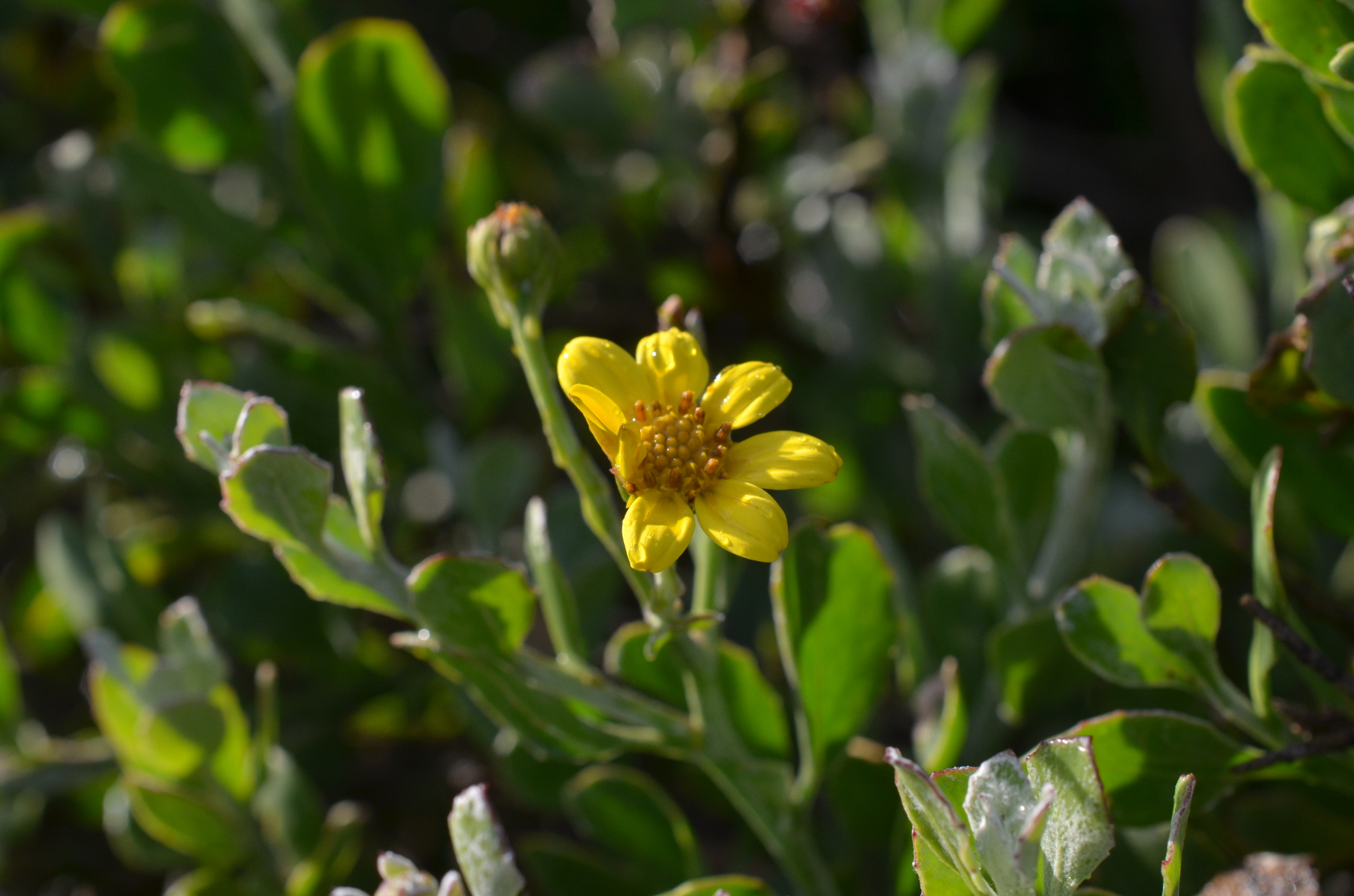
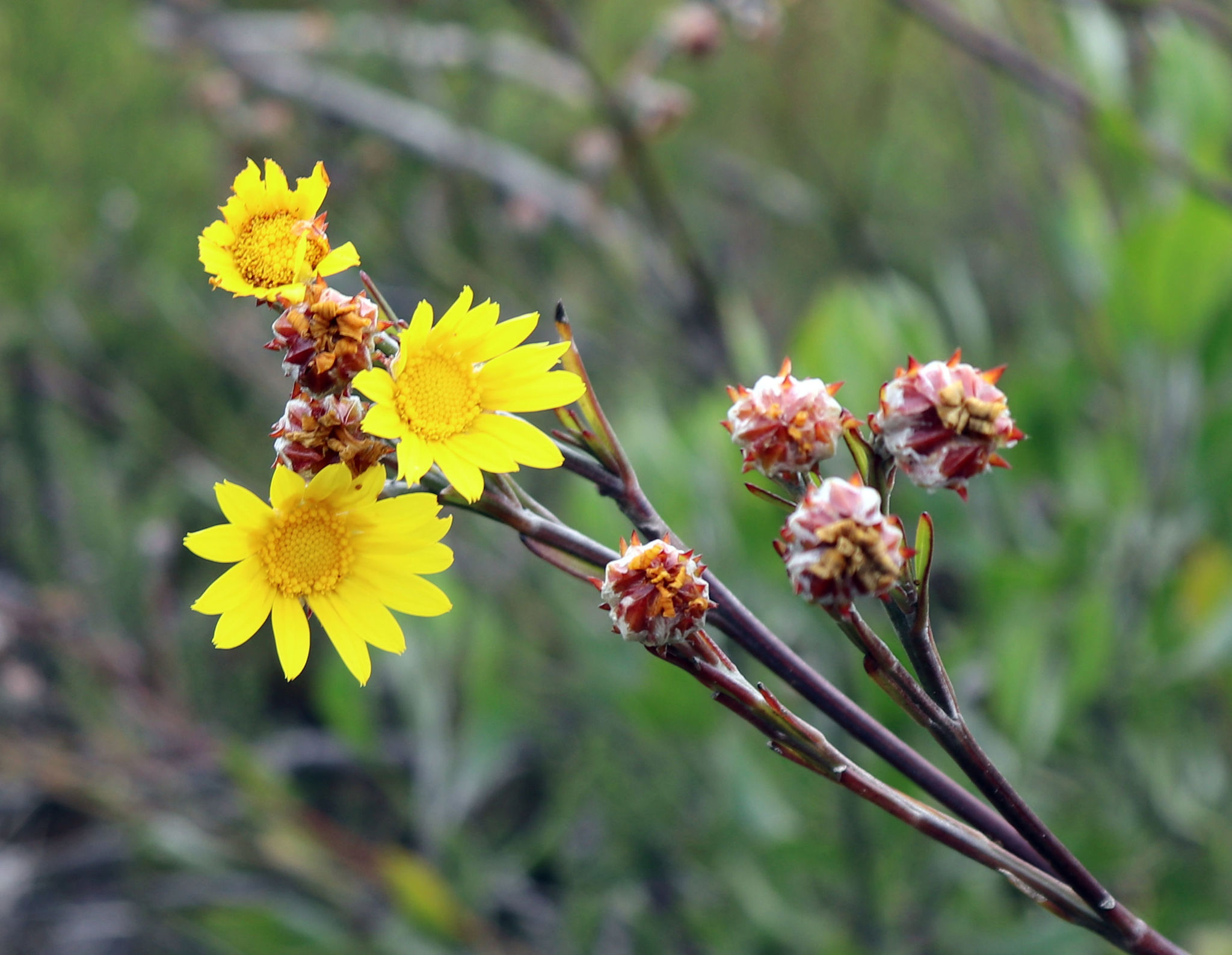
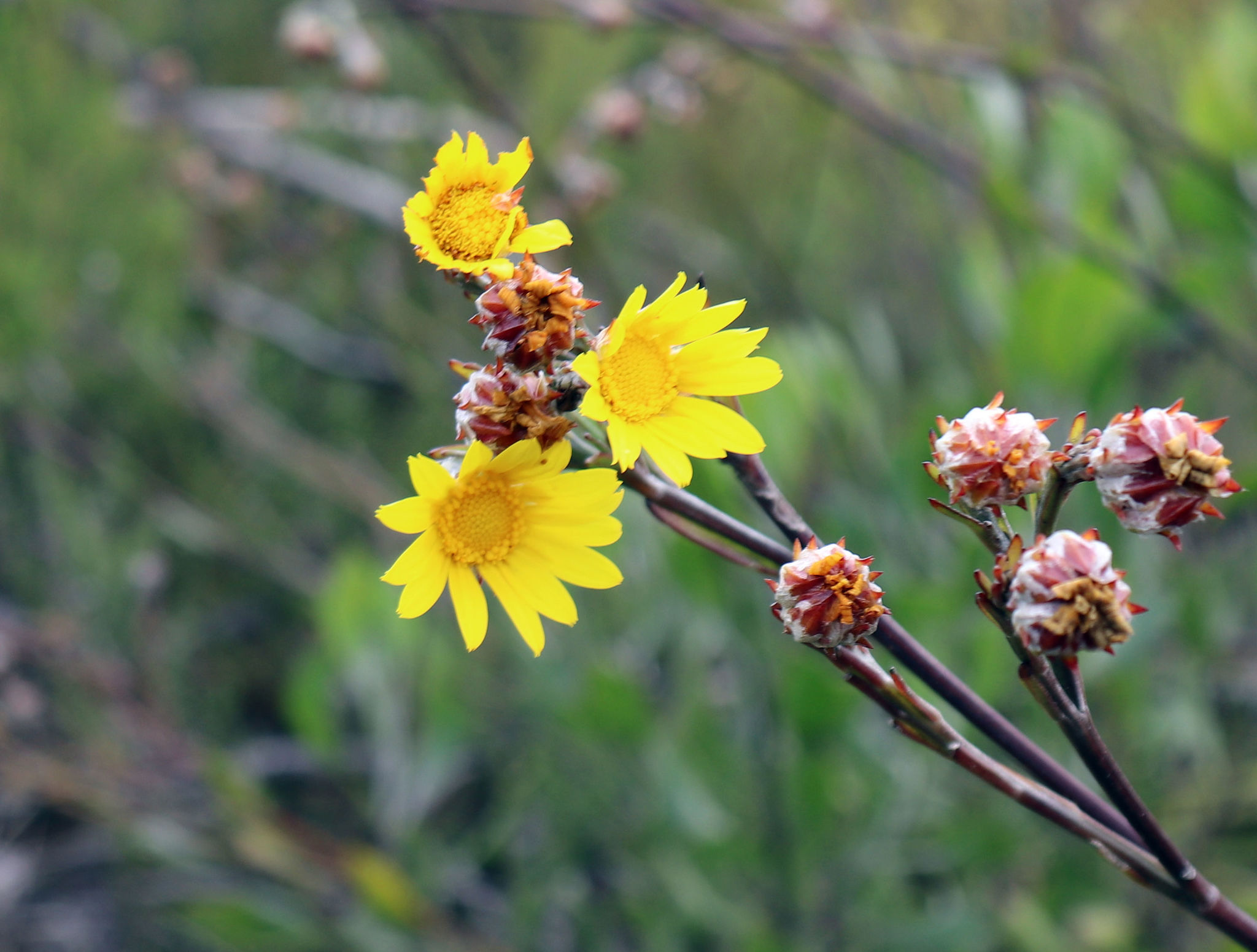
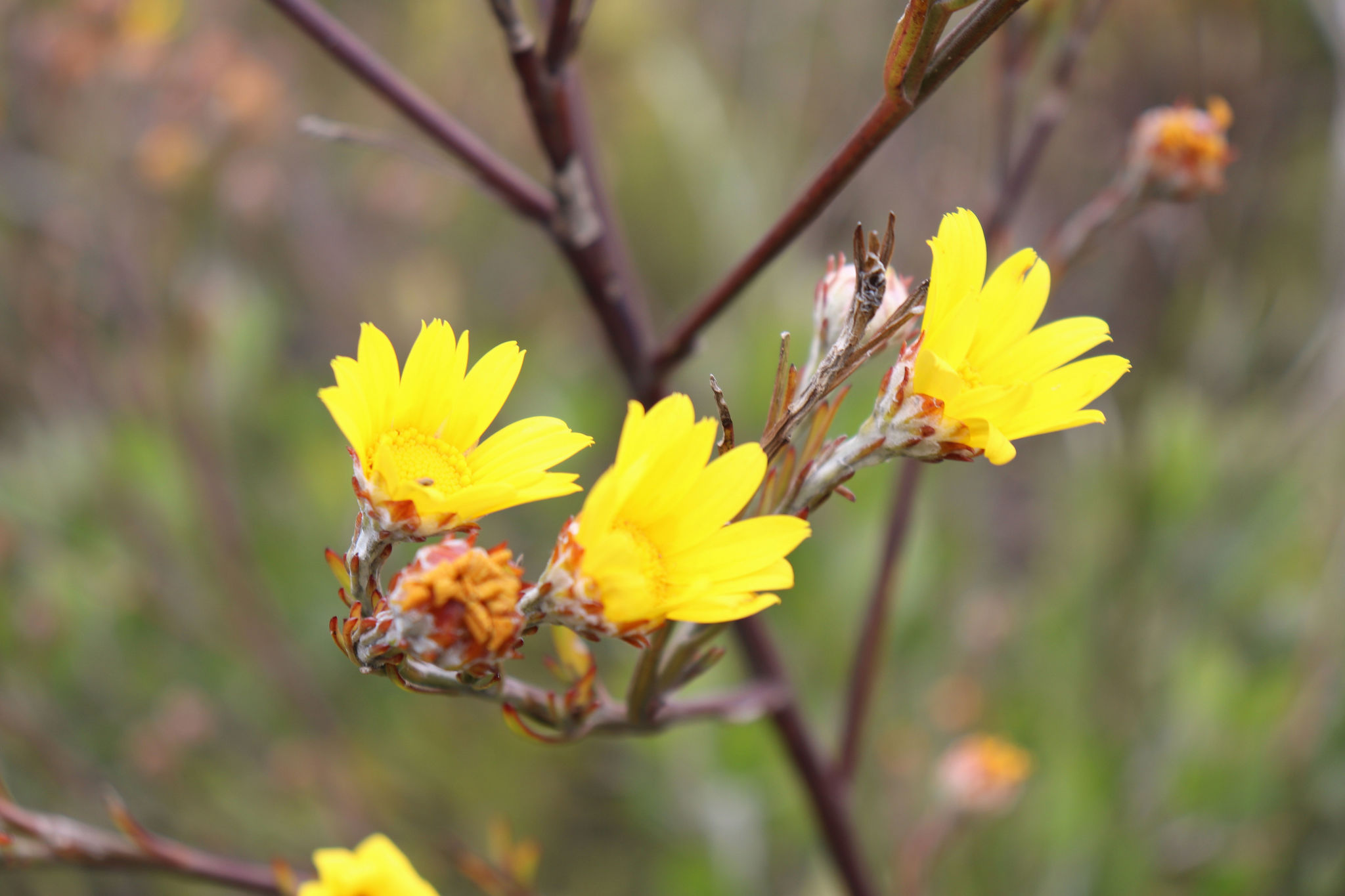
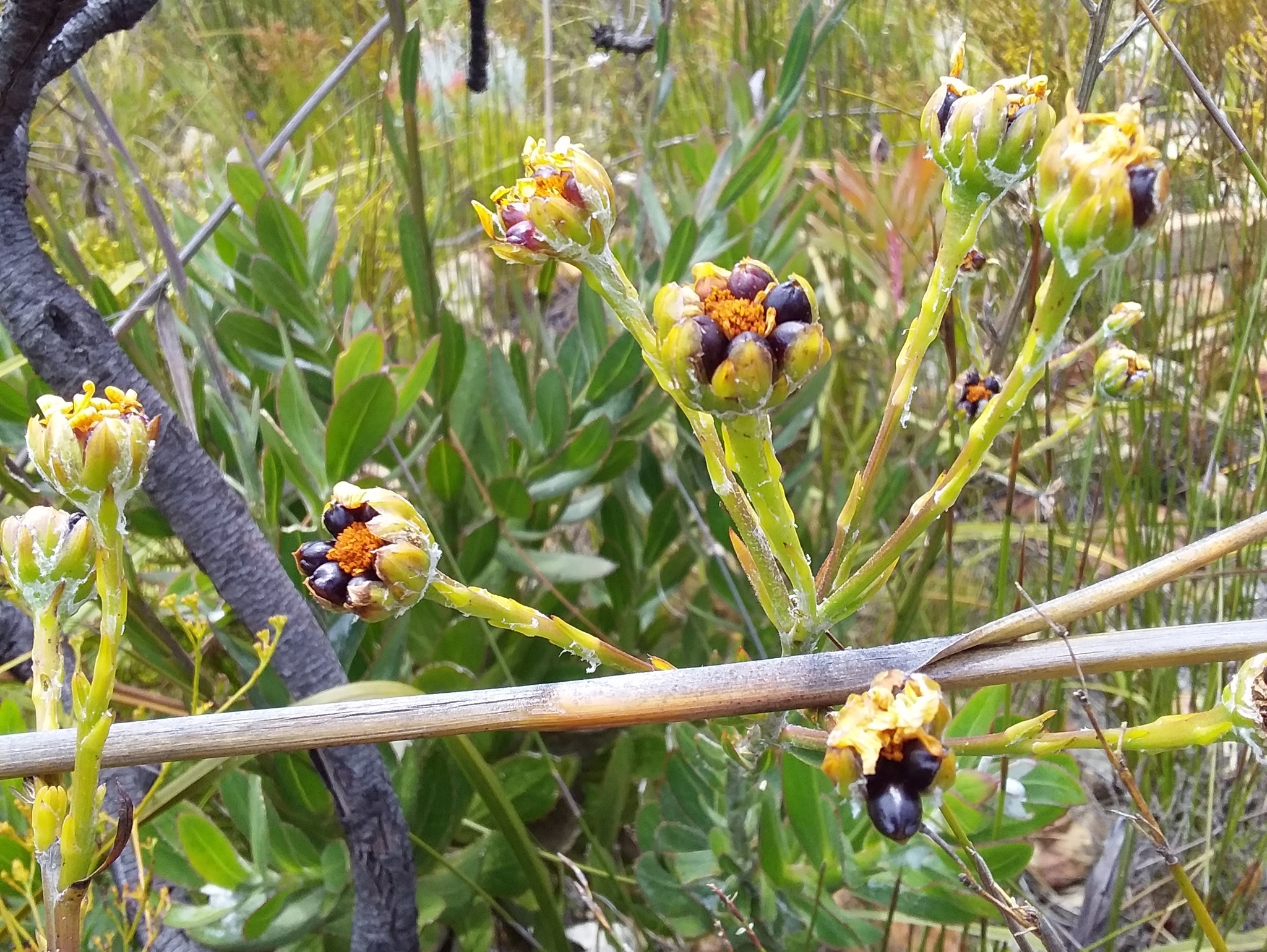
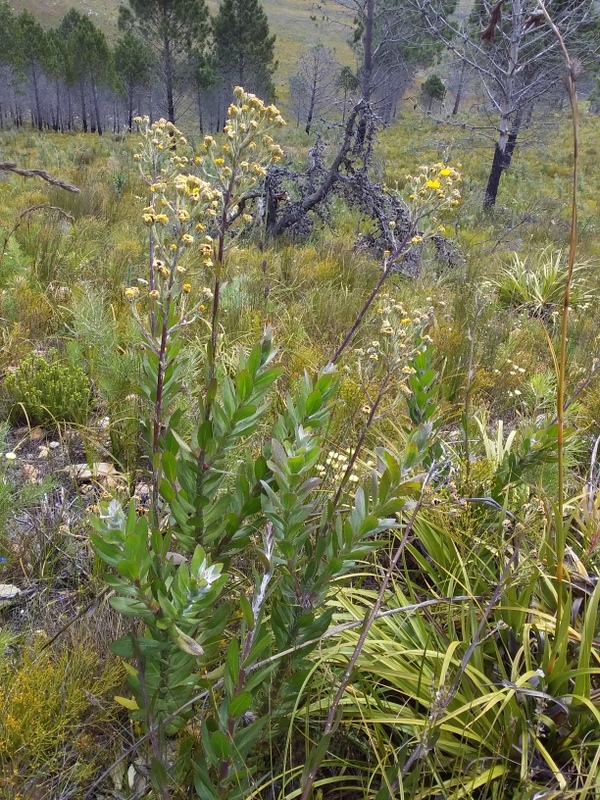
Leucopogon, a genus belonging to a different family (Ericaceae), partially parallels Osteospermum in its range of categories of dispersal. Many species are dispersed and sown by ants, while a few species have colourful fleshy fruits attractive to birds.
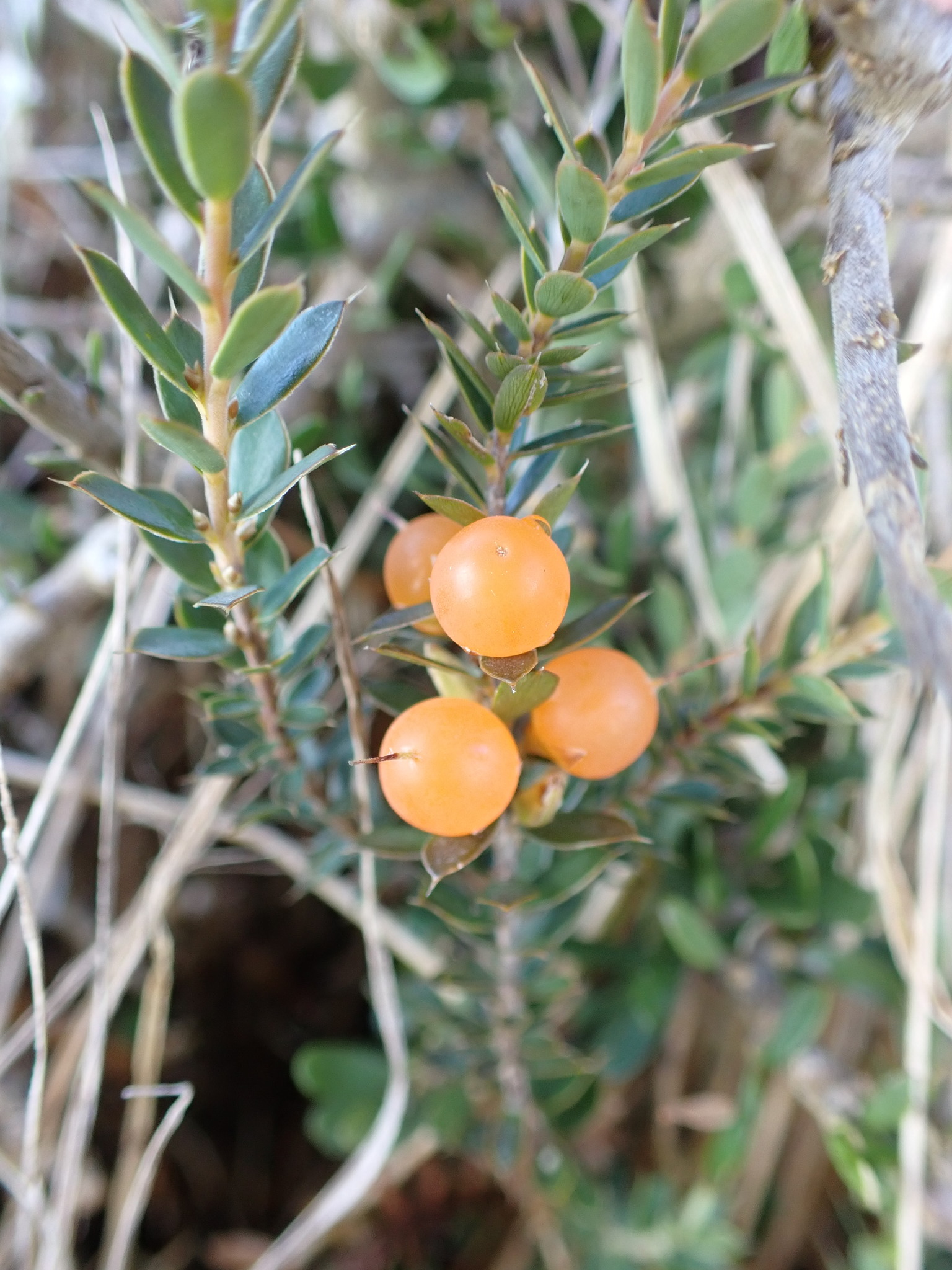
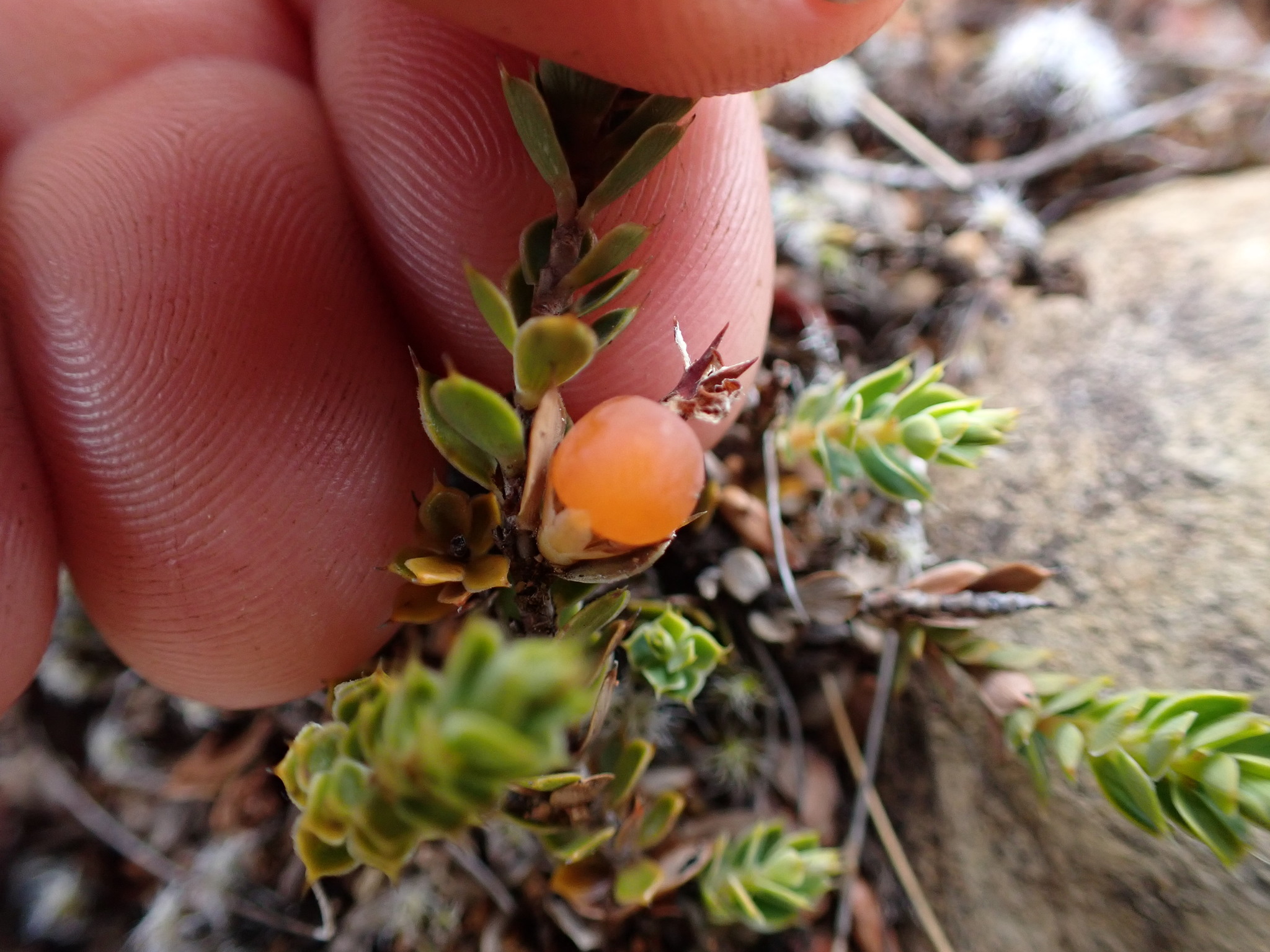
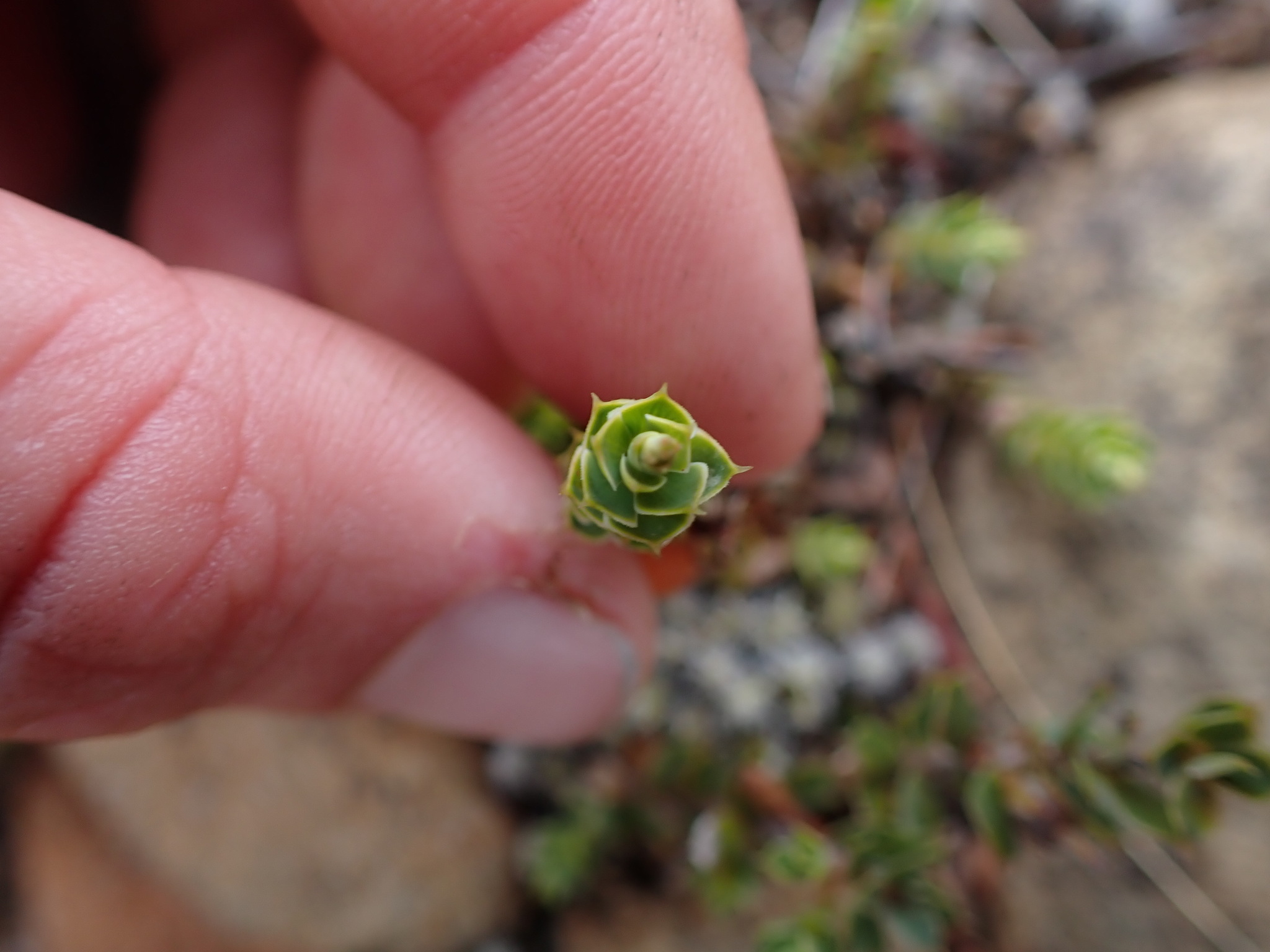
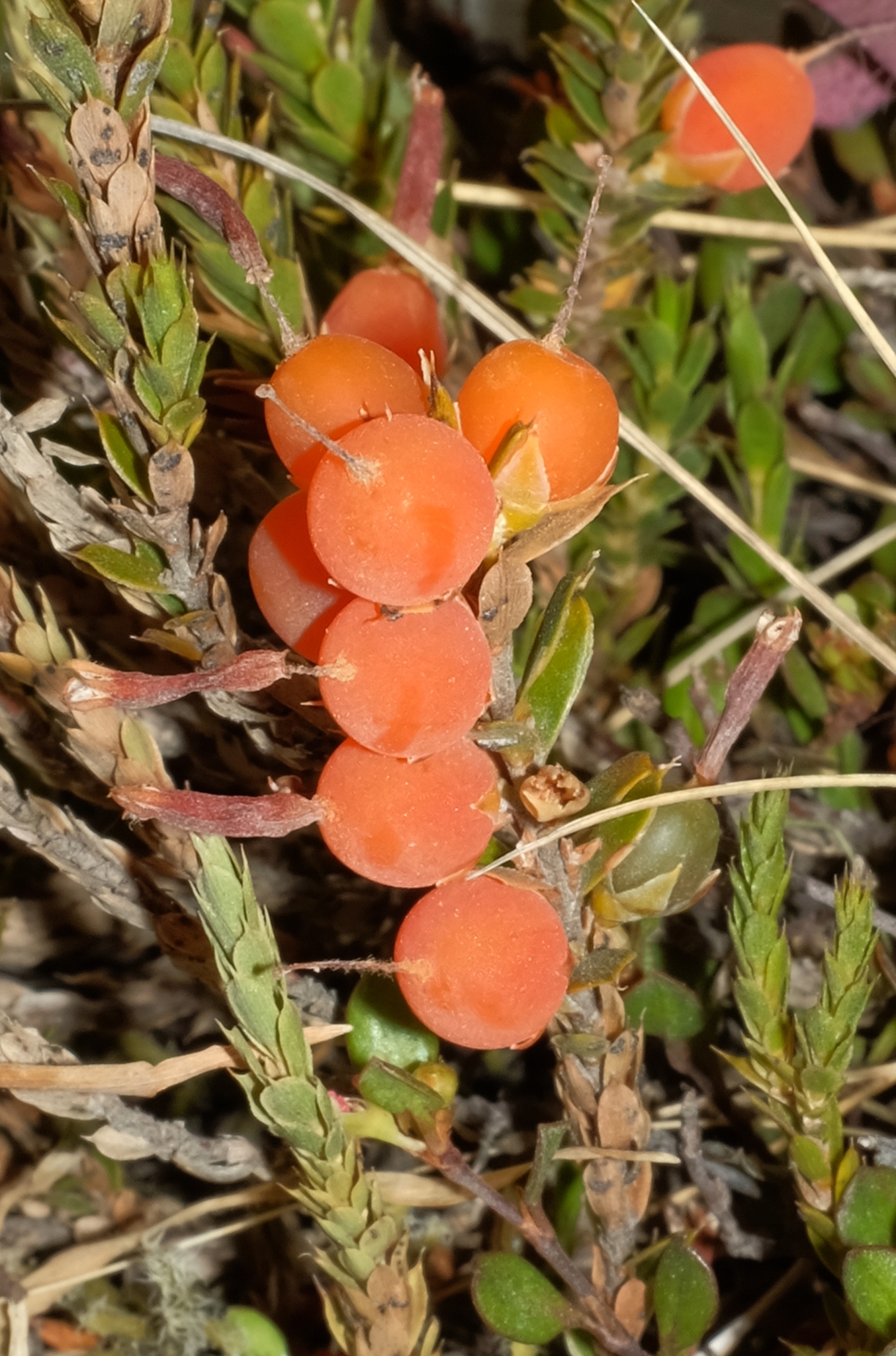
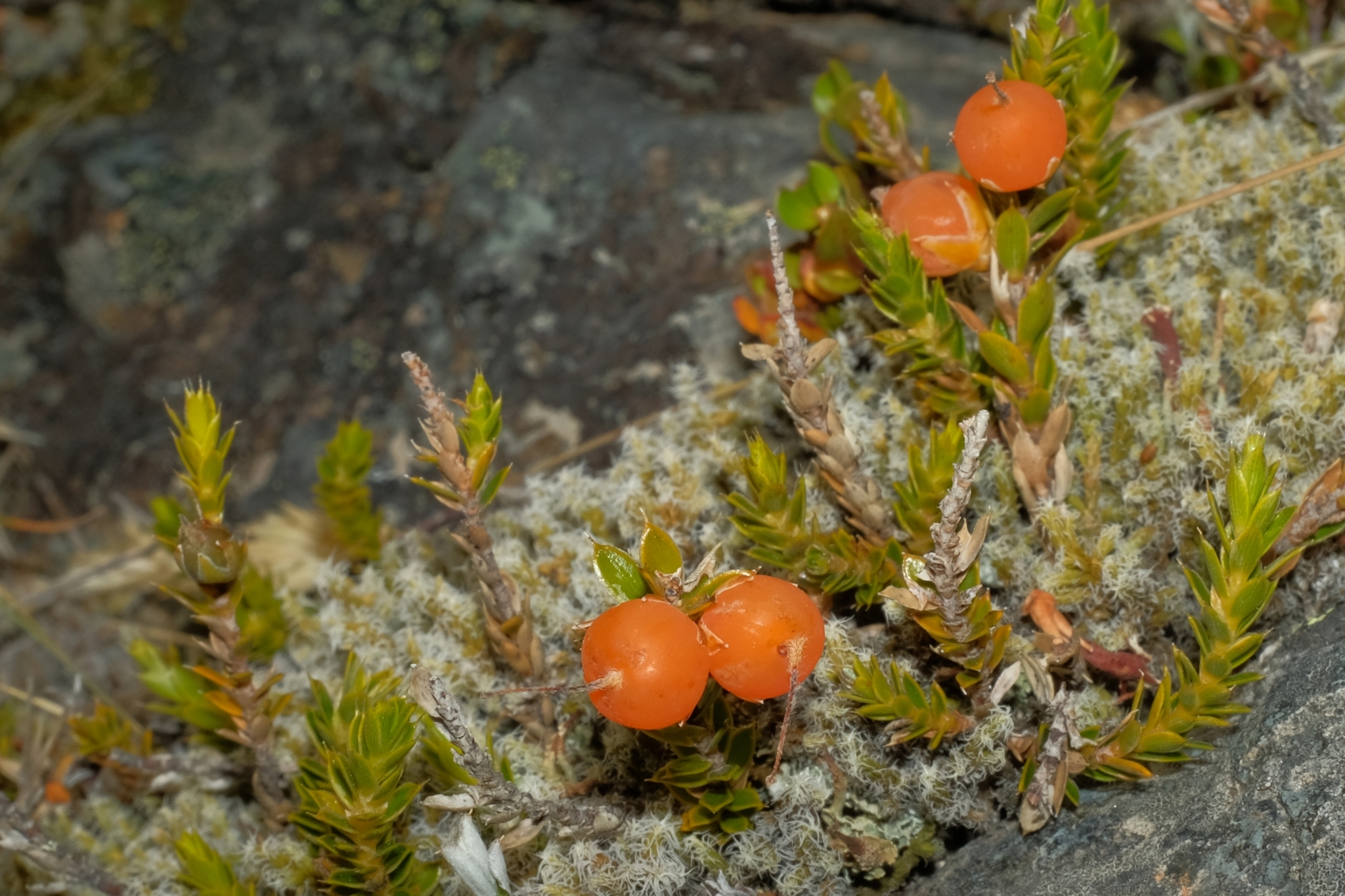
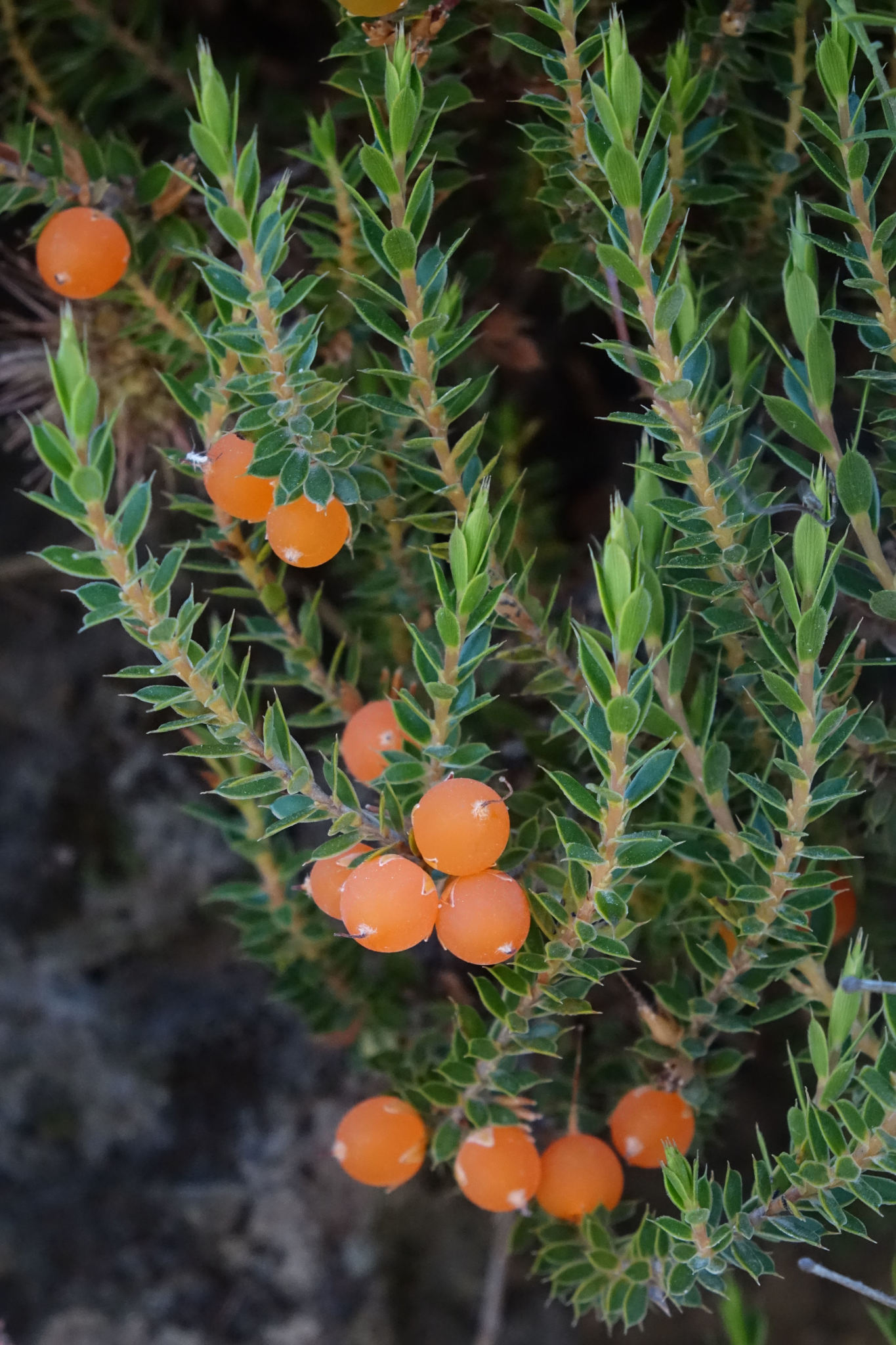
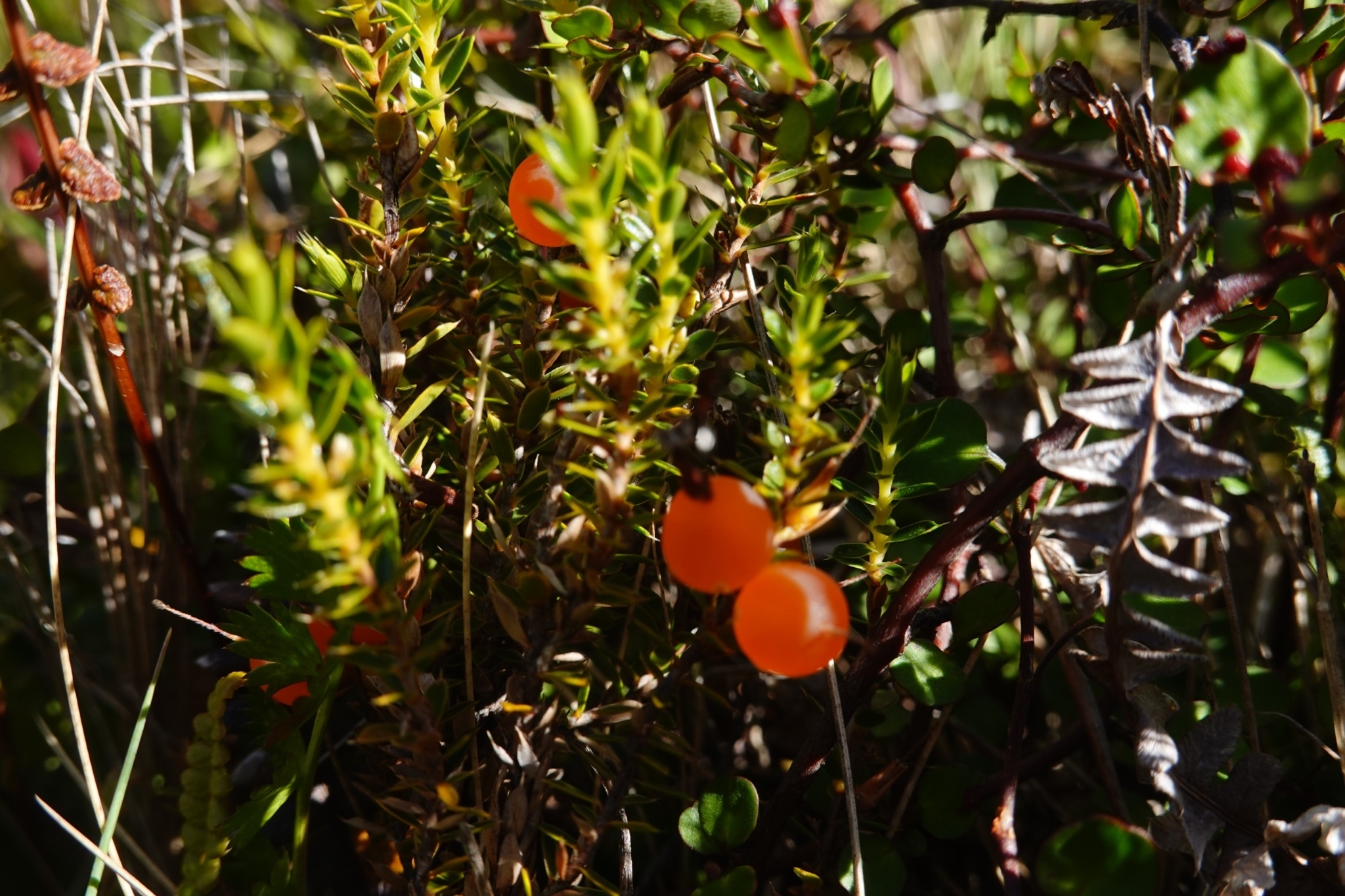
Dispersal by ants in LeucopogonLeucopogon amplexicaulis
In Leucopogon the fruit is a drupe, not a cypsela.
The parallel with Osteospermum may be only partial because I do not know if any species of Leucopogon is adapted mainly for dispersal by wind.
A particularly remarkable genus of Ericaceae, with respect to ‘plasticfruits’, is Gaultheria.
CitedBotanically Inclined·SANBI, fleshy and dry fruits
Humans as agents of dispersal
yvettevanwijk1941 asked whether humans should be included as dispersal animals. They have been around for hundreds of thousands of years, eating and spitting out or otherwise dispersing seeds through all that time, migrating all over the world, moving species, and choosing the largest and sweetest fruits to eat.
It would indeed be good to investigate systematically which species of wild plants in southern Africa were dispersed and sown by hunter-gatherers. I doubt that Osteospermum moniliferum was among them, because in my experience one does not ingest the seeds (this seems instinctive), and the fruits are unlikely to be transported back to camp for consumption, because they are perishable, fiddly and messy. So I see humans as detracting from dispersal rather than contributing to it, in this case.
Firstly, the skin of the ripe fruit is strong enough (despite the softening of the fruit-pulp to a jammy consistency) that I need to pinch the fruit between tongue and incisors to burst the fruit. This takes a small amount of time. It takes me a few minutes to mouth-mash and mouth-process a big mouthful (more than 40 ripe fruits), spitting the seeds out as I go along.
However, please bear in mind that when one finds a stand of individual plants laden with fruits, one tends to remain for mouthful after mouthful, which means that most of the seeds are spat close to the source.
Secondly, I have noted that the feces of Papio ursinus ursinus (e.g. near Hermanus in October 2002) are full of the seeds after this species has eaten the fruits of Osteospermum moniliferum. This is puzzling because the seeds are big enough that my instinct is certainly not to swallow them; the mouth of P. ursinus is smaller than the human mouth, so I would have expected that species to be even more reluctant to swallow the seeds. Yet it swallows them wholesale, apparently without crushing many of them in its jaws (although we need more observations to confirm that the seeds are viable after being defecated by P. ursinus).
So it seems that human and baboon are different as dispersers of O. moniliferum, but I do not know which species is the more effective disperser. Humans certainly spit out the seeds in viable condition, but the distances they are transported are limited. Baboons transport the seeds far, but possibly harm them by chewing or digestion.
Regurgitation by Onychognathus morio
Osteospermum moniliferum was fully in fruit at Rhodes Memorial, next to the University of Cape Town, in early November 2002.
At this time I noticed many instances of the seeds among the buildings on campus (including window-sills just inside buildings), where they had been regurgitated by Onychognathus morio during the breeding season of this species.
Onychognathus morioTaxon page
The regurgitated ‘pellets’ consisted of several seeds encased in a dark, fibrous material that I assume to be the fruit-skins.
On the ground at the base of a roost and/or nest of O. morio on one of the buildings on campus, I found dozens of clean seeds of O. moniliferum, probably also regurgitated.
I do not know whether the parents were feeding the fruits of O. moniliferum to their nestlings or not.
On viability of seeds after passage through Papio ursinus
Geldenhuys (1997) identified the seeds of Chrysanthemoides monilifera (synonym Osteospermum moniliferum) as dispersed by the chacma baboon (Papio ursinus), and by the vervet monkey, explaining the movement of various plant species across geographic gaps from lowlands to isolated mountain patches. The seeds are characterised by a hard, bony endocarp — hence the common name ‘boneseed’ — which facilitates survival through the digestive tract of vertebrate dispersers (Batchelor et al. 2025).
ReferencesBatchelor et al. 2025·Geldenhuys 1997