
Plasticfruits seriesPart 1·Part 2·Part 3·Part 4·Part 5·Part 6·Part 7·Part 8
A beachfront shrub and a health food
Imagine that you are a naturalist living in a coastal suburb in Australia.
This morning, you take a walk along the beachfront, absent-mindedly noticing an indigenous shrub, a ‘berry saltbush’, in red fruit by the pathside.
CitedSeaberry saltbush
This is such a common sight, from Western Australia to New South Wales, that you pay scant attention.
Furthermore, you are not naive enough to be tempted to nibble the fruits.
Later in the day, you sit down to a salad of quinoa seeds and lettuce.
QuinoaTaxon page
And, understandably, it is unlikely to occur to you that berry saltbushes and quinoa belong to the same genus: Chenopodium (Amaranthaceae).
About seven species of berry saltbushes have small, flattish, but succulent and conspicuous fruits, adapted for seed-dispersal by birds. These look moderately appetising, but few naturalists who have ever tried them will repeat the experience.
In quinoa, by contrast, the fruits, not being fleshy, are tantamount simply to seeds. Who would suspect that this wholesome food-plant could belong to the same genus as berry saltbushes?
And yet this is indeed the case.
This kind of evolutionary plasticity, within genera, is surprisingly common in a wide range of plants.
The nature of flowers is so phylogenetically consistent that plants are classified, to genus level, mainly by their flowers. However, the fruits seem to have an adaptive ‘mind of their own’, in many and various genera.
At a glance, both berry saltbushes and quinoa show reddish reproductive structures.
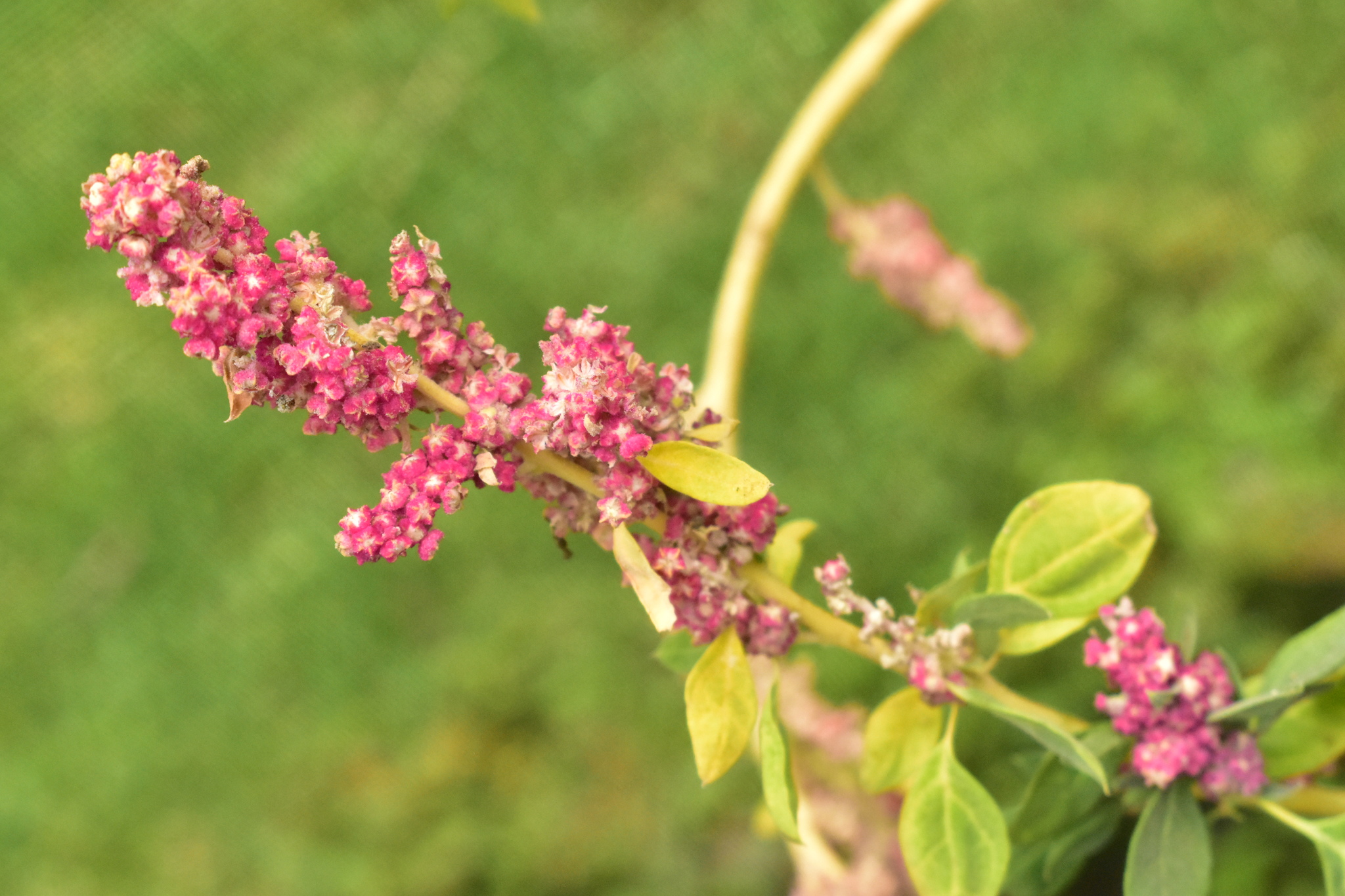
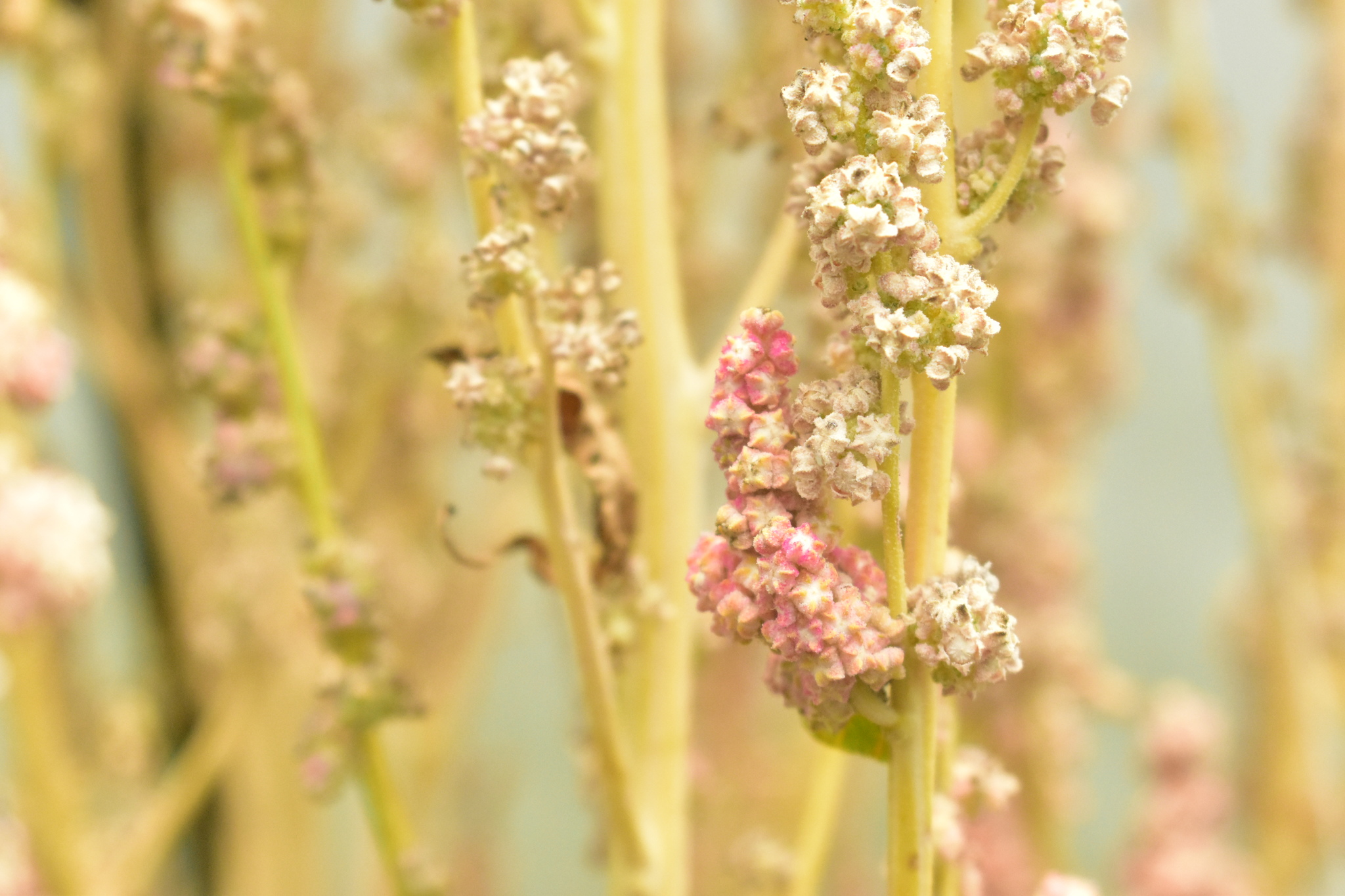
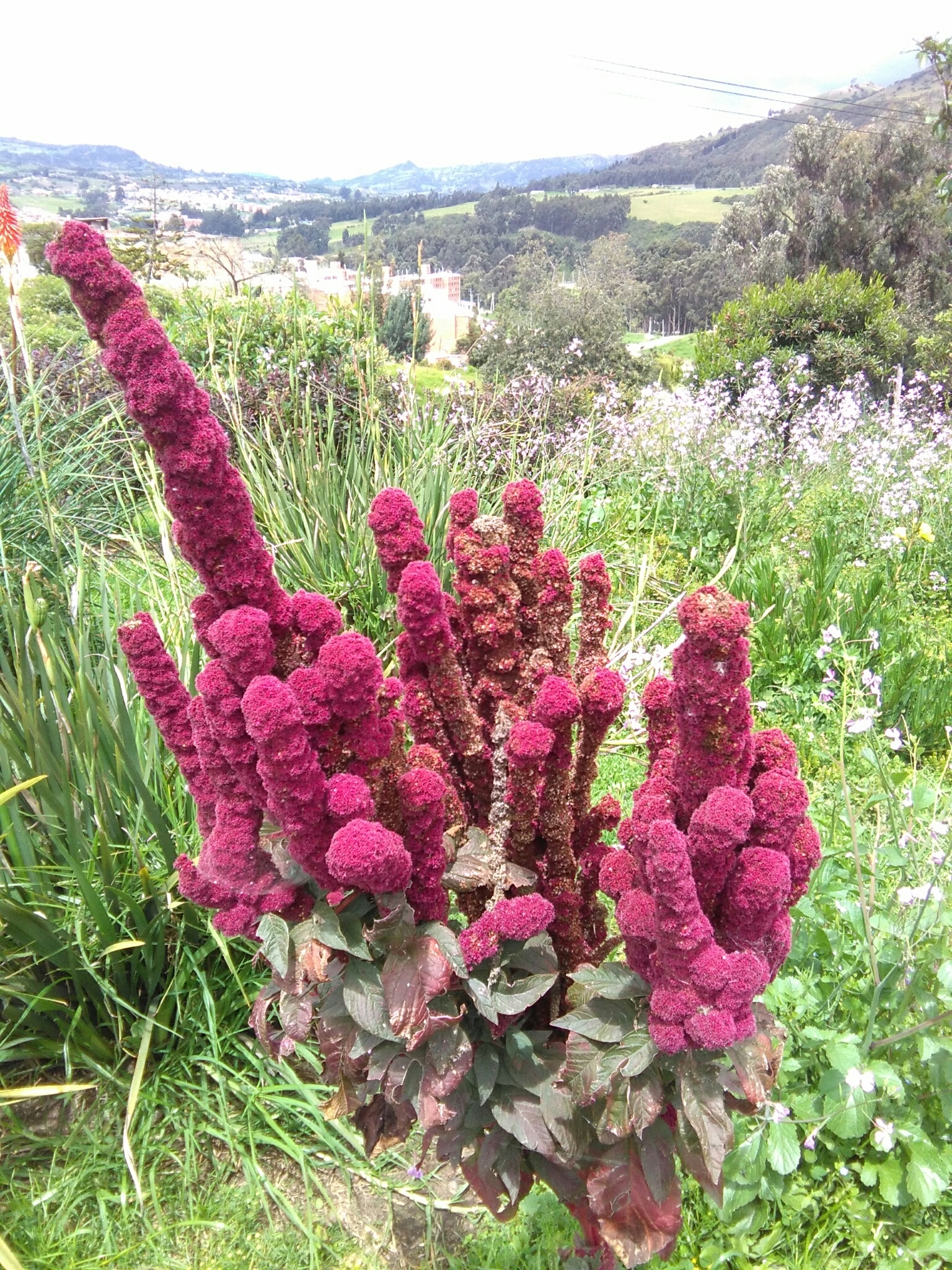
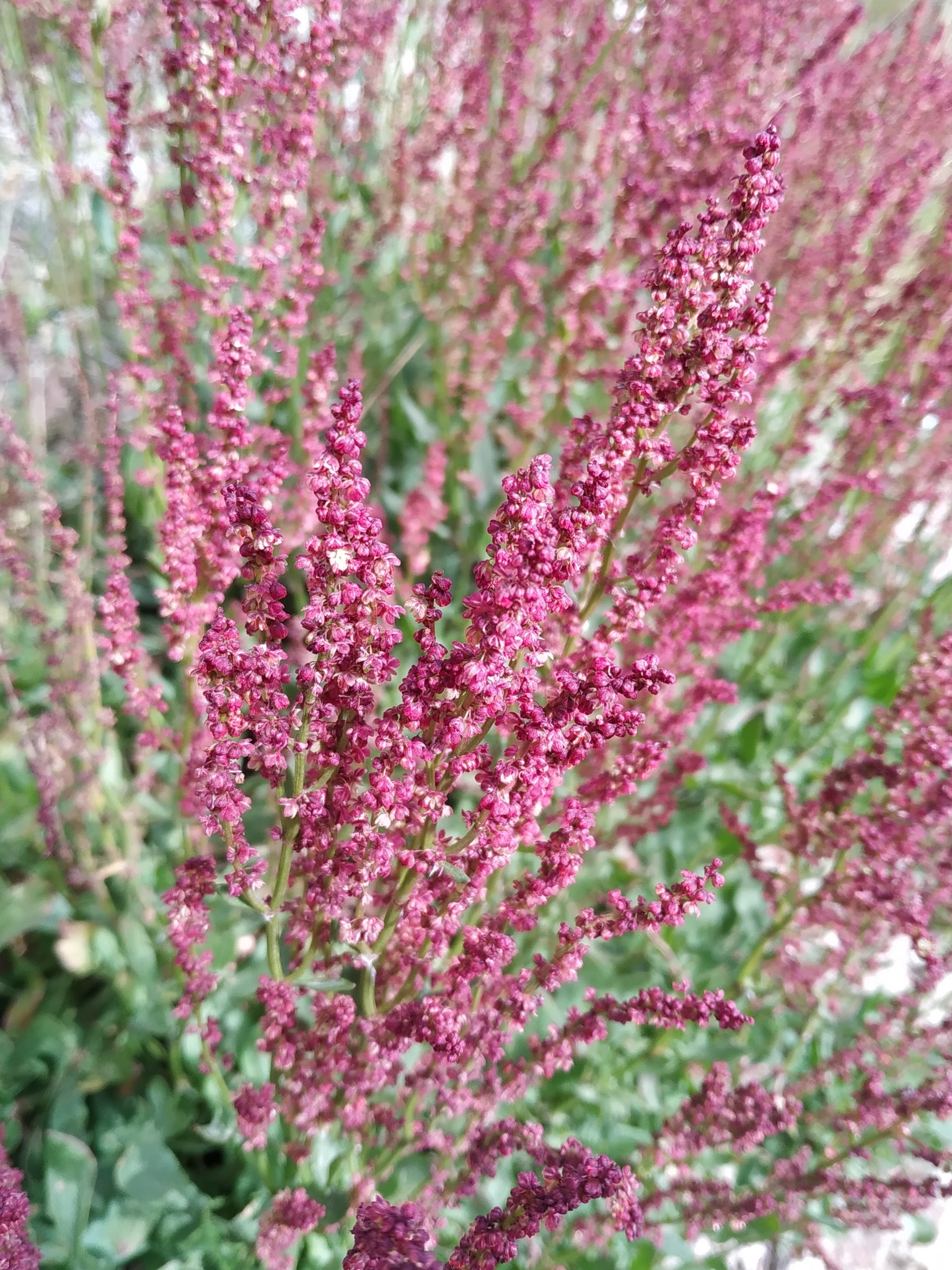
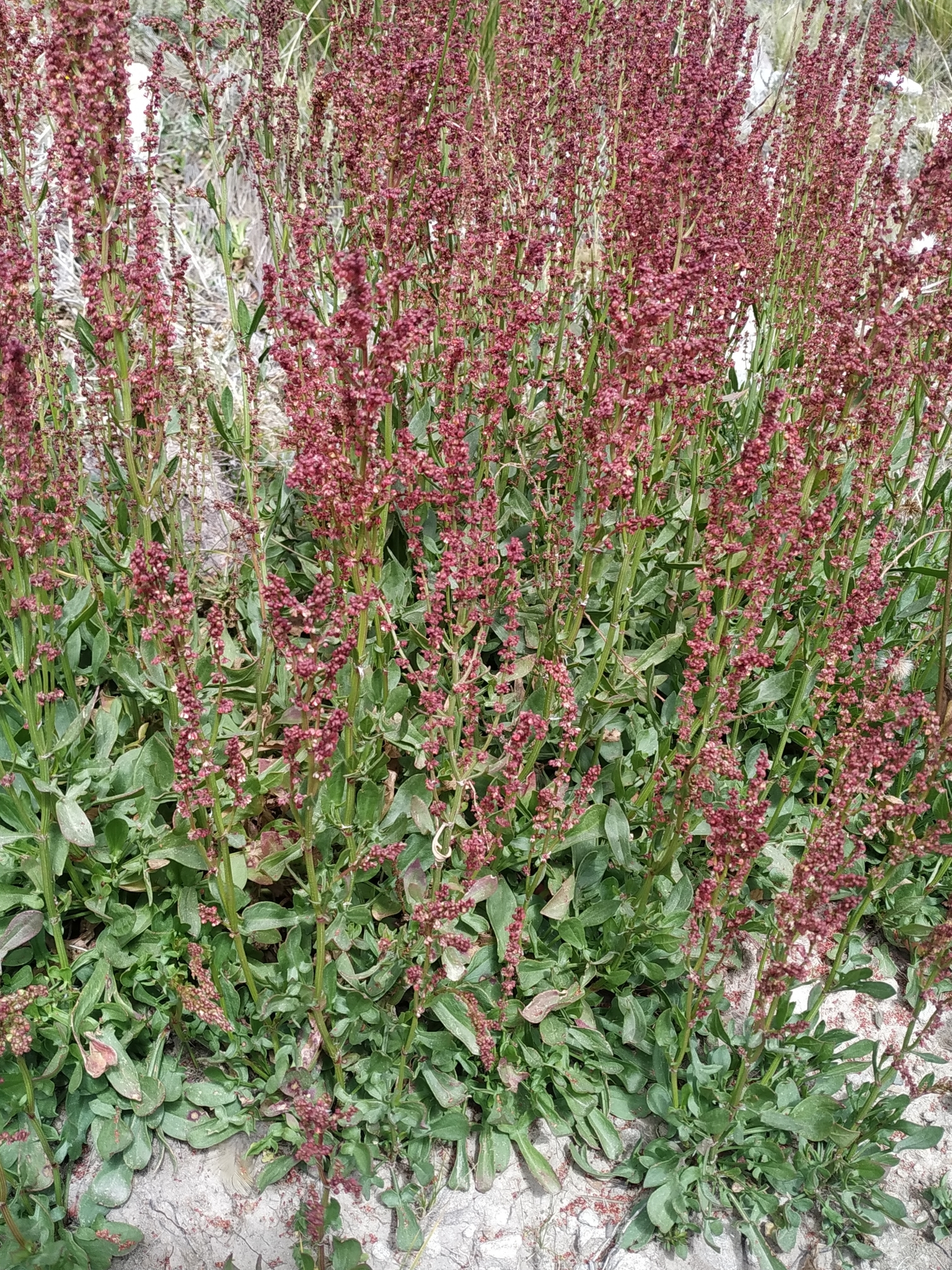
Also cited on iNaturalistobs. 113982778·obs. 62895411
However, in the case of quinoa, these are inflorescences, as opposed to the fleshy fruits of berry saltbushes.
Perianth and pericarp
The dichotomy between fleshy and non-fleshy fruits can be seen even within Australia, in the indigenous species of Chenopodium.
Several species, mainly herbaceous and occurring mainly in the semi-arid interior, have fruits similar to those of quinoa. Were it not the case that quinoa has already been domesticated (in the Andes of Peru), these might be suitable candidates for similar selective breeding as a food-crop.
The variation in the form of the fruits, within Chenopodium, revolves around the remarkable plasticity of both the perianth and the pericarp.
The perianth plays at least three roles in various species of Chenopodium indigenous to Australia, viz.
- reduced to the point of irrelevance, in most of the species with fleshy (red) fruits, dispersed by birds, all of which are shrubs,
- persistent as a hardly-noticeable papery covering around the tiny dry fruit, in the case of several species of annuals (e.g. Chenopodium murale), and
- persistent as a conspicuous cup-like base for the fleshy fruit, in which the red, glossy inner (= upper) surfaces of the tepals complement the bright hue of the fruit, which dries through orange to yellow (Chenopodium curvispicatum).
For its part, the pericarp takes at least four forms, viz.
- membranous and hardly noticeable, adherent to the seed,
- papery and hardly noticeable, loosely enveloping the seed,
- succulent and red, encircling the seed to form a flattened berry, and
- initially succulent and red, then drying through orange to yellow, but still spherically enveloping the seed, in C. curvispicatum.
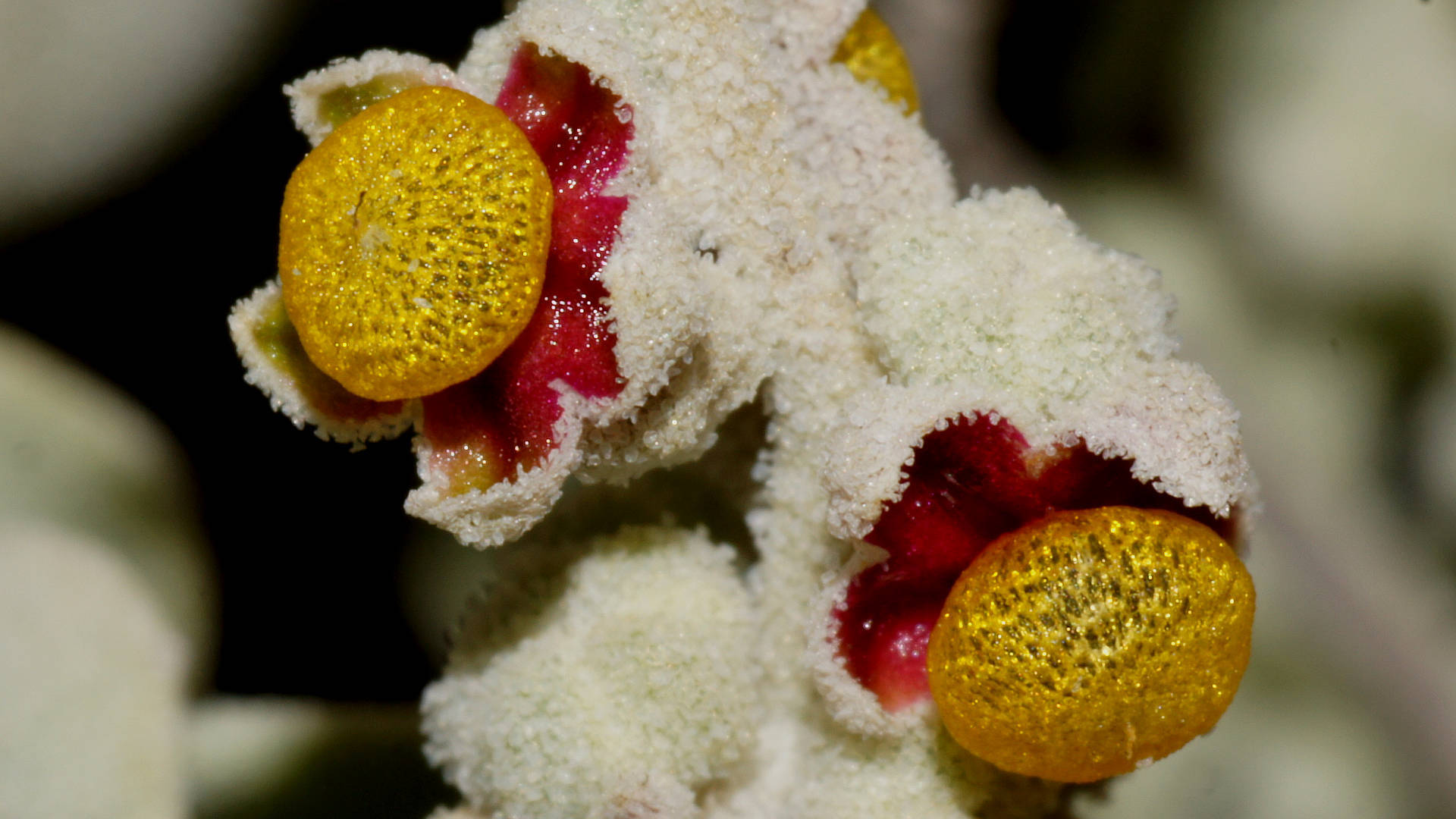
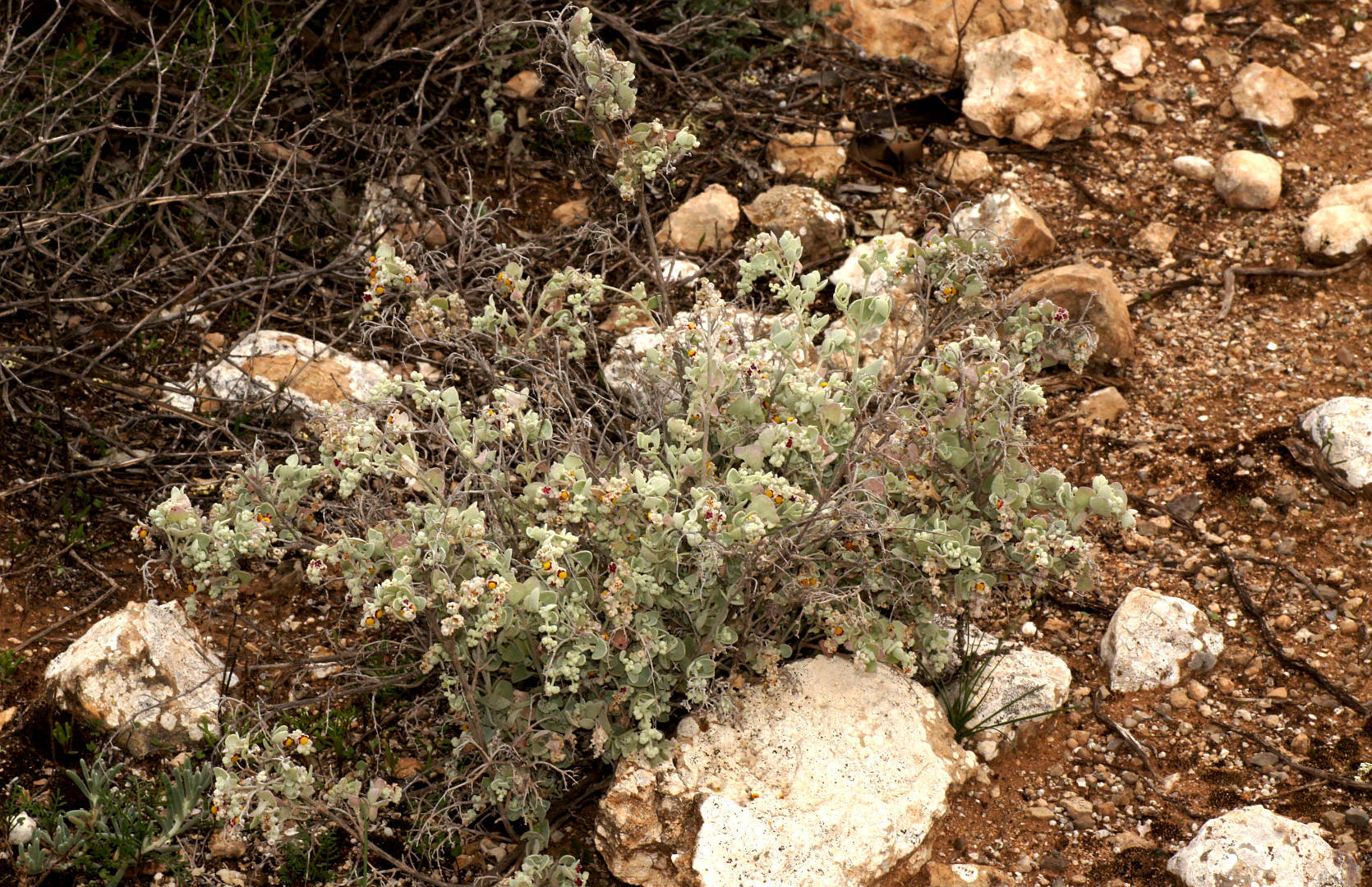
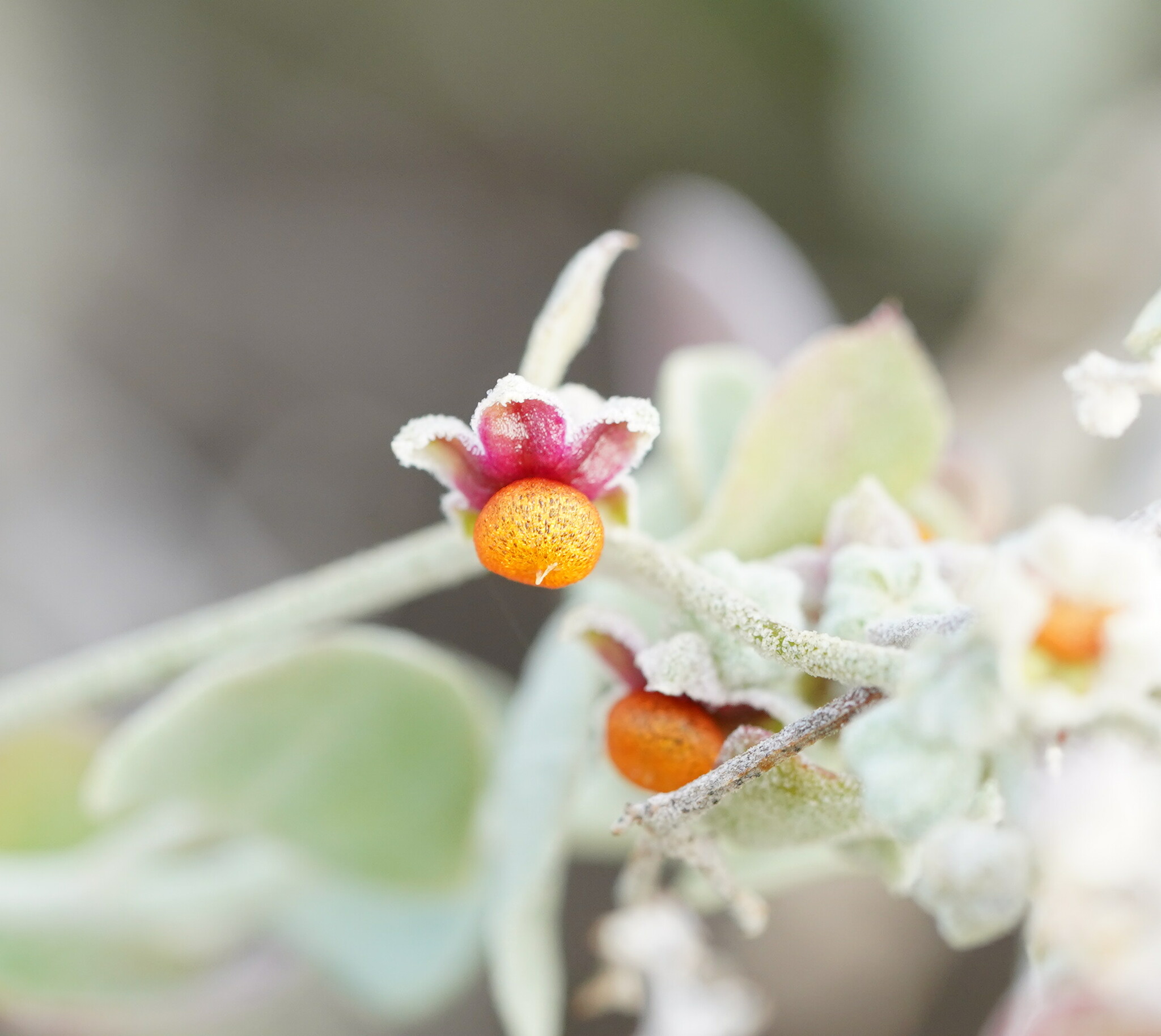
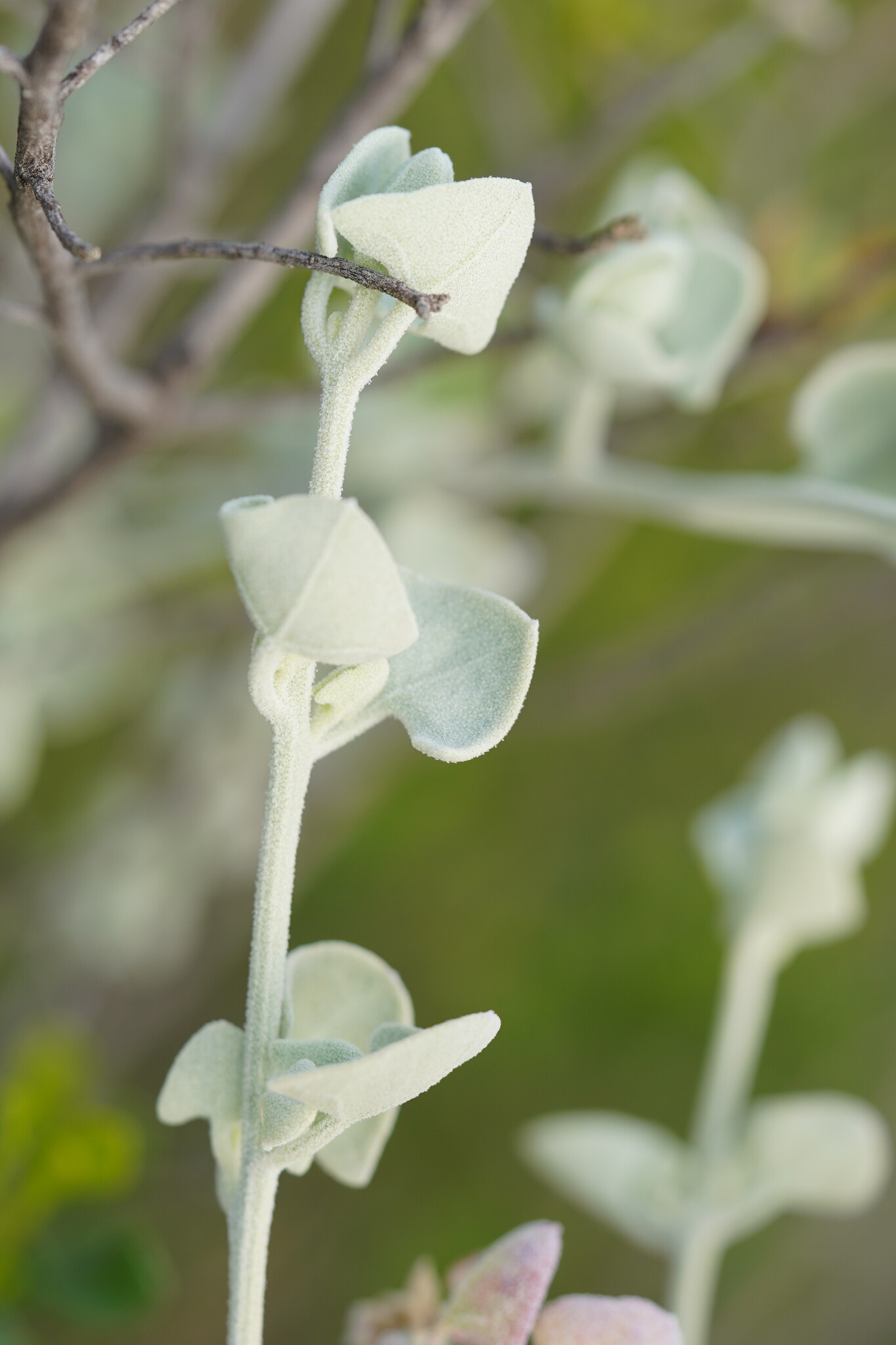
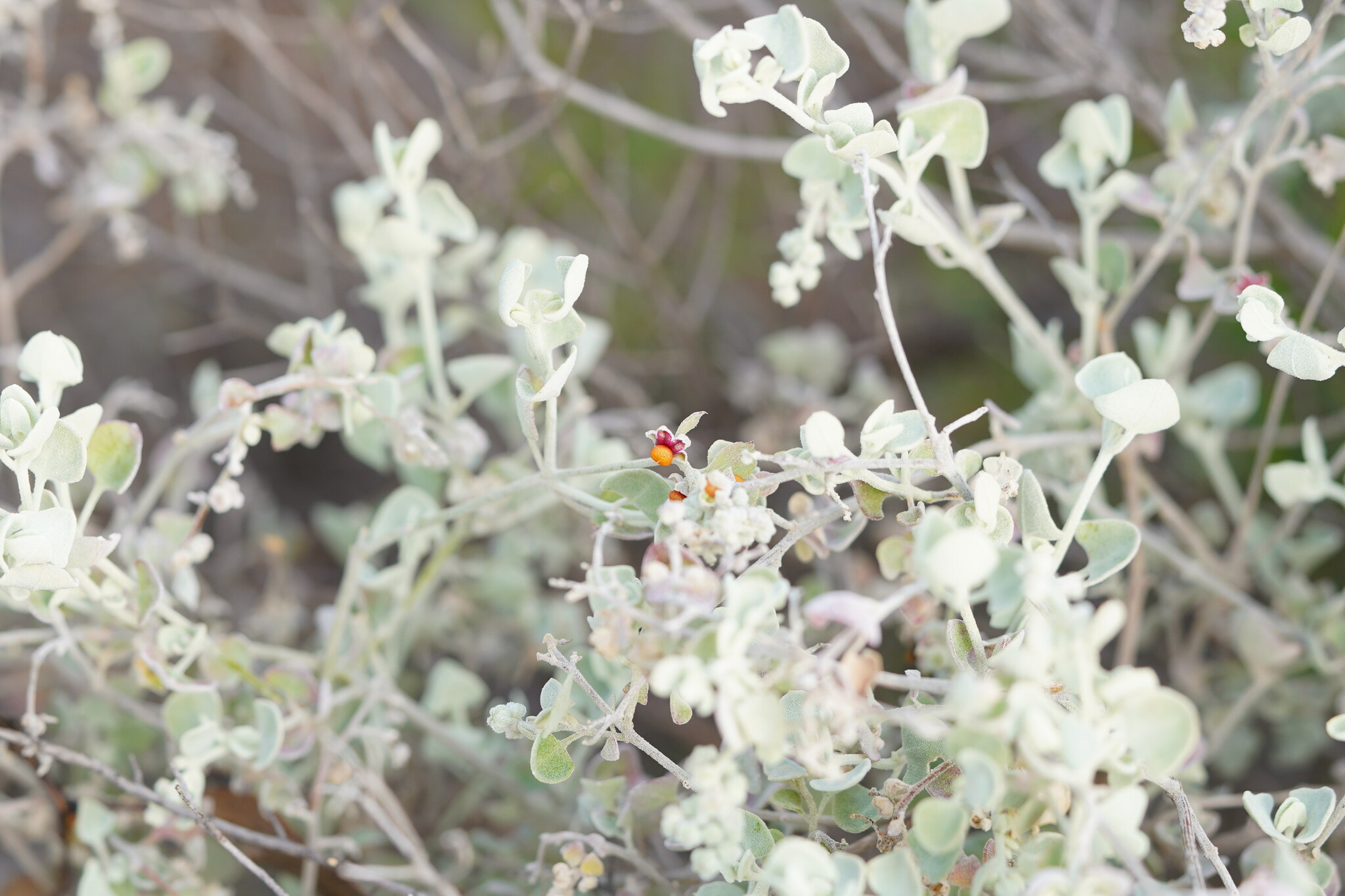
Chenopodium curvispicatum — also citedEllura Sanctuary·Taxon page·Flora of South Australia·Lucid key
The berry saltbushes
The following are the species of Chenopodium, indigenous to Australia, with red fleshy fruits in which the perianth is irrelevant, and the succulent pericarp encircles the seed, rather than spherically enclosing it. These are the various ‘berry saltbushes’.
Chenopodium baccatum
CitedTaxon page
Chenopodium candolleanum
CitedTaxon page·Rhagodia candolleana·Victorian Resources Online
Chenopodium spinescens
CitedTaxon page·Victorian Resources Online·Lucid key·Flora of South Australia
Chenopodium preissii
CitedTaxon page·Plants of the World Online
Chenopodium wilsonii
CitedTaxon page
Chenopodium parabolicum
CitedTaxon page·Wikipedia·PlantNET·Flora of South Australia·Jungle Dragon·Plants of the World Online
Chenopodium gaudichaudianum
CitedTaxon page·Syzygium·GBIF
On the taste of the ripe fruits
The ripe fruits of berry saltbushes are unpalatable to humans, in a way not covered by the adjectives available. ‘Bitter’ is an inept description.
The following is an excerpt from my field-notes, after eating a few ripe fruits of Chenopodium baccatum at Cottesloe beach, Perth, Western Australia.
“These ripe fruits have a ghastly aftertaste, which seems to get worse and worse for tens of minutes. There is a kind of ‘chemical burn’ sensation, which moves from the mouth into the throat or nose over the minutes. This sensation is somewhat along the lines of ‘spiciness’ because it has little if anything to do with the taste buds, and would not be pleasantly spicy even in dilution. Birds, the likely dispersers of this species, presumably do not feel this sensation — much as in the case of chili.”
Further species noted in the thread
Without fleshy fruitsChenopodium nitrariaceum
Also notedChenopodium trigonon·Rhagodia ulicina·Chenopodium desertorum·Rhagodia (PlantNET)·FloraBase
NomenclatureNomenclatural changes in Chenopodium·Revision of Chenopodieae
An exchange on Chenopodium curvispicatum and C. gaudichaudianum
In C. curvispicatum, the ripe fruit is displayed while nestling in the persistent perianth, the inner surfaces of the tepals being variably red and glossy, thus enhancing the display. The ripe fruit is often yellowish, producing a conspicuous contrast in hues with the red of the cup of tepals.
ellurasanctuary checked his records and found the online illustrations correctly segregated, judging mainly by leaf shape — longer in C. gaudichaudianum, rounder in C. curvispicatum.
My reading was that in curvispicatum the perianth is initially red and glossy while the fruit is red; then the fruit turns from red through orange to yellow, and the perianth stays red throughout; then the fruit is removed or falls off (possibly dispersed secondarily by ants?) and the perianth is still red; finally, the bare perianth, still attached, fades to pale brownish. Compare this with gaudichaudianum and all other bird-dispersed species, in which the perianth is either not in evidence, or present but lacking any conspicuous hue at any stage.
ellurasanctuary went through roughly 150 photographs across 36 observations, and found no plant bearing both red and yellow fruits, which argues against the yellow being simply a later stage. He did find tepals of variable colour, green and red within one perianth, which suggests that tepal colour is not related to age. He agreed that brown tepals are old and discoloured.
I suggest that one way to look at the situation is as follows. Chenopodium gaudichaudianum, in having tepals that persist to the fruiting stage, is intermediate between the ‘normal’ berry saltbushes (in which the tepals are insignificant in this context) and C. curvispicatum (in which the tepals have become functionally part of the ‘fruit’).
The difference between C. gaudichaudianum and C. curvispicatum is that in the latter (usually but not always) the tepals are red enough to enhance the display of the fruits, which is particularly effective where the fruits are yellow enough to contrast in hue with the red tepals.
The important point for this post, overall, is that here we have a single genus with a bewildering variety of fruit-forms, despite a presumable consistency of flower-forms. This seems to indicate a basic pattern in the biology of plants, which has caused taxonomic confusion in the past, when many genera (e.g. Muraltia) were falsely split (e.g. Nylandtia) in undue recognition of variation in fruit-form.
Species indigenous to southern Africa
Indigenous to southern Africa are Chenopodium hederiforme, Chenopodium mucronatum and Chenopodium phillipsianum. All are annuals.
CitedChenopodium hederiforme·Chenopodium mucronatum·Chenopodium phillipsianum·SANBI Red List
Ecological notes from Western Australia
In woodland of Eucalyptus gomphocephala, Chenopodium baccatum predictably occurs, as a shade-tolerant, lax shrub. This refers to Quindalup sand (calcareous) blown over Spearwood sand.
Threlkeldia diffusa occurs on the windward side of the primary littoral dune, close to the beach. It prefers full sunlight, not the understorey. The vegetation in which T. diffusa occurs is low and windswept, and seldom carries wildfire, unlike woodland of E. gomphocephala, which is subject to wildfire.
An ecologically related amaranth is Enchylaena tomentosa. However, this hardly occurs naturally in woodland of E. gomphocephala; it is a plant of the interior of southwestern Western Australia, rather than the Swan Coastal Plain.
CitedEucalyptus gomphocephala·Chenopodium baccatum·Threlkeldia diffusa·Enchylaena tomentosa
Rhagodia preissii, which is partly sympatric with Chenopodium baccatum, has not been reallocated at generic level. This implies that the fruits of the two species are convergent.
CitedFloraBase
Amaranthaceae: Atriplex
This genus nicely exemplifies the ‘plasticfruits’ phenomenon.
Most species of Atriplex have non-fleshy fruits, with dispersal usually by wind and water. However, a few species, on two continents, have succulent, bright-hued fruits, and are endozoochorous.
AustraliaAtriplex semibaccata
South AmericaAtriplex philippii·Atriplex rusbyi