
Plasticfruits seriesPart 1·Part 2·Part 3·Part 4·Part 5·Part 6·Part 7·Part 8
A genus of more than 600 species
The herbaceous genus Dioscorea contains more than 600 species.
It occurs on all vegetated continents, and many islands.
The genusSpringer·IITA·Distribution map
There is significant variation in the vegetative features. For example:
- the leaves vary from simple to compound,
- three clades within the genus, namely subgenus Dioscorea, section Stenophora, and section Pseudostenophora, have rhizomes, in contrast to the usual stem-tubers,
- some species are succulent caudiciforms, with pachycaul above-ground tubers,
- the stem-tubers are annual in section Brachyandra of Madagascar, vs perennial in other sections (e.g. Perennia of South Africa),
- axillary, above-ground (aerial) tubers occur in some species,
- some species are non-spinescent, whereas others are spinescent, and
- there are at least three types of spines, viz. caular, stipular, and petiolar.
CitedLeaf form (JSTOR)·Rhizomes (JSTOR)·Infrageneric classification·Caudiciforms·Aerial tubers·Spines (Smithsonian)·Dioscorea dregeana
However, the variation in the fruits of Dioscorea is extreme.
Many species are ‘doubly-adapted’ for dispersal by wind, by virtue of wings on both the fruits and the seeds; by contrast, a few are so clearly adapted for dispersal in the gastrointestinal tracts of birds that they were formerly assumed to constitute a separate genus (Tamus).
Capsules
A clade of species in Brazil, in which the plants are short, has round, wingless capsules.
CitedPhytotaxa·Hoehnea·Kew Bulletin
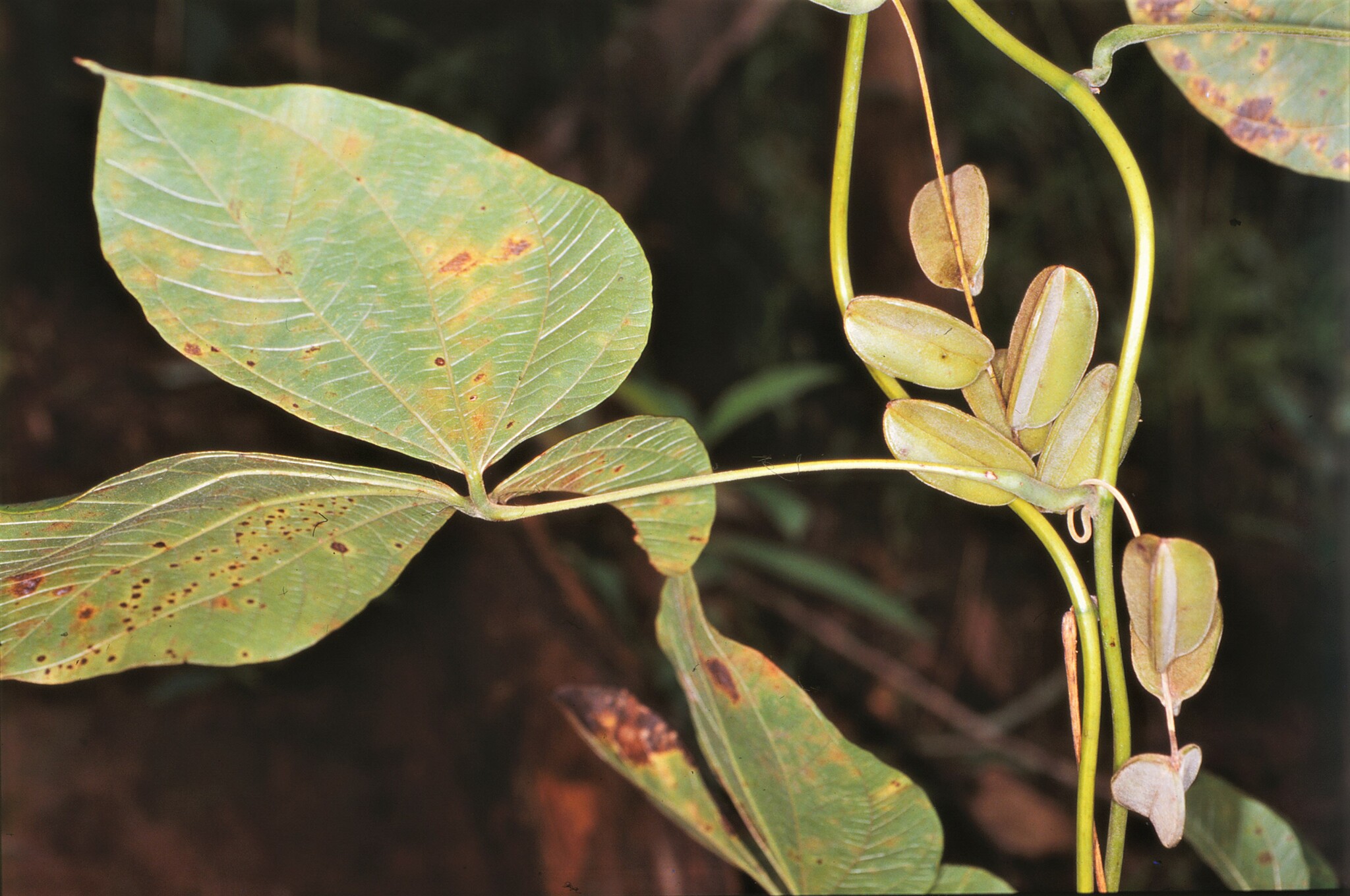
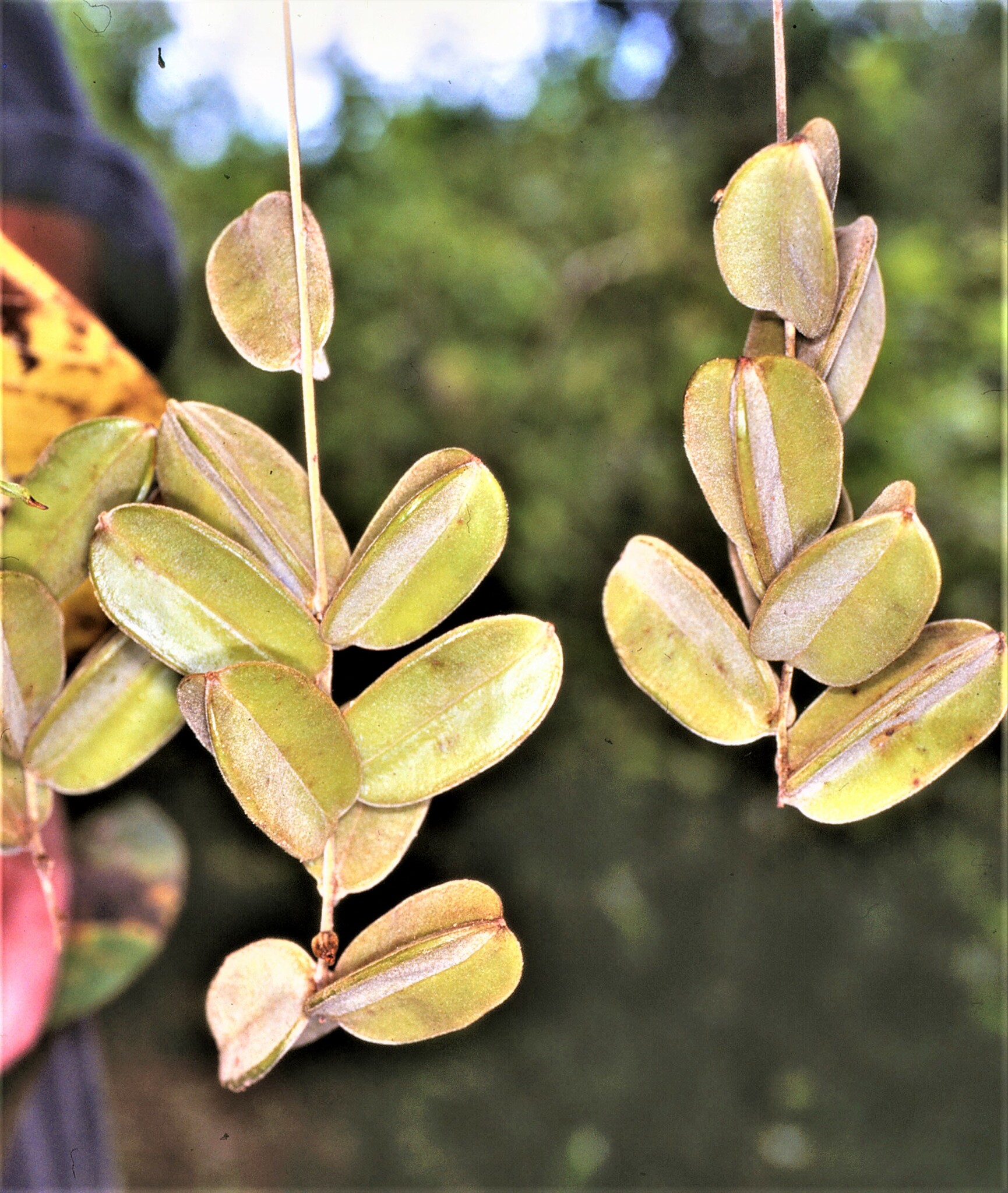
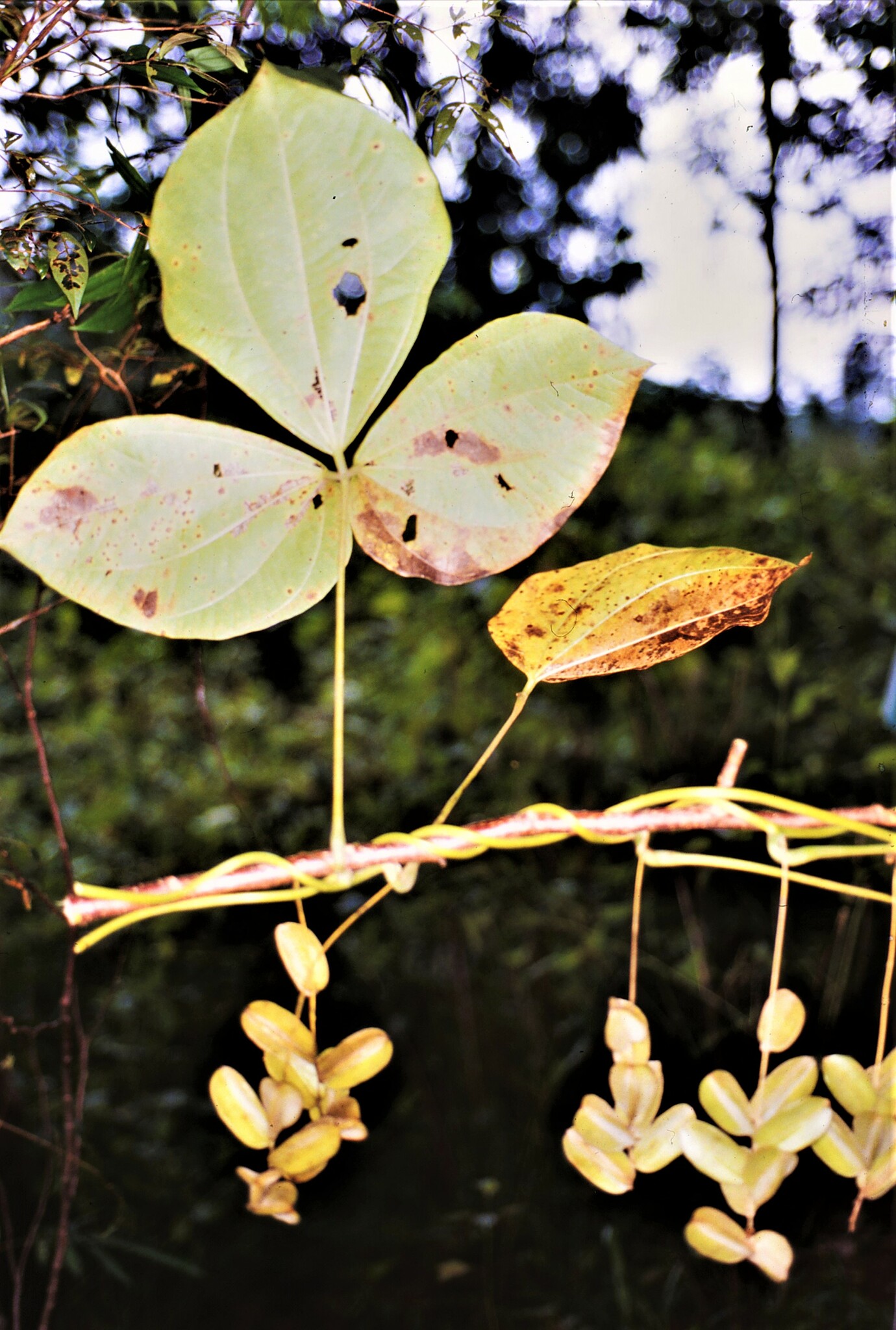
Most of the sections and species of Dioscorea bear winged, dehiscent capsules, containing seeds that
- lack wings (e.g. section Borderea of the Pyrenees, and section Afroborderea of West Africa), or
- in at least 15 sections, have wings, which — depending on the species — occur at the base or apex of the seed, at both base and apex, or surrounding the whole seed.
CitedSeed identification·Wing position (JSTOR)
The following show the winged, dehiscent capsules in various species in Australia, Asia, and North America.
Also citedDioscorea transversa (PlantNET)·Dioscorea transversa (Flickr)·Butterfly House·Dioscorea villosa·Name That Plant
Samaras
One section (Rajania, restricted to the Caribbean islands) has samaras instead of capsules.
CitedbioRxiv·Samara·Dioscorea cordata·Herbarium specimen
Berries
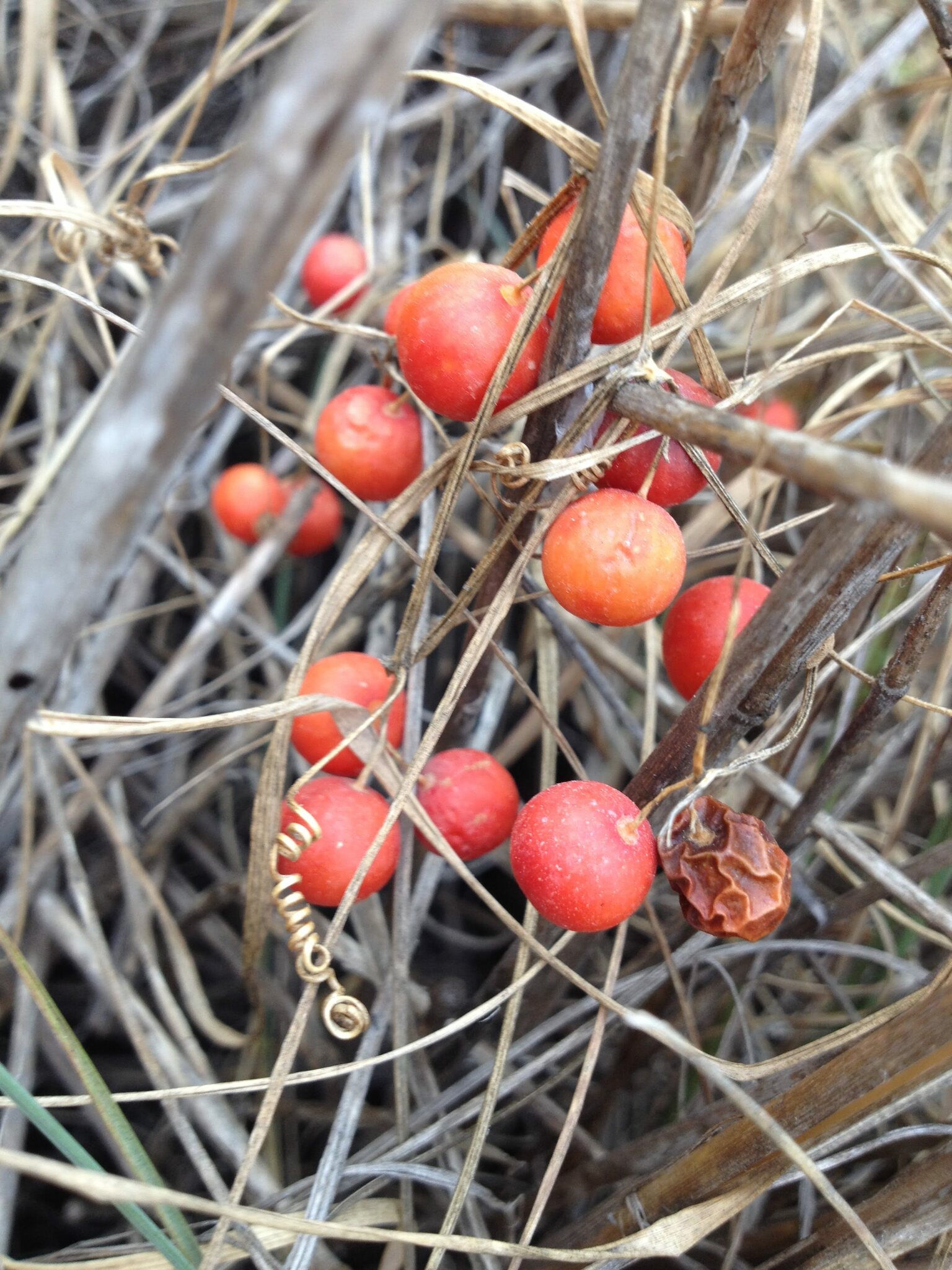
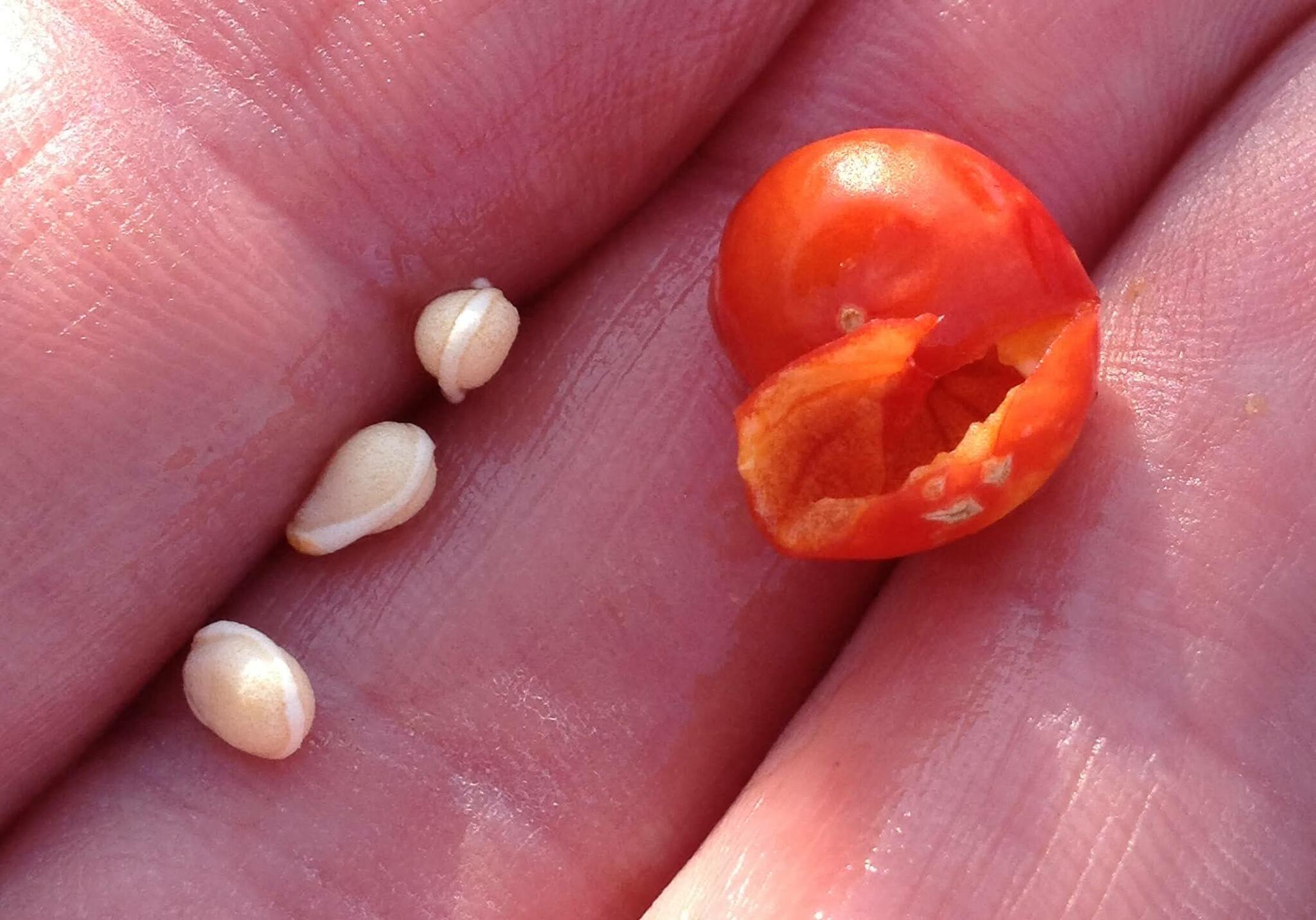
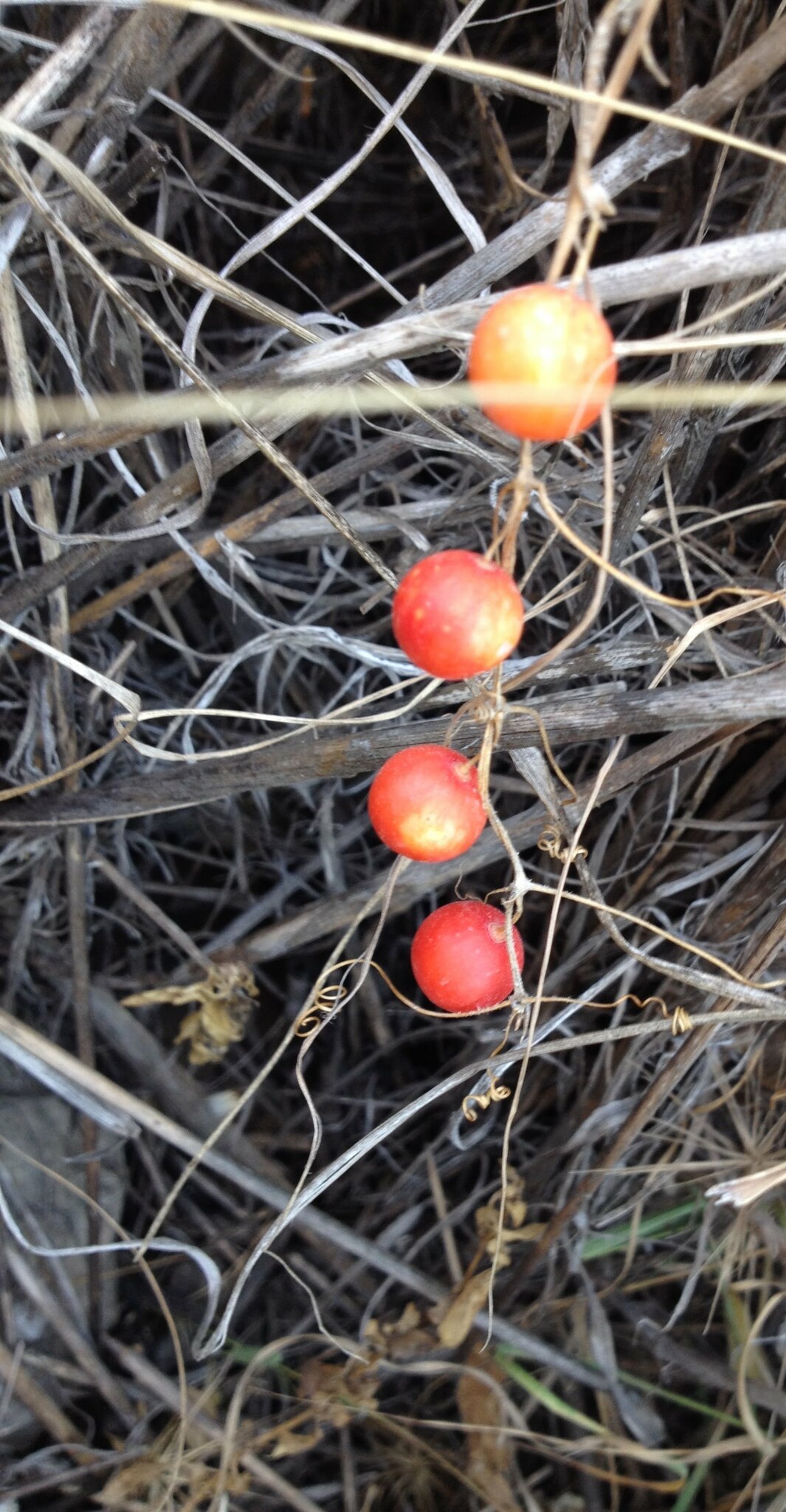
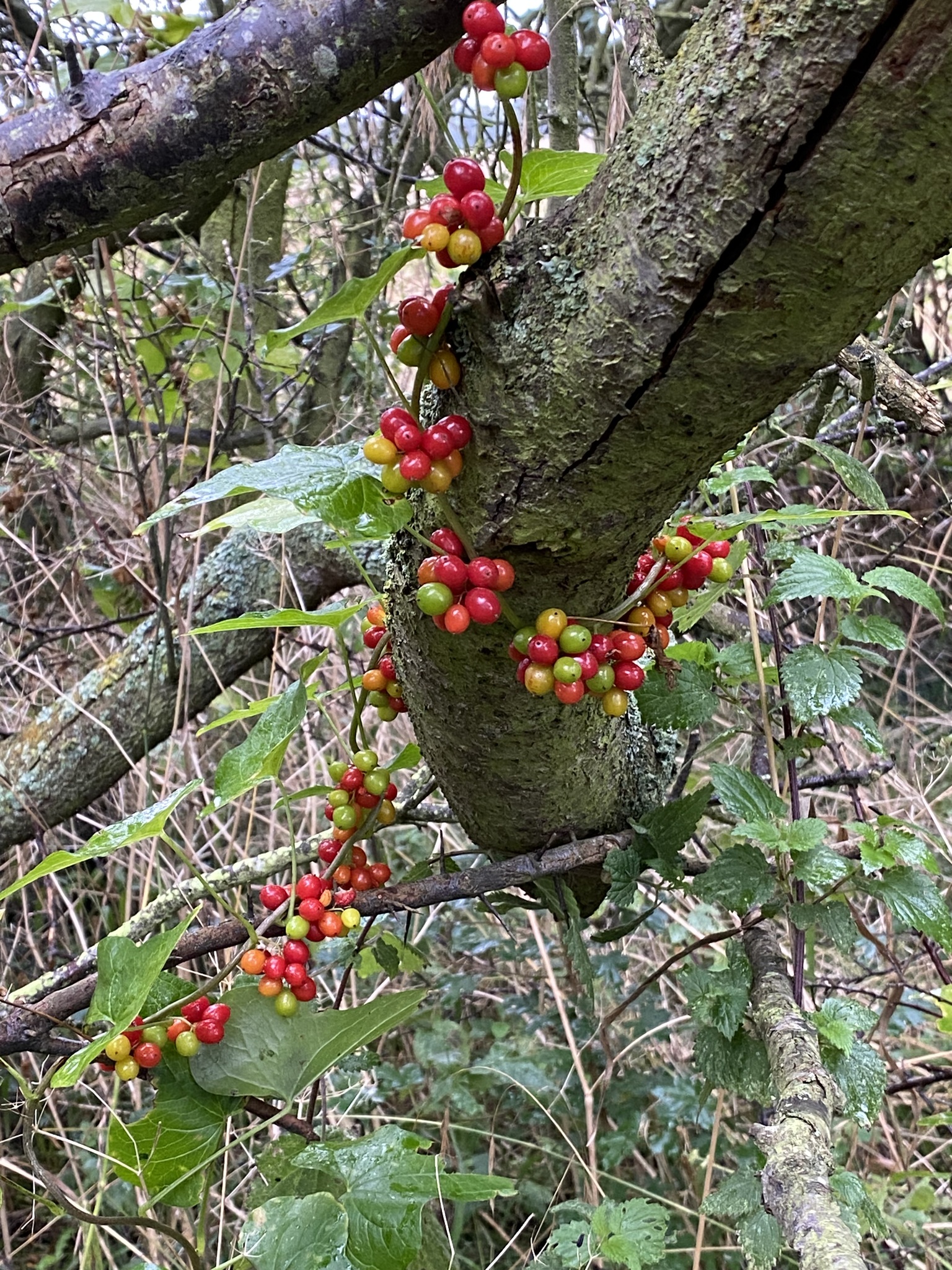
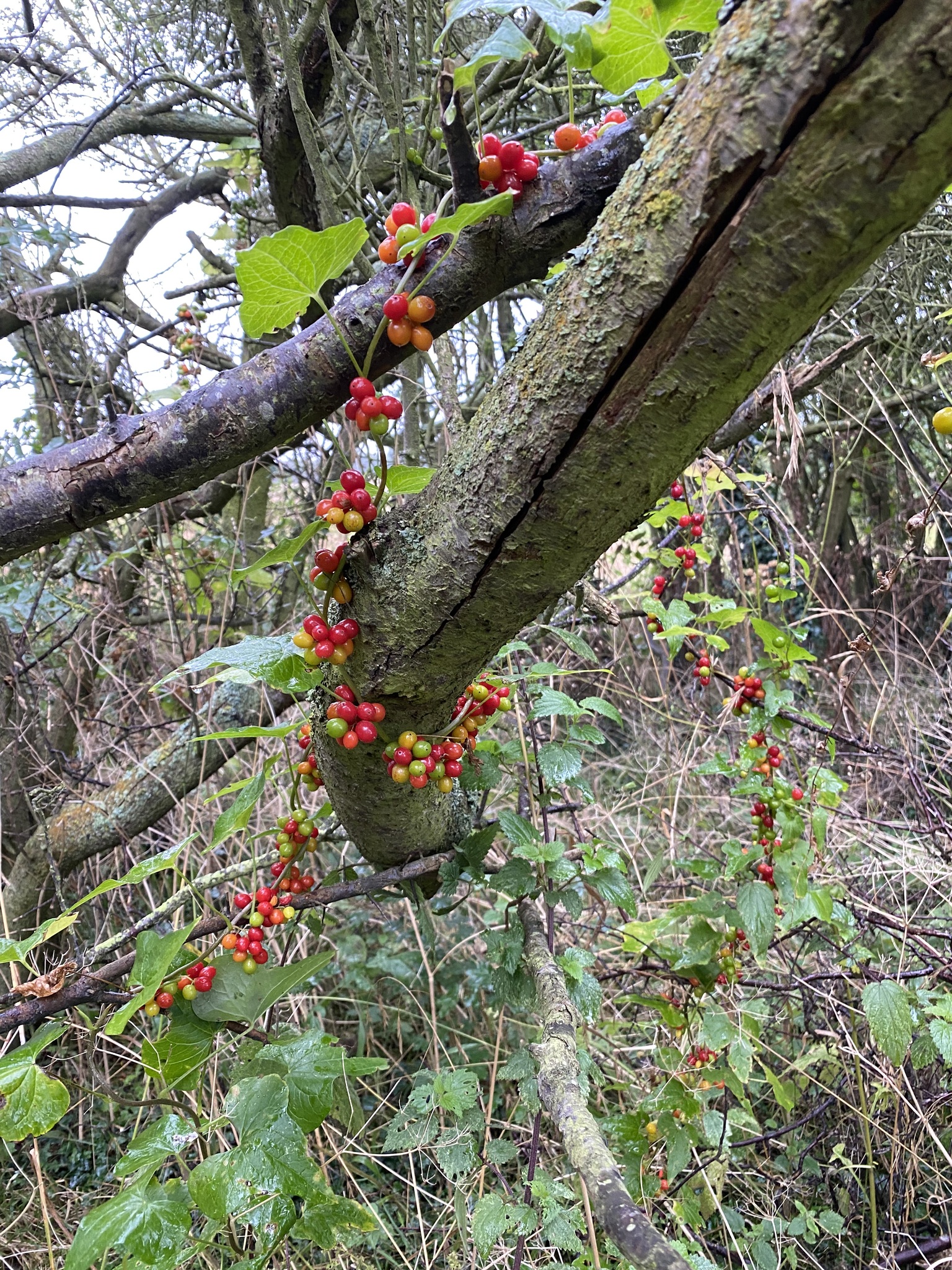
Most relevant for this post, one ‘infragenus’, namely Tamus, has succulent, bright-hued fruits, and several other clades within Dioscorea also have fleshy fruits, or fruits intermediate between dehiscent capsules and fleshy fruits (e.g. Dioscorea ovinala and Dioscorea anataly of Madagascar).
CitedSystematic Botany·Plastid gene phylogeny
The best-known examples are Dioscorea communis and Dioscorea orientalis, which occur in the Canary Islands and Madeira, Europe, the Maghreb, the Caucasus, and the Levant.
CitedDioscorea communis·Dioscorea orientalis·Macaronesia
It is remarkable enough that a single genus stretches from samaras (with specialised dispersal of the diaspore by wind) to fleshy fruits (with specialised dispersal and sowing by birds).
However, what is particularly remarkable is that the variation in fruit-form cuts across the clades within the genus. This suggests that variation in fruit-form has arisen independently, in the evolutionary process, repeatedly within Dioscorea.
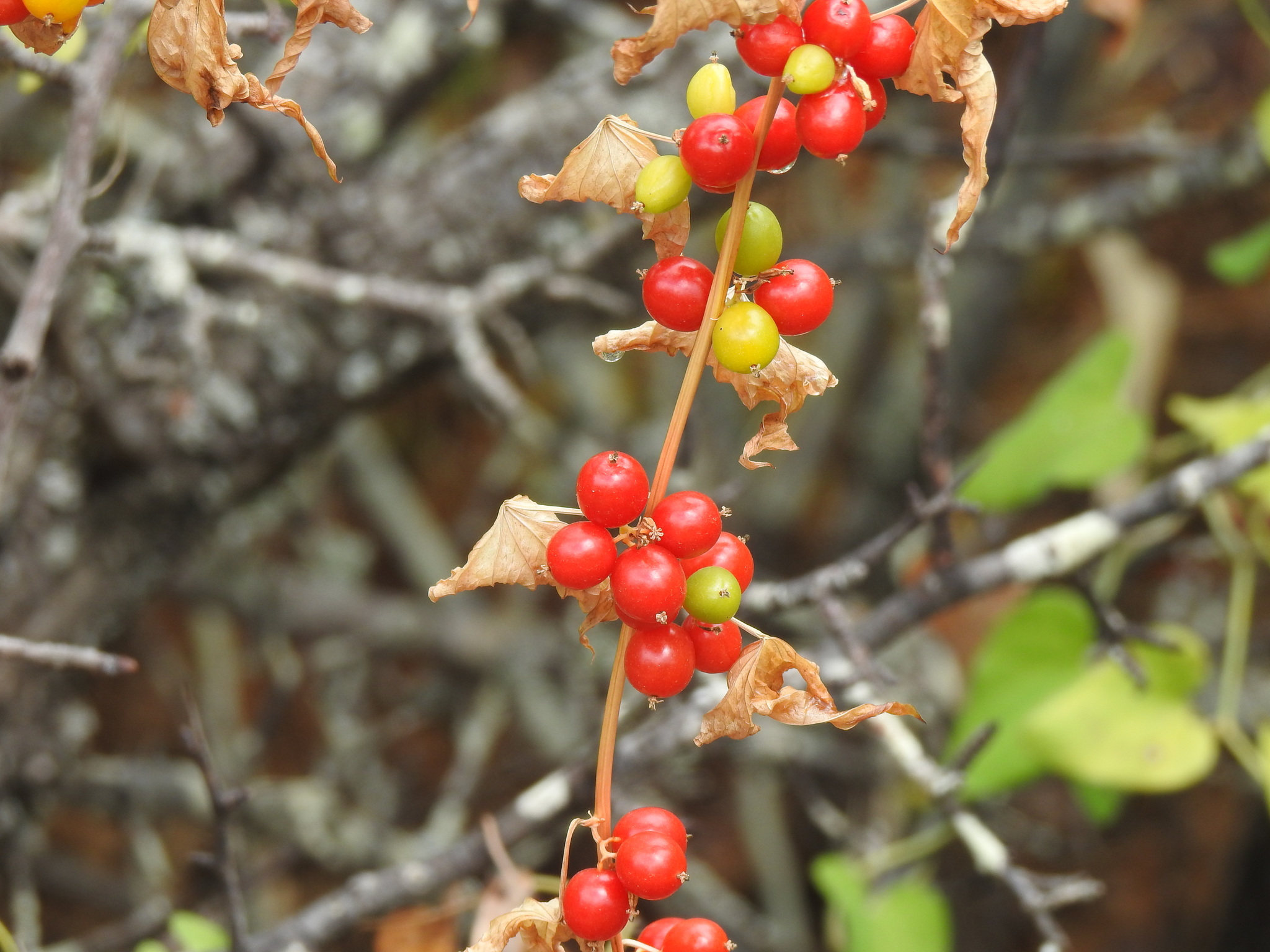
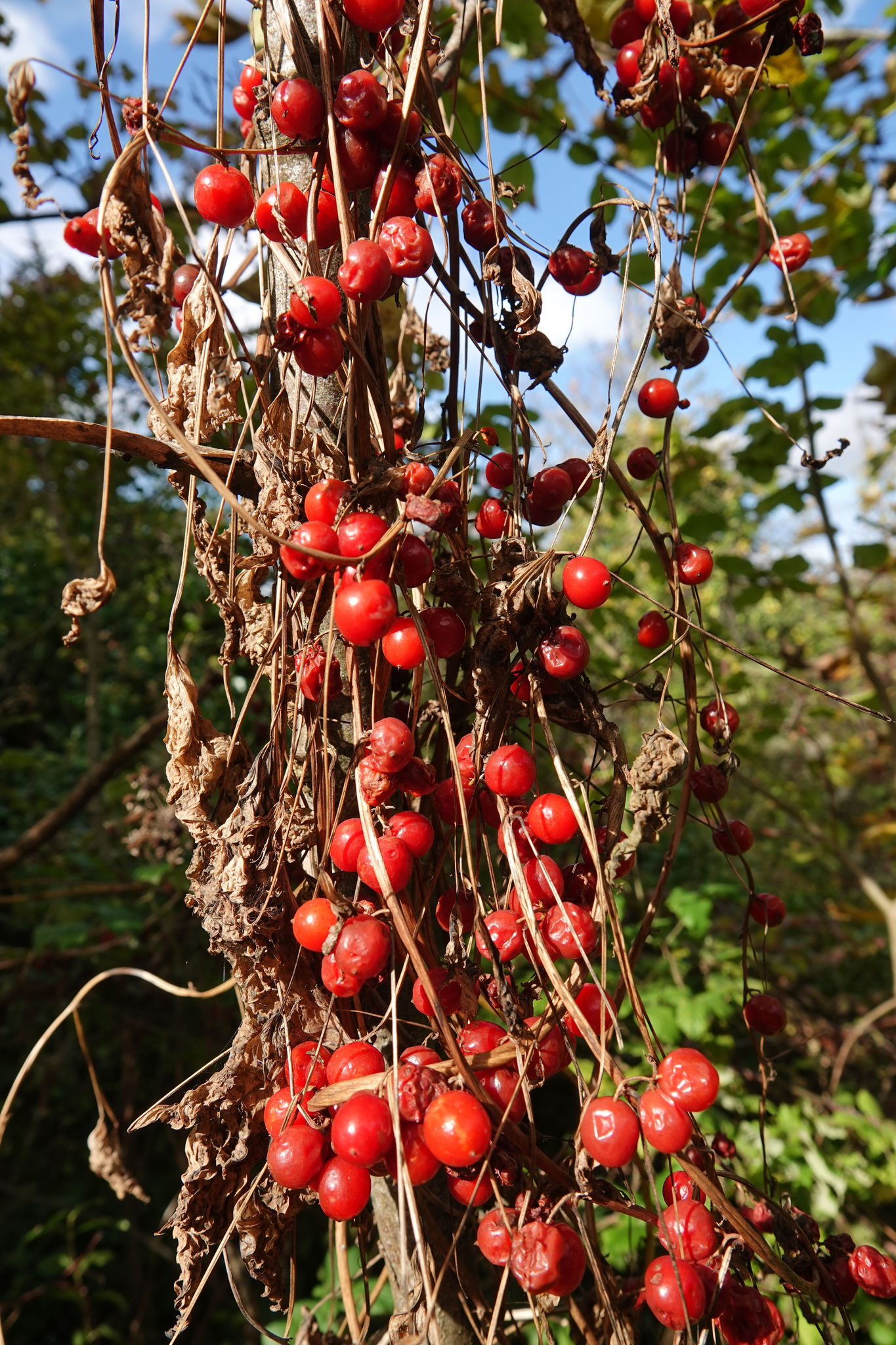
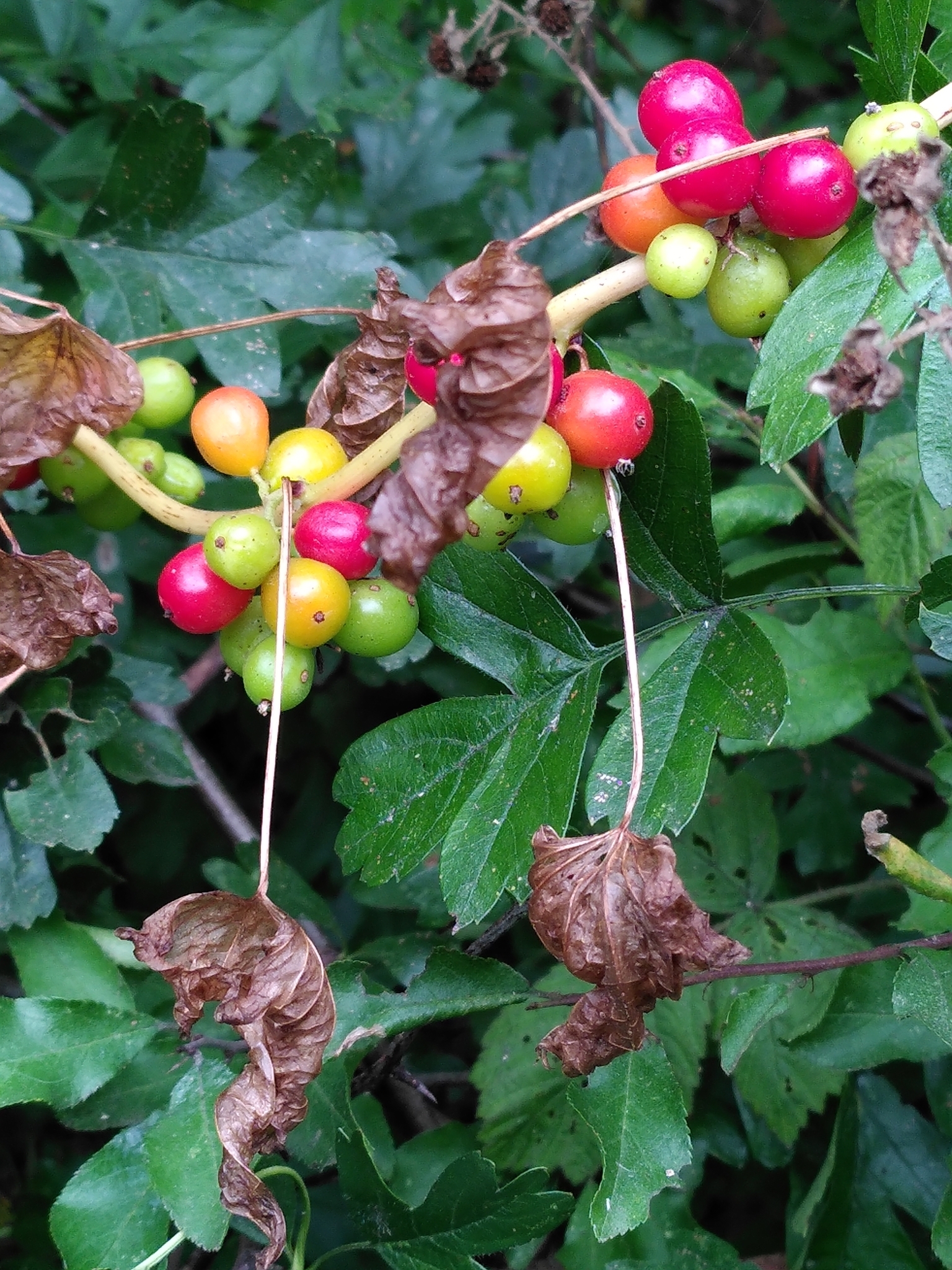
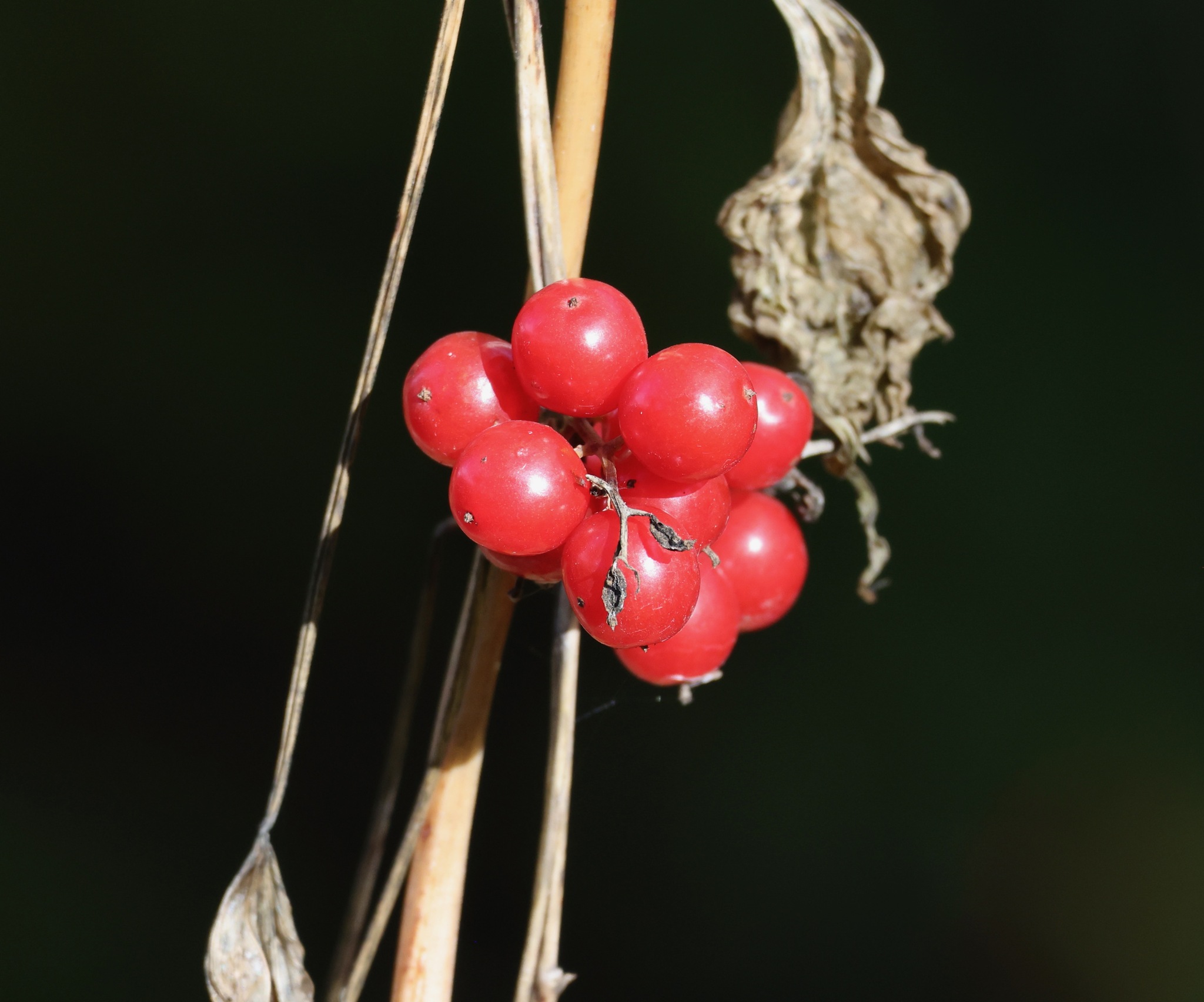
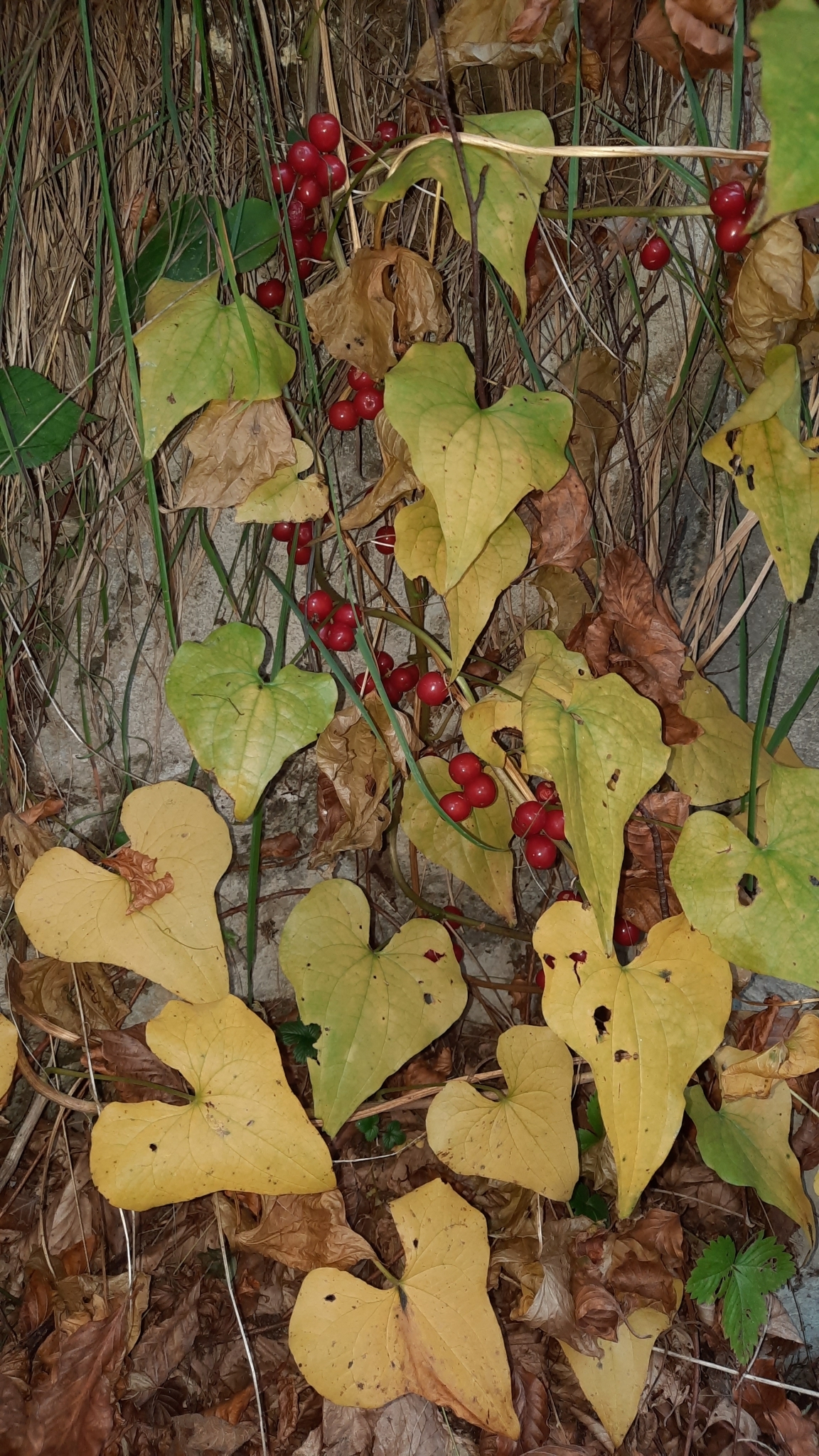
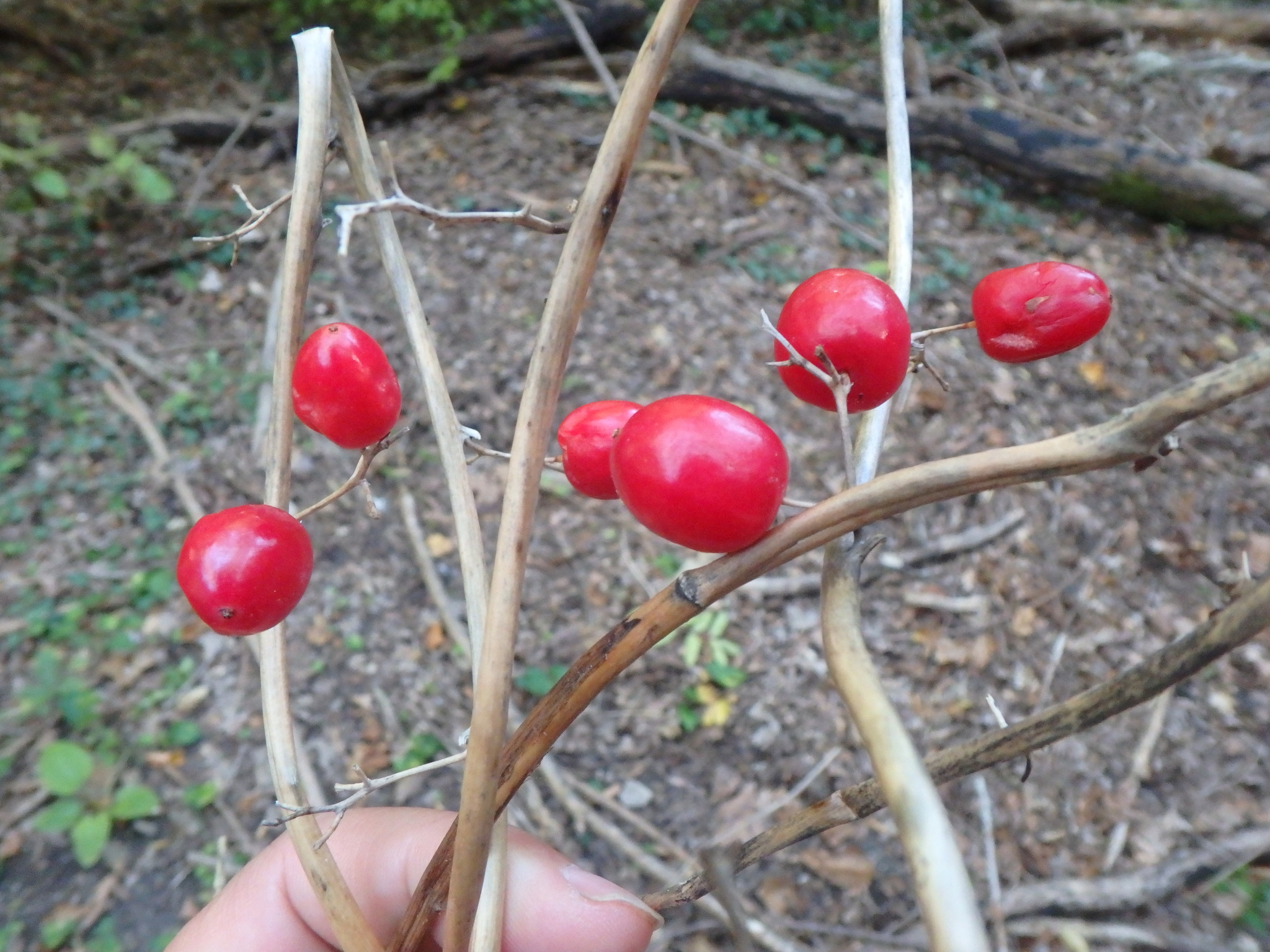
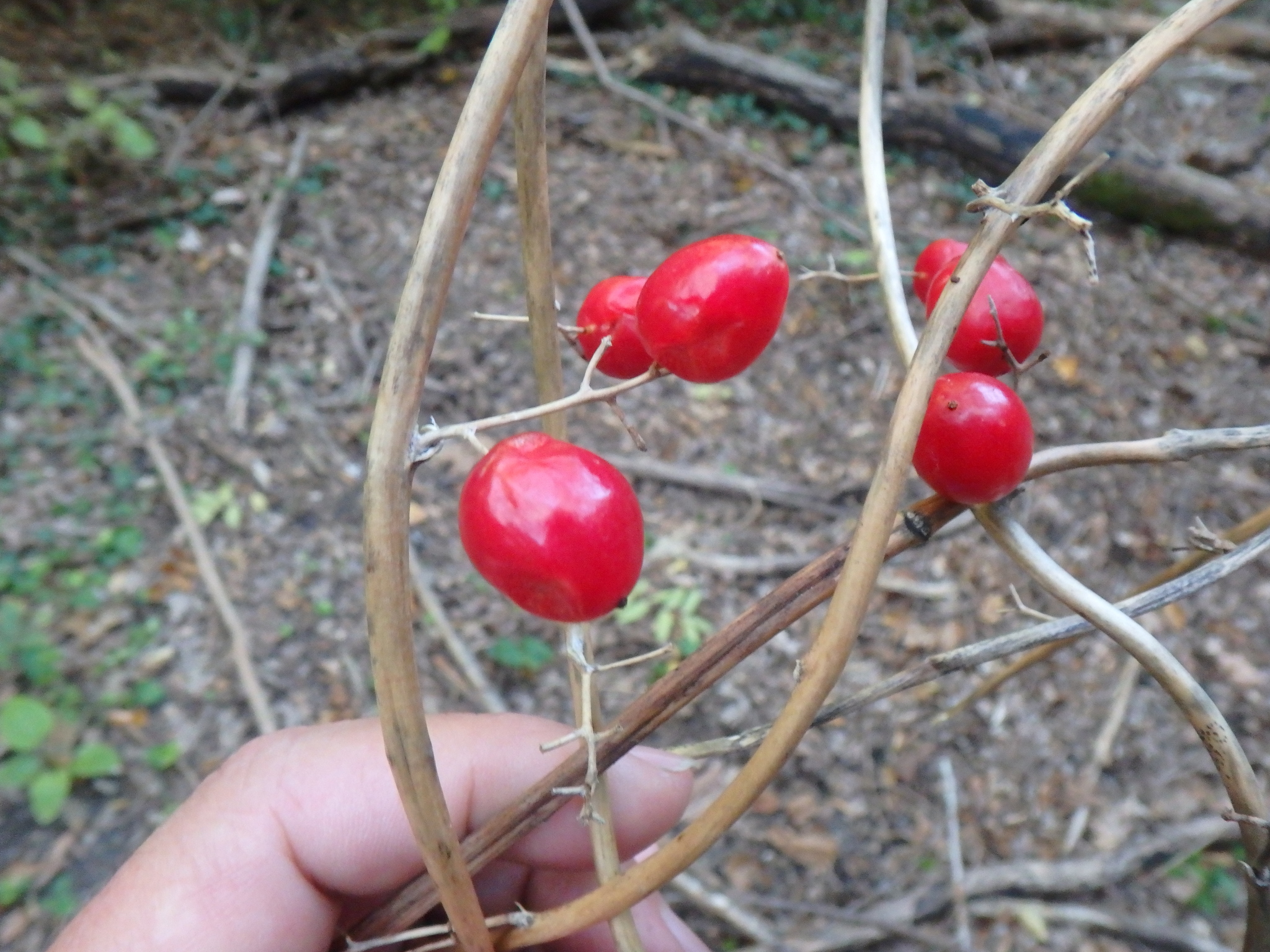
Dioscorea communis and D. orientalis, bearing red berries attractive to seed-dispersing birds, are most closely related to section Borderea, in which the fruits are capsules, containing seeds that lack wings.
CitedAnnals of Botany·Infrageneric classification
Conclusions
In summary, fleshy fruits within Dioscorea are clearly-defined morphologically and adaptively, but poorly-defined phylogenetically. This further exemplifies the evolutionary plasticity of fruits within genera worldwide — which is the focus of this series.
Illustrations of fleshy fruits
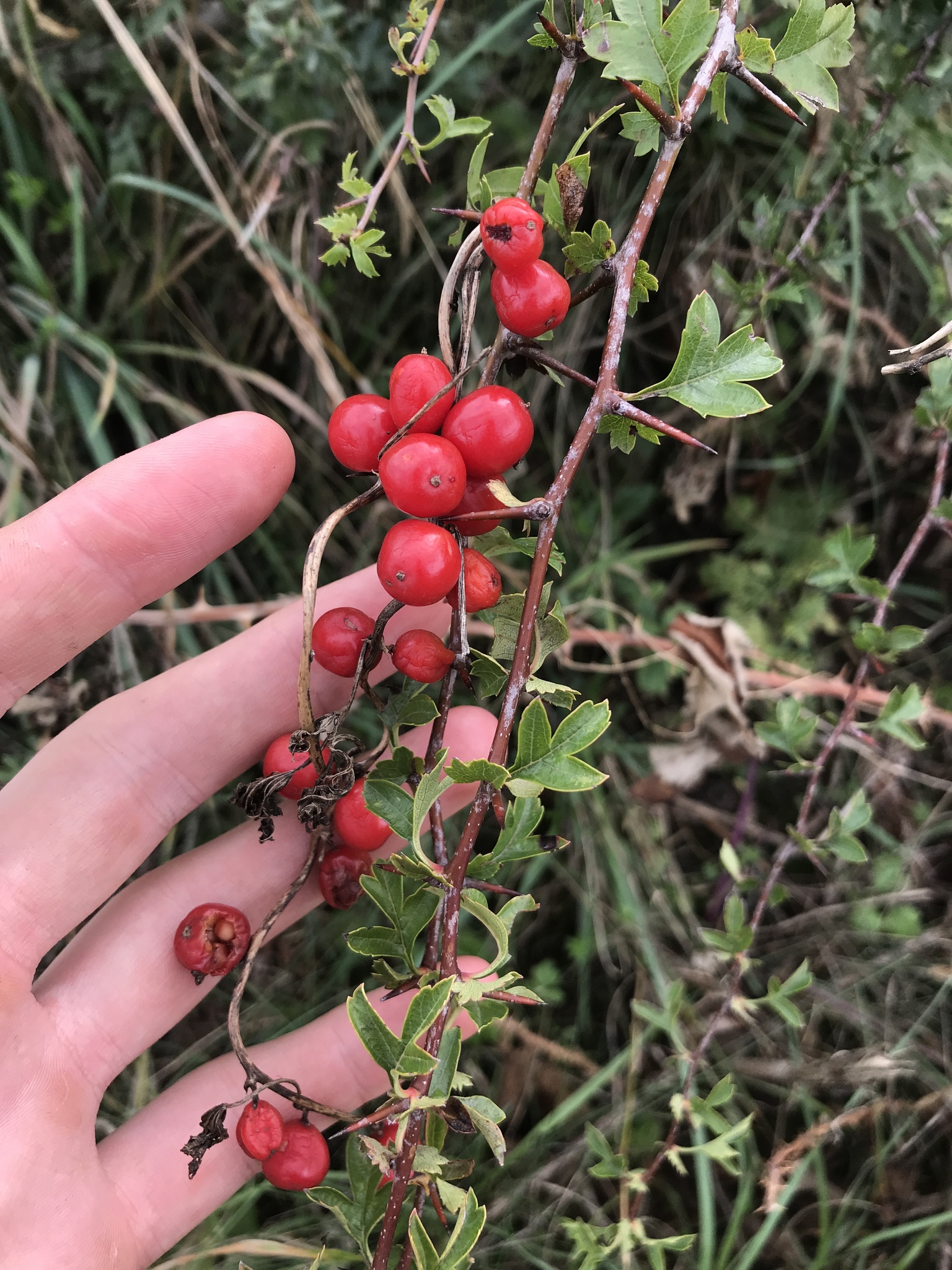
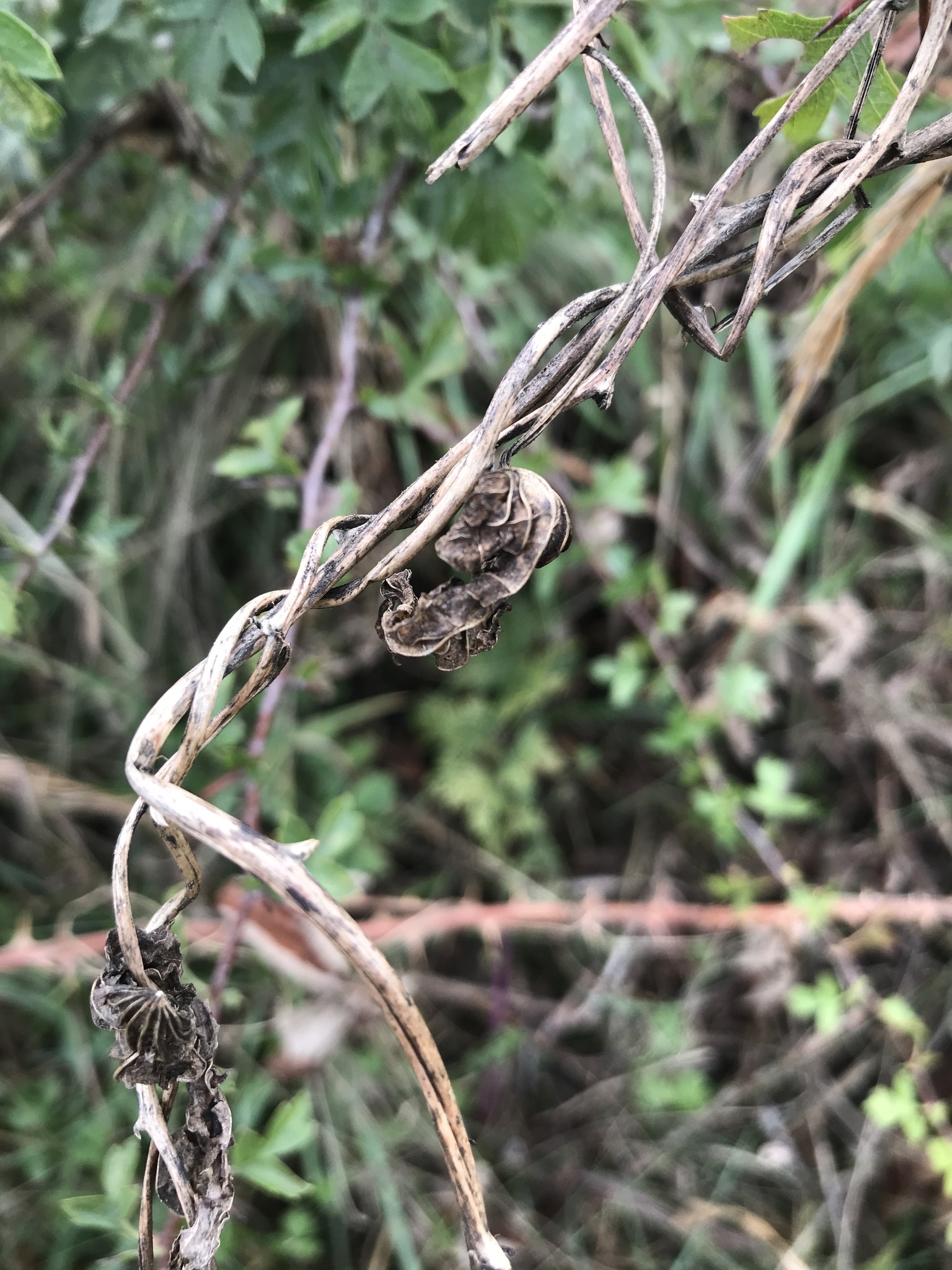
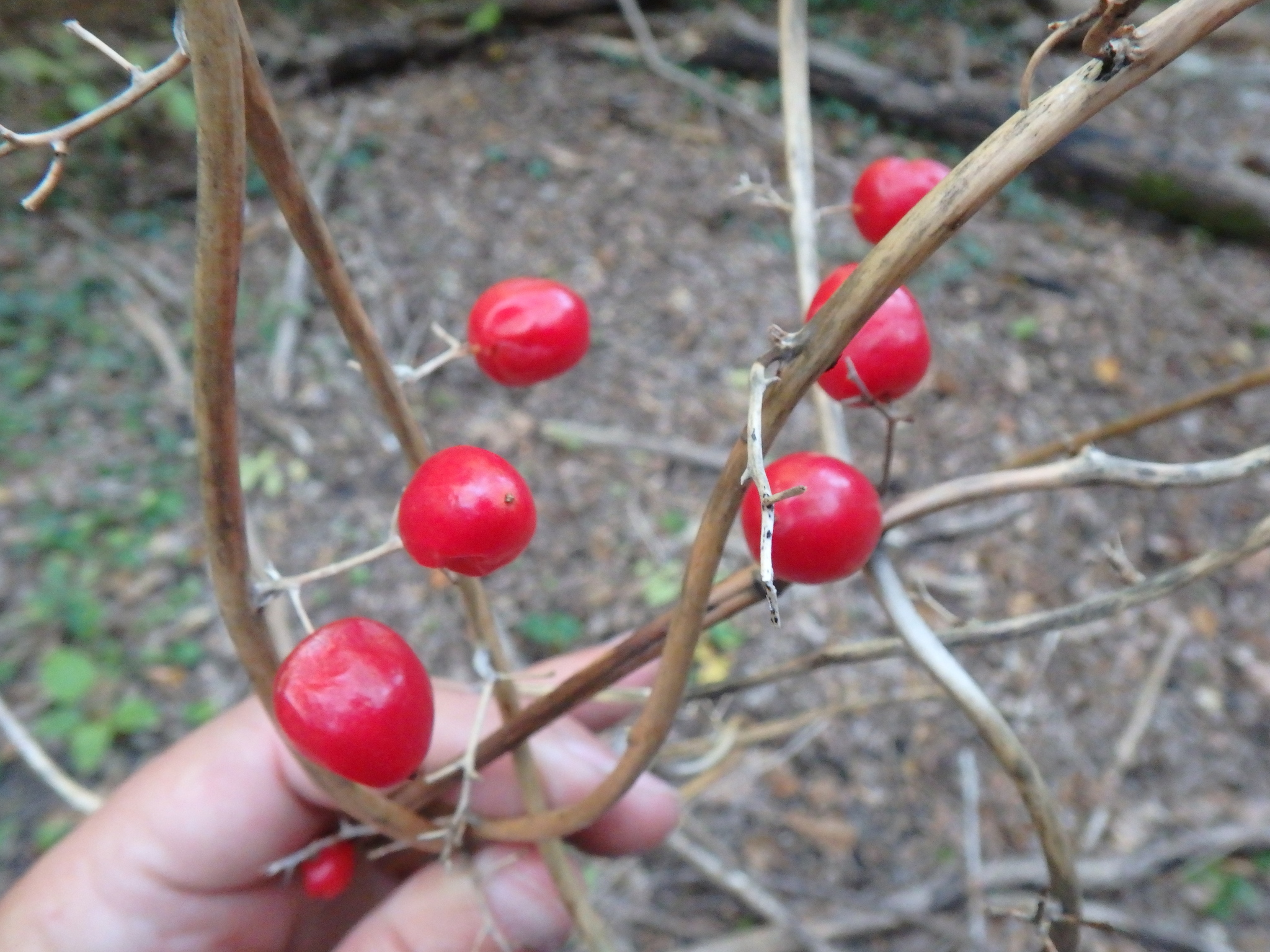
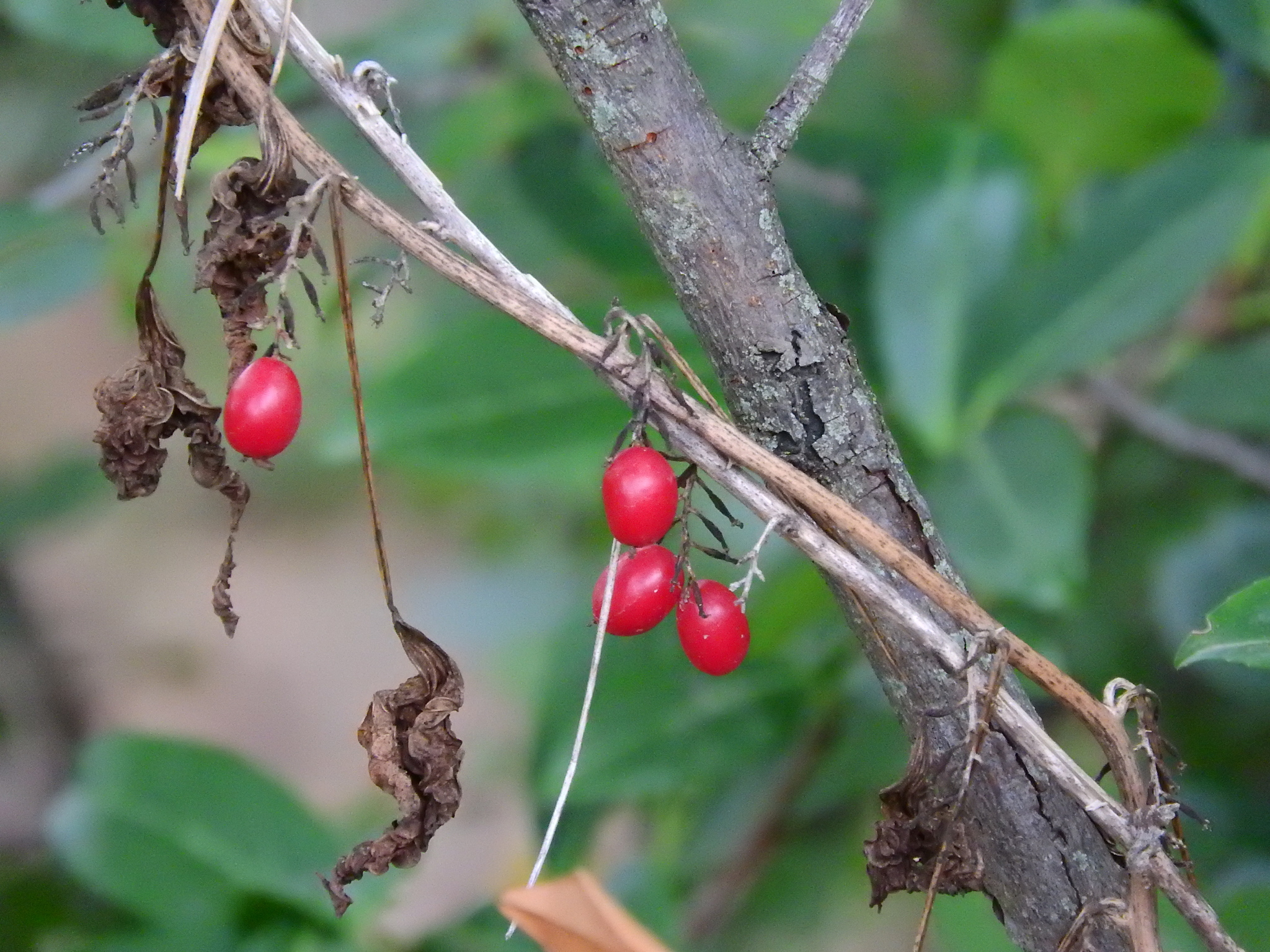
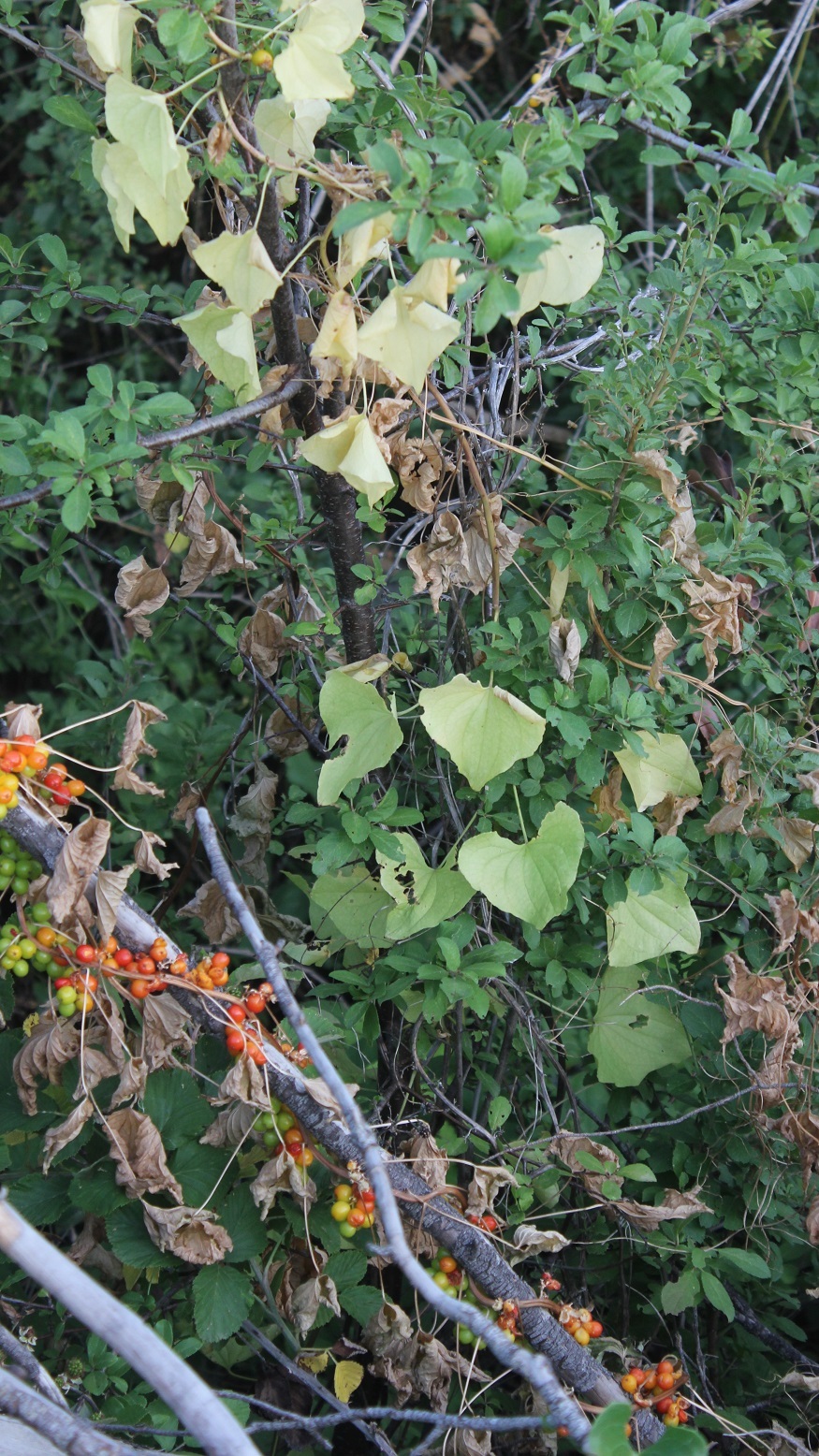
Dioscorea communis
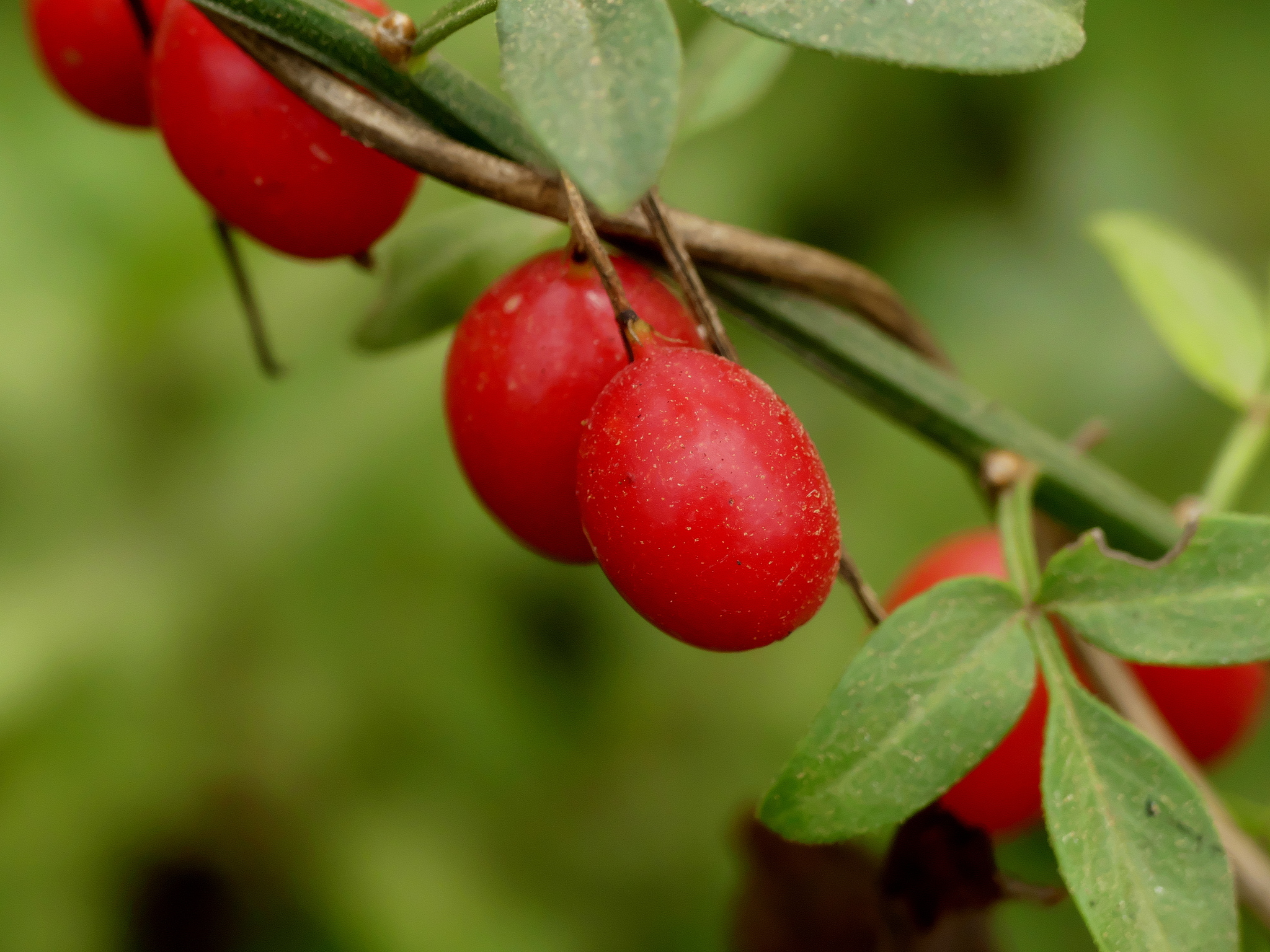
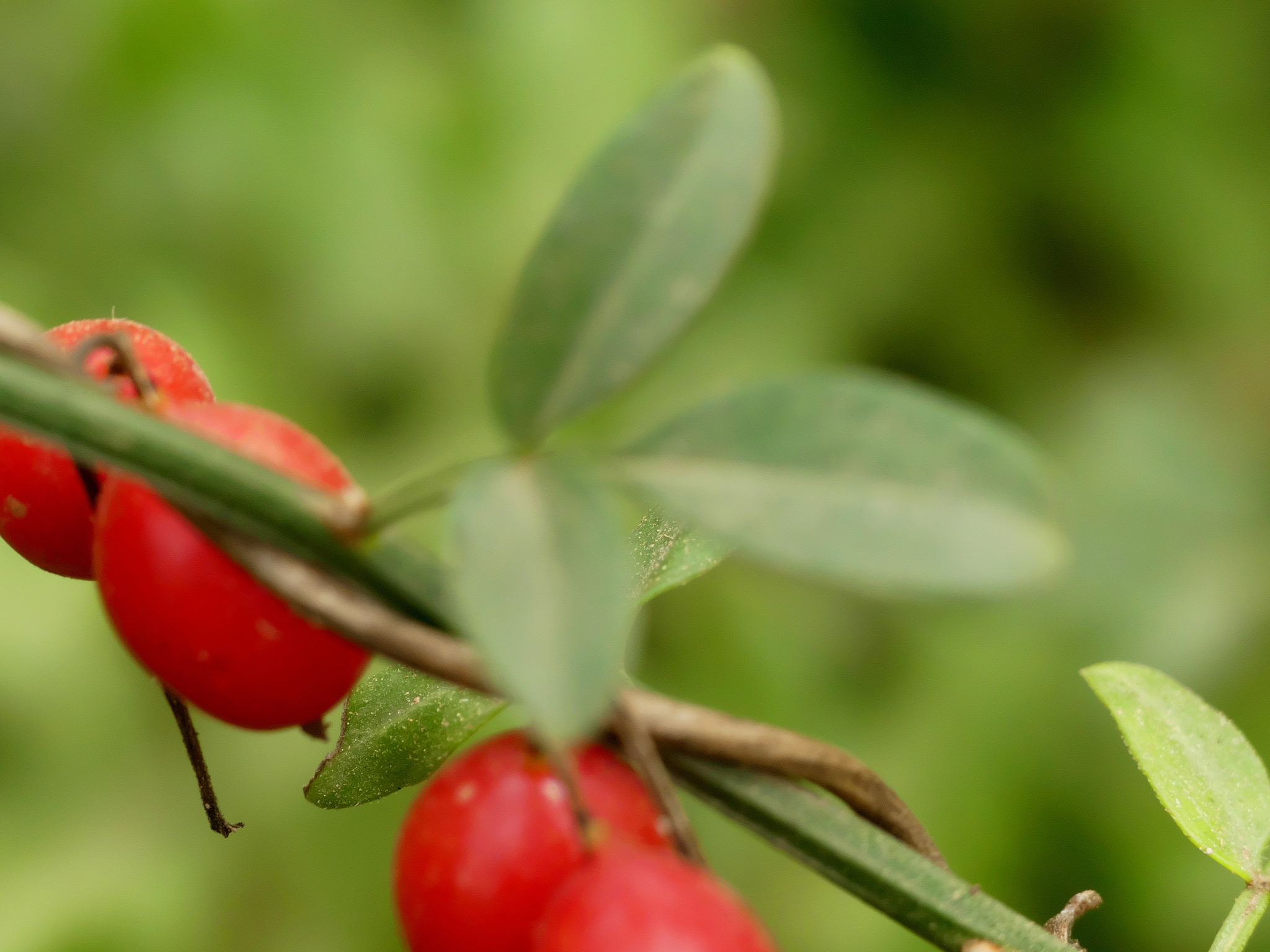
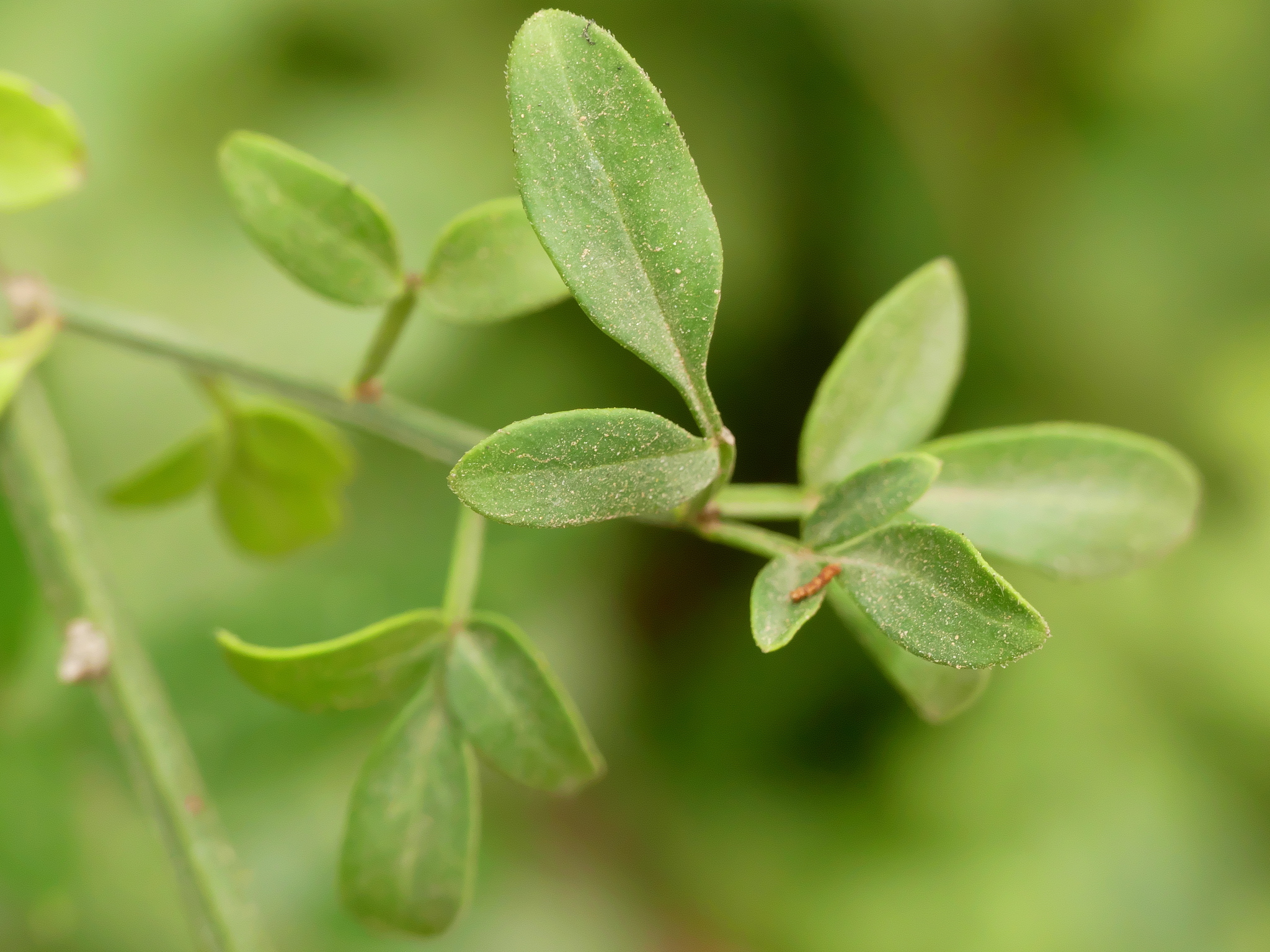
Also cited on iNaturalistobs. 143725011
Also citedBlackcap and black bryony (Alamy)·Kingfisher and black bryony (Alamy)·Scarlet berries (Alamy)
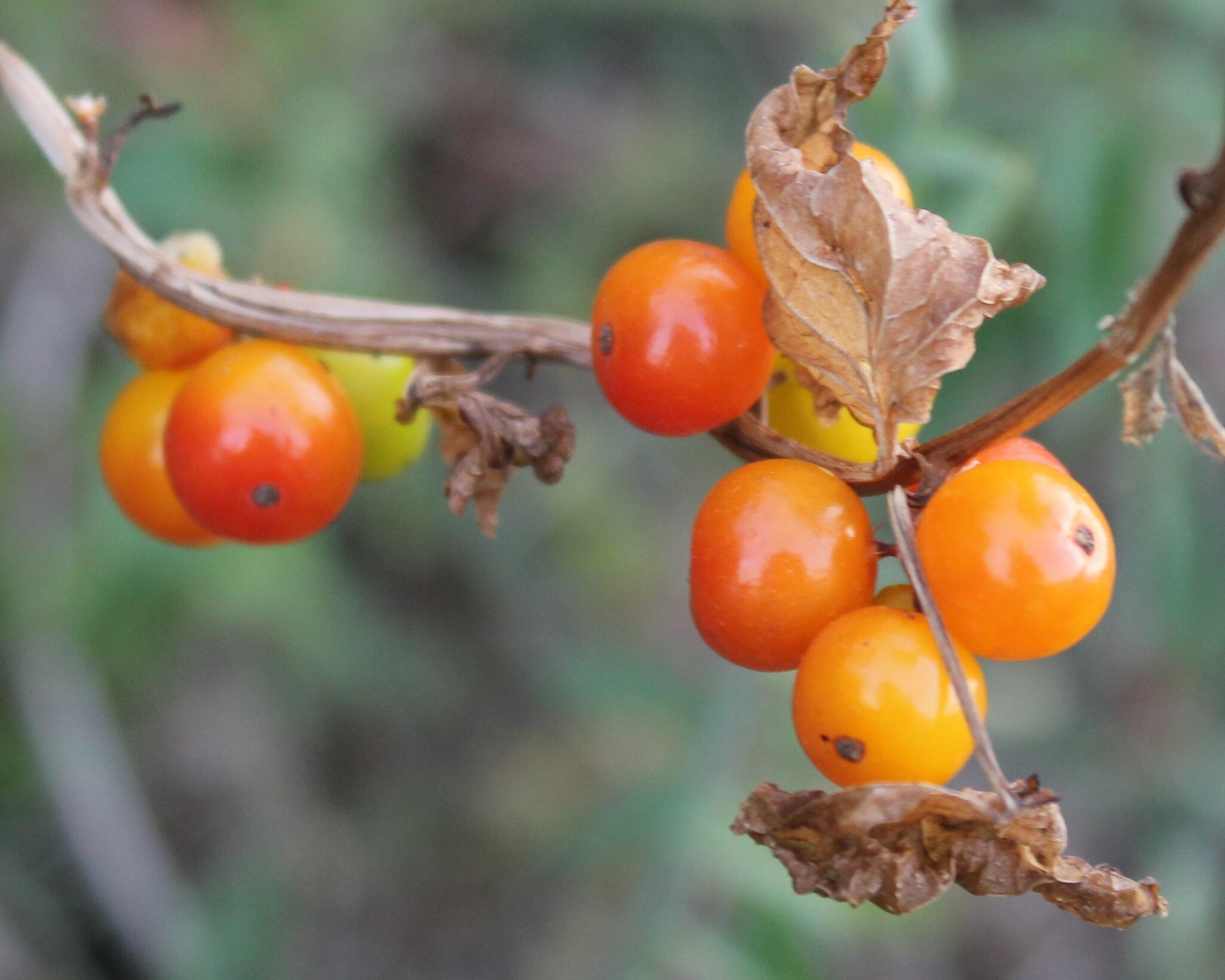
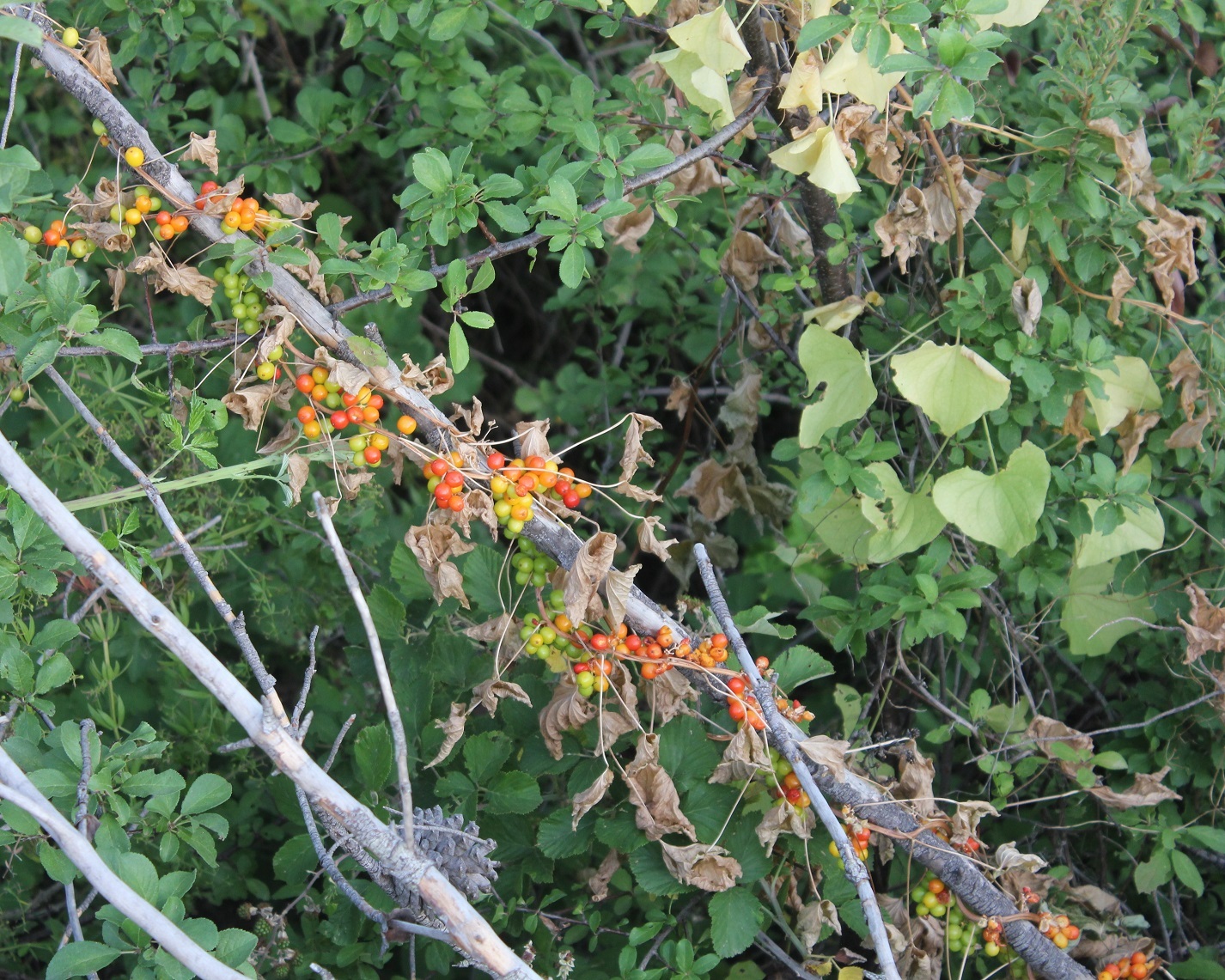
Dioscorea orientalis
The fruits of Dioscorea communis have a pre-ripe display in early autumn.
Also cited on iNaturalistobs. 136164612
In late autumn, they become all the more conspicuous because they persist after the leaves wither and fall.
Further reading on black bryonyScience Photo Library·The Guardian·A Tramp in the Woods·Laidback Gardener·Wildlife Gardening Forum·Betts Ecology·Chest of Books
Further reading on the genusSpringer reference·ScienceDirect·Journal of Biogeography·Lucid key·SEINet·eFloras·DELTA·Frontiers in Pharmacology
Yucca is another example of plasticfruits.